
2 Corinthians 8:1-5 is about a display of remarkable generosity from the Macedonian churches, who despite their own poverty, gave generously and sacrificially to support the ministry and needs of others.
1 We want you to know, brothers, about the grace of God that has been given among the churches of Macedonia,
2 for in a severe test of affliction, their abundance of joy and their extreme poverty have overflowed in a wealth of generosity on their part.
3 For they gave according to their means, as I can testify, and beyond their means, of their own accord,
4 begging us earnestly for the favor of taking part in the relief of the saints—
5 and this, not as we expected, but they gave themselves first to the Lord and then by the will of God to us.
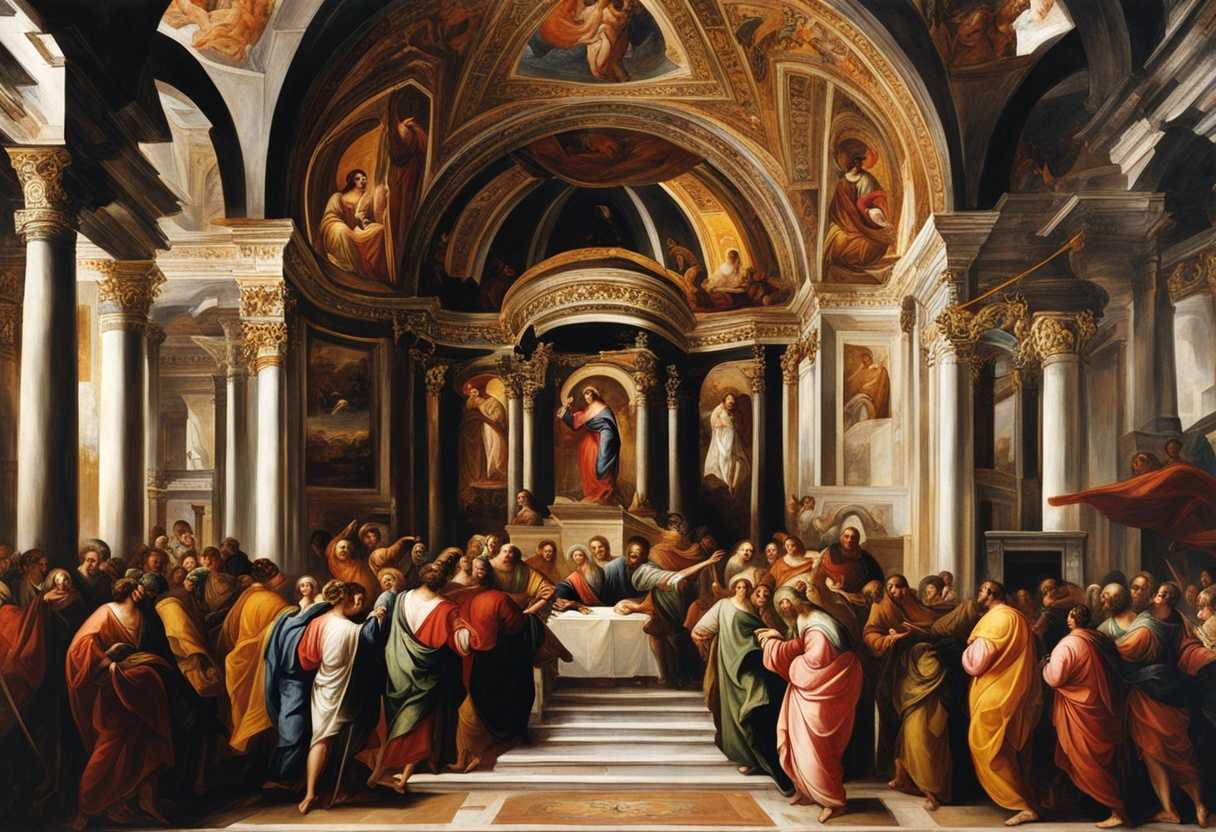
Setting the Scene for 2 Corinthians 8:1-5
In 2 Corinthians chapter 8, the apostle Paul sets the scene in the city of Corinth, where he is writing a letter to the church there. The room is dimly lit by oil lamps, casting a warm glow on the faces of those gathered. Paul is seated at a small wooden table, quill in hand, carefully crafting his words of encouragement and instruction. Around him are a group of believers, eager to hear his words and grow in their faith.
Among those present are Titus, a trusted companion of Paul, and several members of the Corinthian church who have come together to discuss matters of generosity and giving. The atmosphere is one of unity and purpose, as they seek to understand the importance of giving generously to support the work of the ministry and help those in need. The room is filled with a sense of anticipation and reverence as they listen intently to Paul’s words, eager to learn and grow in their faith.
As Paul speaks, his words are filled with wisdom and conviction, urging the Corinthians to excel in the grace of giving just as other churches have done. He shares examples of the Macedonian churches, who despite their own trials and poverty, gave generously out of their love for the Lord and concern for others. The scene is one of inspiration and challenge, as Paul calls the believers to follow in the footsteps of these faithful givers and to abound in the grace of giving.
What is 2 Corinthians 8:1-5 about?
When we look at this verse about the generosity of the Macedonian churches, we see a powerful message about selflessness and giving. The Macedonian churches were praised for their ability to give even when they didn’t have much themselves. It teaches us about the importance of generosity and how it can go beyond what is expected or even seemingly possible. It challenges us to reflect on our own capacity to give, both in terms of material possessions and kindness.
Have you ever considered the impact of giving beyond your means? What could it mean to extend a helping hand even when it might be difficult for you personally? The example of the Macedonian churches reminds us that acts of generosity have a ripple effect, inspiring others and creating a sense of community and support. It challenges us to think about the ways in which we can give back to others, even when it may require sacrifice on our part. We can truly embody the spirit of kindness and selflessness that the Macedonian churches exemplified.
Understanding what 2 Corinthians 8:1-5 really means
In 2 Corinthians 8:1-5, Paul writes to the Corinthians, highlighting the exemplary generosity of the Macedonian churches. Despite facing severe trials and extreme poverty, the Macedonians exhibited a rich generosity that stemmed from the grace of God working in their hearts. Their overflowing joy in Christ led them to give sacrificially, entirely on their own, without coercion. This act of giving was not merely financial but a reflection of their commitment to the Lord, as they first gave themselves to God and then to others according to His will.
The phrase “grace of God” underscores the divine influence that enabled the Macedonians to give generously, emphasizing that true generosity flows from a heart transformed by God’s grace. Their “severe trial” and “extreme poverty” serve as a stark contrast to their “rich generosity,” illustrating that material circumstances do not limit one’s capacity to give when motivated by faith. Their willingness to give “entirely on their own” demonstrates the voluntary and joyful nature of their giving, rooted in a deep sense of devotion to God.
This passage resonates with contemporary believers by challenging them to embrace generosity in adversity, reminding them that true joy comes from giving and serving others rather than accumulating wealth. The Macedonians’ example prompts reflection on the relationship between faith, trust in God’s provision, and the freedom to give generously. Just as the early Christians in Acts 2 shared everything they had, modern-day believers are called to embody communal generosity, trusting in God’s faithfulness to supply all their needs as seen in Philippians 4:10-19.
To illustrate the impact of such generosity, consider the story of a modern-day giver who, despite facing financial challenges, chose to give generously to their community or church. This anecdote showcases how giving not only benefits others but also brings joy and strengthens one’s faith. By reflecting on such stories and biblical teachings, readers are encouraged to examine their own hearts and consider how they can emulate the Macedonians’ example of sacrificial giving, trusting in God’s provision and finding joy in generosity.
In conclusion, this passage serves as a call to action for believers to reflect on their giving practices and consider how they can cultivate a spirit of generosity in their lives. By following the model of the Macedonians, who gave out of their poverty with overflowing joy, readers are invited to experience the blessings that come from trusting in God’s provision and giving generously to others. Let us heed this call to reflect on the joy and fulfillment found in giving, and may we be inspired to live out our faith through acts of sacrificial generosity in obedience to God’s will.
How can we imitate the churches in generosity?
We can imitate the churches in generosity by first recognizing that true generosity stems from a heart that is fully surrendered to God. Our motivation for generosity should also come from a deep love and devotion to God, just as the churches in the passage gave themselves first to the Lord. When we understand the sacrifice that God made for us through Jesus Christ, we are compelled to give generously in response to His grace and love.
Additionally, we can imitate the churches in their generosity by displaying a willingness to give out of our poverty, just as they did. Generosity is not limited to those who have abundance; it is a reflection of our trust in God as our provider and a willingness to prioritize the needs of others above our own comfort and security. We demonstrate our dependence on God to meet our needs and provide for us as we seek to bless others by sacrificially giving, even when resources are limited.
Furthermore, we can imitate the churches in generosity by giving joyfully and eagerly. The passage highlights the churches’ enthusiasm and eagerness to participate in the act of giving, showing that generosity is not meant to be a burden or a duty but a joyful outpouring of gratitude for all that God has done for us. When we give with a cheerful heart and a spirit of joy, we reflect God’s own generous nature and bring glory to Him through our actions.
Application
Think of your life like juggling work and family. The churches of Macedonia gave generously, even when they had little. Let their example push you to examine your own heart. Can you step beyond your comfort and give selflessly? How can you show your faith through acts of love and generosity today?

Reverend Michael Johnson is an experienced Church Minister with a profound expertise in spirituality and guidance. With a serene presence and a compassionate heart, he has faithfully served his congregation for over 20 years, leading them on a spiritual journey towards inner peace and enlightenment. Reverend Johnson’s extensive knowledge of religious philosophies and profound understanding of human nature have made him a trusted confidant and mentor to many, as he seamlessly weaves his profound wisdom into life teachings. Reverend Johnson’s calming demeanor and empathetic nature continue to uplift and heal souls, nurturing a sense of unity and tranquility within his community.