
1 In the twelfth year of Ahaz king of Judah, Hoshea the son of Elah began to reign in Samaria over Israel, and he reigned nine years.
2 And he did what was evil in the sight of the Lord, yet not as the kings of Israel who were before him.
3 Against him came up Shalmaneser king of Assyria. And Hoshea became his vassal and paid him tribute.
4 And the king of Assyria found conspiracy in Hoshea, for he had sent messengers to So, king of Egypt, and offered no tribute to the king of Assyria, as he had done year by year. Therefore the king of Assyria shut him up and bound him in prison.
5 Then the king of Assyria invaded all the land and came to Samaria, and for three years he besieged it.
6 In the ninth year of Hoshea, the king of Assyria captured Samaria, and he carried the Israelites away to Assyria and placed them in Halah, and on the Habor, the river of Gozan, and in the cities of the Medes.
7 And this occurred because the people of Israel had sinned against the Lord their God, who had brought them up out of the land of Egypt from under the hand of Pharaoh king of Egypt, and had feared other gods.
8 and walked in the customs of the nations whom the Lord drove out before the people of Israel, and in the customs that the kings of Israel had practiced.
9 And the people of Israel did secretly against the Lord their God things that were not right. They built for themselves high places in all their towns, from watchtower to fortified city.
10 They set up for themselves pillars and Asherim on every high hill and under every green tree,
11 and there they made offerings on all the high places, as the nations did whom the Lord carried away before them.
12 they served idols, of which the Lord had said to them, “You shall not do this.”
13 Yet the Lord warned Israel and Judah by every prophet and every seer, saying, “Turn from your evil ways and keep my commandments and my statutes, in accordance with all the Law that I commanded your fathers, and that I sent to you by my servants the prophets.”
14 But they would not listen, but were stubborn, as their fathers had been, who did not believe in the Lord their God.
15 They despised his statutes and his covenant that he made with their fathers and the warnings that he gave them. They went after false idols and became false, and they followed the nations that were around them, concerning whom the Lord had commanded them that they should not do like them.
16 And they abandoned all the commandments of the Lord their God and made for themselves metal images of two calves; and they made an Asherah and worshiped all the host of heaven and served Baal.
17 And they burned their sons and their daughters as offerings and used divination and omens and sold themselves to do evil in the sight of the Lord, provoking him to anger.
18 Therefore the Lord was very angry with Israel and removed them out of his sight. None was left but the tribe of Judah only.
19 Judah also did not keep the commandments of the Lord their God, but walked in the customs that Israel had introduced.
20 And the Lord rejected all the descendants of Israel and afflicted them and gave them into the hand of plunderers, until he had cast them out of his sight.
21 When he had torn Israel from the house of David, they made Jeroboam the son of Nebat king. And Jeroboam drove Israel from following the Lord and made them commit great sin.
22 For the people of Israel walked in all the sins that Jeroboam did. They did not depart from them,
23 until the Lord removed Israel out of his sight, as he had spoken by all his servants the prophets. So Israel was exiled from their own land to Assyria until this day.
24 And the king of Assyria brought people from Babylon, Cuthah, Avva, Hamath, and Sepharvaim, and placed them in the cities of Samaria instead of the people of Israel. And they took possession of Samaria and lived in its cities.
25 So at the beginning of their dwelling there, they did not fear the Lord. Therefore the Lord sent lions among them, which killed some of them.
26 So they spoke to the king of Assyria, saying, “The nations whom you have carried away and placed in the cities of Samaria do not know the law of the god of the land. Therefore he has sent lions among them, and behold, they are killing them, because they do not know the law of the god of the land.”
27 Then the king of Assyria commanded, “Send there one of the priests whom you carried away from there, and let him go and dwell there and teach them the law of the god of the land.”
28 So one of the priests whom they had carried away from Samaria came and lived in Bethel and taught them how they should fear the Lord.
29 But every nation still made gods of its own and put them in the shrines of the high places that the Samaritans had made, every nation in the cities in which they lived.
30 The men of Babylon made Succoth-benoth, the men of Cuth made Nergal, the men of Hamath made Ashima,
31 the Avvites made Nibhaz and Tartak; and the Sepharvites burned their children in the fire to Adrammelech and Anammelech, the gods of Sepharvaim.
32 They also feared the Lord and appointed from among themselves all sorts of people as priests of the high places, who sacrificed for them in the shrines of the high places.
33 They feared the Lord and served their own gods according to the custom of the nations from among whom they had been carried away into exile.
34 To this day they do according to their former manner. They do not fear the Lord, and they do not follow the statutes or the rules or the law or the commandment that the Lord commanded the children of Jacob, whom he named Israel.
35 The Lord made a covenant with them and commanded them, “You shall not fear other gods or bow yourselves to them or serve them or sacrifice to them,
36 but you shall fear the Lord, who brought you out of the land of Egypt with great power and with an outstretched arm. You shall bow yourselves to him, and to him you shall sacrifice.
37 And the statutes and the rules and the law and the commandment that he wrote for you, you shall always be careful to do. You shall not fear other gods.
38 And the covenant that I have made with you, you shall not forget, and you shall not fear other gods.
39 But the Lord your God you shall fear, and he will deliver you out of the hand of all your enemies.
40 They would not listen, however, but they did according to their former manner.
41 So these nations feared the Lord and also served their carved images. Their children did likewise, and their children’s children—as their fathers did, so they do to this day.
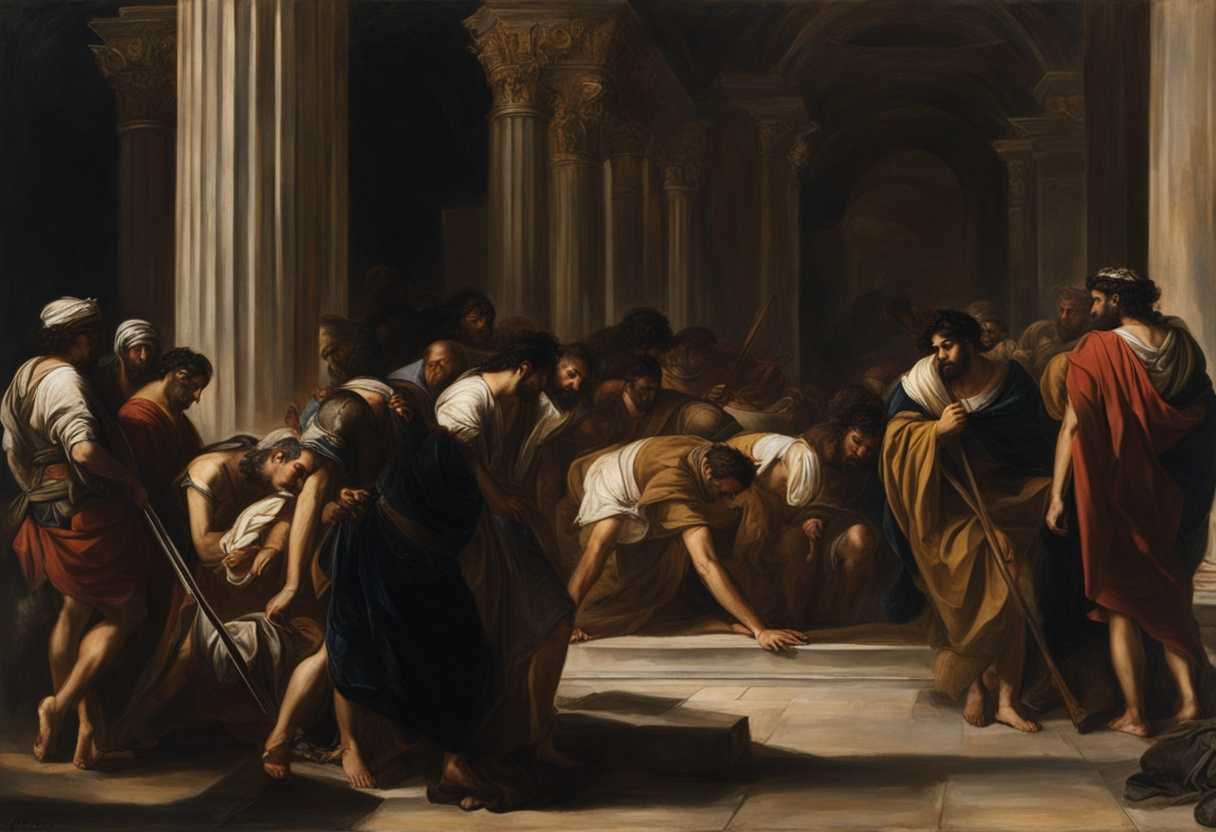
The True Meaning of 2 Kings 17
The author of this chapter is the biblical historian known as the Deuteronomist. This individual was likely a scribe or priest who lived during the Babylonian exile, compiling the historical accounts of the kingdoms of Israel and Judah. The tragic downfall of the northern kingdom of Israel is witnessed in this chapter. After years of idolatry and disobedience to God’s commands, the Israelites face the consequences of their actions. The Assyrian empire conquers the northern tribes, exiling the people and resettling the land. This event marks a pivotal moment in biblical history, as the once-united kingdom of Israel is now divided and facing ruin.
The Deuteronomist draws parallels to earlier warnings found in the book of Deuteronomy, where Moses cautioned the Israelites about the dangers of forsaking their covenant with God (Deuteronomy 28:15-68). We see these prophecies come to fruition as the northern tribes are punished for their unfaithfulness.
2 Kings 17:1-6
The beginning of a significant shift in the history of the Israelites is seen in 2 Kings 17:1-2. Hoshea, son of Elah, became king of Israel in Samaria, the capital of the northern kingdom. Hoshea’s reign came during a tumultuous time in the region, with the Assyrian Empire rising in power. It’s important to understand that the northern kingdom of Israel had a long history of straying from God and turning to idolatry, despite many warnings from prophets like Elijah, Elisha, and Amos. This continued disobedience ultimately led to their downfall.
Moving on to verse 3, we see that Hoshea’s disobedience to the Lord landed him in trouble. The Assyrian King Shalmaneser besieged Samaria for three years. This event was a fulfillment of the prophecies given earlier, particularly in Amos 5:27, where the prophet warned of the exile of the Israelites beyond Damascus. The time of reckoning had come, and the Assyrians were used as a tool of God’s judgment against the unrepentant Israelites. Samaria fell as the siege came to an end in verses 4-6, and the Assyrians captured the capital of the northern kingdom. The Israelites were taken into exile, forcibly removed from their land and scattered among the nations. This deportation marked the end of the northern kingdom of Israel as a distinct political entity. The exile of the Israelites was a devastating event, but it was also a direct consequence of their persistent disobedience and idolatry. Throughout the Bible, the theme of disobedience leading to consequences is a powerful and sobering reminder of the importance of following God’s commands.
This passage in 2 Kings 17 serves as a stark warning about the dangers of turning away from God and the consequences that come with disobedience. The fall of Samaria and the exile of the Israelites are poignant reminders of the destructive power of sin and the faithfulness of God to uphold His justice. It emphasizes the importance of heeding God’s warnings and staying faithful to His commandments, as failure to do so can lead to disastrous outcomes. The events in this passage also set the stage for further prophecies and events in the Bible, highlighting the intricate tapestry of God’s plan unfolding throughout history.
2 Kings 17:7-12
The verses in 2 Kings 17:7-12 provide a grim portrayal of the downfall of the northern kingdom of Israel. The passage begins by setting the scene during the reign of Hoshea, the last king of Israel. It highlights the overarching theme of disobedience and idolatry that plagued the nation for years. The repeated disobedience of the Israelites towards God’s commandments led to their eventual exile and captivity by the Assyrians. The verses delve into the specific reasons why the Israelites faced such severe consequences. They had abandoned the Lord, the God of their ancestors, and instead turned to the worship of idols, following the practices of the surrounding nations. This act of forsaking their covenant with God had severe repercussions as it violated one of the Ten Commandments – “You shall have no other gods before me.” (Exodus 20:3)
Furthermore, the Israelites built high places and set up sacred stones and Asherah poles on every high hill and under every spreading tree. These were all acts of idol worship that were strictly forbidden by God in Deuteronomy 12:3 – “Break down their altars, smash their sacred stones and burn their Asherah poles in the fire; cut down the idols of their gods and wipe out their names from those places.” The Israelites’ persistent disobedience and refusal to repent led to God’s judgment upon them.
The passage also mentions that the Israelites engaged in wicked practices, imitating the detestable ways of the nations that God had driven out before them. The Lord was very angry with Israel and removed them from his presence as a result. This highlights the importance of staying faithful to God’s commandments and not being swayed by the practices of the world. These verses serve as a cautionary tale, emphasizing the consequences of forsaking God and turning to idols. It underscores the importance of obedience, faithfulness, and loyalty to God’s covenant. The downfall of the northern kingdom of Israel serves as a stark warning to all believers about the dangers of straying from the path of righteousness and the need for repentance and turning back to God.
2 Kings 17:13-18
The Lord sends prophets to the people of Israel, warning them and instructing them to turn from their evil ways and keep His commandments as given through Moses in 2 Kings 17:13-18. The passage emphasizes the repeated theme in the Bible of God’s desire for His people to obey His commandments and follow His ways. Despite the warnings and exhortations from the prophets, the people of Israel did not listen, but instead continued to follow the idolatrous practices of the surrounding nations.
This disobedience had dire consequences for the Israelites, leading to the eventual fall of the northern kingdom of Israel to the Assyrians. The mention of “the Lord testified against Israel and Judah by every prophet, every seer, saying, ‘Turn from your evil ways, and keep my commandments and my statutes’” serves as a powerful reminder of God’s patience and persistence in calling His people back to Him. It also highlights the importance of heeding God’s word and living in obedience to His commandments.
The passage goes on to describe how the people of Israel rejected God’s covenant, ignored His warnings, and followed idols, leaving them with no excuse for the judgment that came upon them. The mention of “They rejected His statutes and His covenant that He had made with their fathers, and His warnings that He gave them” underscores the seriousness of turning away from God and the severe consequences of disobedience.
This narrative serves as a cautionary tale for believers today, reminding us of the importance of remaining faithful to God and His commandments. It also shows the devastating consequences of idolatry and disobedience. Throughout the Bible, we see instances where God’s people faced judgment due to their disobedience, but we also see His mercy and grace when they repent and turn back to Him.
The story of the Israelites in 2 Kings 17 serves as a vivid illustration of the cycle of sin, judgment, and restoration that is found throughout the Bible. It underscores the timeless message of the importance of faithfulness to God, the dangers of idolatry, and the need for repentance and obedience. The prophets’ warnings in this passage show us that God’s desire is for His people to walk in His ways and experience His blessings, but He will not tolerate continued disobedience and idolatry. The story of Israel’s fall ultimately serves as a sobering reminder for us to remain steadfast in our faith and wholeheartedly follow God’s commandments.
2 Kings 17:19-23
1. Breakdown of the verse:
2 Kings 17:19-23 states, “Also Judah did not keep the commandments of the Lord their God, but walked in the customs that Israel had introduced. The Lord rejected all the descendants of Israel; he afflicted them and gave them into the hand of plunderers, until he had expelled them from his sight. When he had torn Israel from the house of David, they made Jeroboam son of Nebat king. Jeroboam drove Israel from following the Lord and made them commit a great sin. The Israelites persisted in all the sins of Jeroboam and did not turn away from them until the Lord removed them from his presence, as he had warned through all his servants the prophets. So Israel was exiled from their homeland to Assyria to this day.”
**2. Both Israel and Judah’s disobedience is seen in this passage, revealing the consequences. The verse highlights how the people of Judah failed to follow the commandments of the Lord and instead adopted the sinful practices introduced by Israel. This disobedience led to the Lord rejecting the descendants of Israel, allowing them to be afflicted and plundered.
The division of Israel into two kingdoms, Israel and Judah, after the reign of Solomon had far-reaching implications. Here, Jeroboam, who became king of Israel after the division, is depicted as leading the Israelites into sin by diverting them from worshipping the Lord, setting up golden calves for them to worship. This act of idolatry caused a lasting impact on the people of Israel.
The text mentions that the Israelites persisted in their sinful ways despite the warnings from God through His prophets. This emphasizes the importance of heeding the word of the Lord and turning away from sin. They faced the severe consequence of being exiled from their homeland to Assyria by failing to do so. This event serves as a powerful reminder of the consequences of disobedience and the faithfulness of God to His word.
Throughout the Bible, the theme of obedience and disobedience, especially in relation to following God’s commandments, is a recurring one. The story of Israel and Judah serves as a cautionary tale to future generations about the dangers of straying from God’s path. It underscores the need for repentance, faithfulness, and the consequences of turning away from God. Scripture repeatedly teaches that obedience to God leads to blessings, while disobedience brings about judgment. This passage aligns with the overarching narrative of God’s faithfulness despite human failings in the broader context of the Bible. It demonstrates God’s justice in dealing with sin and disobedience, while also showcasing His mercy and willingness to forgive when His people repent and turn back to Him. This story serves as a reminder of the importance of staying true to God’s word and the grave consequences of straying from His commandments.
2 Kings 17:24-28
The verses in 2 Kings 17:24-28 describe the events following the fall of the northern kingdom of Israel to the Assyrians. The Assyrians had exiled the Israelites and brought people from various other nations to settle in the land of Israel. These new inhabitants initially faced challenges as they struggled to adapt to their new environment.
The text mentions that the king of Assyria brought people from Babylon, Cuthah, Avva, Hamath, and Sepharvaim to settle in the cities of Samaria in place of the Israelites. Each of these nations had their own gods and religious practices, which eventually led to a problem for the new settlers. They did not know how to worship the God of the land, which resulted in them being attacked by lions. This was seen as a punishment from God because they did not fear the Lord of the land.
This narrative serves as a powerful reminder of the importance of honoring and worshipping the one true God. Throughout the Bible, there is a consistent message about the consequences of turning away from God and following after other gods. The warning in Deuteronomy 6:14-15 instructed the Israelites not to follow other gods, as it would kindle the anger of the Lord against them. The events in 2 Kings 17 serve as a concrete example of this warning coming to pass.
Furthermore, this passage highlights the concept of divine judgment. The new settlers faced the wrath of God in the form of attacks by lions because they did not show reverence and respect towards the Lord of the land. This illustrates that God’s judgment is not limited to one particular group of people but extends to all who fail to acknowledge Him. It emphasizes the universal nature of God’s authority and the need for all to submit to Him.
The story also underscores the idea of the sovereignty of God. Despite the Assyrians conquering Israel and the subsequent settling of foreign peoples in the land, God’s authority and control over the situation are evident. The events that transpired were not outside of God’s knowledge or power; everything happened according to His divine will. This aligns with the overarching theme in the Bible that God is in control of all things and works everything according to His purposes (Ephesians 1:11). The verses in 2 Kings 17:24-28 teach us valuable lessons about the consequences of idolatry, the reality of divine judgment, and the sovereignty of God. It is a poignant reminder of the importance of staying true to the one true God and faithfully following His commandments. The actions and outcomes of the people in this passage serve as a cautionary tale for all believers to remain steadfast in their faith and not turn away from the Lord.
2 Kings 17:29-33
2 Kings 17:29-33 reads: “Nevertheless, every nation made gods of its own and put them in the shrines of the high places which the Samaritans had made, every nation in the cities where they dwelt. The men of Babylon made Succoth Benoth, the men of Cuth made Nergal, the men of Hamath made Ashima, and the Avites made Nibhaz and Tartak; and the Sepharvites burned their children in fire to Adrammelech and Anammelech, the gods of Sepharvaim. So they feared the Lord, and from every class they appointed for themselves priests of the high places, who sacrificed for them in the shrines of the high places. Syncretistic religious practices were taking place in the land after the Israelites were exiled by the Assyrians, as depicted vividly in this passage. Despite being taught to fear the Lord, the people did not truly abandon their polytheistic beliefs and instead integrated them with the worship of the true God. Each nation brought their own gods and set up shrines in the high places, a common practice that was in direct opposition to God’s commands.
The mention of specific gods such as Succoth Benoth, Nergal, Ashima, Nibhaz, Tartak, Adrammelech, and Anammelech is significant as it shows the variety of deities that were worshipped in the region. These false gods represented different aspects of nature, war, fertility, or other worldly concerns, appealing to the people’s desires and fears. The Bible repeatedly warns against worshiping idols and placing trust in man-made creations rather than in the one true God. This passage serves as a cautionary tale about the dangers of syncretism and the lure of idolatry.
The most disturbing part of this passage is the mention of the Sepharvites burning their children in fire to Adrammelech and Anammelech, the gods of Sepharvaim. This gruesome practice was a form of human sacrifice that was condemned by God and considered abhorrent. The Bible consistently condemns child sacrifice as an evil practice that provokes God’s wrath. This serves as a stark reminder of the depths of depravity that people can sink to when they turn away from God and follow their own sinful desires.
The appointment of priests from every class to sacrifice in the shrines of the high places highlights the pervasiveness of this false worship. It was not just limited to a particular group of people but had spread throughout the land, corrupting the worship of the true God. This shows the importance of staying faithful to God’s commands and not being swayed by the practices of the world. This passage serves as a cautionary tale about the dangers of syncretism, idolatry, and the consequences of turning away from the one true God. It reminds us of the importance of wholehearted devotion to God and the dangers of compromising our beliefs for the sake of worldly acceptance. We as Christians are called to worship God alone and not to mix our faith with beliefs and practices that are contrary to His word. This passage serves as a sobering reminder of the consequences of straying from God’s commands and the importance of remaining steadfast in our faith.
2 Kings 17:34-41
Several important sections in 2 Kings 17:34-41 can be identified to provide a comprehensive analysis of the passage. Breaking down the verse into these sections allows for a more detailed exploration of the meaning and significance of each part. The king of Assyria brought people from various nations to Samaria, and they settled in the cities of Samaria, as discussed in verse 34. These people did not initially fear the Lord, and they did not follow the decrees, laws, practices, or commands that the Lord had given to the Israelites. This section is significant because it highlights the consequences of the Israelites’ disobedience and the mixing of different people and cultures in that region. This mixing of different beliefs and practices would later lead to the syncretism that plagued the region, contributing to the Israelites moving away from worshipping the one true God.
Moving on to verse 35, it emphasizes how the Lord had established a covenant with the Israelites and commanded them not to worship other gods but to worship Him alone. However, the Israelites broke this covenant by worshipping other gods, not heeding the warnings of the prophets sent by the Lord. The people faced the judgment of the Lord in the form of exile and the invasion of foreign kingdoms. This section underscores the importance of faithfulness and obedience to God’s commands, as straying from His will can lead to dire consequences. The passage delves into the contrast between the Israelites’ disobedience and the expectations of God for their loyalty and devotion in verses 36-38. The Israelites were explicitly told to follow the commands and laws given to them by the Lord through Moses, but they chose to ignore these instructions and instead embraced the practices of the nations around them. This shift towards idolatry and pagan rituals further distanced them from the Lord, leading to their downfall and exile. The passage serves as a cautionary tale about the dangers of compromising one’s faith and principles for the sake of worldly pursuits.
Lastly, in verses 39-41, the passage concludes by highlighting the partial repentance of the people of Samaria, where they continued to worship their own gods while also acknowledging the Lord. However, this half-hearted devotion was not acceptable to the Lord, as He desires whole-hearted worship and allegiance from His people. Despite outwardly acknowledging the Lord, the people’s hearts remained divided, reflecting a lack of true commitment to God. This section underscores the importance of sincerity and faithfulness in one’s relationship with the Lord, as mere lip service without genuine devotion is insufficient. These verses in 2 Kings 17 serve as a somber reminder of the consequences of disobedience, idolatry, and spiritual compromise. The passage highlights the importance of remaining faithful to God’s commands, avoiding the influences of worldly practices, and wholeheartedly dedicating oneself to the worship of the Lord. Through the lens of these events, readers are encouraged to reflect on their own relationship with God and strive for unwavering loyalty and obedience to His will, avoiding the pitfalls of spiritual complacency and compromise.
After 2 Kings 17
The people of Israel had turned away from the Lord and followed the ways of the nations around them. They had built high places and set up sacred stones and Asherah poles on every high hill and under every spreading tree. They had worshipped all the starry hosts and served Baal. The Lord had warned them, but they had not listened. Now, the king of Assyria had conquered the northern kingdom of Israel and carried its people away into exile. The once-prosperous nation lay in ruins, a stark reminder of the consequences of turning away from God. The people of Judah should heed the lessons of history as they watched the downfall of their northern neighbors. The path of disobedience and idolatry leads only to destruction, but the way of the Lord offers hope and restoration. We will see how the southern kingdom of Judah fares in the chapters to come, and whether they will learn from the mistakes of their kin or continue down the same perilous road.

Reverend Michael Johnson is an experienced Church Minister with a profound expertise in spirituality and guidance. With a serene presence and a compassionate heart, he has faithfully served his congregation for over 20 years, leading them on a spiritual journey towards inner peace and enlightenment. Reverend Johnson’s extensive knowledge of religious philosophies and profound understanding of human nature have made him a trusted confidant and mentor to many, as he seamlessly weaves his profound wisdom into life teachings. Reverend Johnson’s calming demeanor and empathetic nature continue to uplift and heal souls, nurturing a sense of unity and tranquility within his community.