
2 Kings 18:9-12 is about King Hezekiah’s rebellion against the Assyrian King Sennacherib, highlighting Hezekiah’s defiance in refusing to serve the Assyrians and his trust in the Lord’s protection.
9 In the fourth year of King Hezekiah, which was the seventh year of Hoshea son of Elah, king of Israel, Shalmaneser king of Assyria came up against Samaria and besieged it.
10 And at the end of three years they captured it.
11 The king of Assyria carried the Israelites away to Assyria and put them in Halah, and on the Habor, the river of Gozan, and in the cities of the Medes,
12 because they did not obey the voice of the Lord their God but transgressed his covenant, even all that Moses the servant of the Lord commanded. They neither listened nor obeyed.
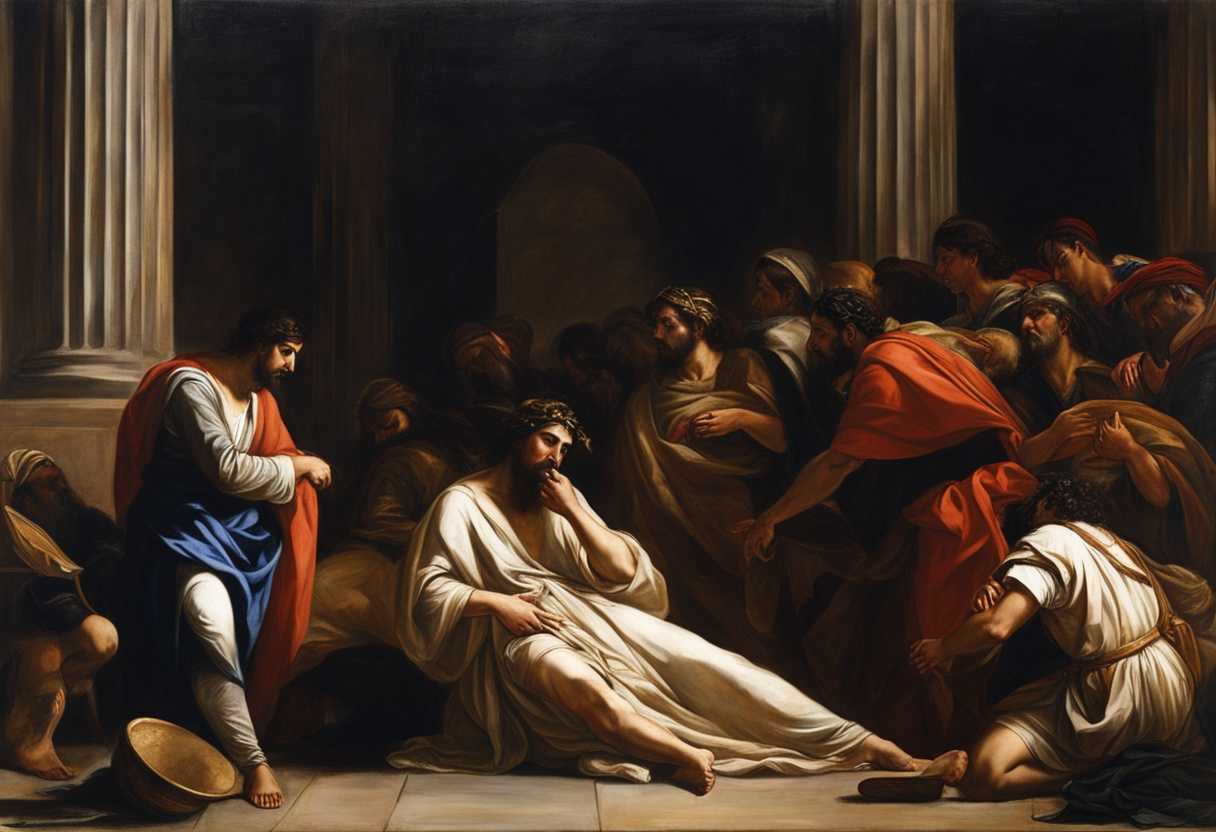
Setting the Scene for 2 Kings 18:9-12
In 2 Kings chapter 18, we find King Hezekiah of Judah reigning in Jerusalem. The scene unfolds in the midst of political turmoil and military threats. The powerful Assyrian Empire, under the leadership of King Sennacherib, has been expanding its conquests and now sets its sights on Judah. Hezekiah, a righteous king who trusted in the Lord, had rebelled against Assyria’s oppressive rule, refusing to pay tribute to the empire.
As tensions escalate, Sennacherib launches a campaign against Judah, capturing several fortified cities. In response, Hezekiah sends a message to Sennacherib, offering to pay a hefty tribute to avoid further conflict. The Assyrian king, emboldened by his military successes, demands an exorbitant sum of silver and gold from Hezekiah, stripping the temple of its treasures to meet his demands.
In this tense and precarious situation, we find King Hezekiah, his advisors, and the people of Judah gathered in the royal court, grappling with the weighty decision of how to respond to the Assyrian threat. The atmosphere is charged with fear and uncertainty as they face the daunting prospect of either submitting to Assyrian domination or trusting in the Lord for deliverance. Amidst the political intrigue and military maneuvers, the faith and leadership of King Hezekiah are put to the ultimate test.
What is 2 Kings 18:9-12 about?
This verse illustrates a powerful moment in the history of King Hezekiah of Judah, showing his strength and defiance against oppressors. Imagine the courage it must have taken for Hezekiah to stand up against the mighty Assyrian king, who held great power and influence over the region. Hezekiah secured his kingdom and asserted his independence and determination to protect his people by defeating the Philistines and rebelling against the Assyrians. The strategic planning and bravery involved in these battles must have been considered. How did King Hezekiah inspire and lead his troops to achieve victory? What sacrifices and risks were taken to defy such formidable enemies? This verse serves as a reminder of the importance of standing up against injustice and oppression, even in the face of overwhelming odds. It is a testament to the resilience and faith of King Hezekiah and the people of Judah, showing that with courage and determination, even the mightiest empires can be challenged and overcome.
Understanding what 2 Kings 18:9-12 really means
The passage in 2 Kings 18:9-12 recounts the siege of Samaria by the Assyrian king Shalmaneser, culminating in the fall of the Northern Kingdom of Israel. This event serves as a poignant reminder of the consequences of Israel’s disobedience to God, despite repeated warnings from prophets urging them to return to the path of righteousness. The Northern Kingdom’s downfall was not merely a historical event but a cautionary tale about the perils of straying from God’s commands.
In examining related passages such as 2 Kings 17:7-23, Deuteronomy 28:15-68, and Hosea 13:16, we see a consistent theme of divine judgment for disobedience. These texts underscore the correlation between Israel’s transgressions and the subsequent calamities that befell them, reinforcing the importance of fidelity to God’s covenant.
The relevance of this narrative to contemporary audiences is striking. It prompts us to evaluate our own lives and ensure that we are aligning our actions with God’s will. Just as Israel faced dire consequences for their disobedience, we are reminded of the dangers of straying from the path of righteousness and the necessity of heeding God’s warnings and corrections.
Consider a community neglecting warnings about a failing dam, akin to Israel ignoring divine admonitions. Despite ample opportunities to rectify the situation, their inaction leads to catastrophic outcomes. This analogy vividly illustrates the repercussions of disregarding God’s guidance and serves as a cautionary tale for us to remain vigilant in our spiritual journey.
Key phrases in the passage, such as “In the fourth year of King Hezekiah,” “Shalmaneser king of Assyria came up against Samaria and besieged it,” “They did not obey the voice of the Lord their God,” and “They transgressed His covenant,” highlight critical aspects of Israel’s downfall. These phrases emphasize the historical context, the external threats faced due to internal spiritual decay, the root cause of disobedience, and the gravity of breaking a covenant with God.
By delving into the implications of 2 Kings 18:9-12 and its resonance with contemporary life, we are encouraged to reflect on our obedience to God’s word. This passage serves as a poignant reminder of the enduring importance of faithfulness and adherence to divine guidance, urging us to learn from Israel’s mistakes and strive for unwavering commitment to God’s will.
How do we handle removing idols in our lives?
King Hezekiah removes the idols from the land of Judah in obedience to God’s commands in 2 Kings 18:9-12. This passage serves as a reminder for us to identify and remove any idols in our lives that may be taking the place of God. An idol can be anything that we prioritize over our relationship with God, such as material possessions, relationships, success, or even our own desires and ambitions.
To handle removing idols in our lives, we must first identify what they are. Reflect on what we value most in life and examine whether these things are drawing us closer to God or leading us away from Him. It requires honesty and self-reflection to recognize where we may be placing more importance on something other than God.
Once we have identified the idols in our lives, we must take action to remove them. This can involve making intentional choices to shift our focus back to God, whether it’s through prayer, seeking accountability from others, or changing our habits and priorities. We too must be proactive in removing anything that hinders our relationship with God, just as King Hezekiah took decisive steps to rid the land of idols.
Application
In the fast-paced world of career and family, we must remember the significance of surrounding ourselves with wise and God-fearing leaders. Take a moment to ponder if those guiding you share values that resonate with your faith. Let us be intentional about seeking out leaders who will nurture and inspire our spiritual growth, leading us on the path towards a more profound connection with God. So, will you choose leaders who mirror the path of the divine in your life?

Reverend Michael Johnson is an experienced Church Minister with a profound expertise in spirituality and guidance. With a serene presence and a compassionate heart, he has faithfully served his congregation for over 20 years, leading them on a spiritual journey towards inner peace and enlightenment. Reverend Johnson’s extensive knowledge of religious philosophies and profound understanding of human nature have made him a trusted confidant and mentor to many, as he seamlessly weaves his profound wisdom into life teachings. Reverend Johnson’s calming demeanor and empathetic nature continue to uplift and heal souls, nurturing a sense of unity and tranquility within his community.