
2 Kings 20:21 is about the reign of King Hezekiah of Judah and his death, highlighting the ephemeral nature of human life and the importance of seeking God’s mercy and guidance in all circumstances.
21 And Hezekiah slept with his fathers, and Manasseh his son reigned in his place.
Setting the Scene for 2 Kings 20:21
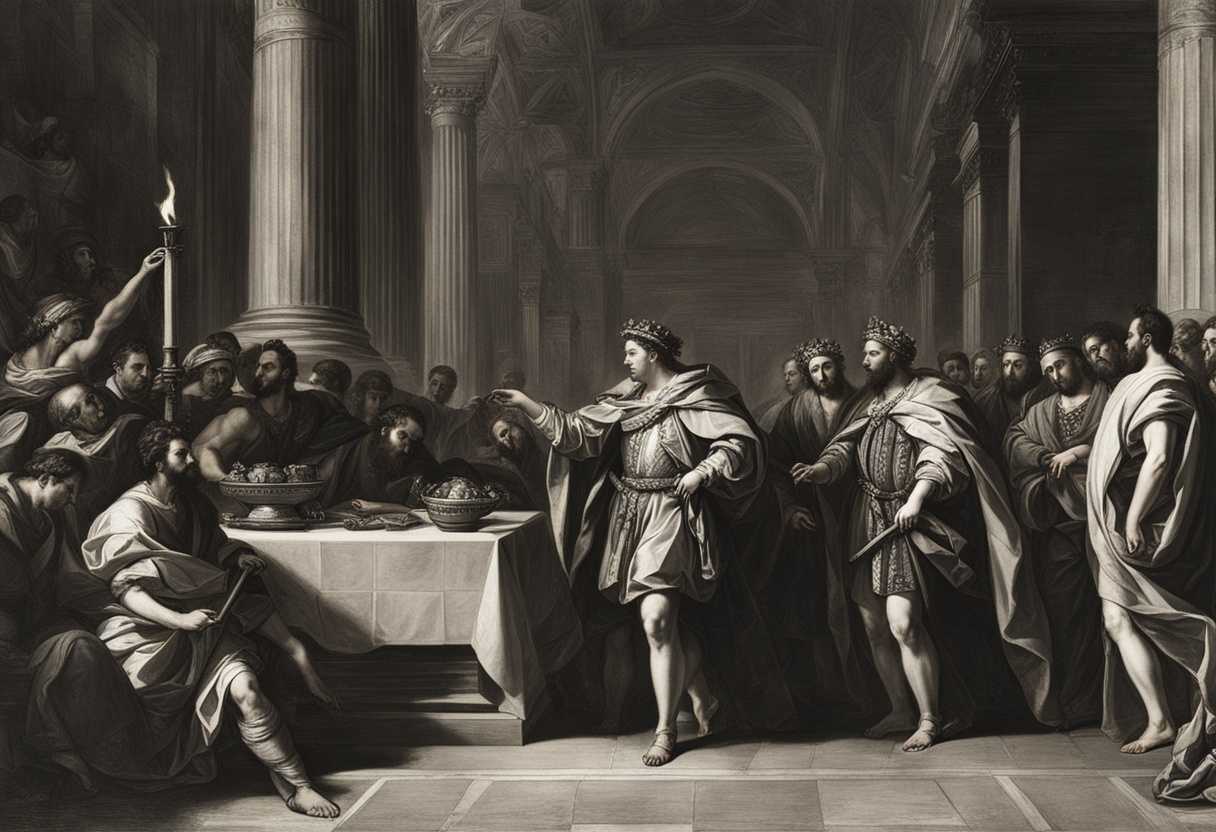
In 2 Kings chapter 20, we find King Hezekiah of Judah in the royal palace in Jerusalem. Hezekiah had fallen ill and was at the point of death. The prophet Isaiah, known for his close relationship with God, came to visit the king. As Isaiah entered the palace, the atmosphere was heavy with concern and fear as the news of Hezekiah’s illness had spread throughout the kingdom.
Inside the grand chambers of the palace, King Hezekiah lay on his bed, weak and in distress. The room was filled with advisors, court officials, and members of the royal family, all anxiously awaiting any news about the king’s condition. Isaiah, a figure of authority and wisdom, stood by the bedside, offering words of comfort and guidance to the troubled king. The flickering torches cast a warm glow on the scene, illuminating the worried faces of those gathered in the room.
As the conversation between Hezekiah and Isaiah unfolded, there was a sense of reverence and awe in the air, as the prophet delivered a message from God about the king’s fate. The tension in the room was palpable as Hezekiah listened intently to Isaiah’s words, knowing that his life hung in the balance. The scene in the royal palace captured a moment of profound significance, where faith, power, and mortality converged in a poignant display of human vulnerability and divine intervention.
What is 2 Kings 20:21 about?
King Hezekiah’s reign was marked by his unwavering dedication to serving and obeying God. He implemented religious reforms, restored the worship of Yahweh in the temple, and encouraged the people of Judah to return to their faith. He also showed great wisdom and leadership in military and political matters, successfully defending Judah against the Assyrian Empire.
The verse about the shadow moving backward on the sundial can be seen as a powerful symbol of God’s miraculous intervention in Hezekiah’s life. It serves as a reminder that no challenge is too great for God to overcome. Hezekiah’s legacy is a testament to the power of faith and obedience. His reign serves as a reminder for us to trust in God’s timing and to always remain steadfast in our beliefs, even in the face of adversity.
So, as we reflect on King Hezekiah’s accomplishments and legacy, let us be inspired by his faith and righteousness. Let us strive to emulate his dedication to following God’s will and trust in His divine intervention in our lives. Just like the shadow on the sundial moved backward at Hezekiah’s request, may we also witness God’s miraculous works in our own lives when we place our trust in Him.
Understanding what 2 Kings 20:21 really means
In 2 Kings 20:21, we witness the transition of power from the faithful King Hezekiah to his son Manasseh, marking the end of one era and the beginning of another in the kingdom of Judah. Hezekiah’s reign was characterized by his unwavering devotion to God, his righteous reforms, and the miraculous healing he received from God. On the other hand, Manasseh’s rule started with idolatry and wickedness, straying from the path set by his father. However, Manasseh later repented, showcasing the possibility of redemption even after a period of waywardness.
The contrast between Hezekiah and Manasseh serves as a poignant reminder of the impact of leadership transitions. Hezekiah’s faithfulness set a high standard, emphasizing the importance of integrity and trust in the Lord in leadership roles. In contrast, Manasseh’s initial choices highlight the consequences of turning away from God and the need for personal repentance and transformation.
The verse resonates with contemporary audiences by underscoring the themes of legacy, faithfulness, and parental influence. It prompts us to consider the influence we have on future generations, whether in familial, professional, or communal settings. Just as Hezekiah’s faithfulness did not guarantee the same path for Manasseh, our actions today shape the choices of those who come after us.
Consider a scenario where a family business founded on principles of integrity faces a leadership transition akin to Hezekiah passing the mantle to Manasseh. The new leader initially strays from the established values, causing turmoil. Yet, through guidance and introspection, they can realign with the foundational principles, restoring the business’s integrity and success. This narrative mirrors the potential for redemption and renewal depicted in the transition from Hezekiah to Manasseh.
Phrases like “Hezekiah rested with his ancestors” and “Manasseh his son succeeded him as king” carry profound meanings. The former signifies a peaceful end to a faithful life, while the latter denotes the transfer of authority and the weight of responsibility that accompanies leadership transitions. These phrases encapsulate the cyclical nature of succession, where each generation must navigate its own path while bearing the consequences of their choices.
In contemplating 2 Kings 20:21, we glean insights into the enduring themes of legacy, choice, and the possibility of redemption. It prompts us to reflect on our own influence on those who come after us, the importance of staying faithful to God’s principles, and the hope for renewal even after periods of waywardness. Just as Hezekiah’s legacy lived on through Manasseh, our actions today shape the narratives of tomorrow, emphasizing the timeless relevance of this biblical account.
What does it mean to live a righteous life?
Living a righteous life entails following the ways of the Lord, walking in obedience to His commands, and doing what is pleasing in His sight. It involves upholding honesty, integrity, and moral uprightness in all aspects of one’s conduct and interactions with others. Additionally, it includes striving to do what is right, just, and honorable, while showing kindness, compassion, and love to one’s neighbors.
A righteous life is characterized by a genuine desire to live in accordance with God’s will, seeking to bring glory to Him in all that is done. It entails actively pursuing righteousness and shunning wickedness, avoiding deceit, dishonesty, and immorality. It involves living with a pure heart, demonstrating faithfulness, humility, and a commitment to living a life that reflects God’s truth and light to the world.
Application
Reflect on your impact on those around you, just as King Hezekiah did in 2 Kings 20:21. Are you consciously crafting a positive legacy in your work, family, and beliefs? Your actions today shape the legacy you leave behind. Consider, what footprint are you leaving for those who will come after you?

Reverend Michael Johnson is an experienced Church Minister with a profound expertise in spirituality and guidance. With a serene presence and a compassionate heart, he has faithfully served his congregation for over 20 years, leading them on a spiritual journey towards inner peace and enlightenment. Reverend Johnson’s extensive knowledge of religious philosophies and profound understanding of human nature have made him a trusted confidant and mentor to many, as he seamlessly weaves his profound wisdom into life teachings. Reverend Johnson’s calming demeanor and empathetic nature continue to uplift and heal souls, nurturing a sense of unity and tranquility within his community.