
2 Kings 22:3 is about King Josiah rediscovering the lost Book of the Law and initiating a spiritual revival in Judah by obeying God’s commands and seeking reconciliation with Him.
3 And in the eighteenth year of King Josiah, the king sent Shaphan the son of Azaliah, son of Meshullam, the secretary, to the house of the Lord, saying,
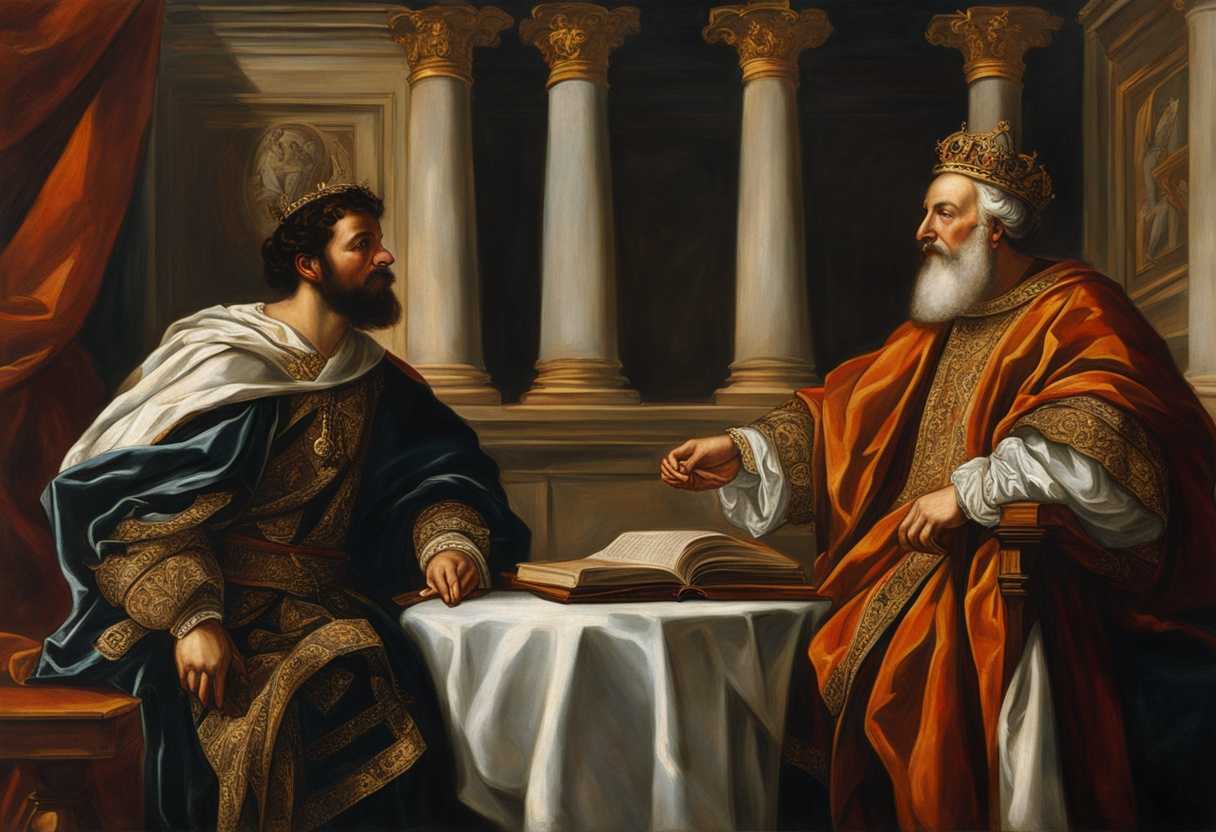
Setting the Scene for 2 Kings 22:3
In 2 Kings chapter 22, we find King Josiah, a young and righteous ruler of Judah, who ascended to the throne at the tender age of eight. The scene unfolds in the 18th year of his reign when Josiah instructs Shaphan the scribe to go up to the high priest, Hilkiah, and collect the money that had been brought into the house of the Lord. As Shaphan enters the temple to carry out the king’s orders, he is met by Hilkiah, who hands him a book that had been found in the temple.
The setting is the temple in Jerusalem, a place of worship and reverence for the people of Judah. The atmosphere is one of solemnity and devotion as Shaphan unrolls the book before King Josiah. As they read the words of the book, they realize it is the long-lost Book of the Law, the Torah, which had been neglected and forgotten for years. The discovery of this sacred text sets off a chain of events that leads to a great spiritual revival in the land of Judah, as Josiah takes it upon himself to restore the worship of the Lord and cleanse the land of idolatry.
What is 2 Kings 22:3 about?
King Josiah, a righteous king who sought after God and worked to restore the Temple in Jerusalem, is seen in this verse. Josiah’s actions are highlighted as commendable and praiseworthy because he followed the ways of David, who was known for his devotion to God and obedience to His commands. Josiah is making a deliberate effort to reestablish a connection with God and uphold the religious practices of his ancestors by seeking God and restoring the temple.
Think about the significance of Josiah’s actions. Why is it important for a leader to seek after God and lead his people in righteousness? How does Josiah’s commitment to restoring the temple reflect his dedication to his faith and his people? When leaders prioritize spiritual renewal and the restoration of sacred spaces, they are not only setting an example for their people but also fostering a sense of unity and reverence for God within their community. Just like Josiah, we too can seek after God and work towards restoring our faith and connection with Him in our own lives.
Understanding what 2 Kings 22:3 really means
During the reign of King Josiah of Judah, a pivotal moment unfolds as he takes action to restore the Temple, a place that had been neglected and tainted by idolatry. Josiah’s commitment to reviving the worship of Yahweh sets the stage for a profound transformation within the religious landscape of Judah. This narrative serves as a reminder of the power of restoration and renewal, urging individuals to reflect on the state of their own spiritual lives and communities. Just as Josiah embarked on the journey to repair the physical Temple, we are prompted to consider how we can embark on a similar path of revitalization in our spiritual endeavors.
Parallel passages such as 2 Chronicles 34:8-13 shed further light on the temple repairs and the remarkable discovery of the Book of the Law. The unearthing of this sacred text underscores the significance of reconnecting with foundational truths and scriptures during times of moral and spiritual decline. Similarly, Deuteronomy 31:24-26 emphasizes the importance of the Book of the Law, foreshadowing its eventual recovery during Josiah’s reign. These interconnected passages weave a narrative of rediscovery and revival, inviting readers to contemplate the enduring relevance of ancient texts in guiding contemporary faith journeys.
The presence of contemporary prophet Jeremiah during Josiah’s reign, as depicted in Jeremiah 1:1-3, offers a glimpse into the spiritual climate of the era. Jeremiah’s prophetic voice echoes through the annals of history, resonating with themes of repentance, renewal, and divine intervention. His writings serve as a poignant reminder of the role of prophets in challenging societal norms and calling people back to a deeper relationship with the divine. In a modern context, Jeremiah’s message prompts us to consider the prophetic voices in our midst and the urgent call to heed their wisdom in times of moral ambiguity.
The narrative of Josiah’s proactive leadership and initiative in restoring the Temple serves as a beacon of inspiration for contemporary leaders. By entrusting his secretary, Shaphan son of Azaliah, with the task of overseeing the temple repairs, Josiah exemplifies the importance of delegation and collaboration in effecting meaningful change. This collaborative spirit underscores the value of teamwork and trust in leadership, highlighting the transformative power of collective action in pursuing shared goals. Josiah’s decisive actions underscore the significance of taking proactive steps to address spiritual decay and uphold the values that define a community’s identity.
Imagine a neglected community center undergoing a transformation under new leadership, unearthing forgotten documents that illuminate the shared values and history of its inhabitants. This anecdote mirrors Josiah’s restoration efforts, illustrating how the rediscovery of foundational truths can breathe new life into a community, fostering unity and a renewed sense of purpose. The narrative of Josiah’s reign, encapsulated in the verse “In the eighteenth year of King Josiah,” serves as a poignant reminder that transformative change can occur at any juncture, urging individuals to remain vigilant in their pursuit of spiritual growth and renewal. As we contemplate the significance of Josiah’s actions, let us draw inspiration from his legacy of restoration, rediscovery, and proactive leadership, seeking to emulate his example in our personal and communal spiritual journeys.
How can we seek God’s will diligently?
We can seek God’s will diligently by studying His Word regularly and prayerfully. Through reading the Bible, we gain insight into God’s character, His desires for us, and the principles He wants us to follow. We can align our hearts and minds with God’s will and seek to live according to His ways by immersing ourselves in Scripture. We can seek God’s will diligently by spending time in prayer in addition to studying the Bible. Through prayer, we can communicate with God, share our concerns, and seek His guidance in decision-making. We invite God into every aspect of our lives and open ourselves up to receiving His direction and wisdom by developing a habit of regular prayer.
Seeking God’s will diligently also involves being attentive to the prompting of the Holy Spirit in our hearts. Maintaining a close relationship with God through Scripture, prayer, and fellowship with other believers helps us become more attuned to His voice and leading in our lives. We can walk in obedience to God’s will and experience His plans unfolding in our lives by being sensitive to the Holy Spirit’s guidance.
Application
Delve into the Word of God as King Josiah did, make it your cornerstone. Let the Scriptures not just be read but lived, guiding your beliefs and actions. Will you embrace this call to fully embody God’s teachings in your daily existence?

Reverend Michael Johnson is an experienced Church Minister with a profound expertise in spirituality and guidance. With a serene presence and a compassionate heart, he has faithfully served his congregation for over 20 years, leading them on a spiritual journey towards inner peace and enlightenment. Reverend Johnson’s extensive knowledge of religious philosophies and profound understanding of human nature have made him a trusted confidant and mentor to many, as he seamlessly weaves his profound wisdom into life teachings. Reverend Johnson’s calming demeanor and empathetic nature continue to uplift and heal souls, nurturing a sense of unity and tranquility within his community.