
2 Kings 23:21-30 is about King Josiah’s efforts to restore the worship of Yahweh, eradicate idolatry, and fulfill prophecies of impending judgment upon Judah for their disobedience.
21 And the king commanded all the people, “Keep the Passover to the Lord your God, as it is written in this Book of the Covenant.”
22 Neither in the days of the judges who judged Israel, nor in the days of the kings of Israel and the kings of Judah had any such Passover been kept.
23 But in the eighteenth year of King Josiah this Passover was kept to the Lord in Jerusalem.
24 Moreover, Josiah put away the mediums and the necromancers and the household gods and the idols and all the abominations that were seen in the land of Judah and in Jerusalem, that he might establish the words of the law that were written in the book that Hilkiah the priest found in the house of the Lord.
25 Before him there was no king like him, who turned to the Lord with all his heart and with all his soul and with all his might, according to all the Law of Moses, nor did any like him arise after him.
26 Still the Lord did not turn from the burning of his great wrath, by which his anger was kindled against Judah, because of all the provocations with which Manasseh had provoked him.
27 And the Lord said, “I will remove Judah also out of my sight, as I have removed Israel, and I will cast off this city that I have chosen, Jerusalem, and the house of which I said, My name shall be there.”
28 Now the rest of the acts of Josiah and all that he did, are they not written in the Book of the Chronicles of the Kings of Judah?
29 In his days Pharaoh Neco king of Egypt went up to the king of Assyria to the river Euphrates. King Josiah went to meet him, and Pharaoh Neco killed him at Megiddo as soon as he saw him.
30 And his servants carried him dead in a chariot from Megiddo and brought him to Jerusalem and buried him in his own tomb. And the people of the land took Jehoahaz the son of Josiah, and anointed him, and made him king in his father’s place.
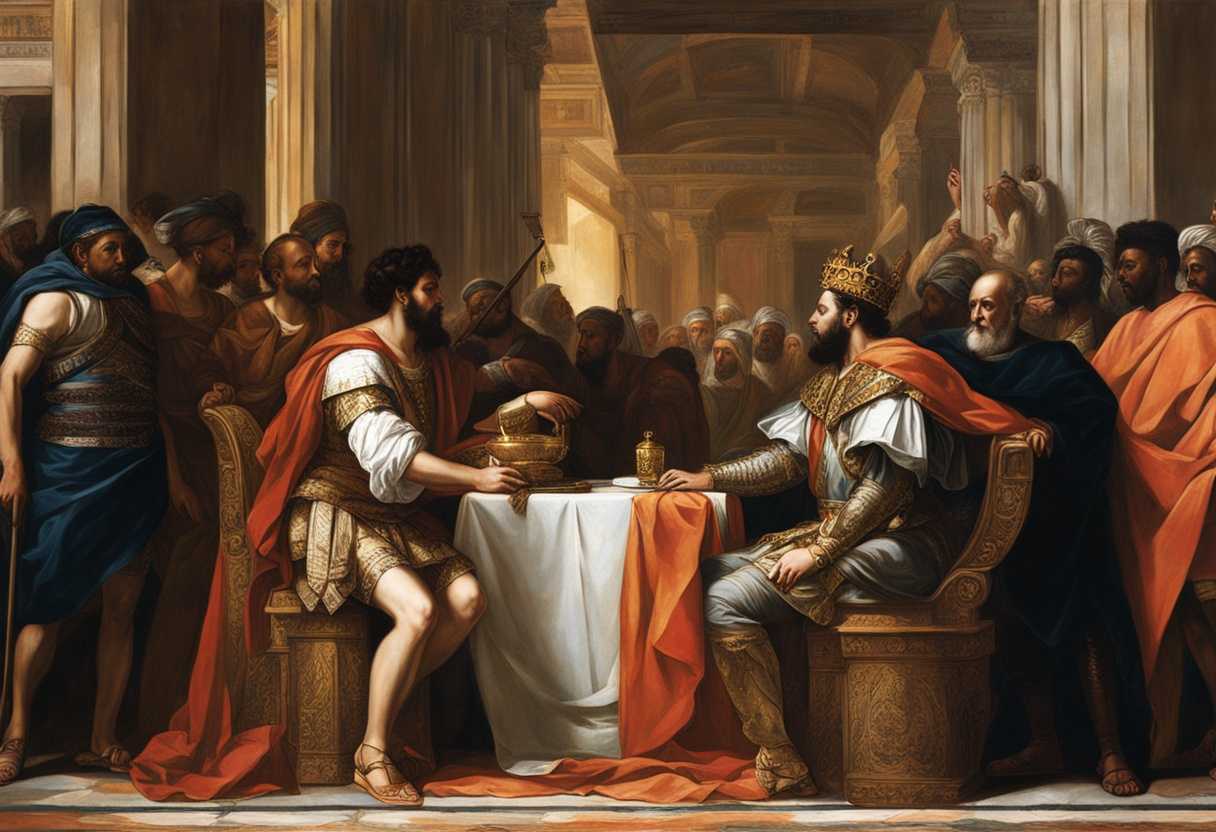
Setting the Scene for 2 Kings 23:21-30
In 2 Kings 23:21-30, we find King Josiah of Judah leading his people in a significant event. The scene is set in the temple in Jerusalem, where Josiah is overseeing the restoration of the Passover celebration. Josiah had recently discovered the Book of the Law during renovations of the temple, and upon reading it, he realized how far the people had strayed from God’s commandments. Filled with a desire to bring his people back to God, Josiah initiated a series of religious reforms, including the reinstitution of the Passover feast.
Surrounded by priests, Levites, and the people of Judah, King Josiah stands in the temple courtyard, dressed in his royal robes. The atmosphere is one of reverence and anticipation as the Passover celebration is about to begin. The temple is adorned with decorations, and the smell of incense fills the air. The people have gathered from all over Judah to participate in this sacred event, eager to reconnect with their faith and heritage.
As the Passover lamb is sacrificed and the people partake in the traditional meal, there is a sense of unity and renewal among the crowd. King Josiah’s leadership and devotion to God have inspired the people to turn away from idolatry and recommit themselves to following the commandments of the Lord. The scene is a powerful reminder of the importance of repentance, obedience, and the enduring faithfulness of God.
What is 2 Kings 23:21-30 about?
This verse illustrates the powerful impact of a righteous leader on a nation. King Josiah’s decision to restore the practice of Passover not only symbolizes a return to God and His commandments but also signifies a revival of faith and spiritual renewal among the people. Josiah demonstrates his commitment to purifying the nation and honoring God above all else by removing idolatry from the land. The fulfillment of the prophecy of judgment on Judah highlights the importance of heeding God’s warnings and the consequences of straying from His ways.
When we reflect on this verse, we can see the profound influence that leaders have on society. We are reminded of the responsibility and opportunity each of us has to lead others towards righteousness and faith, just as Josiah’s actions brought about positive change and spiritual revival. We can strive to restore what has been lost, remove any idols that have taken precedence in our lives, and fulfill the call to turn back to God by following the example of King Josiah. Courageous leaders who actively seek to bring about restoration, renewal, and fulfillment of God’s promises in our communities and beyond can take inspiration from this verse.
Understanding what 2 Kings 23:21-30 really means
During the reign of King Josiah of Judah, a period marked by religious reform and revival, the command to “keep the Passover” resonates deeply. This directive goes beyond a mere ritual; it symbolizes a return to foundational beliefs and practices. The Passover, rooted in the Israelites’ deliverance from Egypt, serves as a poignant reminder of God’s salvation and unwavering faithfulness throughout history. As Josiah sought to align Judah with the teachings of the “Book of the Covenant,” we are reminded of the enduring authority of Scripture and the importance of living in accordance with God’s revealed word.
The phrase “No such Passover had been kept” underscores the magnitude of neglect that had permeated Judah and the profound impact of Josiah’s reforms in restoring true worship. It serves as a stark reminder that even in times of spiritual decline, genuine revival is possible through wholehearted devotion to the Lord. Josiah’s unwavering commitment, described as turning to the Lord with all his heart, sets a powerful example of repentance and dedication for believers today.
Drawing parallels to biblical passages such as Exodus 12 and Deuteronomy 6:5, we see the foundational significance of the Passover and the call to love God wholeheartedly. In 2 Chronicles 34-35, a complementary account of Josiah’s reforms provides additional insights into his leadership and the impact of returning to God’s ways. These narratives offer timeless lessons on the importance of spiritual renewal, adherence to Scripture, and sincere devotion to God.
In contemporary contexts, Josiah’s story challenges individuals and communities to embark on a journey of renewal and reform. Just as Josiah led Judah in rediscovering their faith, modern readers are encouraged to prioritize scriptural authority in their lives and pursue a deep, authentic relationship with God. By reflecting on Josiah’s example and the themes encapsulated in this passage, we are prompted to examine our own spiritual practices and commit to wholehearted devotion to the Lord.
Consider the relevance of these themes in personal and communal settings. Picture individuals who, like Josiah, rediscover their faith after a period of spiritual drift, or envision congregations revitalized by a renewed focus on Scripture. These anecdotes illustrate the transformative power of returning to God with all our hearts, aligning our lives with His word, and experiencing the profound renewal that comes from genuine devotion and obedience. As we contemplate these truths, may we be inspired to emulate Josiah’s unwavering commitment and strive for a renewed, wholehearted relationship with God in our own lives.
How can individuals fully commit their hearts to God?
Individuals can fully commit their hearts to God by following the example of King Josiah in 2 Kings 23:21-30. Josiah showed his wholehearted commitment to God by purging the land of all forms of idolatry and wickedness, and by reinstating the Passover celebration according to God’s commandments. Just like Josiah, individuals can fully commit their hearts to God by actively seeking to remove anything that hinders their relationship with Him and by faithfully obeying His Word.
Another way to fully commit one’s heart to God is to cultivate a lifestyle of prayer and seeking His presence. Individuals can deepen their relationship with God and align their hearts with His will by maintaining a consistent prayer life and spending time in His presence. This allows them to surrender their desires and ambitions to God and fully entrust their lives to His care and guidance.
Lastly, individuals can fully commit their hearts to God by serving others and living a life of compassion and love. Individuals can demonstrate their commitment to God by showing kindness, mercy, and generosity to those around them, just as King Josiah took care of the needs of the poor and oppressed in his kingdom. Individuals can fully commit their hearts to God and live out His purposes in their lives by imitating His love and compassion.
Application
Take a moment to look within – are there idols holding you back from fully connecting with God? Just as King Josiah cleansed the temple of idols, let’s clear our hearts of anything that obstructs our spiritual journey. Can we too strive to eliminate distractions that hinder our devotion to God?

Reverend Michael Johnson is an experienced Church Minister with a profound expertise in spirituality and guidance. With a serene presence and a compassionate heart, he has faithfully served his congregation for over 20 years, leading them on a spiritual journey towards inner peace and enlightenment. Reverend Johnson’s extensive knowledge of religious philosophies and profound understanding of human nature have made him a trusted confidant and mentor to many, as he seamlessly weaves his profound wisdom into life teachings. Reverend Johnson’s calming demeanor and empathetic nature continue to uplift and heal souls, nurturing a sense of unity and tranquility within his community.