
2 Kings 24:1-17 is about the siege of Jerusalem by King Nebuchadnezzar of Babylon and the subsequent exile of the Jewish people, illustrating the consequences of disobedience to God and the fulfillment of divine prophecy regarding Israel’s judgment and the eventual loss of sovereignty.
2 And the Lord sent against him bands of the Chaldeans and bands of the Syrians and bands of the Moabites and bands of the Ammonites, and sent them against Judah to destroy it, according to the word of the Lord that he spoke by his servants the prophets.
2 And the Lord sent against him bands of the Chaldeans and bands of the Syrians and bands of the Moabites and bands of the Ammonites, and sent them against Judah to destroy it, according to the word of the Lord that he spoke by his servants the prophets.
3 Surely this came upon Judah at the command of the Lord, to remove them out of his sight, for the sins of Manasseh, according to all that he had done,
4 And also for the innocent blood that he had shed. For he filled Jerusalem with innocent blood, and the Lord would not pardon.
5 Now the rest of the deeds of Jehoiakim and all that he did, are they not written in the Book of the Chronicles of the Kings of Judah?
6 So Jehoiakim slept with his fathers, and Jehoiachin his son reigned in his place.
7 And the king of Egypt did not come again out of his land, for the king of Babylon had taken all that belonged to the king of Egypt from the Brook of Egypt to the river Euphrates.
8 Jehoiachin was eighteen years old when he became king, and he reigned three months in Jerusalem. His mother’s name was Nehushta the daughter of Elnathan of Jerusalem.
9 And he did what was evil in the sight of the Lord, according to all that his father had done.
10 At that time the servants of Nebuchadnezzar king of Babylon came up to Jerusalem, and the city was besieged.
11 And Nebuchadnezzar king of Babylon came to the city while his servants were besieging it.
12 and Jehoiachin the king of Judah gave himself up to the king of Babylon, himself and his mother and his servants and his officials and his palace officials. The king of Babylon took him prisoner in the eighth year of his reign,
13 And he carried off all the treasures of the house of the Lord and the treasures of the king’s house, and cut in pieces all the vessels of gold in the temple of the Lord, which Solomon king of Israel had made, as the Lord had foretold.
14 He carried away all Jerusalem and all the officials and all the mighty men of valor, 10,000 captives, and all the craftsmen and the smiths. None remained, except the poorest people of the land.
15 And he carried away Jehoiachin to Babylon. The king’s mother, the king’s wives, his officials, and the chief men of the land he took into captivity from Jerusalem to Babylon.
16 All the men of valor, seven thousand, and the craftsmen and the smiths, one thousand, all of them strong and fit for war, the king of Babylon brought captive to Babylon.
17 And the king of Babylon made Mattaniah, Jehoiachin’s uncle, king in his place, and changed his name to Zedekiah.
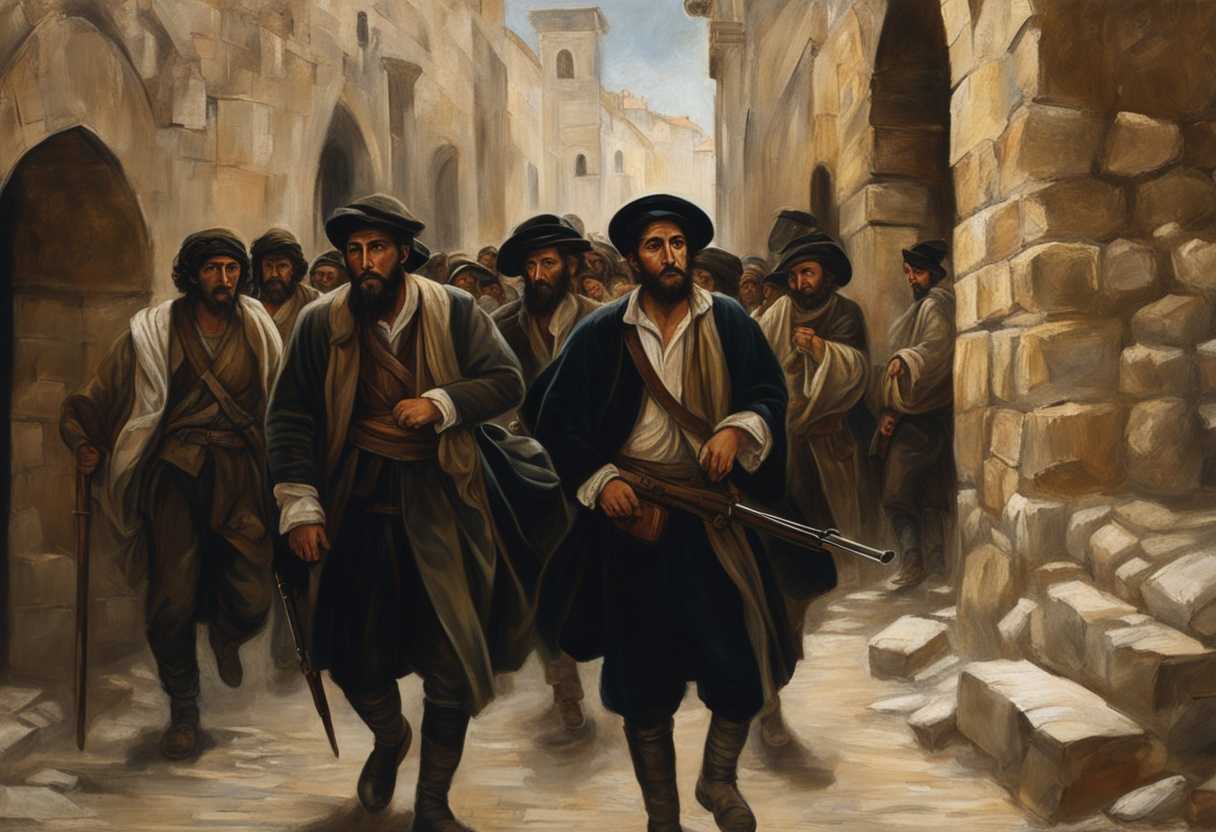
Setting the Scene for 2 Kings 24:1-17
In the waning days of the kingdom of Judah, the air was thick with tension and uncertainty. The once-mighty city of Jerusalem stood as a shadow of its former glory, its walls bearing the scars of conflict and its people weary from the weight of oppression. King Jehoiakim, a ruler caught between the ambitions of powerful empires, had recently submitted to the authority of Nebuchadnezzar, the king of Babylon. This allegiance was not born of loyalty but rather a desperate attempt to stave off destruction. The streets of Jerusalem were filled with whispers of impending doom, as the populace grappled with the reality of their subjugation and the looming threat of exile.
In the royal palace, Jehoiakim sat uneasily on his throne, flanked by his advisors and military leaders. The atmosphere was charged with anxiety as they discussed the implications of Babylon’s dominance. Among them was the prophet Jeremiah, a voice of warning and lamentation, who had long been urging the people to turn back to God and repent. His presence was both a comfort and a source of discomfort, as his prophecies foretold the dire consequences of their actions. The tension in the room was palpable, with Jehoiakim torn between his desire to maintain power and the prophetic words that echoed in his ears, urging him to heed the warnings of the Lord.
Outside the palace, the city was alive with the sounds of daily life, yet an undercurrent of fear ran through the streets. Merchants hurried to close their stalls, and families gathered in hushed conversations, casting wary glances toward the horizon where Babylonian forces were rumored to be gathering. The Temple, once a symbol of hope and divine presence, now stood as a stark reminder of the people’s disobedience. As the sun dipped below the horizon, casting long shadows over the city, the reality of their situation settled heavily upon the hearts of the people. They were on the brink of a new chapter, one that would lead them into exile and challenge their very identity as the chosen people of God.
What is 2 Kings 24:1-17 about?
We step into a pivotal moment in biblical history as we delve into this historical passage—the reign of King Jehoiakim, the siege of Jerusalem by Babylon, and the consequential exile of notable Israelites. This period serves as a vivid backdrop to explore themes of power, faith, and the struggles of identity amidst turmoil. Have you ever considered how the actions of rulers can dramatically affect entire nations? Jehoiakim’s rule was marked not only by political maneuvering but also by moral decline, leading his people into a challenging situation that would forever shape their future.
Now, consider the profound sense of loss among the Israelites who were exiled. Being uprooted from their homeland must have felt like a deep wound, severing not just their physical ties to Jerusalem but also their spiritual and cultural essence. Do you feel their anguish as they were taken away from the land that held their collective memories, traditions, and connection to God? The Babylonians’ siege was not merely a military action; it represented a clash of civilizations and ideologies, where the Israelites’ faith was put to the test. These exiled individuals grappled with their identity and faith in the midst of such adversity. This poignant moment invites us to reflect on our own experiences of loss and displacement. What does it mean for us to maintain hope and faith in the face of overwhelming challenges? This passage is not just about historical events; it is a compelling narrative that echoes throughout the ages, reminding us of the resilience of the human spirit amidst crises.
Understanding what 2 Kings 24:1-17 really means
In 2 Kings 24:1-17, we encounter a pivotal moment in the history of Judah, marked by the reign of King Jehoiakim and the impending Babylonian exile. This passage is not merely a historical account; it serves as a profound reflection on the consequences of disobedience to God. Understanding the context of this narrative is crucial. Judah’s unfaithfulness had reached a tipping point, and divine judgment was imminent. How often do we overlook the signs of our own unfaithfulness in our lives and communities?
One of the key themes in this passage is divine sovereignty. Despite the overwhelming power of Babylon, it is God who orchestrates these events as a response to Judah’s rebellion. This raises an important question: Do we recognize God’s hand in the circumstances of our lives? The narrative illustrates that God is not distant; He is actively involved in the affairs of nations and individuals. The exile of Judah serves as a stark reminder that our actions have consequences, particularly when we turn away from God.
Related biblical passages, such as Jeremiah 25:8-11, reinforce this theme of judgment. Jeremiah’s warnings went unheeded, highlighting the tragic reality that Judah ignored God’s call to repentance. Lamentations 3:39-40 further emphasizes the need for self-examination in the face of suffering. Are we, too, guilty of ignoring the warnings in our lives? The connection between these texts invites us to reflect on our own spiritual state and the collective health of our communities.
The relevance of this passage extends into our contemporary society. Many individuals and communities grapple with the fallout of choices that stray from moral and spiritual foundations. Consider a community that neglects its ethical responsibilities; the resulting social decay mirrors the fate of Judah. Just as they faced exile, we too can experience breakdowns in relationships and trust when we abandon our core values. How can we ensure that we are building a foundation that honors God?
Several phrases in this passage carry significant weight. The declaration that Jehoiakim “did evil in the sight of the Lord” serves as a powerful reminder of the importance of living a life that pleases God. Our actions are not isolated; they have spiritual implications that extend beyond ourselves. Additionally, the phrase “The Lord sent against him bands of the Chaldeans” underscores God’s active role in fulfilling His purposes, even through seemingly chaotic circumstances. Are we aware of how our choices align with God’s will?
In conclusion, the narrative in 2 Kings 24 challenges us to examine our faithfulness to God. It prompts us to consider whether we are living in a manner that honors Him or if we are, like Judah, on a path leading to dire consequences. The call is clear: we must return to God, seek His guidance, and align our lives with His will. By doing so, we can avoid repeating the mistakes of the past and foster a community that reflects God’s love and righteousness. What steps can we take today to ensure we are on the right path?
How do we respond to circumstances beyond our control?
Maintaining hope, trust, and resilience is essential in circumstances beyond our control. This reflects the understanding that while external events may shape our situation, our reactions and choices remain within our power. Such a mindset encourages us to seek guidance and clarity, allowing us to navigate challenges with a sense of purpose and faith in the future. Recognizing the role of leadership and authority during difficult times is important. Leaders must act with wisdom, often making painful decisions for the greater good to ensure stability and survival. This underscores the necessity of having strong, principled leaders who can guide their people through adversity, ensuring they remain focused on collective goals despite the surrounding chaos.
Finally, in facing uncontrollable circumstances, community and cooperation become crucial. The strength of collective resilience can often mitigate the impact of external challenges. When individuals come together, sharing resources and support, they build a foundation to withstand adversity, demonstrating that even in times of trial, unity can offer solace and hope for a better tomorrow.
Application
Life’s like a tightrope walk between work and family, and sometimes we lose our balance. Just as skipping a step at work can lead to chaos, drifting from your commitments with God can bring turmoil into your life. Take a moment to reflect: are there promises you’ve let slip? How can you get back on track and strengthen that connection today? Don’t wait for the storm to brew—realign your heart and actions with His purpose now. What’s stopping you from making that change?

Reverend Michael Johnson is an experienced Church Minister with a profound expertise in spirituality and guidance. With a serene presence and a compassionate heart, he has faithfully served his congregation for over 20 years, leading them on a spiritual journey towards inner peace and enlightenment. Reverend Johnson’s extensive knowledge of religious philosophies and profound understanding of human nature have made him a trusted confidant and mentor to many, as he seamlessly weaves his profound wisdom into life teachings. Reverend Johnson’s calming demeanor and empathetic nature continue to uplift and heal souls, nurturing a sense of unity and tranquility within his community.