
2 Kings 25:1-7 is about the fall of Jerusalem at the hands of the Babylonians, showcasing the consequences of disobedience to God and the fulfillment of prophecy regarding the judgment of Judah.
1 And in the ninth year of his reign, in the tenth month, on the tenth day of the month, Nebuchadnezzar king of Babylon came with all his army against Jerusalem and laid siege to it. And they built siegeworks all around it.
2 And the city was besieged till the eleventh year of King Zedekiah.
3 On the ninth day of the fourth month the famine was so severe in the city that there was no food for the people of the land.
4 Then the city was breached, and all the men of war fled by night by the way of the gate between the two walls, by the king’s garden, and the Chaldeans were around the city. And they went in the direction of the Arabah.
5 But the army of the Chaldeans pursued the king and overtook him in the plains of Jericho, and all his army was scattered from him.
6 Then they captured the king and brought him up to the king of Babylon at Riblah, and they passed sentence on him.
7 And they slaughtered the sons of Zedekiah before his eyes, and put out the eyes of Zedekiah and bound him in chains and took him to Babylon.
Setting the Scene for 2 Kings 25:1-7
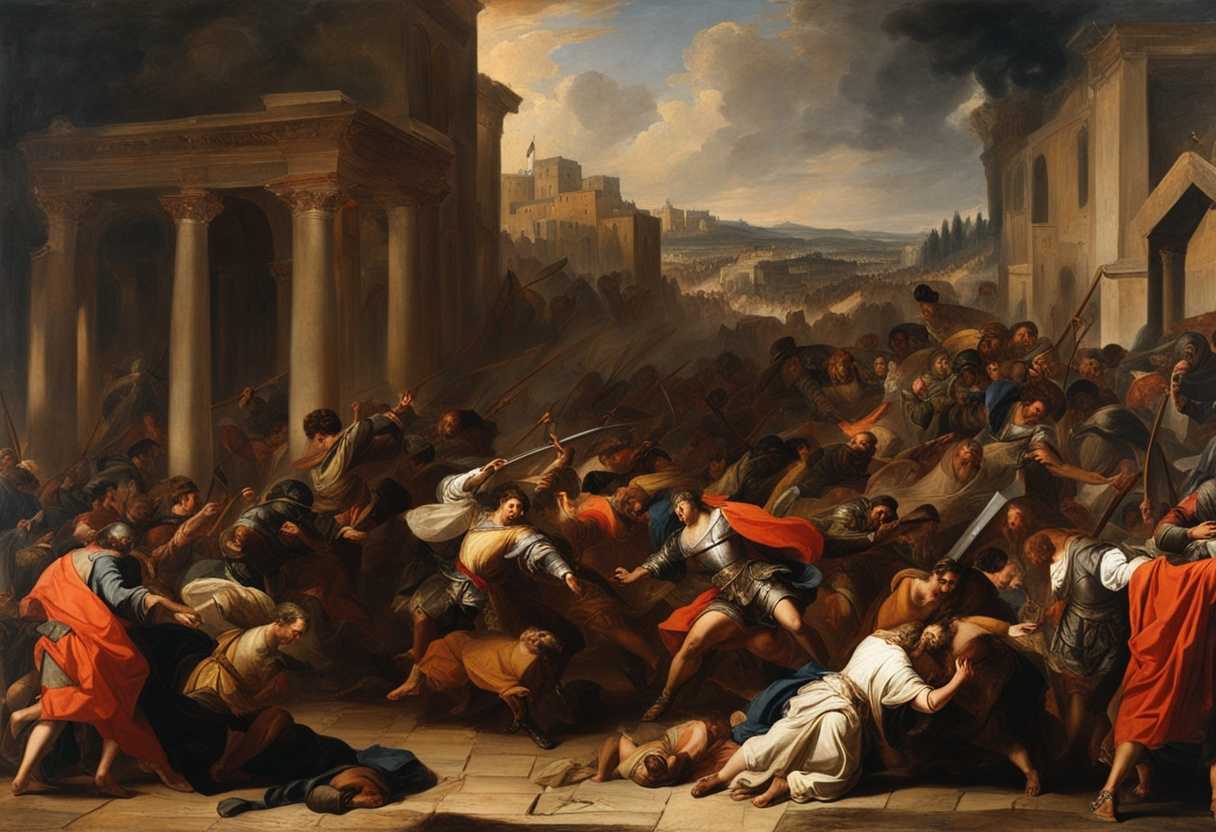
The scene described in 2 Kings 25:1-7 takes place in Jerusalem during the final days of the kingdom of Judah. The main characters in this scene are King Zedekiah of Judah, his army, and the Babylonian forces led by King Nebuchadnezzar.
The surroundings are tense and filled with the sounds of war as the Babylonian army has laid siege to Jerusalem due to Zedekiah’s rebellion against Nebuchadnezzar. The once glorious city of Jerusalem is now under attack, with the walls breached and the people suffering from famine and distress.
Zedekiah and his army attempt to escape the city under the cover of darkness, but they are pursued and captured by the Babylonians. The scene is one of defeat and destruction as Zedekiah is brought before Nebuchadnezzar, witnessing the execution of his sons before his eyes, and then being blinded and taken captive to Babylon. The fall of Jerusalem and the exile of its people mark the tragic end of the kingdom of Judah.
What is 2 Kings 25:1-7 about?
This verse symbolizes a significant event in ancient history where the city of Jerusalem fell to the Babylonian forces. The destruction of the temple in Jerusalem was a devastating blow to the Jewish people, as it held great religious and cultural significance. The exile of the people refers to the forced removal of many Jews from their homeland to Babylon, where they faced years of hardship and captivity. This event marked a dark period in Jewish history and served as a turning point in shaping their identity and faith.
Imagine the despair and anguish felt by the people as they witnessed the fall of their city and the destruction of their most sacred place of worship. Consider the psychological and emotional toll of uprooting individuals from their homes and taking them to a foreign land. Reflect on the resilience and faith required to endure such trials and tribulations while holding onto hope for a better future. This verse serves as a reminder of the fragility of human existence and the strength of the human spirit in overcoming adversity.
Understanding what 2 Kings 25:1-7 really means
The passage in 2 Kings 25:1-7 recounts the tragic events surrounding the siege of Jerusalem by the Babylonian king Nebuchadnezzar. This historical account holds significant weight in Israel’s history as it culminated in the Babylonian exile, a period of immense suffering and displacement for the Israelites. The precision of the timing, with the siege beginning in the ninth year of Zedekiah’s reign on the tenth day of the tenth month, serves to emphasize the inevitability of God’s judgment. It is a stark reminder that God’s decrees are exact and will come to pass without fail.
Nebuchadnezzar’s overwhelming force and determination are vividly portrayed as he marches against Jerusalem with his entire army. The image of the Babylonian army setting up camp outside the city and constructing siege works all around it symbolizes the inescapable judgment that loomed over Jerusalem. The prolonged siege, lasting until the eleventh year of King Zedekiah, speaks to the severity of the situation and the immense suffering endured by the besieged inhabitants. The breach of the city wall signifies the collapse of Jerusalem’s defenses and security, leading to a sense of desperation and hopelessness as Zedekiah and his soldiers flee.
The capture of King Zedekiah by the Babylonians marks the end of his reign and the fulfillment of prophetic warnings. The brutal killing of his sons before his eyes and the subsequent blinding and binding of Zedekiah with bronze shackles serve as poignant symbols of the total judgment and humiliation he faced. These actions underscore the consequences of disobedience and the severity of God’s justice when His warnings are disregarded.
This passage resonates with contemporary audiences by serving as a cautionary tale about the dangers of pride, stubbornness, and the repercussions of ignoring divine guidance. It prompts reflection on the themes of judgment, repentance, and the hope for restoration, which remain relevant to individuals and communities facing their own challenges and crises. Just as Jerusalem faced the consequences of its disobedience, individuals today are urged to heed God’s warnings, seek wisdom, and embrace humility in their walk of faith.
In considering the narrative of Jerusalem’s downfall, readers are encouraged to contemplate the broader implications of obedience and faithfulness in their own lives. The lessons drawn from this historical event emphasize the importance of aligning one’s actions with God’s will, acknowledging the consequences of straying from His path, and embracing the hope for redemption through repentance and restoration. The story of Zedekiah and the fall of Jerusalem stand as enduring reminders of the timeless truths found in God’s word and the call to heed His guidance with reverence and obedience.
How does God’s judgment affect nations today?
God’s judgment on nations today can manifest in various ways, just as it did in the passage you referred to. When a nation strays from God’s ways and continuously disobeys His commands, they may eventually face consequences for their actions. This can come in the form of natural disasters, economic downfall, political unrest, or other forms of societal collapse. Just like in the verses you mentioned, where Jerusalem faced destruction and exile due to their disobedience, nations today can also face similar outcomes when they turn away from God.
It serves as a reminder that God’s judgment is not limited to individuals but can extend to entire nations. God continues to hold nations accountable for their collective moral and ethical decisions, just as He held the nation of Judah accountable for their actions in the passage you referenced. This underscores the importance of seeking righteousness and obedience on a national level, as the consequences of turning away from God can have far-reaching and devastating effects on a country and its people. God is sovereign over all nations and will judge them according to His righteousness, as highlighted in the passage. It serves as a cautionary tale for nations today, reminding them of the importance of honoring God and following His ways to avoid the potential consequences of His judgment. Nations today must also consider the impact of their actions on their relationship with God and the potential consequences of straying from His path, just as Judah faced the repercussions of their disobedience.
Application
Reflect on Jerusalem’s fall and see its relevance to your life. It’s a stark lesson on the cost of straying from what you know is true. Use this as a wake-up call to stay committed to what’s right, both at work and with your family. How will you choose to walk the path of faithfulness and obedience today?

Reverend Michael Johnson is an experienced Church Minister with a profound expertise in spirituality and guidance. With a serene presence and a compassionate heart, he has faithfully served his congregation for over 20 years, leading them on a spiritual journey towards inner peace and enlightenment. Reverend Johnson’s extensive knowledge of religious philosophies and profound understanding of human nature have made him a trusted confidant and mentor to many, as he seamlessly weaves his profound wisdom into life teachings. Reverend Johnson’s calming demeanor and empathetic nature continue to uplift and heal souls, nurturing a sense of unity and tranquility within his community.