
2 Kings 3:4-8 is about the kings of Israel, Judah, and Edom coming together to seek the prophet Elisha’s help in finding water during a time of drought, symbolizing the nations’ need for guidance and provision from God in times of desperation.
4 Now Mesha king of Moab was a sheep breeder, and he had to deliver to the king of Israel 100,000 lambs and the wool of 100,000 rams.
5 But when Ahab died, the king of Moab rebelled against the king of Israel.
6 And King Jehoram marched out of Samaria at that time and mustered all Israel.
7 And he went and sent word to Jehoshaphat king of Judah: “The king of Moab has rebelled against me. Will you go with me to battle against Moab?” And he said, “I will go. I am as you are, my people as your people, my horses as your horses.”
8 And he said, “By which way shall we march?” Jesus answered, “By the way of the wilderness of Edom.”
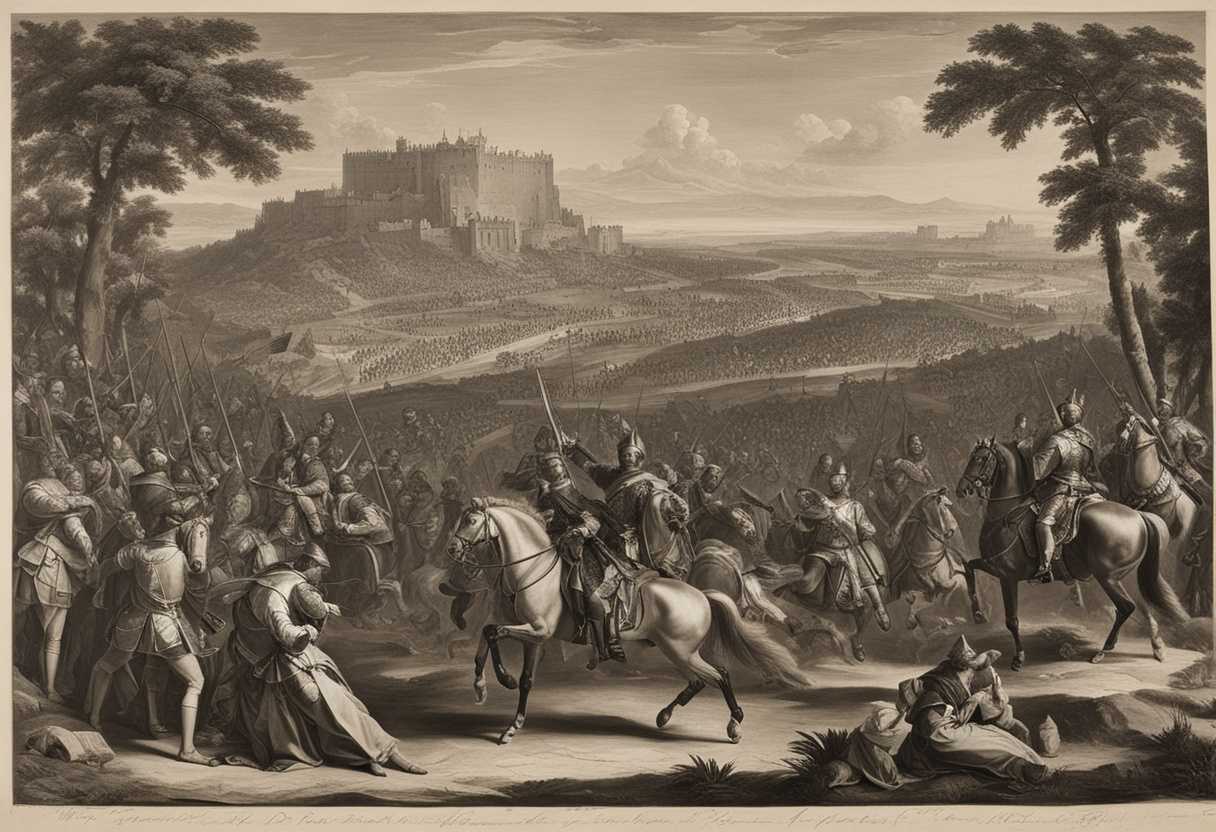
Setting the Scene for 2 Kings 3:4-8
In 2 Kings chapter 3, we find King Mesha of Moab rebelling against the king of Israel, Jehoram. To quell the rebellion, King Jehoram seeks the help of King Jehoshaphat of Judah. The two kings, along with the king of Edom, decide to march their armies through the wilderness of Edom to attack Moab.
The scene is set in the royal tent where King Jehoram of Israel, King Jehoshaphat of Judah, and the king of Edom are gathered with their advisors and military commanders. The tension in the tent is palpable as they strategize their next move against the rebellious King Mesha. The desert sun beats down on the tent, casting a warm glow over the sand outside, while inside, the air is thick with the scent of incense burning in a corner.
The kings are deep in discussion, maps spread out before them, as they plan their military campaign. King Jehoshaphat, known for his faith in the Lord, suggests seeking the counsel of a prophet before going into battle. The advisors nod in agreement, recognizing the importance of seeking divine guidance in such a critical moment. The atmosphere in the tent is a mix of anticipation, apprehension, and determination as they prepare to face the challenges ahead.
What is 2 Kings 3:4-8 about?
The kings sought the help of the prophet Elisha in their battle against the Moabites in this verse. This event signifies the spiritual guidance and divine intervention that the kings were seeking to ensure victory in their battle. It highlights the belief in the power of prophecy and the importance of seeking advice from religious figures in times of conflict and struggle.
It makes us ponder on the significance of faith and trust in higher powers when faced with challenges. The actions of the kings in seeking Elisha’s help also depict the idea of humility and the understanding that sometimes, human efforts alone may not be enough to overcome adversities. It prompts us to reflect on our own reliance on faith and spiritual guidance in times of need, and to consider the role of religion and spirituality in providing strength and direction in our lives. This verse serves as a powerful reminder of the importance of seeking divine assistance and wisdom when facing battles or difficulties, highlighting the belief that faith can be a guiding force in overcoming obstacles.
Understanding what 2 Kings 3:4-8 really means
In 2 Kings 3:4-8, we are transported to a time of political intrigue and shifting alliances during the reign of King Joram of Israel. Seeking to quell the rebellion of Mesha, the king of Moab, Joram forms an alliance with Jehoshaphat, the king of Judah, and the king of Edom. This strategic move sets the stage for a complex web of power dynamics and economic pressures that resonate with themes still relevant today.
Mesha, the king of Moab, is described as a sheep breeder, emphasizing his economic strength and the significance of livestock in the ancient Near Eastern economy. The tribute of 100,000 lambs and the wool of 100,000 rams demanded by Israel showcases the subjugation of Moab and the economic strain imposed on the region. However, when Ahab, Joram’s father, dies, Mesha seizes the opportunity to rebel against Israel, highlighting the fragility of political alliances and the impact of leadership changes on power dynamics.
This passage prompts us to reflect on the importance of seeking divine guidance in our decisions, much like Jehoshaphat’s reliance on God’s will in times of conflict. It also draws parallels to modern economic and political pressures, urging us to consider fair and just practices in our dealings with others. Mesha’s rebellion serves as a poignant reminder of the potential for change and upheaval when faced with oppressive systems, emphasizing the need for stability and justice in governance.
Consider a scenario where a small business owner, burdened by high taxes imposed by a larger corporation, seizes an opportunity to renegotiate terms or break free from the oppressive agreement when leadership changes. This anecdote mirrors Mesha’s rebellion, illustrating the courage required to challenge unjust systems and seek change for the betterment of all involved.
In conclusion, 2 Kings 3:4-8 offers valuable insights into the complexities of political alliances, the significance of seeking divine wisdom, and the courage to stand against oppression. It underscores the importance of placing our ultimate trust in God, who provides guidance, wisdom, and justice in navigating the intricate webs of power and influence that shape our world.
How do we seek God’s guidance in times of crisis?
We can seek God’s guidance in times of crisis by looking to Him with humility, faith, and perseverance. We can also turn to God in prayer and seek His wisdom through His word and through seeking counsel from those who are knowledgeable in matters of faith, just as the kings in 2 Kings 3 sought the counsel of the prophet Elisha when faced with a daunting challenge.
Additionally, we can seek guidance from God by surrendering our own plans and desires to His will. The kings in the passage approached Elisha with a willingness to listen and follow his advice, demonstrating a readiness to submit their own strategies to the wisdom of God. We can approach God with open hearts, ready to receive His direction and guidance, even if it means letting go of our own preconceived notions of how the situation should be resolved. Seeking God’s guidance in times of crisis ultimately requires trust and patience. Elisha instructed the kings to trust in the Lord’s provision and promise of victory. We can find peace and confidence in His perfect guidance by leaning on His understanding rather than our own.
Application
Let’s pause, like King Joram, and seek guidance before our battles— be they at work or home. Let’s embrace seeking wisdom in our decisions, big and small, for a brighter path forward. Are we rushing in blindly or seeking the light in the midst of our challenges?

Reverend Michael Johnson is an experienced Church Minister with a profound expertise in spirituality and guidance. With a serene presence and a compassionate heart, he has faithfully served his congregation for over 20 years, leading them on a spiritual journey towards inner peace and enlightenment. Reverend Johnson’s extensive knowledge of religious philosophies and profound understanding of human nature have made him a trusted confidant and mentor to many, as he seamlessly weaves his profound wisdom into life teachings. Reverend Johnson’s calming demeanor and empathetic nature continue to uplift and heal souls, nurturing a sense of unity and tranquility within his community.