
2 Maccabees 10:14-23 is about the dedication of the temple and the celebration of the cleansing and restoration of the sanctuary after the Maccabean revolt against the oppressive rule of King Antiochus IV Epiphanes.
14 Then, after the celebration of the purification, they sought to find a way to celebrate the feast of booths during the month of Chislev, as it was fitting to do after the harvest,
15 And when they had cleansed the entire temple, they made a new altar of sacrifice.
16 And while they were giving thanks, he armed his men, and without notice, attacked the city day and night, putting the enemy to flight, and burned down the most important buildings.
17 For in the days of the ancestors the Hebrews had been saved by God from their enemies, and so they had been saved from the barbarians.
18 For through the excellence of the Almighty, it was evident how much they were loved.
19 And they kept the eight days with gladness, as in the feast of the booths, remembering how not long before, during the feast of the booths, they had been wandering in the mountains and caves like wild animals.
20 For Judas and his brothers have been glorified among the Gentiles, and have been exalted with great honor.
21 They decreed by public edict, ratified by vote, that the whole nation of the Jews should observe these days every year.
22 When they had done this, they offered sacrifice according to the law on the new altar of burnt offering that they had built.
23 For when they had committed their sin, this fire fell upon them and consumed them.
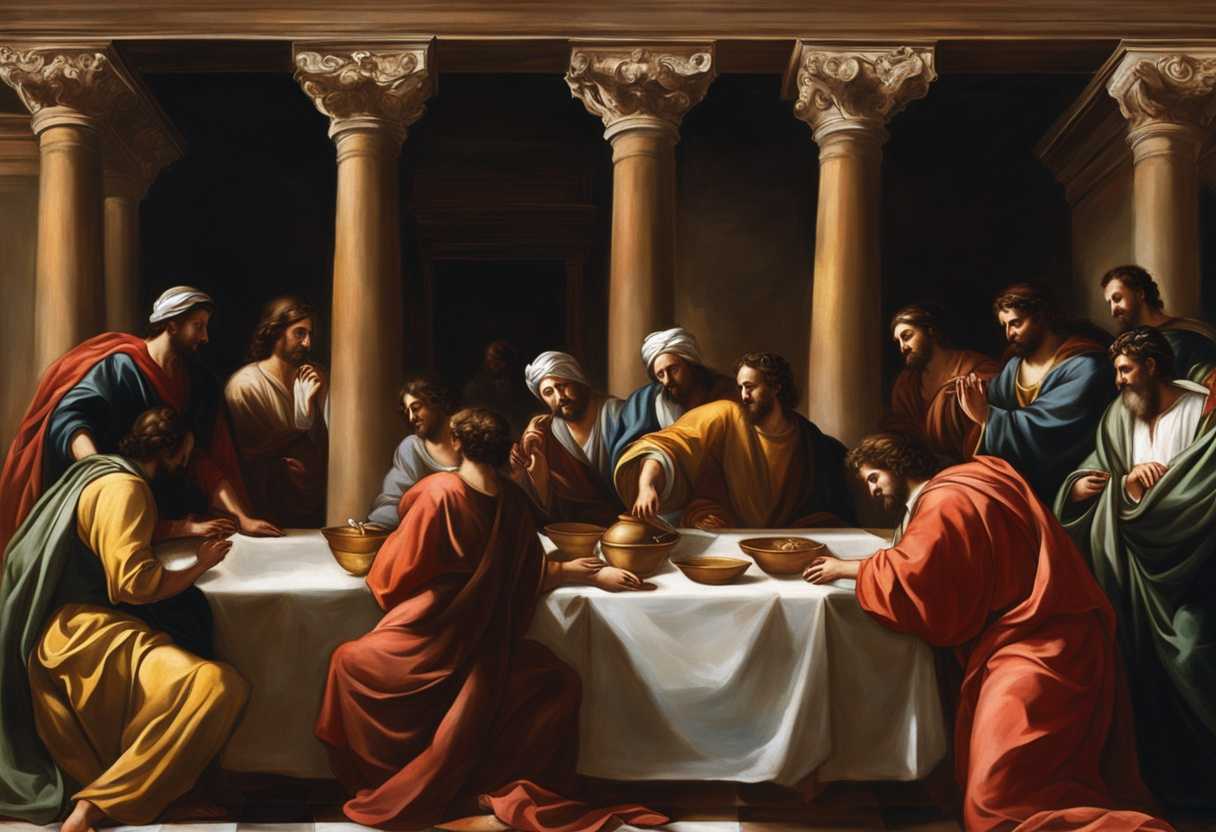
Setting the Scene for 2 Maccabees 10:14-23
The scene in 2 Maccabees chapter 10 is set in Jerusalem during the time of the Maccabean Revolt. Judas Maccabeus and his brothers have successfully defeated the Seleucid forces and reclaimed the city. The temple, which had been desecrated by the Greeks, is now being purified and rededicated.
In this particular passage, Judas Maccabeus gathers his men and leads them in a procession to cleanse the temple. The men are filled with joy and gratitude as they remove the defiled altar and build a new one in its place. They also gather stones to rebuild the temple walls and the sanctuary that had been destroyed. The scene is one of restoration and renewal, as the Jewish people reclaim their sacred space and rededicate it to the worship of God.
The atmosphere is one of celebration and thanksgiving as the people of Jerusalem come together to witness the rededication of the temple. Judas Maccabeus, a heroic figure in Jewish history, is at the center of the action, leading his men with courage and determination. The surroundings are filled with the sounds of prayers and hymns as the temple is once again made holy. The scene serves as a powerful reminder of the resilience and faith of the Jewish people in the face of oppression and persecution.
What is 2 Maccabees 10:14-23 about?
Ah, the story of Judas Maccabeus is truly awe-inspiring and full of profound meaning. The verse speaks of Judas leading the purification of the temple after a hard-fought victory over enemies. This act symbolizes not only the physical cleansing of the temple but also the restoration of holiness and worship after a period of desecration and turmoil. Judas Maccabeus’s leadership in this purification process demonstrates his commitment to preserving the faith and traditions of his people, despite facing significant challenges and opposition.
Imagine the scene of the temple being restored to its former glory, with Judas and his followers working tirelessly to remove all traces of impurity and corruption. This act of purification serves as a powerful metaphor for the inner cleansing and renewal that we all must undergo in our lives. We must strive to purify our hearts and minds of negativity and distractions, just as the temple was cleansed of defilement, in order to fully dedicate ourselves to what is sacred and meaningful. Judas Maccabeus’s actions remind us of the importance of staying true to our beliefs, even in the face of adversity, and the transformative power of restoring purity and holiness in our lives.
Understanding what 2 Maccabees 10:14-23 really means
The passage in 2 Maccabees 10:14-23 takes us back to a tumultuous period in Jewish history, the Maccabean Revolt. This rebellion against the oppressive Seleucid Empire was not merely a political struggle but a fight for religious freedom and the purification of the Temple in Jerusalem. At the heart of this narrative is Judas Maccabeus, a figure revered for his unwavering faith, courage, and leadership in the face of adversity.
Judas Maccabeus symbolizes a beacon of faith, embodying a deep commitment to God and his people. His actions are not driven by personal ambition but by a profound sense of duty and devotion to the divine. The purification of the Temple, a central theme in this passage, signifies more than just a physical cleansing; it represents the restoration of religious purity and the reclaiming of sacred space for worship and dedication to God.
The concept of divine assistance permeates the narrative, underscoring the belief that God actively supports and intervenes on behalf of those who remain faithful and righteous. This theme echoes throughout the Bible, emphasizing the importance of trusting in God’s providence rather than relying solely on human strength or resources. Passages like Psalm 20:7 and Hebrews 11:32-34 further reinforce this message of faith in the face of adversity.
The relevance of Judas Maccabeus’ story extends beyond its historical context, offering timeless lessons for people today. In times of struggle and hardship, individuals can draw strength and hope from their faith, mirroring the unwavering trust displayed by Judas and his followers. The passage also underscores the importance of remaining steadfast in one’s values and beliefs, even when confronted with opposition or challenges.
Moreover, the narrative highlights the significance of strong, faith-driven leadership and the power of a united community working towards a common goal. Just as Judas Maccabeus rallied his people to fight for their beliefs, modern leaders can inspire and guide their communities through adversity, fostering unity and resilience in the face of obstacles.
In a modern context, the story of Judas Maccabeus can be likened to a community facing a natural disaster. A leader emerges, akin to Judas, who mobilizes the people, instilling hope and organizing efforts for recovery. Through faith and collective action, the community overcomes adversity, showcasing the enduring power of faith, unity, and righteous leadership in overcoming challenges.
In conclusion, the story of Judas Maccabeus and the purification of the Temple imparts valuable lessons on faith, righteous leadership, and community strength. These timeless teachings serve as a source of inspiration for individuals of all backgrounds, reminding us of the enduring power of faith and unity in the face of adversity.
How can we honor and remember the dead?
One way to honor and remember the dead is by offering prayers and sacrifices on their behalf. We show that our departed loved ones are not forgotten and that they remain in our hearts and thoughts by remembering and praying for them. Offering sacrifices can be a way to express our love and respect for those who have passed away and to ask for God’s mercy and blessings upon their souls.
Another way to honor and remember the dead is by performing acts of charity and kindness in their name. We continue their legacy of love and goodness by doing good deeds and helping others in memory of the deceased. These acts can serve as a tribute to their lives and a way to keep their spirit alive in the world. Honoring and remembering the dead ultimately acknowledges the impact they had on our lives and expresses our thankfulness for the time we shared with them. We can pay tribute to their lives and find comfort in knowing that they are never truly forgotten by cherishing their memory and embodying their values.
Application
Let us embody the fearless spirit of the Maccabees from 2 Maccabees 10:14-23 in our daily lives. Just as they stayed true to their beliefs in the face of adversity, let’s stand strong in our principles amidst the challenges of the modern world. Embrace their courage as we navigate through the trials and tribulations, unwavering in our faith. Let their legacy inspire us to hold onto our values with unyielding determination and unwavering resolve, no matter what hurdles come our way. Will you rise to the occasion and hold fast to your faith, no matter the storms that rage around you?

Reverend Michael Johnson is an experienced Church Minister with a profound expertise in spirituality and guidance. With a serene presence and a compassionate heart, he has faithfully served his congregation for over 20 years, leading them on a spiritual journey towards inner peace and enlightenment. Reverend Johnson’s extensive knowledge of religious philosophies and profound understanding of human nature have made him a trusted confidant and mentor to many, as he seamlessly weaves his profound wisdom into life teachings. Reverend Johnson’s calming demeanor and empathetic nature continue to uplift and heal souls, nurturing a sense of unity and tranquility within his community.