
2 Maccabees 12:10-16 is about the importance of praying for the souls of the deceased and making atonement for their sins, exemplified by Judas Maccabeus and his companions offering sacrifices for fallen soldiers who had died in battle while wearing idols.
10 and also in the prayers he made next of kin to the dead, that they might be delivered from their sin.
11 In the daytime they would go around the hills singing hymns and praises, but at night they would go out in patrols to guard themselves against the enemy.
12 and he considered the cause of the fallen, and provided for the burial of their bodies.
13 And he also took up a collection, man by man, to the amount of two thousand drachmas of silver, and sent it to Jerusalem to provide for a sin offering.
14 For if he were not expecting that those who had fallen would rise again, it would have been superfluous and foolish to pray for the dead.
15 And when he had armed each of them, not so much with the security of shield and spear as with the encouragement of noble words, he cheered them all by relating a dream, a sort of vision, which was worthy of belief.
16 And when he arrived at Jerusalem, he offered sacrifices to make atonement for the dead, that they might be delivered from their sin.
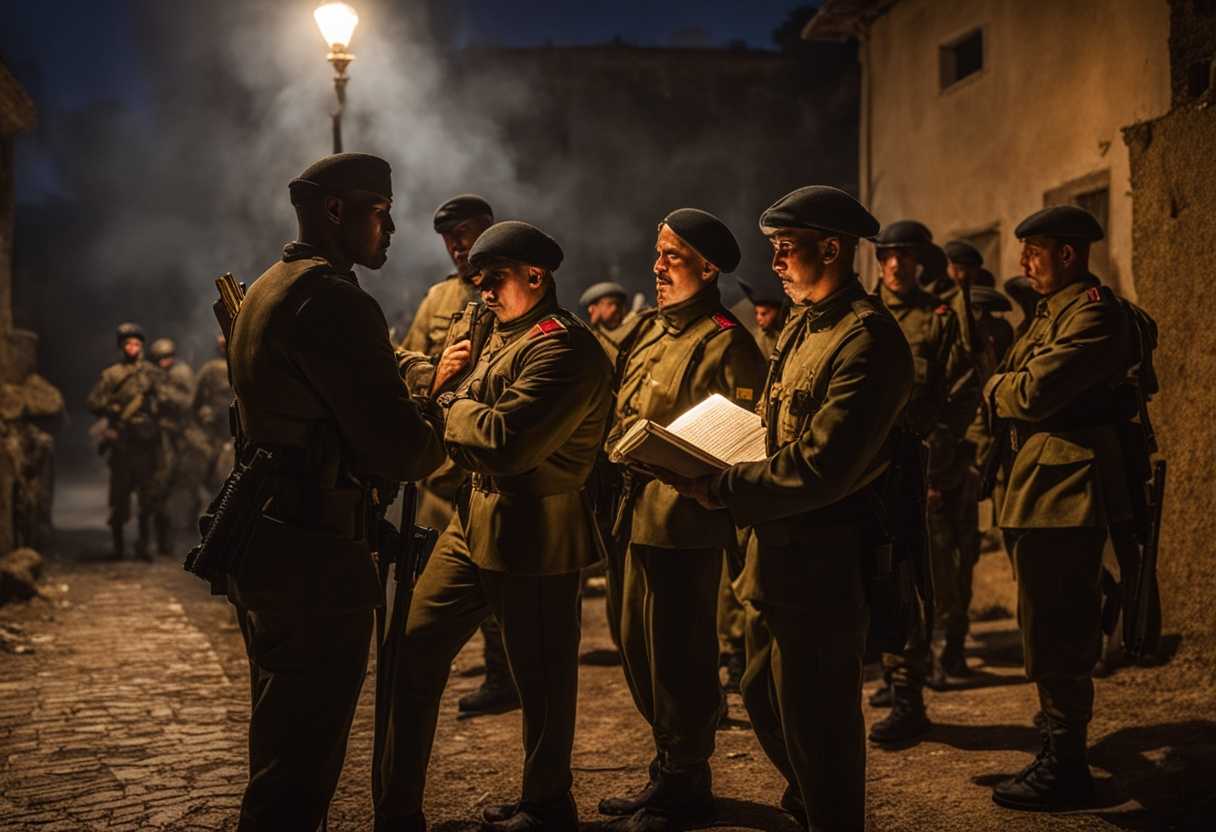
Setting the Scene for 2 Maccabees 12:10-16
The scene in 2 Maccabees 12:10-16 takes place during the time of Judas Maccabeus, a Jewish leader who led a revolt against the Seleucid Empire in the 2nd century BCE. In this particular passage, Judas Maccabeus and his men are preparing to bury their fallen comrades after a battle. They find that the fallen soldiers had been carrying sacred tokens taken from a pagan temple, which was against Jewish law. Judas and his men then pray for the souls of the deceased and make an offering for their sins, believing in the resurrection of the dead.
The setting is somber yet reverent, as Judas Maccabeus and his men gather to honor their fallen comrades. The battlefield is strewn with the aftermath of the conflict, with the sounds of mourning and prayers filling the air. The men are weary from battle but resolute in their faith, seeking to fulfill their duty to their fallen brothers according to Jewish customs and beliefs.
Judas Maccabeus, known for his military prowess and devotion to the Jewish faith, stands at the center of the scene, leading the prayers and offerings for the fallen soldiers. His men, loyal and battle-worn, stand beside him, united in their grief and determination to honor their comrades. The surroundings are a stark reminder of the harsh realities of war, yet amidst the chaos, there is a sense of unity and faith that sustains them in their time of loss.
What is 2 Maccabees 12:10-16 about?
Imagine the power of prayer, a sacred communication with the divine, amplified in its ability to help even those who have passed on from this world. When we pray for the souls of the departed to be released from sin, we are participating in a profound act of love and mercy. This verse speaks to the belief that our prayers can have a positive impact not only on the living but also on those who have crossed over into the next life. It reminds us that even in death, there is hope for redemption and salvation through the intercession of those who hold them dear. We are encouraged to consider the power of forgiveness and the eternal bond of love that transcends this earthly realm as we reflect on the significance of praying for the dead to be freed from sin. It beckons us to contemplate the spiritual journey of the departed and our role in aiding them on their path towards peace and enlightenment. Let us embrace this teaching as a reminder of the interconnectedness of all souls and the transformative power of prayer in bringing healing and reconciliation to those who have departed.
Understanding what 2 Maccabees 12:10-16 really means
The Book of 2 Maccabees, though not included in all versions of the Bible, offers valuable insights into the historical events surrounding Judas Maccabeus, a Jewish leader who fought against the Seleucid Empire. In this passage, we witness Judas and his men embarking on a military campaign, showcasing the importance of strong leadership and collective action in defending their beliefs and traditions. The phrase “The Lord was with them” underscores the divine support and intervention that bolstered their efforts, emphasizing the belief that God stands by those who are faithful and just. As they “fell upon the city,” we see a depiction of resolute determination and urgency in fighting for what is right.
Drawing parallels from other biblical passages, such as Joshua 1:9, Romans 8:31, and Psalm 46:1, we find a consistent theme of God’s presence and support in times of struggle. These verses echo the notion that with God on our side, we can face any challenge with courage and faith. Today, amidst our own trials and tribulations, this passage remains relevant, reminding us of the enduring power of faith, unity, and righteous leadership in overcoming adversity. It serves as a beacon of hope, urging us to stand firm in our beliefs and work together towards a common goal.
Imagine a community grappling with a natural disaster, where a local leader emerges as a beacon of strength, rallying the people to rebuild and restore. Just like Judas Maccabeus, this leader inspires faith and unity among the community, instilling the belief that God is guiding their efforts. This modern-day scenario mirrors the ancient narrative, illustrating that the principles of faith, leadership, and collective action transcend time and culture, offering timeless lessons for us to ponder.
In conclusion, the passage from 2 Maccabees 12:10-16 serves as a poignant reminder of the resilience that stems from unwavering faith, solidarity, and righteous guidance. It calls upon us to trust in the divine support that surrounds us and to face challenges with courage and integrity. By delving into this scripture and its related verses, we can find solace, inspiration, and direction for navigating our own journeys, secure in the knowledge that we are never alone in our struggles.
How can we honor and care for the deceased?
Honoring and caring for the deceased involves attending to their final needs and ensuring they are laid to rest respectfully. This can be seen as a form of love and respect for the individual who has passed on. We show our reverence for the life and impact of the deceased by completing the necessary rituals and acts of service.
When we attend to the deceased in a loving and respectful manner, we also provide comfort to those who are grieving. Engaging in rituals that honor the deceased can help in the healing process by providing closure and a sense of peace. It allows for a space to remember and celebrate the life of the person who has passed away, keeping their memory alive in our hearts and minds. Honoring and caring for the deceased is a way to acknowledge their life and contributions, while also providing solace for those who mourn their loss. It is a way to express our gratitude and love for the individual, and to ensure they are treated with the dignity and respect they deserve even after death.
Application
Friends, let us learn from the lesson in 2 Maccabees 12:10-16 about the strength of prayer for our loved ones who have passed on. Just as Judas Maccabeus interceded for the fallen, our prayers can make a difference. Let us commit to lifting up the souls of the departed in prayer, believing in the power of our petitions to bring comfort and grace. Will you stand with me today in this vital act of remembrance and care?

Reverend Michael Johnson is an experienced Church Minister with a profound expertise in spirituality and guidance. With a serene presence and a compassionate heart, he has faithfully served his congregation for over 20 years, leading them on a spiritual journey towards inner peace and enlightenment. Reverend Johnson’s extensive knowledge of religious philosophies and profound understanding of human nature have made him a trusted confidant and mentor to many, as he seamlessly weaves his profound wisdom into life teachings. Reverend Johnson’s calming demeanor and empathetic nature continue to uplift and heal souls, nurturing a sense of unity and tranquility within his community.