
2 Maccabees 12:32-37 is about the principle of praying for the dead and offering sacrifices on their behalf to atone for their sins and ensure their eventual salvation.
32 And when he had gone through the whole city, he turned to the people of Israel, who were present, and said, “See, here are our brothers who have been killed, and I will go now.”
33 And when he arrived at the place, he encamped against it and fought against it several days and he made machines of war and threw fire and hot stones upon the towers and the walls of the city.
2 And looking to heaven, he praised the Lord who works wonders, for he makes his mercy endure forever.
35 And also in the daytime he would go out into the streets, crying out loudly and bitterly to this effect.
36 Then Judas and his brothers said, “See, our enemies are crushed; let us go up to cleanse the sanctuary and dedicate it.”
37 But the man who had led them in their error, Judas, was led to the wilderness and they found him and killed him, and his brothers and all who had fled with him.
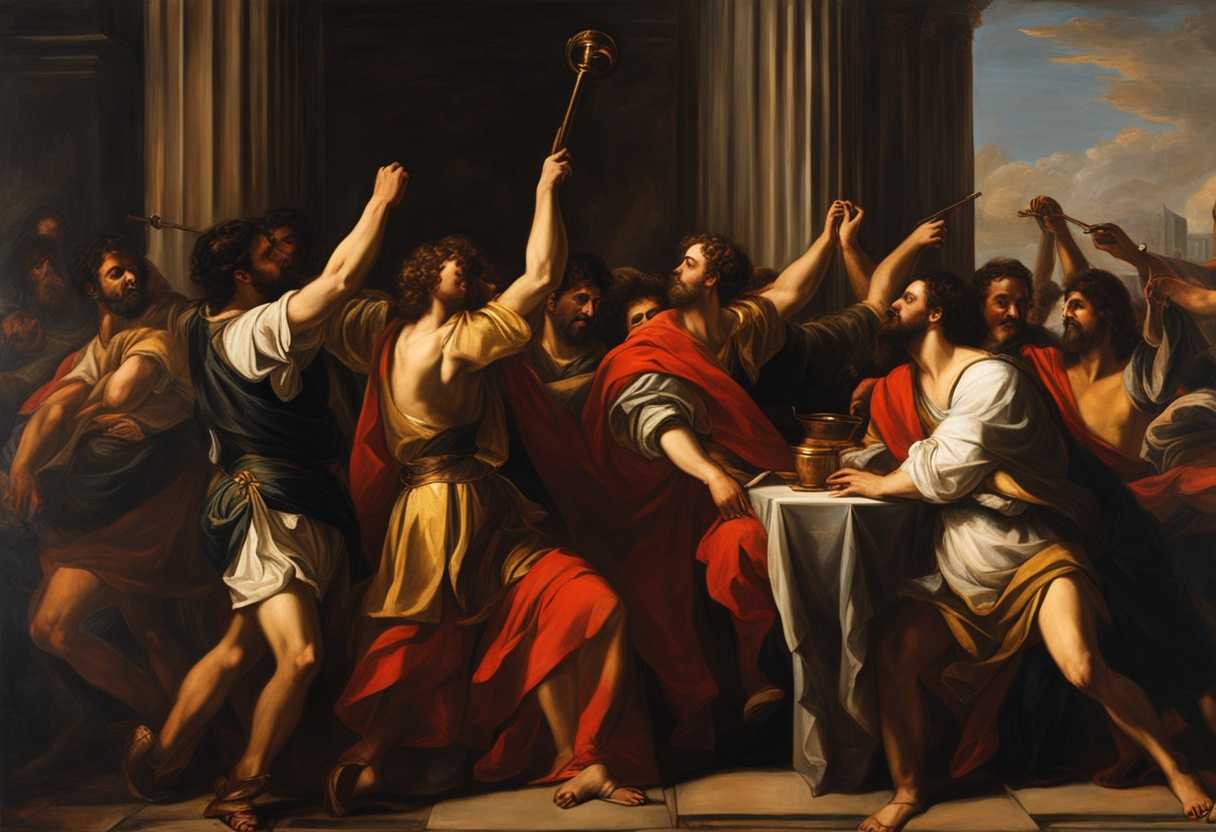
Setting the Scene for 2 Maccabees 12:32-37
In 2 Maccabees 12:32-37, we find Judas Maccabeus, a Jewish leader, leading his men in prayer and supplication for the souls of their fallen comrades who had died in battle. The scene is set in the aftermath of a fierce conflict between the Jewish forces under Judas Maccabeus and the enemies of Israel. The battle had been intense, and many of Judas’ soldiers had fallen in the fight.
Judas Maccabeus, known for his bravery and faith in God, gathers his remaining men to honor the fallen soldiers by offering prayers and sacrifices for their souls. The atmosphere is somber yet filled with a sense of reverence and determination as Judas and his men seek to fulfill their duty to their fallen comrades. The surroundings are likely a makeshift camp or battlefield, with the sounds of war still echoing in the distance.
As Judas Maccabeus leads the prayers, his men join him in seeking God’s mercy and forgiveness for the souls of their fallen brothers. The scene is a poignant reminder of the sacrifices made in the pursuit of freedom and faith, highlighting the deep sense of camaraderie and loyalty among Judas’ men. It is a moment of reflection and unity in the midst of the chaos and turmoil of war, showcasing the unwavering faith and courage of Judas Maccabeus and his followers.
What is 2 Maccabees 12:32-37 about?
When we pray for the dead, we demonstrate our belief in the power of resurrection and the importance of atonement for sins. This act reflects our understanding that even after death, there is hope for redemption and forgiveness. We affirm our belief in the continuity of the soul and the possibility of spiritual growth beyond this earthly life by offering prayers for those who have passed away. Consider how atonement and redemption are significant in your own life. How do you seek forgiveness and reconciliation for your own mistakes and shortcomings? We can also strive to make amends and seek forgiveness in our own lives, just as we pray for the dead to find peace and atonement. Let us reflect on how prayers for the dead can inspire us to live with greater compassion, humility, and faith in the power of redemption in our interconnected spiritual journeys.
Understanding what 2 Maccabees 12:32-37 really means
The Book of 2 Maccabees, though not included in all versions of the Bible, offers valuable insights into the Maccabean Revolt led by Judas Maccabeus. In this passage, we witness a crucial moment where Judas and his followers, after observing the Sabbath and purifying themselves, courageously enter battle with hymns and prayers. These actions highlight the deep intertwining of faith and action in their pursuit of reclaiming their land and faith from external influences.
Drawing parallels from other biblical passages like Joshua 6:1-20, Psalm 20:7, and Ephesians 6:10-18, we see a consistent theme of relying on God’s strength rather than human might in times of conflict. The power of faith and divine intervention in battles is emphasized, urging believers to trust in the Lord’s guidance and protection amidst challenges.
Today, the message of this passage remains relevant as it prompts us to integrate our faith into all aspects of life. Just as Judas and his men united in worship and action, we are encouraged to lean on our community and shared faith during trials. The resilience and hope displayed by these ancient warriors serve as a beacon of inspiration for modern believers facing adversity.
Imagine a community rallying together in the face of a natural disaster, not only rebuilding physically but also finding solace in collective prayer and support. This anecdote mirrors the actions of Judas Maccabeus and his followers, showcasing how faith can sustain and uplift individuals through the darkest of times. The passage from 2 Maccabees 12:32-37 serves as a poignant reminder of the transformative power of faith, community, and spiritual preparedness in overcoming life’s battles.
In conclusion, this passage underscores the timeless truth that our trust in God and our unity in faith can lead us to triumph and renewal, whether in ancient battles or modern-day struggles. Let us draw strength from the example of Judas Maccabeus, embracing the intertwined nature of faith and action as we navigate the challenges of our own lives.
Do we have a responsibility to pray for the dead?
According to the verse in 2 Maccabees 12:32-37, there is a specific reference to Judas Maccabeus making atonement for the dead. This indicates a belief in the responsibility to pray for the deceased, seeking forgiveness and mercy on their behalf. One can potentially help the dead find peace and salvation in the afterlife by offering prayers and sacrifices.
The act of praying for the dead reflects the understanding of a continued connection between the living and the deceased. It is an expression of care and compassion that transcends the boundaries of life and death, showing a belief in the possibility of seeking spiritual benefit for those who have passed away. This responsibility to pray for the dead is rooted in the hope for their souls to find rest and reconciliation, highlighting the importance of intercession and remembrance in the Christian faith.
Application
Dear believer, the scripture speaks to us about the impact of our prayers in atoning for the departed. Let us not overlook the significance of our intercession for those who are no longer with us. It is a testament of our faith to stand in prayer for our loved ones who have moved on. Will you answer the call to lift up their souls, believing in the mercy and compassion of God to bring solace to their spirits?

Reverend Michael Johnson is an experienced Church Minister with a profound expertise in spirituality and guidance. With a serene presence and a compassionate heart, he has faithfully served his congregation for over 20 years, leading them on a spiritual journey towards inner peace and enlightenment. Reverend Johnson’s extensive knowledge of religious philosophies and profound understanding of human nature have made him a trusted confidant and mentor to many, as he seamlessly weaves his profound wisdom into life teachings. Reverend Johnson’s calming demeanor and empathetic nature continue to uplift and heal souls, nurturing a sense of unity and tranquility within his community.