
2 Samuel 17:23-29 is about the resourcefulness and loyalty of Hushai as he aids David by sending secret messages during Absalom’s rebellion.
23 When Ahithophel saw that his counsel was not followed, he saddled his donkey and went off home to his own city. He set his house in order and hanged himself, and he died and was buried in the tomb of his father.
24 Then David came to Mahanaim. And Absalom crossed the Jordan with all the men of Israel.
25 Now Absalom had set Amasa over the army instead of Joab. Amasa was the son of a man named Ithra the Ishmaelite, who had married Abigal the daughter of Nahash, sister of Zeruiah, Joab’s mother.
26 Israel and Absalom encamped in the land of Gilead.
27 When David came to Mahanaim, Shobi the son of Nahash from Rabbah of the Ammonites, and Machir the son of Ammiel from Lo-debar, and Barzillai the Gileadite from Rogelim,
28 brought beds, basins, and earthen vessels, wheat, barley, flour, parched grain, beans and lentils,
29 honey, curds, sheep, and cheese from the herd, for David and the people with him to eat, for they said, “The people are hungry and weary and thirsty in the wilderness.”
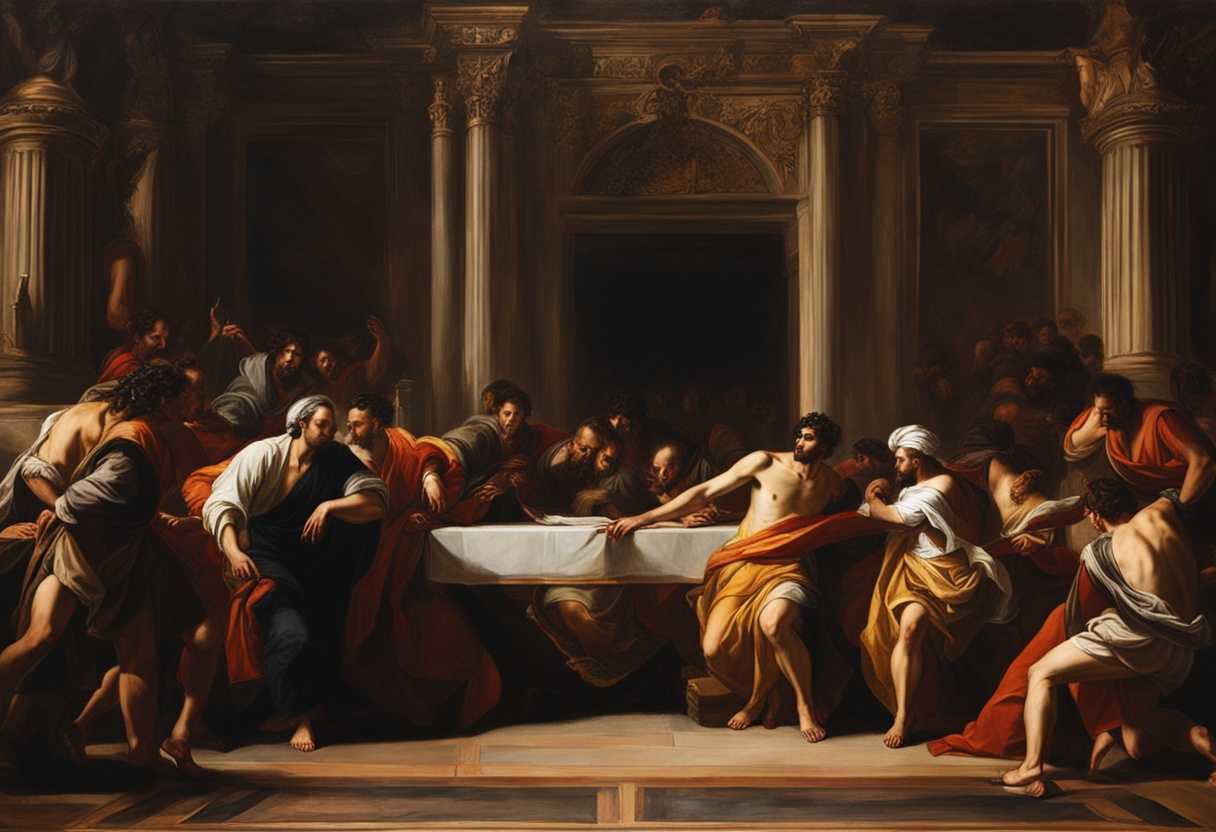
Setting the Scene for 2 Samuel 17:23-29
In 2 Samuel 17:23-29, the scene is set in the aftermath of Absalom’s rebellion against his father, King David. As the rebellion comes to a violent end with Absalom’s death, the focus shifts to the loyal supporters of David who played a crucial role in securing his reign. Among them is Hushai the Arkite, a trusted advisor to David who had cunningly foiled Absalom’s plans by feeding him false information.
The setting is a war-torn landscape, with the dust of battle settling as the sun begins to set. Hushai is seen making his way back to Jerusalem, his loyalty to David unwavering despite the dangers he faced. Along the way, he encounters Zadok and Abiathar, the priests who had remained faithful to David throughout the turmoil. Their reunion is filled with relief and gratitude, as they share news of the victory and the restoration of David’s rule.
As they journey back to Jerusalem, the trio is joined by loyal supporters who had risked their lives to ensure David’s safety. The scene is one of camaraderie and triumph, as they reflect on the events that had unfolded and the faith that had sustained them through the darkest hours. In the distance, the lights of Jerusalem begin to twinkle, a beacon of hope and stability in a land torn apart by strife.
What is 2 Samuel 17:23-29 about?
The powerful demonstration of friendship and support during a time of turmoil is seen in this verse. David, who was facing a rebellion led by his son Absalom, receives provisions and assistance from his friends. This act of kindness and loyalty not only provides physical support to David but also serves as a reminder of the importance of relationships during challenging times. It showcases how friends can step in and offer help when we are facing difficulties, reinforcing the idea that we are not alone in our struggles.
Have you ever experienced the comfort and strength that comes from knowing you have friends by your side during tough times? This verse serves as a powerful reminder of the impact of genuine friendships and how they can be a source of sustenance and support in the midst of chaos. It prompts us to reflect on the friends in our own lives and consider how we can also be a source of support and encouragement to those around us. We too should be reminded of the importance of showing up for our friends when they need us the most, just as David’s friends rallied around him during his time of need.
Understanding what 2 Samuel 17:23-29 really means
In the tumultuous period of Absalom’s rebellion against his father, King David, the narrative in 2 Samuel 17:23-29 unfolds with poignant lessons and reflections. The tragic end of Ahithophel, who saw his counsel disregarded, serves as a stark reminder of the weight of wisdom and the consequences of feeling undervalued. His deliberate actions of saddling his donkey and returning to his hometown before taking his own life symbolize a profound sense of despair and finality. This sequence of events prompts us to ponder the significance of acknowledging and respecting the counsel of others, especially in matters of leadership and decision-making.
As David seeks refuge in Mahanaim, we witness a contrasting response to adversity. His choice to turn to allies for support amidst the impending conflict showcases the importance of community and solidarity during times of distress. This narrative thread resonates with the timeless truth that seeking refuge and finding strength in companionship can provide solace and aid in navigating challenging circumstances. The parallel drawn between David’s allies and the support networks we rely on in modern society underscores the enduring relevance of seeking assistance and companionship in times of need.
The passage’s exploration of betrayal, wise counsel, and finding solace in the midst of turmoil offers profound insights that transcend the historical context. In contemporary settings, instances of feeling disregarded or unappreciated are not uncommon, leading to feelings of isolation and worthlessness. The narrative of Ahithophel’s tragic end serves as a cautionary tale, reminding us of the perils of neglecting the wisdom and contributions of others. It prompts us to reflect on the value of fostering environments where diverse perspectives are respected and where individuals feel valued and supported.
Drawing parallels between biblical accounts and modern-day scenarios can illuminate the enduring relevance of these themes. Consider a workplace scenario where an employee’s innovative ideas are dismissed, echoing Ahithophel’s experience of being ignored. However, just as David found support in Mahanaim, individuals can find solace and renewed purpose through supportive relationships and communities. This analogy underscores the transformative power of validation and support in restoring one’s sense of worth and resilience in the face of adversity.
In conclusion, the passage from 2 Samuel 17:23-29 serves as a poignant reminder of the profound impact of feeling valued and the significance of wise counsel and communal support. By reflecting on these themes and applying them to our lives, we can cultivate a culture of mutual respect, understanding, and support. In embracing the lessons from this narrative, we are encouraged to value the contributions of others, seek guidance in times of uncertainty, and extend a helping hand to those in need, fostering a more compassionate and empathetic community.
How can we show hospitality to those in need?
One way we can show hospitality to those in need is by offering them a place of rest and refuge. We too can open our homes and hearts to those who are seeking help and support, just as Barzillai provided for David and his men by supplying them with food, lodging, and other necessities in their time of need. We show compassion and care for our fellow human beings by welcoming them in and meeting their needs.
Additionally, we can extend hospitality by showing kindness and generosity to those who are marginalized or facing difficult circumstances. Like Shobi, Machir, and Barzillai who brought bedding, basins, pottery, wheat, barley, flour, roasted grain, beans, lentils, honey, curds, sheep, and cheese to David and his men, we can provide practical assistance to those in need. We can help alleviate their burdens and show them love and solidarity by giving our resources and time.
Furthermore, we can demonstrate hospitality by offering a listening ear and emotional support to those who are struggling. We can provide a safe space for others to share their concerns and feelings, just as these individuals comforted David and his followers by showing empathy and understanding. Through our presence and compassion, we can create a sense of community and belonging for those who are going through challenging times.
Application
In our journey of faith, let’s embody the courage and loyalty of Hushai, who steadfastly protected God’s chosen king. Like him, let’s act decisively in the face of challenges, unwavering in our dedication to God’s plan. Are you ready to step up in faith and obedience, just as Hushai did in his defining moment?

Reverend Michael Johnson is an experienced Church Minister with a profound expertise in spirituality and guidance. With a serene presence and a compassionate heart, he has faithfully served his congregation for over 20 years, leading them on a spiritual journey towards inner peace and enlightenment. Reverend Johnson’s extensive knowledge of religious philosophies and profound understanding of human nature have made him a trusted confidant and mentor to many, as he seamlessly weaves his profound wisdom into life teachings. Reverend Johnson’s calming demeanor and empathetic nature continue to uplift and heal souls, nurturing a sense of unity and tranquility within his community.