
1 Then David mustered the men who were with him and set over them commanders of thousands and commanders of hundreds.
2 And David sent out the army, one third under the command of Joab, one third under the command of Abishai the son of Zeruiah, Joab’s brother, and one third under the command of Ittai the Gittite. And the king said to the men, “I myself will also go out with you.”
3 But the men said, “You shall not go out. For if we flee, they will not care about us. If half of us die, they will not care about us. But you are worth ten thousand of us. Therefore it is better that you send us help from the city.”
4 The king said to them, “Whatever seems best to you I will do.” So the king stood at the side of the gate, while all the army marched out by hundreds and by thousands.
5 And the king ordered Joab and Abishai and Ittai, “Deal gently for my sake with the young man Absalom.” And all the people heard when the king gave orders to all the commanders about Absalom.
6 So the people went out into the field against Israel, and the battle was fought in the forest of Ephraim.
7 And the people of Israel were defeated there by the servants of David, and the loss there was great on that day, twenty thousand men.
8 The men of Israel were defeated there by the servants of David, and the loss there was great on that day, twenty thousand men.
9 And Absalom happened to meet the servants of David. Absalom was riding on his mule, and the mule went under the thick branches of a great oak, and his head caught fast in the oak, and he was suspended between heaven and earth, while the mule that was under him went on.
10 And a certain man saw it and told Joab, “Behold, I saw Absalom hanging in an oak.”
11 And Joab said to the man who told him, “What, you saw him! Why did you not strike him there to the ground? I would have been glad to give you ten pieces of silver and a belt.”
12 But the man said to Joab, “Even if I felt in my hand the weight of a thousand pieces of silver, I would not reach out my hand against the king’s son, for in our hearing the king commanded you and Abishai and Ittai, ‘For my sake protect the young man Absalom.’
13 And Joab the son of Zeruiah and the servants of David went out and met them at the pool of Gibeon. And they sat down, the one on the one side of the pool, and the other on the other side of the pool.
14 Joab said, “I will not waste time like this with you.” And he took three javelins in his hand and thrust them into the heart of Absalom while he was still alive in the oak.
15 And ten young men, Joab’s armor-bearers, surrounded Absalom and struck him and killed him.
16 Joab blew the trumpet, and the troops came back from pursuing Israel, for Joab restrained them.
17 And they took Absalom and threw him into a great pit in the forest and raised over him a very great heap of stones. And all Israel fled every one to his tent.
18 Now Absalom in his lifetime had taken and set up for himself the pillar that is in the King’s Valley, for he said, “I have no son to keep my name in remembrance.” He called the pillar after his own name, and it is called Absalom’s monument to this day.
19 Then Ahimaaz the son of Zadok said, “Let me run and carry news to the king that the Lord has delivered him from the hand of his enemies.”
20 Then Joab said to him, “You will not carry news today. You may carry news another day, but today you shall carry no news, because the king’s son is dead.”
21 Then Joab said to the Cushite, “Go, tell the king what you have seen.” And the Cushite bowed before Joab and ran.
22 Then Ahimaaz the son of Zadok said, “Let me run and carry news to the king that the Lord has delivered him from the hand of his enemies.”
23 But whatever comes out of the city is like a gift from the Lord of hosts, and the people of Israel are not to be seen.
24 Now David was sitting between the two gates, and the watchman went up to the roof of the gate by the wall, and raised his eyes and looked, and behold, a man running alone.
25 And the watchman cried out and told the king. And the king said, “If he is alone, there is news in his mouth.” And he drew nearer and nearer.
26 And the watchman saw another man running. And the watchman called to the gate and said, “See, another man running alone!” The king said, “He also brings news.”
27 The watchman said, “I think the running of the first is like the running of Ahimaaz the son of Zadok.”
28 Then Ahimaaz cried out to the king, “All is well.” And he bowed before the king with his face to the earth and said, “Blessed be the Lord your God, who has delivered up the men who raised their hand against my lord the king.”
29 The king said, “Is it well with the young man Absalom?” Ahimaaz answered, “When Joab sent the king’s servant, your servant, I saw a great commotion, but I do not know what it was.”
30 The king said, “Turn aside and stand here.” So he turned aside and stood still.
31 And behold, the Cushite came, and the Cushite said, “Good news for my lord the king! For the Lord has delivered you this day from the hand of all who rose up against you.”
32 The king said to the Cushite, “Is it well with the young man Absalom?” And the Cushite answered, “May the enemies of my lord the king and all who rise up against you for evil be like that young man.”
33 And the king was deeply moved and went up to the chamber over the gate and wept. And as he went, he said, “O my son Absalom, my son, my son Absalom! Would I had died instead of you, O Absalom, my son, my son!”
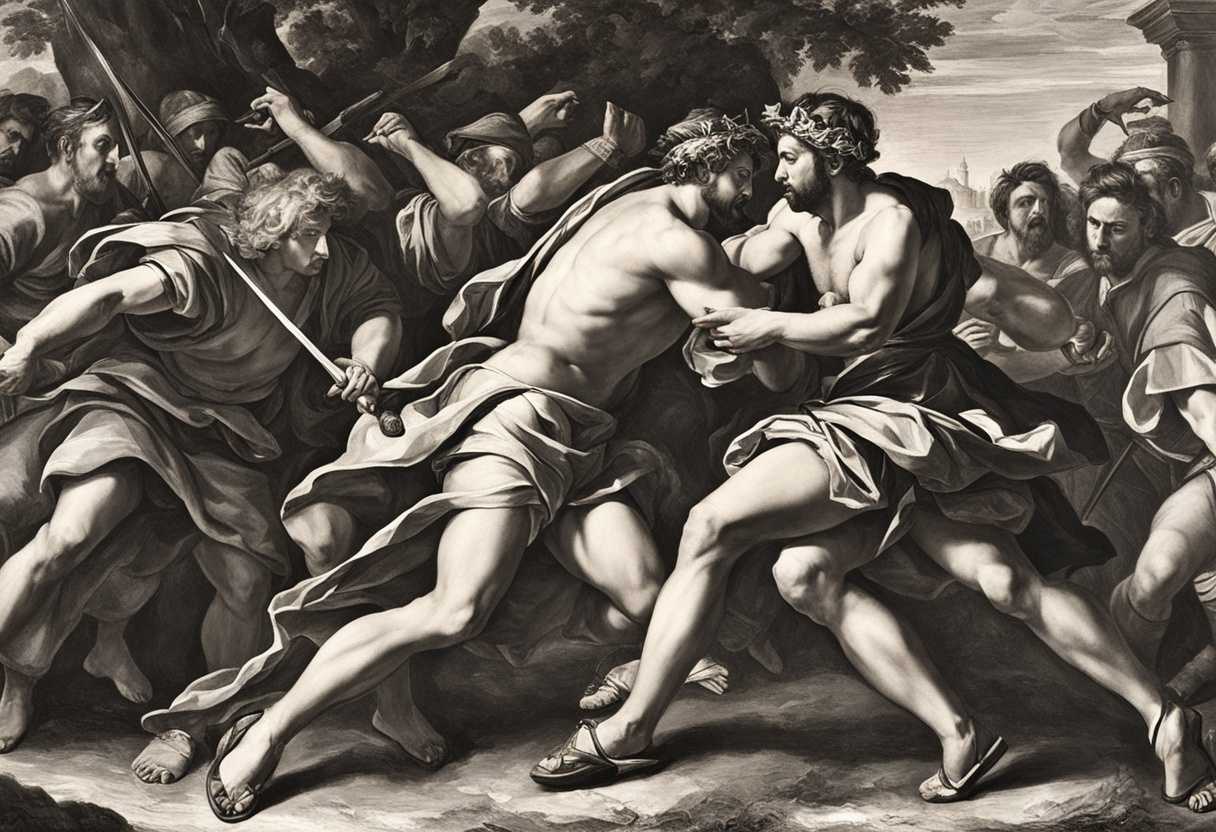
The True Meaning of 2 Samuel 18
The book of 2 Samuel was written by the prophet Nathan and the scribe Gad, who were close companions of King David. They provide a detailed account of David’s reign, including the tumultuous events surrounding his son Absalom’s rebellion. David’s forces confront the army led by the rebellious Absalom in this climactic chapter. We’ll see how this conflict plays out with far-reaching consequences for the kingdom as the chapter unfolds. The events described here echo the warnings found in Proverbs 30:12, where we’re cautioned against the dangers of pride and self-righteousness.
The chapter opens with David’s army preparing for battle, led by the experienced commander Joab. Absalom, driven by his own ambition, has gathered a formidable force to challenge his father’s rule. The stage is set for a decisive clash that will determine the future of the kingdom. We delve into the narrative, weaving the principles of justice, loyalty, and the sovereignty of God throughout this pivotal moment in Israel’s history.
2 Samuel 18:1-4
The text in 2 Samuel 18:1-4 describes the preparations for the battle between David’s forces and Absalom’s rebels. The verse reads: “David mustered the men who were with him and appointed over them commanders of thousands and commanders of hundreds. David sent out his troops, a third under the command of Joab, a third under Joab’s brother Abishai son of Zeruiah, and a third under Ittai the Gittite. The king told the troops, ‘I myself will surely march out with you.’ But the men said, ‘You must not go out; if we are forced to flee, they won’t care about us. Even if half of us die, they won’t care; but you are worth ten thousand of us. It would be better now for you to give us support from the city.’”
This section highlights the leadership and military strategy of David. He organized his troops into three groups under the command of Joab, Abishai, and Ittai, showing his strategic thinking in distributing his forces effectively. Despite his intention to join the battle personally, his soldiers urged him to remain in the safety of the city due to the immense value they placed on his life. Here, we see the loyalty and respect the soldiers had for David. This passage underscores the value of wise leadership and the importance of leaders valuing the lives and well-being of their followers. David’s humility and care for his men’s concerns show his qualities of a compassionate leader, willing to listen to the advice of those on the ground, even if it meant setting aside his own bravery for the greater good.
This scene also brings to mind the broader theme of loyalty in the Bible. David’s relationship with his commanders and soldiers reflects the importance of faithfulness and trust in biblical narratives. Loyalty was prized in the Old Testament, and leaders like David were expected to inspire such devotion among their followers. This loyalty is a simultaneous reflection of the relationship between God and His people. Believers are called to show steadfast allegiance to God, just as David’s men were willing to sacrifice for him. The concept of loyalty and sacrifice is echoed in verses like Proverbs 3:3, which calls for writing love and faithfulness on one’s heart, highlighting the enduring value of loyalty in biblical teachings.
2 Samuel 18:5-8
David and Absalom prepare for battle in an intense moment in the story found in 2 Samuel 18:5-8. The verse states, “The king commanded Joab, Abishai, and Ittai, ‘Deal gently for my sake with the young man Absalom.’ And all the people heard when the king gave orders to all the commanders about Absalom.” This section highlights the conflicting emotions David has towards his son Absalom. Despite Absalom’s rebellion against him, David still deeply loves his son and cannot completely relinquish that paternal instinct. David is revealing a father’s heart torn between justice and love by instructing his commanders to deal gently with Absalom, even after all that he has done.
This command by David also shows a moment of weakness in his leadership. His personal feelings for his son cloud his judgment, even though he is supposed to uphold justice and order as a king. This internal struggle is a timeless reminder of the complexities of human emotions and relationships. It serves as a cautionary tale about the dangers of allowing personal attachments to interfere with one’s responsibilities and duties.
Furthermore, the fact that all the people heard about David’s command regarding Absalom emphasizes the public nature of his dilemma. David’s struggles as a father and a king are on full display for his subjects to witness. This transparency underscores the accountability that comes with leadership and the importance of setting the right example, even in the most challenging of circumstances.
This episode with David and Absalom echoes the theme of forgiveness and redemption found throughout the Bible. Despite Absalom’s grave sins, David’s desire to show him mercy reflects God’s unending grace towards His children. Just like David, God is willing to forgive, even when we fall short and rebel against Him. This narrative of love, mercy, and reconciliation serves as a powerful reminder of God’s unwavering love for His people, regardless of their wrongdoings.
It is also worth noting the characters involved in this passage. Joab, a prominent military commander, plays a crucial role in David’s kingdom. He is known for his loyalty to David, as well as his ruthless tactics in battle. Abishai, Joab’s brother, is also a fierce warrior devoted to David. Ittai is a newcomer to David’s service, demonstrating his allegiance by joining David despite being a foreigner. Each of these men represents different aspects of loyalty, duty, and obedience, which are recurring themes in the Old Testament. This passage from 2 Samuel 18:5-8 offers a profound insight into the complexities of human relationships, the challenges of leadership, and the boundless nature of God’s mercy. Through the lens of David and Absalom’s story, we are reminded of the importance of forgiveness, the struggle between justice and love, and the eternal truth that God’s grace surpasses all our transgressions.
2 Samuel 18:9-15
Absalom, the rebellious son of King David, meets his demise in a significant event in the Bible in 2 Samuel 18:9-15. The passage describes how Absalom, riding his mule, gets his head caught in the branches of a great oak tree while fleeing from David’s forces led by Joab. This leads to his eventual death at the hands of Joab’s men, against David’s explicit orders to deal gently with Absalom.
This event holds profound symbolism and lessons. Firstly, it illustrates the consequences of rebellion and the importance of honoring authority. Absalom’s rebellion against his father, King David, resulted in his tragic end. This serves as a stark warning about the dangers of turning against rightful leaders and the chaos and destruction it can bring. The imagery of Absalom’s head caught in the tree branches can symbolize his pride and arrogance. Absalom’s luxurious hair, which eventually becomes his undoing, was a source of his vanity and pride. This serves as a reminder of the dangers of vanity and self-centeredness, highlighting the biblical message that pride goes before a fall (Proverbs 16:18).
Additionally, the fact that Joab disregarded David’s command to deal gently with Absalom raises ethical questions about the limits of loyalty and the complexities of human nature. Joab, though a loyal commander, chose to prioritize the security and stability of the kingdom over David’s emotional attachments, illustrating the tensions between duty and personal relationships.
This account also points to the broader theme of justice and divine consequences. Absalom’s death can be interpreted as a form of divine retribution for his actions and sins. Throughout the Bible, we see instances where individuals face the repercussions of their disobedience and rebellion against God’s will. This serves as a reminder of the biblical principle that God’s justice ultimately prevails, whether in this life or the next. The story of Absalom’s tragic end in 2 Samuel 18:9-15 offers profound insights into themes of rebellion, pride, loyalty, and divine justice. It serves as a cautionary tale about the perils of straying from the path of righteousness and the importance of humility, obedience, and respect for authority. This passage invites readers to reflect on their own actions and attitudes towards authority, reminding them of the timeless truths and consequences depicted in the word of God.
2 Samuel 18:16-18
The verses in 2 Samuel 18:16-18 recount the tragic end of Absalom, the rebellious son of King David. Let’s break down these important sections.
“Joab sounded the trumpet, and the troops came to a halt; they ceased pursuing Israel, for Joab restrained them.” – Here we see Joab, the commander of David’s army, taking control of the situation. Despite Absalom being a threat to David’s reign, Joab knows that David’s heart is torn between his duty as a king and his love for his son. Joab is respecting David’s emotions, showing loyalty to the king, and preventing further bloodshed within the kingdom by restraining his troops from pursuing Absalom further. This act of Joab can be seen as strategic and compassionate, as he understands the delicate balance between fulfilling their duties and keeping the king’s heart in mind.
“They took Absalom, threw him into a big pit in the forest, and piled up a large heap of rocks over him. Meanwhile, all the Israelites fled to their homes.” – This verse describes the grim fate of Absalom. Despite his rebellion against his father and his attempt to seize the throne, the act of throwing him into a pit and covering him with rocks is a brutal end for anyone. This act symbolizes not only the physical defeat of Absalom but also the obliteration of his ambitions and his lineage. It serves as a stark reminder of the consequences of rebellion and the price of seeking power through deceit and betrayal in the eyes of those who go against God’s established order.
“During his lifetime, Absalom had taken a pillar and erected it in the King’s Valley as a monument to himself, for he thought, “I have no son to carry on the memory of my name.”” – This verse provides insight into Absalom’s character and motivations. Absalom’s pride and arrogance are evident in his actions of erecting a monument to himself, seeking to ensure his legacy lived on even if he had no son to carry his name. This display of self-importance and desire for personal glory ultimately leads to his downfall. It serves as a cautionary tale about the dangers of pride and vanity, showcasing how such qualities can blind individuals to the consequences of their actions and the eventual destruction it brings upon them. The account of Absalom’s demise in 2 Samuel 18 serves as a poignant reminder of the consequences of rebellion, pride, and disobedience to God’s ordained authority. It underscores the importance of humility, loyalty, and obedience in the face of power struggles and personal ambition. The story of Absalom also highlights the complexities of familial relationships, political intrigue, and the repercussions of one’s choices in the narrative of God’s people. It resonates with biblical themes of justice, consequences, and the ultimate sovereignty of God over the affairs of humanity. Through analyzing these verses, readers are prompted to reflect on their own attitudes towards authority, pride, and the importance of seeking God’s will above personal glory.
2 Samuel 18:19-23
A pivotal moment in the aftermath of the battle between David’s forces and the rebellious Absalom is found in 2 Samuel 18:19-23. The verse reads, “Then Ahimaaz the son of Zadok said, ‘Let me run and bring the king news that the Lord has delivered him from the hand of his enemies.’ And Joab said to him, ‘You are not the man to carry news today. But you may carry news another day; however, today you shall not carry news, because the king’s son is dead.’ Then Joab said to the Cushite, ‘Go, tell the king what you have seen.’ The Cushite bowed before Joab and ran.”
This passage sheds light on the delicate and intricate dynamics of power and authority in the midst of a kingdom at war. Ahimaaz, the son of Zadok, a priestly family closely associated with David, offers to bring the news of Absalom’s defeat to David. However, Joab, David’s military commander, discerns that delivering such grim news, the death of the king’s son, requires a tactful approach. Joab understands the emotional turmoil that this news will inevitably bring to David, as he had previously forbidden the troops to harm Absalom, despite the threat he posed to David’s reign. Joab’s decision not to send Ahimaaz and instead opting for the Cushite to go reveals a profound understanding of the gravity of the situation and the need for a messenger who can handle the news appropriately.
This moment highlights the deep sense of loyalty and duty present among David’s men, as well as the wisdom and discernment required in navigating sensitive matters. It also exemplifies the weight of decisions made in times of conflict and the importance of handling delicate situations with care and consideration. The emotions and complexities in this narrative resonate with the broader themes of loyalty, responsibility, and the consequences of rebellion and betrayal that are prevalent throughout the Bible. Absalom’s rebellion against his father, King David, reveals the tragic consequences when considering this passage in the larger context of 2 Samuel 18. Despite David’s deep love for his son, Absalom’s ambition and betrayal led to a devastating conflict that ended with Absalom’s death. This event serves as a sobering reminder of the consequences of disobedience and the importance of honoring authority, even when it is difficult or seemingly unjust.
This theme of obedience and respect for authority is echoed in other parts of the Bible as well. “Romans 13:1-2 states, ‘Let everyone be subject to the governing authorities, for there is no authority except that which God has established.’” The authorities that exist have been established by God. Consequently, whoever rebels against the authority is rebelling against what God has instituted, and those who do so will bring judgment on themselves.” This reinforces the idea that even in challenging circumstances, there is a divine order to be upheld, and there are consequences for casting aside authority. The exchange between Ahimaaz, Joab, and the Cushite in 2 Samuel 18:19-23 serves as a poignant moment that encapsulates the complexities of loyalty, duty, and the consequences of rebellion. It underscores the importance of discernment and wisdom in navigating challenging situations, and the need to handle delicate matters with sensitivity and grace. The timeless biblical message ultimately reminds us of the significance of obedience to authority and the far-reaching repercussions of betrayal and disobedience.
2 Samuel 18:24-27
The book of 2 Samuel places us amid a tumultuous time in the history of Israel, specifically during the reign of King David. The verses in 2 Samuel 18:24-27 depict a pivotal moment in the aftermath of Absalom’s rebellion against his father, King David. Absalom had sought to usurp the throne from David, leading to a heartbreaking conflict between father and son.
The section begins with a watchman sighting a man, later identified as Ahimaaz, running alone. This runner, Ahimaaz, was eager to bring news to King David about the battle’s outcome between David’s forces and Absalom’s army. The watchman observed Ahimaaz’s approach and another man, later identified as Cushi, arrived at the scene as well. The watchman noted that whereas Ahimaaz was running swiftly, Cushi seemed to have a more deliberate and methodical pace.
Ahimaaz requests permission from the watchman to deliver the news to King David, but the watchman hesitates, knowing that Ahimaaz is a loyal friend of David and may not provide the full picture of what occurred in the battle. Despite this, Ahimaaz persists in his request to deliver the news, showing his devotion to the king and his eagerness to bring tidings, whether good or bad, to David.
This passage provides us with several valuable lessons. Firstly, we can observe the importance of loyalty and integrity in our actions, as demonstrated by Ahimaaz’s determination to deliver the news to King David. Ahimaaz’s loyalty to the king serves as a reminder of the significance of remaining steadfast in our commitments, even in the face of challenges or potential consequences. This narrative also highlights the theme of communication and the eagerness to share important information, reflecting the broader biblical principles of honesty, transparency, and accountability. Absalom’s actions manifest the consequences of sin and rebellion as we reflect on this passage within the context of the overarching themes of 2 Samuel. Absalom’s rebellion against his father David ultimately led to tragedy and loss, underscoring the biblical teaching that disobedience and pride can result in devastating outcomes. The narrative of Ahimaaz and Cushi running to bring news to David serves as a poignant moment amidst the chaos of battle, emphasizing the importance of truth-telling and the duty to convey information faithfully. We can draw parallels to other biblical figures who played critical roles in delivering messages or news to God’s chosen leaders when considering the characters of Ahimaaz and Cushi. For instance, prophets such as Nathan and Elijah were instrumental in conveying God’s word to kings like David and Ahab, exemplifying the role of messengers in the biblical narrative. The actions of Ahimaaz and Cushi, therefore, align with the broader biblical theme of messenger figures fulfilling their duties to convey important information, even in challenging circumstances. The verses in 2 Samuel 18:24-27 offer a profound reflection on loyalty, communication, and the consequences of rebellion. Through the characters of Ahimaaz and Cushi, we are reminded of the importance of faithfulness, honesty, and diligence in our interactions and responsibilities. The broader context of Absalom’s rebellion and its repercussions underscores the timeless biblical truths of humility, obedience, and the far-reaching impact of one’s choices.
2 Samuel 18:28-30
A messenger arrives to King David with news about the outcome of the battle between David’s forces and Absalom’s rebels in 2 Samuel 18:28-30. The messenger reports, “Then Ahimaaz called out to the king, ‘All is well!’ He bowed down before the king with his face to the ground and said, ‘Praise be to the Lord your God! He has delivered up those who lifted their hands against my lord the king.’ The king asked, ‘Is the young man Absalom safe?’ Ahimaaz answered, ‘I saw great confusion just as Joab was about to send the king’s servant and me, your servant, but I don’t know what it was.’”
This passage is significant on multiple levels. Firstly, the messenger, Ahimaaz, exemplifies loyalty and obedience by faithfully delivering the news to King David, even though the outcome is not what David might have hoped for. Ahimaaz not only informs the king of the victory, but he also acknowledges the role of God in the deliverance of David’s enemies into his hands. This reflects the theme of divine intervention and providence throughout the Bible.
Secondly, the anticipation and anxiety in King David’s question about the safety of his son, Absalom, reveal the complexities of David’s character as both a king and a father. Despite Absalom’s rebellion, David still harbors a fatherly concern for his son’s welfare, showing the human side of a leader who must balance personal relationships with his responsibilities as a ruler. This inner conflict in David’s character echoes throughout the story of his reign, highlighting the challenges of leadership and family dynamics.
The uncertainty in Ahimaaz’s response about Absalom’s fate adds to the tension and drama of the narrative, leaving the readers and David himself in suspense about the ultimate outcome of the battle. This suspense serves to engage the audience and build anticipation for the resolution of the conflict between father and son, loyalty and betrayal, and justice and mercy. This passage reflects themes of loyalty, faith, and the consequences of disobedience in the broader context of the Bible. It also underscores the intricate relationships between family members, the complexities of leadership, and the overarching presence of God’s will in human affairs. Additionally, the story of Absalom serves as a cautionary tale about the perils of rebellion and the tragic outcomes that can result from pursuing one’s own ambitions at the expense of others, particularly family members.
2 Samuel 18:31-33
We read the aftermath of the battle between the forces of King David and those of his rebellious son Absalom in 2 Samuel 18:31-33. The verse reads, “Then the Cushite arrived and said, ‘My lord the king, hear the good news! The Lord has vindicated you today by delivering you from the hand of all who rose up against you.’ The king asked the Cushite, ‘Is the young man Absalom safe?’ The Cushite replied, ‘May the enemies of my lord the king and all who rise up against you to harm you be like that young man.’ The king was shaken. He went up to the room over the gateway and wept. He said, ‘O my son Absalom!’ as he went. My son, my son Absalom! If only I had died instead of you—O Absalom, my son, my son! We witness the news of Absalom’s death being brought to King David in this powerful and emotional scene. The Cushite, a messenger, delivers the news with good intentions but without sensitivity to David’s paternal love for his son. When David hears of Absalom’s fate, he is consumed with grief and weeps openly for the son who had rebelled against him. Despite Absalom’s betrayal and attempts to seize the throne from his own father, David’s love for his son shines through as he mourns his death.
This moment illustrates the complexities of family relationships, forgiveness, and the pain that can come from broken bonds. David’s deep sorrow over the loss of his son serves as a reminder of the consequences of sin and rebellion, as Absalom’s actions ultimately led to his tragic end. It also underscores the heart of God the Father, whose love for His children is unconditional, even in the face of their mistakes and transgressions.
The lamentation of David over Absalom’s death can be seen as a foreshadowing of the ultimate sacrifice that God the Father would make through His Son, Jesus Christ. God grieves for humanity’s sin and brokenness, yet offers redemption and forgiveness through the sacrifice of Jesus on the cross. This poignant moment in 2 Samuel 18 serves as a timeless reminder of the power of love, forgiveness, and the depths of a parent’s heartache. It shows that even in the midst of tragedy and betrayal, God’s mercy and grace are ever-present for those who turn back to Him.
After 2 Samuel 18
The battle was fierce, and the outcome hung in the balance. Absalom, the king’s son, had led a rebellion against his father, David. Absalom’s forces defeated him in the end, catching him in the branches of a great oak tree. David’s heart was heavy with grief as he received the news of Absalom’s death. “O my son Absalom, my son, my son Absalom! Would I had died instead of you, O Absalom, my son, my son!” he cried out in anguish.
The reverend closed the book and let out a deep sigh. The story of David’s family was a tragic one, filled with betrayal, violence, and the deep pain of a father’s love. Yet, even in the midst of such darkness, there was a glimmer of hope. For in the next chapter, we would see how David, the man after God’s own heart, would find the strength to rise up and lead his people once more.

Reverend Michael Johnson is an experienced Church Minister with a profound expertise in spirituality and guidance. With a serene presence and a compassionate heart, he has faithfully served his congregation for over 20 years, leading them on a spiritual journey towards inner peace and enlightenment. Reverend Johnson’s extensive knowledge of religious philosophies and profound understanding of human nature have made him a trusted confidant and mentor to many, as he seamlessly weaves his profound wisdom into life teachings. Reverend Johnson’s calming demeanor and empathetic nature continue to uplift and heal souls, nurturing a sense of unity and tranquility within his community.