
2 Samuel 21:17 is about the bravery and valor of David’s men in defending him against the Philistine giants, reflecting the theme of divine protection and victory in the face of seemingly insurmountable challenges.
17 But Abishai the son of Zeruiah came to his aid and attacked the Philistine and killed him. Then David’s men swore to him, “You shall no longer go out with us to battle, lest you quench the lamp of Israel.”
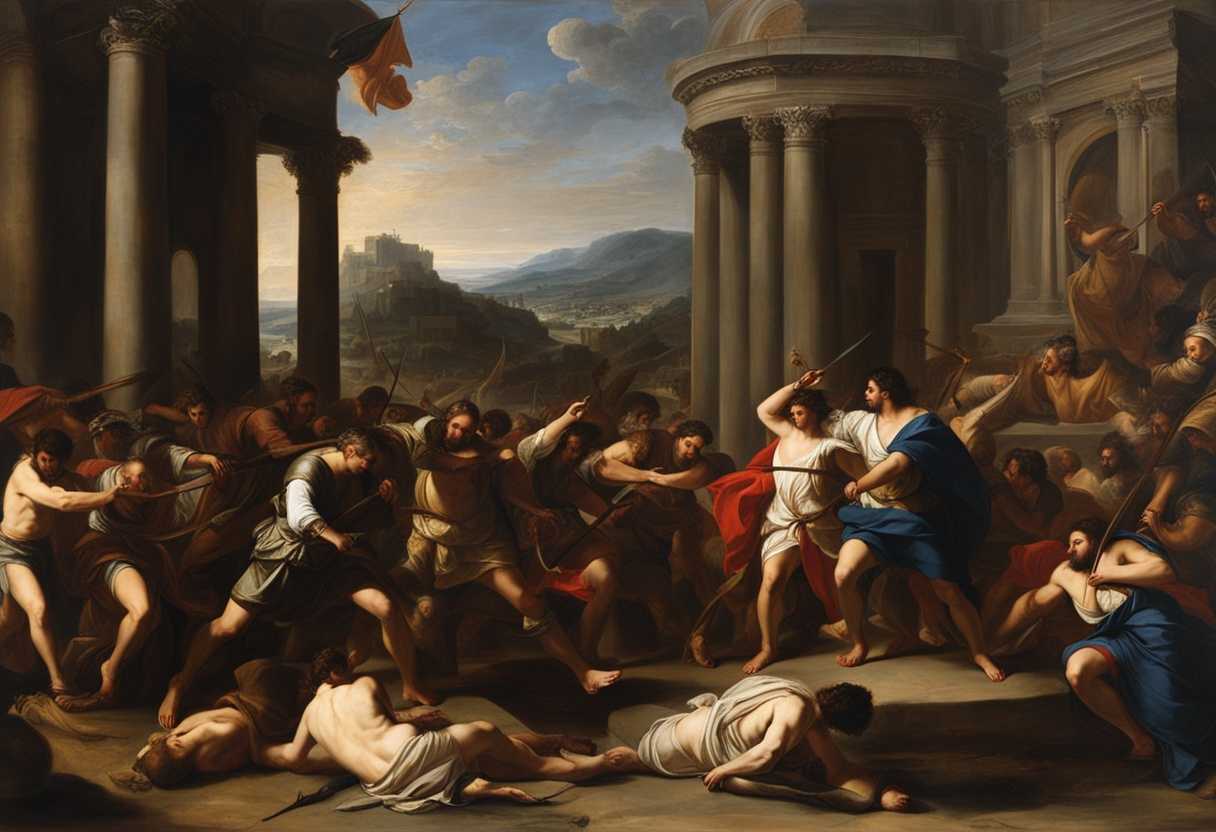
Setting the Scene for 2 Samuel 21:17
The scene in 2 Samuel 21:17 takes place on a battlefield where the Philistines are gathered to fight against Israel. The Philistines had been a longstanding enemy of the Israelites, and this particular battle was fierce and intense. Among the Philistine forces stood a giant warrior named Ishbi-Benob, who was known for his formidable strength and skill in combat.
On the other side of the battlefield, the Israelite army was led by King David, who had gathered his mighty men to face the Philistine threat. Among David’s warriors was Abishai, the nephew of David and a renowned warrior in his own right. As the battle raged on, Ishbi-Benob confronted Abishai, seeking to strike him down and claim victory for the Philistines.
The clash between Ishbi-Benob and Abishai was a moment of high tension and drama, with the outcome hanging in the balance. The two warriors engaged in a fierce duel, their swords clashing as they fought for supremacy on the battlefield. In the end, it was Abishai who emerged victorious, striking down Ishbi-Benob and securing a crucial victory for the Israelites in their ongoing struggle against their enemies.
What is 2 Samuel 21:17 about?
This verse from the Bible depicts a powerful image of loyalty, courage, and divine protection. David, a figure known for his faith in God and his bravery, is surrounded by his men who stand by him in the face of giants. This scene symbolizes the importance of solidarity and support in times of adversity. David’s men exemplify the concept of brotherhood and camaraderie, willing to put themselves in harm’s way to defend their leader.
Furthermore, the verse conveys a profound message about God’s unwavering presence in times of struggle. Despite the overwhelming odds and the intimidating presence of giants, David and his men find strength and protection through their faith in God. This passage serves as a reminder that with God on our side, we can overcome any obstacle or challenge that may come our way. It prompts us to reflect on the importance of trusting in a higher power and having faith that we are never alone in our battles.
Understanding what 2 Samuel 21:17 really means
In the narrative of 2 Samuel 21:17, we witness a poignant moment where David, the aging warrior, is aided by his loyal companion, Abishai, in battle against the Philistines. This verse serves as a testament to the significance of community and support, showcasing how individuals coming together can achieve remarkable feats. Abishai’s swift action to rescue David not only highlights his bravery but also underscores the essence of standing by those who lead and inspire us.
The phrase “But Abishai son of Zeruiah came to David’s rescue” resonates with the timeless truth that unity and loyalty are pillars of strength in times of adversity. It prompts us to reflect on the importance of being there for one another, especially when facing challenges. Abishai’s decisive strike against the Philistine symbolizes the triumph that can be attained through courage and unwavering faith, inspiring us to confront our own battles with similar resolve.
Moreover, the pledge made by David’s men to safeguard him from future battles signifies the recognition of his pivotal role as the “lamp of Israel.” This gesture underscores the value of leadership and the collective responsibility to protect and uphold those who guide and illuminate our paths. It serves as a poignant reminder of the need to honor and support those who selflessly dedicate themselves to the well-being of their communities.
Drawing parallels from related biblical passages such as Ecclesiastes 4:9-10, Galatians 6:2, and John 15:13, we are reminded of the enduring principles of mutual support, bearing one another’s burdens, and the ultimate act of sacrificial love. These verses echo the themes of companionship, shared responsibilities, and selfless devotion exemplified in Abishai’s actions towards David, urging us to emulate such virtues in our interactions with others.
In a contemporary context, where individualism often takes precedence, the narrative of 2 Samuel 21:17 serves as a poignant reminder of the strength and necessity of collective effort and mutual care. It prompts us to reevaluate our priorities, emphasizing the profound impact of standing together, supporting one another, and valuing the interconnectedness that binds us as a community. Just as Abishai’s intervention bolstered David and his men, our acts of solidarity and compassion can foster resilience and unity in our modern-day societies.
Imagine a scenario where a community rallies around a leader in need, mirroring the support Abishai provided to David. This modern-day anecdote illustrates the transformative power of collective care and solidarity, showcasing how coming together to uplift and protect those in vulnerable positions not only fosters individual well-being but also strengthens the fabric of the community. In essence, 2 Samuel 21:17 beckons us to embrace the virtues of loyalty, support, and the safeguarding of those who illuminate our lives, inspiring us to cultivate a culture of mutual respect and communal solidarity in our daily interactions.
How can we trust God when facing overwhelming odds?
We can trust in God by remembering His faithfulness and power in moments when we are faced with overwhelming odds. We can find strength and confidence in knowing that He is able to help us in our current situation by reflecting on the times He has come through for us in the past. This trust is grounded in the belief that God is sovereign and in control of all things, including the challenges we may be facing.
Additionally, trusting in God in the face of overwhelming odds involves surrendering our fears and doubts to Him. We must acknowledge our limitations and weaknesses, and choose to place our trust in His strength and wisdom. This act of surrender allows us to let go of the need to have all the answers or solutions, and instead rely on God’s guidance and provision. Trusting in God ultimately means recognizing that He is bigger than any obstacle we may encounter and choosing to have faith that He will see us through.
Application
Just like David battled the Philistines, think about your own daily struggles at work or at home. Life hands you tough challenges, but remember the courage David showed. Use his example to confront your own problems head-on, with determination and faith. Are you ready to tackle your giants today?

Reverend Michael Johnson is an experienced Church Minister with a profound expertise in spirituality and guidance. With a serene presence and a compassionate heart, he has faithfully served his congregation for over 20 years, leading them on a spiritual journey towards inner peace and enlightenment. Reverend Johnson’s extensive knowledge of religious philosophies and profound understanding of human nature have made him a trusted confidant and mentor to many, as he seamlessly weaves his profound wisdom into life teachings. Reverend Johnson’s calming demeanor and empathetic nature continue to uplift and heal souls, nurturing a sense of unity and tranquility within his community.