
2 Samuel 23:13-17 is about three mighty warriors who risked their lives to fulfill King David’s simple request for water from the well of Bethlehem, displaying their unwavering loyalty and willingness to sacrifice for their leader.
23:13 And three of the thirty chief men went down and came about harvest time to David at the cave of Adullam, when a band of Philistines was encamped in the Valley of Rephaim.
14 And David was then in the stronghold, and the garrison of the Philistines was then at Bethlehem.
15 And David said longingly, “Oh, that someone would give me water to drink from the well of Bethlehem that is by the gate!”
16 Then the three mighty men broke through the camp of the Philistines and drew water out of the well of Bethlehem that was by the gate and carried and brought it to David. But he would not drink of it. He poured it out to the Lord,
17 And he said, “Far be it from me, O Lord, that I should do this. Is it not the blood of men who went at the risk of their lives?” Therefore he would not drink it. These things the three mighty men did.
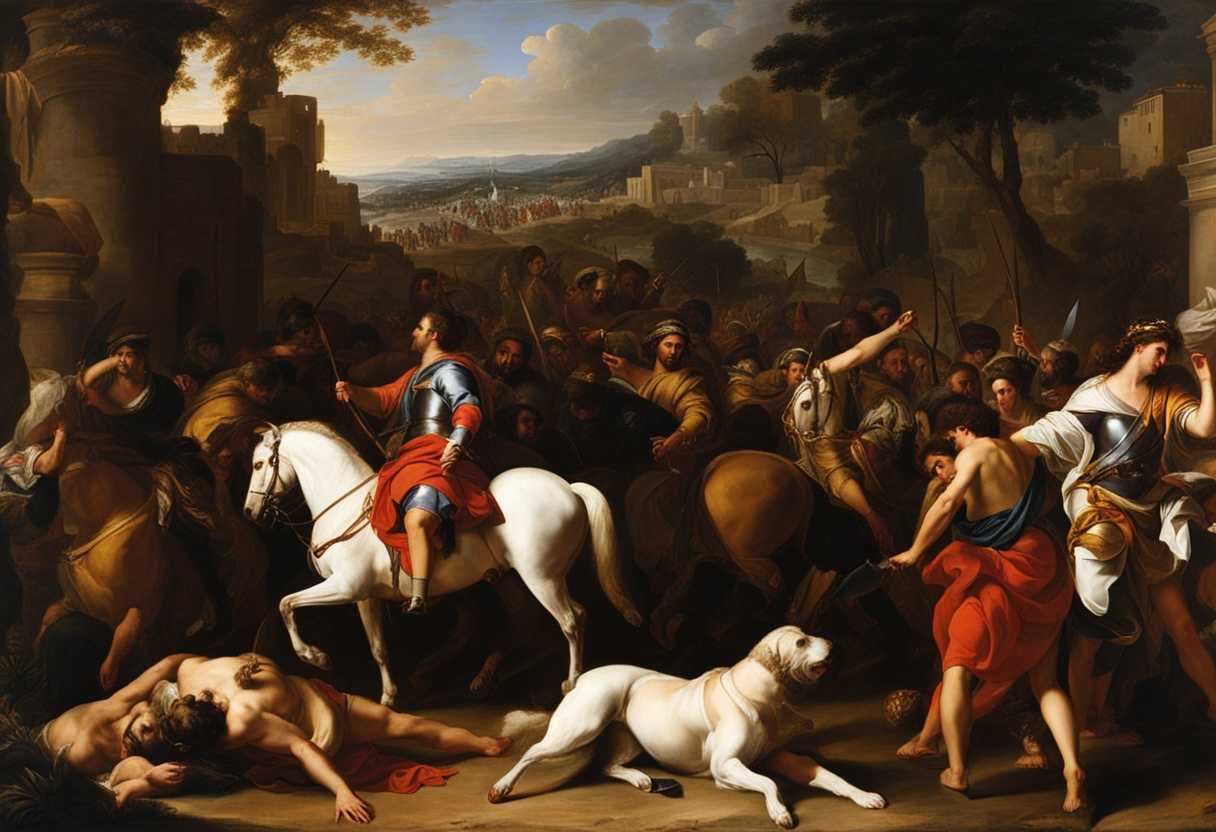
Setting the Scene for 2 Samuel 23:13-17
In 2 Samuel chapter 23, we find a gripping account of a valiant act by three of King David’s mighty men. The scene is set in the midst of a battle between the Israelites and the Philistines. As the battle rages on, the Philistines have taken control of a field of barley, and David is stationed in a stronghold while the Philistine garrison is at Bethlehem.
Among David’s mighty men are three warriors: Josheb-basshebeth, Eleazar, and Shammah. These three men are fiercely loyal to King David and are known for their exceptional bravery and skill in battle. One day, while David is in the stronghold, these three warriors hear him express a longing for water from the well of Bethlehem, which is currently under Philistine control.
Driven by their unwavering devotion to their king, Josheb-basshebeth, Eleazar, and Shammah embark on a daring mission to fulfill David’s wish. Risking their lives, they break through the Philistine lines, draw water from the well of Bethlehem, and bring it back to David. This act of loyalty and courage demonstrates the deep bond between David and his mighty men, as well as the extraordinary lengths to which they are willing to go to honor and serve their king.
What is 2 Samuel 23:13-17 about?
Imagine the dedication and loyalty these three warriors had for David to risk their lives to bring him water from Bethlehem’s well. It speaks volumes about the deep bond and respect they had for their leader. Their act was not just about quenching David’s physical thirst but more about showing their unwavering support and willingness to go to great lengths for him. It highlights the selfless and sacrificial nature of their loyalty and commitment.
Reflect on what it means to have such unwavering loyalty and dedication in your own life. How far would you go to support those you care about? David and these warriors must have had trust and respect for each other to take on such a risky mission. It challenges us to think about the depth of our own relationships and what we are willing to do for the people we hold dear. Let us consider the significance of true friendship and loyalty in our lives as we ponder this verse and emulate the example set by these three mighty warriors.
Understanding what 2 Samuel 23:13-17 really means
In the “Last Words of David” section in 2 Samuel, we encounter a poignant account of three of David’s mighty warriors who displayed exceptional courage and loyalty. These elite warriors, part of the thirty chief men, risked their lives to fulfill David’s simple request for water from Bethlehem, then occupied by the Philistines. The phrase “broke through the camp of the Philistines” vividly portrays the daring nature of their mission, showcasing their unwavering commitment to their leader.
David’s act of pouring out the water as an offering to the Lord symbolizes his deep reverence for God and his profound appreciation for the sacrifice made by his men. This gesture underscores the spiritual significance of recognizing and honoring the sacrifices of others, while also emphasizing the centrality of God in all aspects of life. The narrative in 2 Samuel 23:13-17 resonates with themes of loyalty, sacrifice, and leadership, offering timeless lessons that transcend the boundaries of time and culture.
Drawing parallels to other biblical passages, such as 1 Chronicles 11:15-19, Romans 12:1, and John 15:13, we see a consistent message of selflessness, devotion, and sacrificial love. These verses further illuminate the profound impact of acts of loyalty and sacrifice, urging believers to emulate such virtues in their own lives. The story of David’s warriors serves as a compelling example of the ultimate expression of love – laying down one’s life for others.
In today’s world, where individualism often takes precedence, the narrative in 2 Samuel 23:13-17 reminds us of the enduring strength found in community and mutual support. It prompts reflection on how we can embody the values of loyalty, sacrifice, and reverence in our interactions with others. Just as David honored his warriors’ sacrifice, we are called to recognize and appreciate the sacrifices of those around us, fostering a culture of gratitude and unity.
Consider a contemporary scenario where a group of friends rallies around a companion in need, going above and beyond to provide support and assistance. Inspired by their collective efforts, the recipient decides to pay it forward by donating the received help to a charitable cause, thus perpetuating the cycle of generosity and compassion. This anecdote mirrors the essence of the passage, highlighting the ripple effect of loyalty, sacrifice, and communal solidarity.
In conclusion, 2 Samuel 23:13-17 encapsulates profound truths about bravery, loyalty, and reverence that resonate across generations. It challenges us to reflect on our own capacity for sacrificial love and to honor the sacrifices of others in ways that glorify God and enrich the broader community. As we contemplate the legacy of David’s warriors, may we be inspired to embody these virtues in our daily lives, fostering a culture of selflessness and mutual support.
What does true loyalty look like in relationships?
True loyalty in relationships can be seen when someone shows unwavering dedication and support to another, even in the face of challenges or danger. It involves going above and beyond to stand by someone’s side, no matter the circumstances. This kind of loyalty is not based on personal gain or convenience but on a deep commitment and love for the other person. Three mighty warriors risk their lives to fulfill King David’s wish for a drink of water from his hometown well in the story from 2 Samuel 23:13-17, showing an example of true loyalty. Their selfless devotion to their leader demonstrates the kind of loyalty that puts the needs and desires of others above their own, even at great personal cost. This level of loyalty is a rare and precious quality in relationships, one that can strengthen bonds and create lasting connections built on trust and devotion.
Application
Think about those moments when you go out of your way to help a colleague or sacrifice time for your family. Just like the three mighty warriors in 2 Samuel 23:13-17 who risked everything to get water for David, ask yourself – are you willing to go the extra mile for those who matter to you? When your loved ones or coworkers need you most, will you step up with the same bravery and loyalty? What would our world look like if we all made that kind of commitment?

Reverend Michael Johnson is an experienced Church Minister with a profound expertise in spirituality and guidance. With a serene presence and a compassionate heart, he has faithfully served his congregation for over 20 years, leading them on a spiritual journey towards inner peace and enlightenment. Reverend Johnson’s extensive knowledge of religious philosophies and profound understanding of human nature have made him a trusted confidant and mentor to many, as he seamlessly weaves his profound wisdom into life teachings. Reverend Johnson’s calming demeanor and empathetic nature continue to uplift and heal souls, nurturing a sense of unity and tranquility within his community.