
2 Samuel 7:1-7 is about King David desiring to build a house for the Lord, but God revealing through the prophet Nathan that He does not need a physical house to dwell in because He is present everywhere and will establish an eternal kingdom through David’s descendants.
1 Now when the king lived in his house and the Lord had given him rest from all his surrounding enemies,
2 that the king said to Nathan the prophet, “See now, I dwell in a house of cedar, but the ark of God dwells in a tent.”
3 And Nathan said to the king, “Go, do all that is in your heart, for the Lord is with you.”
4 But that same night the word of the Lord came to Nathan,
5 “Go and tell my servant David, ‘Thus says the Lord: Would you build me a house to dwell in?
6 I have not lived in a house since the day I brought up the people of Israel from Egypt to this day, but I have been moving about in a tent for my dwelling.
7 In all the places where I have moved with all the people of Israel, did I speak a word with any of the judges of Israel, whom I commanded to shepherd my people Israel, saying, “Why have you not built me a house of cedar?”
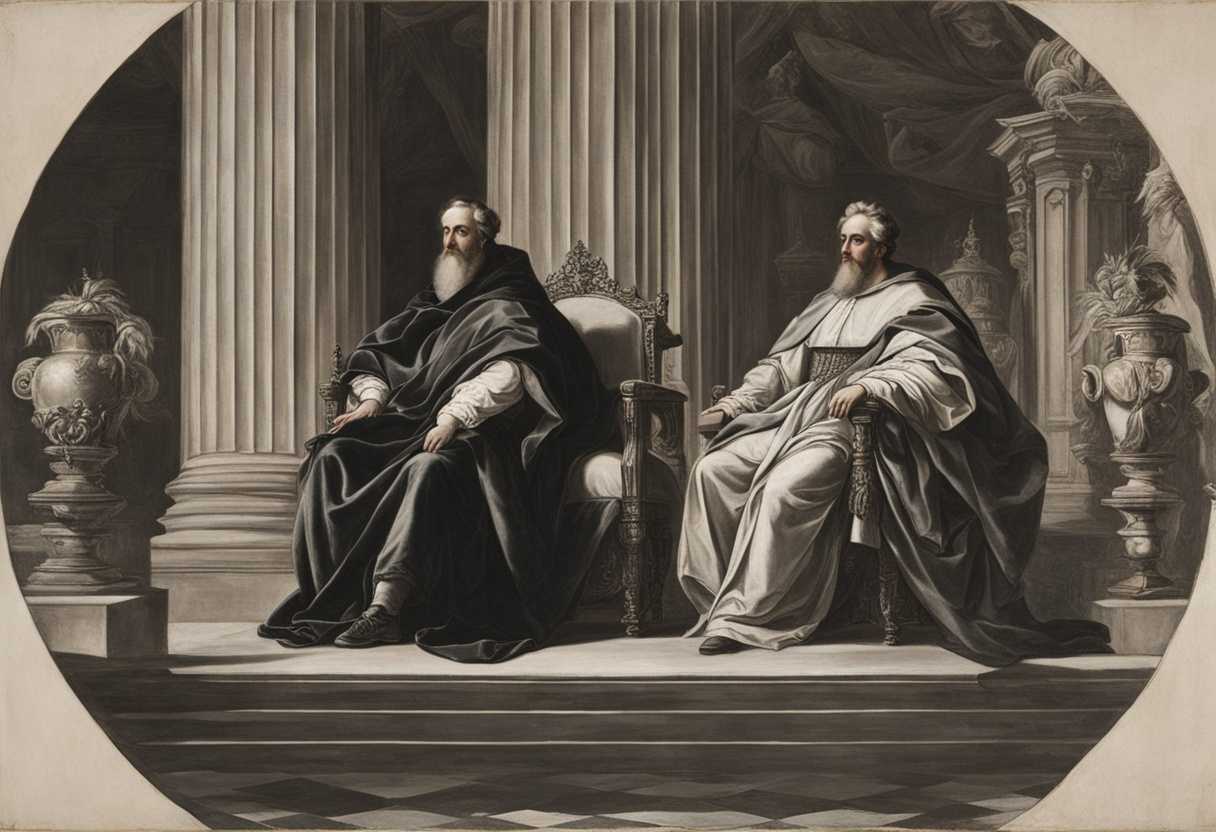
Setting the Scene for 2 Samuel 7:1-7
In 2 Samuel chapter 7, we find King David residing in his palace in Jerusalem. The scene is set in a grand hall adorned with rich tapestries and ornate furniture. King David, a man after God’s own heart, is feeling a sense of peace and prosperity as he reflects on his victories and blessings. His loyal servants and advisors are gathered around him, discussing matters of the kingdom and the welfare of the people.
Among those present is the prophet Nathan, who has been a trusted counselor to King David. Nathan, guided by divine inspiration, will play a crucial role in the events that unfold in this chapter. As they converse, a sense of reverence and awe fills the room, for they are aware of the presence of the Almighty in their midst. The atmosphere is one of solemnity and respect as they seek to discern God’s will for the future of the kingdom and the dynasty of David.
What is 2 Samuel 7:1-7 about?
King David’s heartfelt desire to build a temple for God is seen in this verse, despite God’s promise of an eternal kingdom for him. This moment is a beautiful display of David’s deep reverence and devotion to God, wanting to honor Him by creating a place where His presence can dwell among His people. It reveals David’s humility and love for God, as he seeks to give back and serve Him in a tangible way.
Have you ever felt a similar desire to honor and serve God in your life? How does David’s example inspire you to express your devotion to God? This verse reminds us of the importance of seeking to glorify God in all that we do, just like David yearned to build a temple for God. It encourages us to examine our own hearts and actions, reflecting on how we can show our love and reverence for God through our words and deeds.
Understanding what 2 Samuel 7:1-7 really means
In 2 Samuel 7:1-7, we find King David at a pivotal moment in his reign, expressing his desire to build a house for the Lord. The passage unfolds against the backdrop of a time of peace and stability in David’s rule, where he reflects on the incongruity of residing in a grand palace while the Ark of the Covenant, symbolizing God’s presence, remains in a humble tent. David’s genuine reverence for God is evident as he contemplates honoring Him with a permanent dwelling place, showcasing his desire to prioritize spiritual matters even amidst his earthly success.
God’s response through the prophet Nathan challenges David’s assumption and redirects his focus from constructing a physical structure to understanding God’s sovereign will. The rhetorical question, “Are you the one to build me a house to dwell in?” underscores the notion that God’s presence transcends human-made structures. Through this interaction, God emphasizes His continuous presence and faithfulness throughout Israel’s history, irrespective of a physical dwelling place.
This passage resonates with contemporary believers, urging us to align our plans with God’s will and submit our noble intentions to His greater purpose. It serves as a poignant reminder that true worship is not confined to physical buildings but is manifested in a heart surrendered to God’s leading. Just as David learned to prioritize God’s plans over his own, we are called to seek God’s guidance in our endeavors, trusting that His designs are infinitely more significant than our own aspirations.
Drawing parallels from this narrative, consider a modern-day believer embarking on a ministry endeavor. Initially envisioning a grand building or specific location as the focal point, through prayer and seeking God’s direction, they may realize that God is calling them to serve in a different capacity or place. This shift in perspective can lead to a more impactful ministry that aligns with God’s will, mirroring David’s experience of yielding his plans to God’s divine purpose.
In conclusion, 2 Samuel 7:1-7 prompts us to humbly seek God’s guidance in all aspects of our lives, acknowledging that His plans surpass our understanding. It reassures us of God’s unwavering presence and faithfulness, irrespective of our circumstances or the physical spaces we inhabit. This passage serves as a timeless testament to the importance of surrendering our ambitions to God’s will and finding solace in His constant companionship, a truth that transcends the confines of ancient narratives and speaks directly to the hearts of believers today.
How does God want us to honor Him?
God wants us to honor Him by recognizing His greatness and sovereignty over all things. This means acknowledging His presence in our lives and giving Him the respect and reverence that He deserves as the Almighty Creator of the universe. We show our love and devotion to God by honoring Him in this way, demonstrating our acknowledgment of His power and authority.
God also desires for us to honor Him by following His commandments and living in a way that is pleasing to Him. This includes practicing justice, righteousness, and kindness towards others, as well as striving to live a life that aligns with His will. We demonstrate our reverence for God and show our commitment to walk in His ways by obeying His commandments and leading a life of integrity. We should honor God with our whole hearts, minds, and souls. This means making Him the center of our lives, seeking His guidance and wisdom in all that we do, and giving Him the praise and adoration that He deserves. We show our gratitude for His grace and mercy by honoring God in this way, cultivating a deep and meaningful relationship with Him that brings us joy, fulfillment, and eternal blessings.
Application
Think about your days at the office or time with family—are you looking for ways to honor your commitments? Like David wishing to build a house for God, you are invited to find ways to glorify God in your daily life. Reflect on your actions and align them with a greater purpose. Will you rise to this challenge and dedicate your efforts to something bigger? Are you ready to honor God with everything you do?

Reverend Michael Johnson is an experienced Church Minister with a profound expertise in spirituality and guidance. With a serene presence and a compassionate heart, he has faithfully served his congregation for over 20 years, leading them on a spiritual journey towards inner peace and enlightenment. Reverend Johnson’s extensive knowledge of religious philosophies and profound understanding of human nature have made him a trusted confidant and mentor to many, as he seamlessly weaves his profound wisdom into life teachings. Reverend Johnson’s calming demeanor and empathetic nature continue to uplift and heal souls, nurturing a sense of unity and tranquility within his community.