
2 Samuel 7:13-14 is about God’s covenant promise to King David, stating that He will establish David’s kingdom and recognizing that David’s offspring will be His son, signifying a deep, familial relationship between God and the Davidic line, which underscores themes of divine loyalty, kingdom permanence, and the messianic lineage culminating in Jesus Christ.
13 He shall build a house for my name, and I will establish the throne of his kingdom forever.
14 I will be to him a father, and he shall be to me a son. When he commits iniquity, I will discipline him with the rod of men, with the stripes of the sons of men,
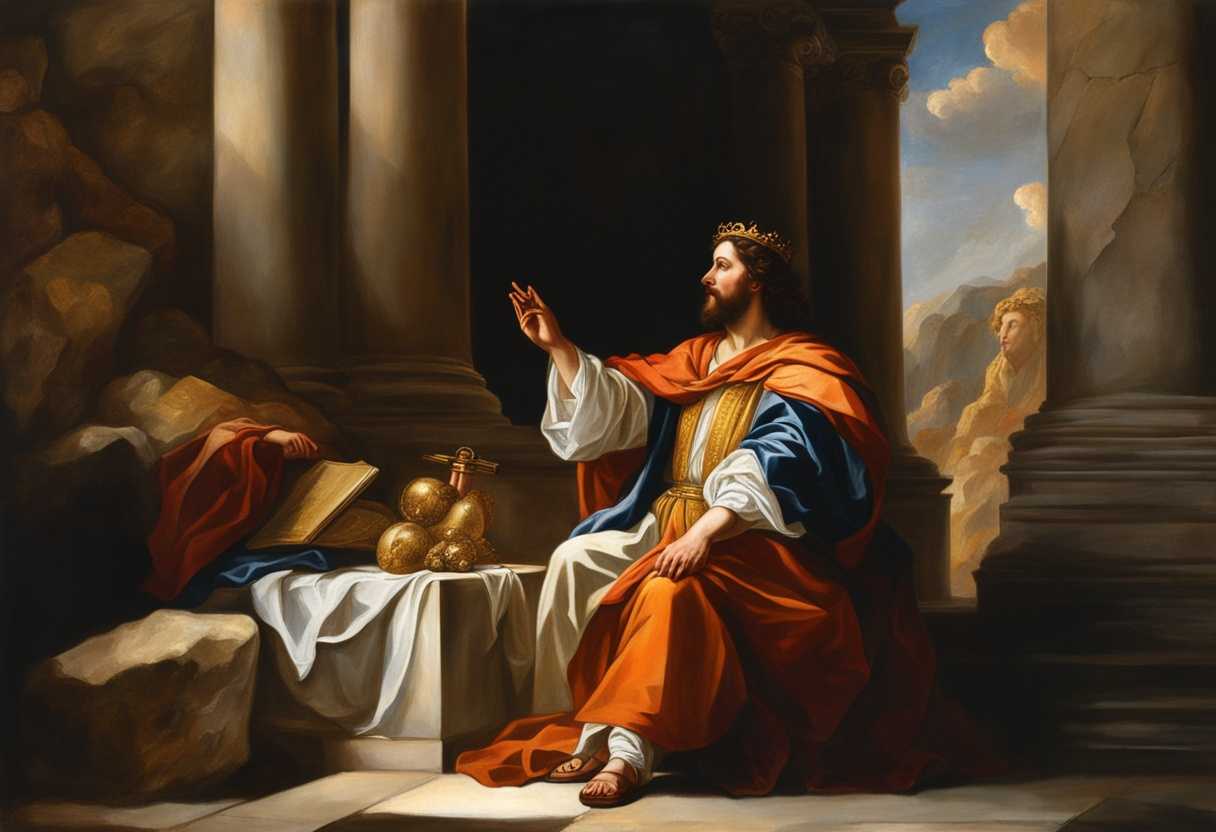
Setting the Scene for 2 Samuel 7:13-14
In the heart of ancient Israel, the air was thick with anticipation and reverence as King David sat in his royal palace, a grand structure of hewn stone and cedar wood, overlooking the city of Jerusalem. The sun was setting, casting a warm golden hue over the landscape, illuminating the hills that surrounded the city. David, a man after God’s own heart, had recently united the tribes of Israel and established Jerusalem as the political and spiritual center of the nation. His heart was filled with gratitude and a desire to honor God, yet he felt a deep longing to build a house for the Lord, a magnificent temple that would reflect the glory of the Almighty.
In this moment of contemplation, the prophet Nathan stood before David, a man chosen by God to deliver His messages. Nathan had been a trusted advisor to the king, and he had witnessed the rise of David from a humble shepherd to the revered monarch of Israel. As David expressed his desire to construct a temple, Nathan initially encouraged him, sensing the king’s passion and devotion. However, that night, God spoke to Nathan in a dream, revealing His divine plan for David’s lineage and the future of Israel. Nathan awoke with a sense of urgency, understanding that God had a different purpose for David than what he had envisioned.
The scene was set for a profound revelation. The palace was adorned with rich tapestries and the sounds of distant celebrations echoed through the streets, as the people of Israel rejoiced in their newfound unity and strength. Nathan approached David the next day, his heart racing with the weight of the message he was about to deliver. He conveyed God’s promise that David’s house would be established forever, and that his offspring would be the one to build the temple. This moment marked a pivotal point in Israel’s history, as it not only affirmed David’s legacy but also foreshadowed the coming of the Messiah, who would reign eternally. The atmosphere was charged with divine purpose, as both men understood the significance of what was unfolding before them.
What is 2 Samuel 7:13-14 about?
This verse speaks volumes about the profound covenant that God made with David, a promise that extends beyond mere rulership into the realm of everlasting significance. When we consider the implications of such a promise, we must ask ourselves: what does it mean for a lineage to establish an eternal kingdom? Is this merely about politics and power, or is there a deeper spiritual truth at play? The fact that God chooses to work through human lineage suggests an intimate relationship between the divine and the earthly. It’s a reminder that our actions and choices can have ramifications that echo through generations. This promise signifies an enduring hope for not only David and his descendants, but also for the broader community of believers. Imagine living in a time of uncertainty, where the stability of the kingdom might waver. How encouraging it must have been to know that God’s plan would remain unshaken through David’s lineage! The establishment of an everlasting kingdom implies the triumph of goodness, justice, and divine order—elements that we all yearn for in our lives and world today. So, as we reflect on this promise, we might ask ourselves: how does this shape our understanding of legacy and faith? How can we, in our own lives, contribute to a lineage of hope and integrity that lasts beyond our mere existence?
Understanding what 2 Samuel 7:13-14 really means
In 2 Samuel 7:13-14, we encounter a pivotal moment in biblical history, where God establishes a profound covenant with David. This passage is not merely a promise; it is a declaration of God’s unwavering commitment to His people and the establishment of a lasting kingdom through David’s lineage. As we delve into this text, we uncover layers of meaning that resonate with both the historical context and our contemporary lives.
David, having secured his reign, expresses a desire to build a temple for the Lord. However, God, through the prophet Nathan, reveals that it will be David’s son who will fulfill this task. This revelation is significant. It underscores the idea that God’s plans often extend beyond our immediate desires and ambitions. David’s intention to honor God through a temple is noble, yet God redirects this vision, emphasizing that His purposes are greater than any single individual. How often do we find ourselves wanting to dictate the terms of our service to God? This passage invites us to reflect on the importance of aligning our desires with God’s overarching plan.
The key phrases in this passage are rich with meaning. When God declares, “I will establish the throne of his kingdom forever,” it speaks to the eternal nature of His promise. This is not a fleeting assurance; it is a commitment that transcends time and human limitations. The “throne” symbolizes authority and governance, suggesting that God’s kingdom will be characterized by righteousness and justice. In a world where authority can often be corrupted, this promise offers a glimpse of a kingdom where divine justice prevails. Are we not all yearning for such a reality in our lives today?
Furthermore, the phrase “I will be his father, and he will be my son” reveals a deep, covenantal relationship between God and David’s lineage. This familial connection signifies more than just a ruler-subject dynamic; it highlights God’s love and commitment to His people. It invites us to consider our own relationship with God. Do we see Him as a distant ruler, or do we embrace the intimacy of being His children? This passage challenges us to cultivate a deeper understanding of our identity in Christ.
Related biblical passages, such as Psalm 89:3-4 and Luke 1:32-33, further illuminate the significance of this promise. Psalm 89 reinforces the idea of an everlasting dynasty, while Luke connects this promise to Jesus, the Son of David. This continuity from the Old Testament to the New Testament emphasizes that God’s promises are fulfilled in Christ. How does this connection shape our understanding of Jesus’ role in our lives? It invites us to see Him not just as a historical figure but as the fulfillment of God’s eternal plan.
In today’s world, filled with uncertainty and change, the promise of an everlasting kingdom offers hope and assurance. It reminds us that God’s plans are steadfast and unshakeable. As believers, we are encouraged to trust in His faithfulness, knowing that His promises endure beyond our circumstances. This assurance can be a source of strength in times of doubt and fear. How can we actively remind ourselves of this truth in our daily lives?
To illustrate this, consider a young couple who, after years of hard work, purchase their first home. They invest love and effort into creating a nurturing environment, only to learn that their home will be passed down to their children. This news brings them joy and security, knowing their legacy will continue. Similarly, we can find comfort in knowing that God’s promises extend beyond our lifetime, providing a foundation for generations to come. How can we build our lives on this foundation of faith?
In conclusion, the promise made to David is not just a historical event; it is a living testament to God’s faithfulness. As we reflect on this passage, let us embrace the hope it offers, recognizing that we are part of a greater story that God is weaving through time. Our lives, like David’s, can be instruments of His purpose, contributing to the unfolding of His eternal kingdom. How will you respond to this invitation to be part of God’s enduring legacy?
How can I nurture a lasting relationship with God?
Nurturing a lasting relationship with God involves recognizing His desire for an intimate connection with you. Understanding that you are part of a larger divine plan can be a powerful motivator. This relationship is built on trust and commitment, much like the bonds we create with others in our lives. You allow intimacy to grow by allowing God to be a constant presence, acknowledging His sovereignty, and embracing the idea that He desires to dwell among you.
Another key aspect is the pursuit of obedience and faithfulness. God’s promises and His faithfulness serve as a foundation for your faith journey. Embrace regular practices that strengthen your connection with Him—such as prayer, meditation, and studying spiritual teachings. These actions not only deepen your understanding but also help cultivate a heart that aligns with God’s will, encouraging a life that reflects His values.
Lastly, it’s crucial to engage in community and worship. Surrounding yourself with others who share similar spiritual goals can provide encouragement and accountability. Together, you can explore the depths of your faith, celebrate shared experiences, and support one another through challenges. Creating a strong network by fostering these relationships can bolster your relationship with God, reminding you of His unwavering love and the importance of loyalty and fellowship in your spiritual journey.
Application
Just as a strong foundation supports a house, our commitments shape our lives and families. Take a moment to reflect: Are you upholding the promises you’ve made to those you love and to God? Today is your opportunity to renew that commitment. Think of it like pouring fresh concrete into the cracks of your relationships. How will you choose to honor the bonds you’ve built? Will you step forward and strengthen your legacy today?

Reverend Michael Johnson is an experienced Church Minister with a profound expertise in spirituality and guidance. With a serene presence and a compassionate heart, he has faithfully served his congregation for over 20 years, leading them on a spiritual journey towards inner peace and enlightenment. Reverend Johnson’s extensive knowledge of religious philosophies and profound understanding of human nature have made him a trusted confidant and mentor to many, as he seamlessly weaves his profound wisdom into life teachings. Reverend Johnson’s calming demeanor and empathetic nature continue to uplift and heal souls, nurturing a sense of unity and tranquility within his community.