
2 Samuel 7:18 is about King David’s humble response to God’s promise to establish his throne forever, reflecting on his own unworthiness and acknowledging God’s greatness.
18 Then King David went in and sat before the Lord and said, “Who am I, O Lord God, and what is my house, that you have brought me thus far?
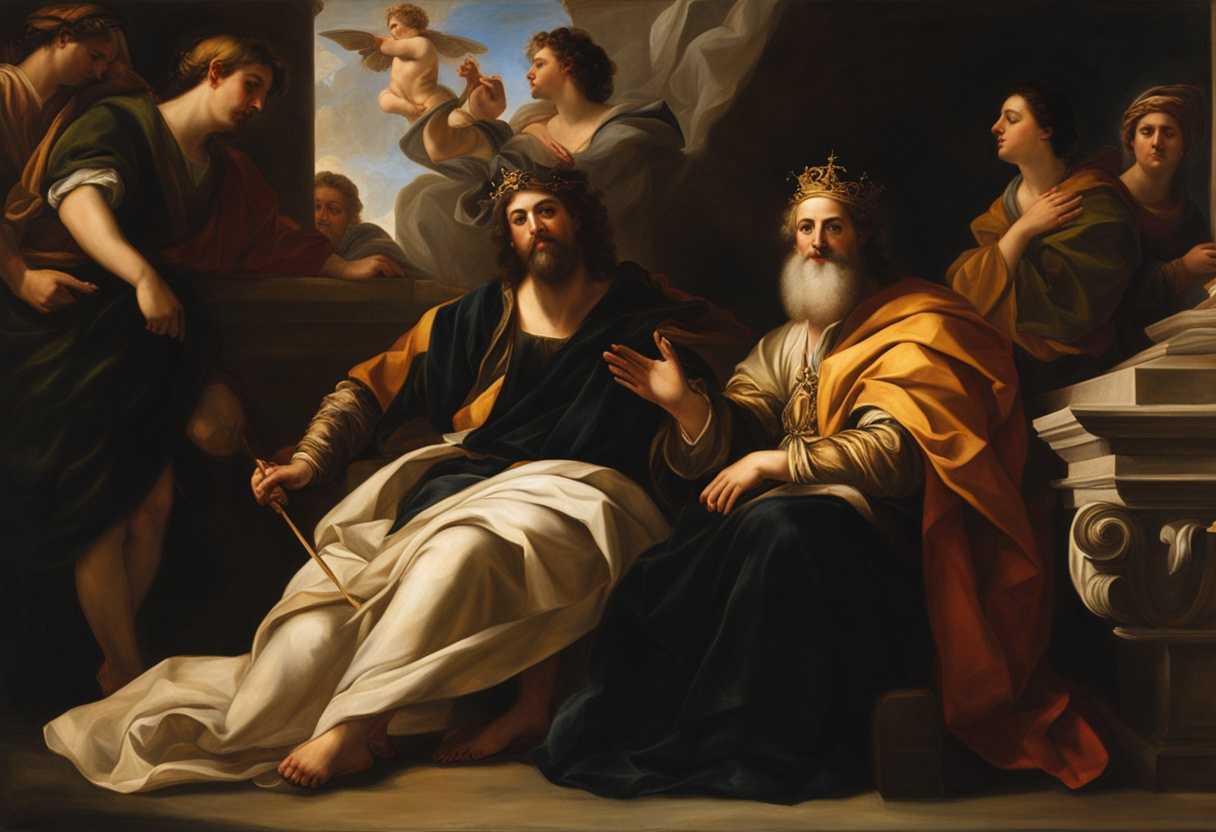
Setting the Scene for 2 Samuel 7:18
In 2 Samuel chapter 7, we find King David sitting in his palace in Jerusalem, reflecting on the blessings of God. The room is adorned with rich tapestries and golden ornaments, a symbol of David’s reign and prosperity. As he ponders the victories and peace that God has granted him, David is filled with gratitude and a desire to honor the Lord.
Nathan, the prophet, enters the chamber, his presence commanding respect and reverence. He approaches King David with a solemn expression, carrying a message from God. Nathan shares with David the divine promise of establishing his kingdom forever, a covenant that will endure through generations. David is humbled by this revelation, overwhelmed by the faithfulness and grace of God towards him and his descendants.
The scene is one of profound significance, as David and Nathan stand together in the presence of God’s favor and promise. The atmosphere is charged with awe and reverence, as the weight of God’s covenant settles upon them. In this moment, David’s heart is moved to worship and praise, recognizing the greatness of the Lord and His faithfulness to His people throughout the ages.
What is 2 Samuel 7:18 about?
David expresses his deep sense of humility and gratitude towards God after receiving the promise of an eternal kingdom in this powerful verse. David acknowledges God’s greatness and sovereignty, recognizing that his own accomplishments and victories are ultimately the result of God’s guidance and favor. Through his prayer, David teaches us the importance of recognizing our dependence on God and offering thanks for all the blessings and promises He bestows upon us.
Have you ever paused to reflect on the blessings in your own life and given thanks to a higher power for them? David’s prayer serves as a poignant reminder for us to remain humble in the face of our achievements and successes, attributing them to the grace and mercy of God. It also calls us to approach life with a heart full of gratitude, acknowledging that every good thing we have is a gift from above. We should contemplate David’s words and strive to cultivate a spirit of humility and thanksgiving in our own lives, recognizing that God is the ultimate source of all blessings and promises.
Understanding what 2 Samuel 7:18 really means
In 2 Samuel 7:18, we witness a profound moment in King David’s life, where he humbly acknowledges God’s greatness and sovereignty. This verse is nestled within a narrative where David, filled with a desire to build a temple for God, is met with the revelation that it will be his son who fulfills this task. Instead of resentment or disappointment, David’s response is one of deep gratitude and humility. He enters the presence of the Lord and poses a rhetorical question that echoes through the ages, “Who am I, O Lord God, and what is my house, that you have brought me thus far?”
This moment of reflection by David serves as a poignant reminder for us today. In a world that often exalts self-sufficiency and pride, David’s posture of humility before God stands out as a beacon of wisdom. It prompts us to consider our own lives and achievements, leading us to question the source of our successes. Just as David recognized that his position and blessings were not solely of his own making, we are encouraged to acknowledge the role of divine intervention and grace in our journey.
The parallel passages in 1 Chronicles 17:16-27 and Psalm 8:4 further illuminate the themes of humility and gratitude present in David’s prayer. These passages echo the sentiment of awe and wonder at God’s attention to humanity, reinforcing the idea that our existence and blessings are intricately tied to God’s providence. Additionally, the connection to Mary’s Magnificat in Luke 1:46-55 underscores the universal nature of humility and gratitude in the face of God’s favor.
As we ponder on David’s words, “Who am I, O Lord God, and what is my house, that you have brought me thus far?” we are invited to engage in personal reflection. This verse challenges us to examine our own lives, to recognize the blessings and grace we have received, and to cultivate a spirit of gratitude. It compels us to approach God with humility, acknowledging His sovereignty and faithfulness in guiding our paths.
In a modern context, this verse resonates deeply with individuals navigating success, achievements, and milestones. Just as David paused to acknowledge God’s role in his journey, we too can take a moment amidst our victories to express gratitude for the support and opportunities that have shaped our paths. By doing so, we align ourselves with the spirit of David’s prayer, recognizing that our accomplishments are not solely our own but are intertwined with God’s providential care.
In essence, 2 Samuel 7:18 serves as a timeless reminder of the importance of humility, gratitude, and recognizing God’s hand in our lives. It challenges us to ponder our own existence and achievements in light of God’s grace, prompting us to approach Him with reverence and thanksgiving. May we, like David, find moments to sit before the Lord, pondering the question, “Who am I, O Lord God, that you have brought me thus far?”
What does it mean to find favor in God’s eyes?
To find favor in God’s eyes means to receive His approval, acceptance, and kindness. It indicates that God looks upon the person with favor and grace, showing them mercy and blessings. When someone finds favor in God’s eyes, they are seen as righteous and pleasing in His sight, and their relationship with God is strengthened. The Lord favors King David’s desire to build a house for God in 2 Samuel 7:18. This favor indicates that God acknowledges David’s heart and intentions, and He responds by promising to establish David’s kingdom forever. This act of favor from God not only shows His approval of David’s heart and actions, but it also reflects His faithfulness to His promises and His willingness to bless His chosen servants. A profound blessing that signifies a deep connection and relationship with the Almighty is ultimately found in God’s eyes. It is a state of alignment with God’s will and a manifestation of His grace and love towards those who seek to honor and serve Him faithfully.
Application
Let’s think about 2 Samuel 7:18. See how King David approached God with ultimate humility and reverence. Imagine having the same respect in your interactions, like tuning out office noise during a crucial meeting to stay focused on what matters. Let this reflection push you to connect more deeply with God, seeking His guidance like a GPS in rush hour. What steps will you take today to honor God in your life?

Reverend Michael Johnson is an experienced Church Minister with a profound expertise in spirituality and guidance. With a serene presence and a compassionate heart, he has faithfully served his congregation for over 20 years, leading them on a spiritual journey towards inner peace and enlightenment. Reverend Johnson’s extensive knowledge of religious philosophies and profound understanding of human nature have made him a trusted confidant and mentor to many, as he seamlessly weaves his profound wisdom into life teachings. Reverend Johnson’s calming demeanor and empathetic nature continue to uplift and heal souls, nurturing a sense of unity and tranquility within his community.