
Acts 15:22-29 is about the early church leaders coming together to resolve a dispute over circumcision and dietary laws, emphasizing the foundation of faith in Christ alone for salvation and the importance of maintaining unity among believers.
22 Then it seemed good to the apostles and the elders, with the whole church, to choose men from among them and send them to Antioch with Paul and Barnabas. They sent Judas called Barsabbas, and Silas, leading men among the brothers,
23 They sent this letter by them: “The apostles and the elders, your brothers, To the brothers who are of the Gentiles in Antioch and Syria and Cilicia, greetings.
24 Since we have heard that some persons have gone out from us and troubled you with words, unsettling your minds, although we gave them no instructions,
25 it has seemed good to us, having come to one accord, to choose men and send them to you with our beloved Barnabas and Paul,
26 men who have risked their lives for the name of our Lord Jesus Christ.
27 We have therefore sent Judas and Silas, who themselves will tell you the same things by word.
28 For it has seemed good to the Holy Spirit and to us to lay on you no greater burden than these requirements:
29 that you abstain from what has been sacrificed to idols, and from blood, and from what has been strangled, and from sexual immorality. If you keep yourselves from these, you will do well. Farewell.”
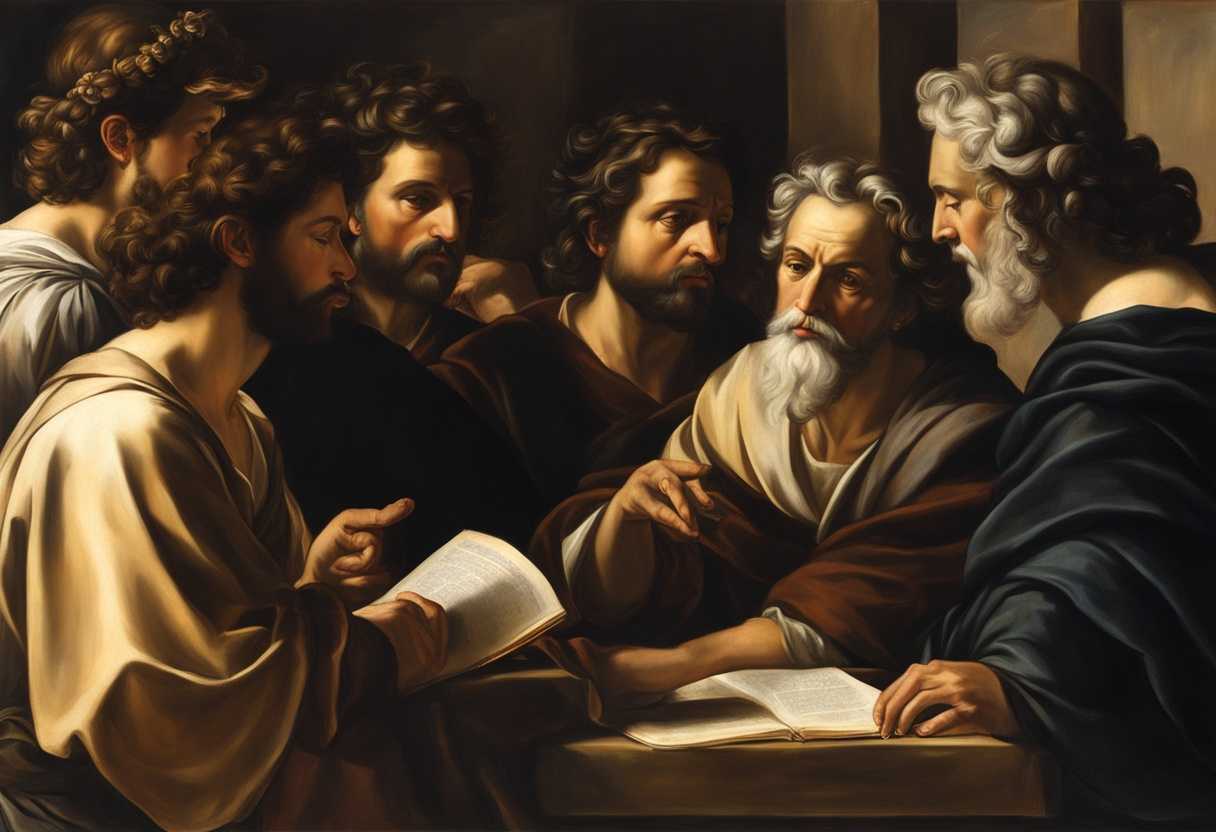
Setting the Scene for Acts 15:22-29
In Acts chapter 15, we find a pivotal scene taking place in Jerusalem. The setting is a meeting of the early Christian leaders, including the apostles and elders of the church. The reason for this gathering is to address a significant issue that has arisen within the Christian community – the question of whether Gentile believers should be required to follow Jewish customs, such as circumcision, in order to be considered part of the faith.
Among those present are key figures such as Peter, Paul, Barnabas, and James, the brother of Jesus and the leader of the Jerusalem church. The atmosphere is tense as different viewpoints are presented and debated. Ultimately, after much discussion and prayer, a decision is reached to send a letter to the Gentile believers, outlining the requirements for their inclusion in the Christian community while also affirming their freedom from the burdens of the Jewish law.
The room where the meeting takes place is likely a simple yet solemn space, with the leaders seated in a circle, deep in thought and conversation. The walls may be adorned with symbols of the faith, and the air is thick with anticipation as the fate of the early church hangs in the balance. This momentous gathering marks a significant turning point in the history of Christianity, as the leaders come together in unity to navigate the complexities of faith and culture.
What is Acts 15:22-29 about?
Guidance is provided to Gentile believers in this verse on three specific behaviors they should abstain from: idols, sexual immorality, and consuming blood. Each of these prohibitions has significant cultural, religious, and moral implications that were relevant in the context of the early Christian community.
Idolatry was a prevalent practice in many ancient cultures, where people worshipped idols or images as gods. The verse emphasizes the importance of monotheism and the exclusivity of worshipping the one true God by instructing believers to abstain from idols. Sexual immorality refers to any sexual behavior outside the boundaries of a committed marital relationship. This guidance underscores the sanctity of marriage and the importance of honoring one’s body and relationships.
The prohibition against consuming blood likely stems from both cultural and religious beliefs. Many ancient societies considered blood sacred and often used it in rituals. Gentile believers would not only respect Jewish dietary laws but also demonstrate reverence for life and obedience to God’s commands by abstaining from consuming blood. This verse serves as a moral compass, guiding believers to live in a way that honors God, respects cultural norms, and upholds ethical standards in their community.
Understanding what Acts 15:22-29 really means
The passage in Acts 15:22-29 takes us back to a crucial moment in the early Christian church, the Council of Jerusalem. This gathering was convened to address a pressing issue: whether Gentile converts should adhere to Jewish law, particularly the practice of circumcision. The decision reached by the council was not made lightly; it was guided by the belief that the Holy Spirit was leading them in their deliberations. This phrase, “It seemed good to the Holy Spirit and to us,” underscores the importance of seeking divine guidance in communal decision-making processes, highlighting the unity between believers and the Spirit’s direction.
In laying out their decision, the council emphasized that they did not want to burden the Gentile believers with unnecessary requirements. “To lay upon you no greater burden than these necessary things” reflects their desire to promote inclusivity and alleviate the weight of legalistic practices. This decision aligns with the broader message of freedom in Christ, as seen in Galatians 5:1, where believers are encouraged to stand firm in the liberty found in Jesus and not be entangled again in the bondage of the old law.
The relevance of this passage extends to contemporary believers, reminding us of the importance of inclusivity and the avoidance of unnecessary burdens in our faith practices. Just as the early church sought the guidance of the Holy Spirit, we are called to align our actions with divine will and promote harmony within our communities. This message resonates with Jesus’ invitation in Matthew 11:28-30 to come to Him for rest, emphasizing the lightness of His yoke and the ease of His burden.
To illustrate this principle in a modern context, consider a church community grappling with the decision to incorporate new styles of worship music. Some members advocate for traditional hymns, while others push for contemporary songs to engage younger generations. After prayerful consideration, the leaders decide to blend both styles, guided by the Holy Spirit to foster unity and inclusivity. This mirrors the council’s approach in Acts 15, respecting tradition while embracing new ways to connect with a diverse audience.
In conclusion, Acts 15:22-29 serves as a poignant reminder of the early church’s efforts to balance tradition with the evolving needs of a diverse community. It challenges us, as modern believers, to seek divine guidance, promote inclusivity, and refrain from imposing unnecessary burdens on others. By following these principles, we ensure that our faith remains accessible and welcoming to all, reflecting the unity and guidance of the Holy Spirit in our communal decisions.
How can we discern God’s will together?
We must seek unity and guidance from the Holy Spirit as we discern God’s will together. We must come together in prayer, seeking God’s wisdom and direction, just as the early church in Acts 15 gathered to discuss and make decisions. Through prayer and seeking God’s will collectively, we can discern the path that He wants us to take.
Additionally, we can look to the example set in Acts 15 where the early church leaders came to a consensus after discussing and debating the issue at hand. Engaging in open and honest dialogue, listening to one another’s perspectives, and discerning God’s voice through the collective wisdom of the group are crucial in our decision-making processes. We can seek God’s will and make decisions that align with His purpose for us by working together in unity and humility.
Application
Let’s heed the wisdom from Acts 15:22-29 and embrace unity and respect within our faith community and beyond. Let’s be like the early church leaders, fostering reconciliation and harmony in our daily lives. Just as in our work and family, let’s strive for unity, love, and empathy in all our interactions. How can you bring peace and unity into your relationships today?

Reverend Michael Johnson is an experienced Church Minister with a profound expertise in spirituality and guidance. With a serene presence and a compassionate heart, he has faithfully served his congregation for over 20 years, leading them on a spiritual journey towards inner peace and enlightenment. Reverend Johnson’s extensive knowledge of religious philosophies and profound understanding of human nature have made him a trusted confidant and mentor to many, as he seamlessly weaves his profound wisdom into life teachings. Reverend Johnson’s calming demeanor and empathetic nature continue to uplift and heal souls, nurturing a sense of unity and tranquility within his community.