
Acts 1:15-26 is about the selection of Matthias to replace Judas Iscariot as one of the twelve apostles, demonstrating the importance of maintaining the continuity of leadership and unity within the early Christian community.
15 In those days Peter stood up among the brothers (the company of persons was in all about 120) and said,
16 “Brothers, the Scripture had to be fulfilled, which the Holy Spirit spoke beforehand by the mouth of David concerning Judas, who became a guide to those who arrested Jesus.
17 For he was numbered among us and was allotted his share in this ministry.
18 (Now this man acquired a field with the reward of his wickedness, and falling headlong he burst open in the middle and all his bowels gushed out.
19 And it became known to all the inhabitants of Jerusalem, so that the field was called in their own language Akeldama, that is, Field of Blood.
20 “For it is written in the Book of Psalms, ‘May his camp become desolate, and let there be no one to dwell in it’; and ‘Let another take his office.’”
21 So one of the men who have accompanied us during all the time that the Lord Jesus went in and out among us,
22 beginning from the baptism of John until the day when he was taken up from us—one of these men must become with us a witness to his resurrection.”
23 And they put forward two, Joseph called Barsabbas, who was also called Justus, and Matthias.
24 And they prayed and said, “You, Lord, who know the hearts of all, show which one of these two you have chosen.
26 And they cast lots for them, and the lot fell on Matthias, and he was numbered with the eleven apostles.
26 And they cast lots for them, and the lot fell on Matthias, and he was numbered with the eleven apostles.
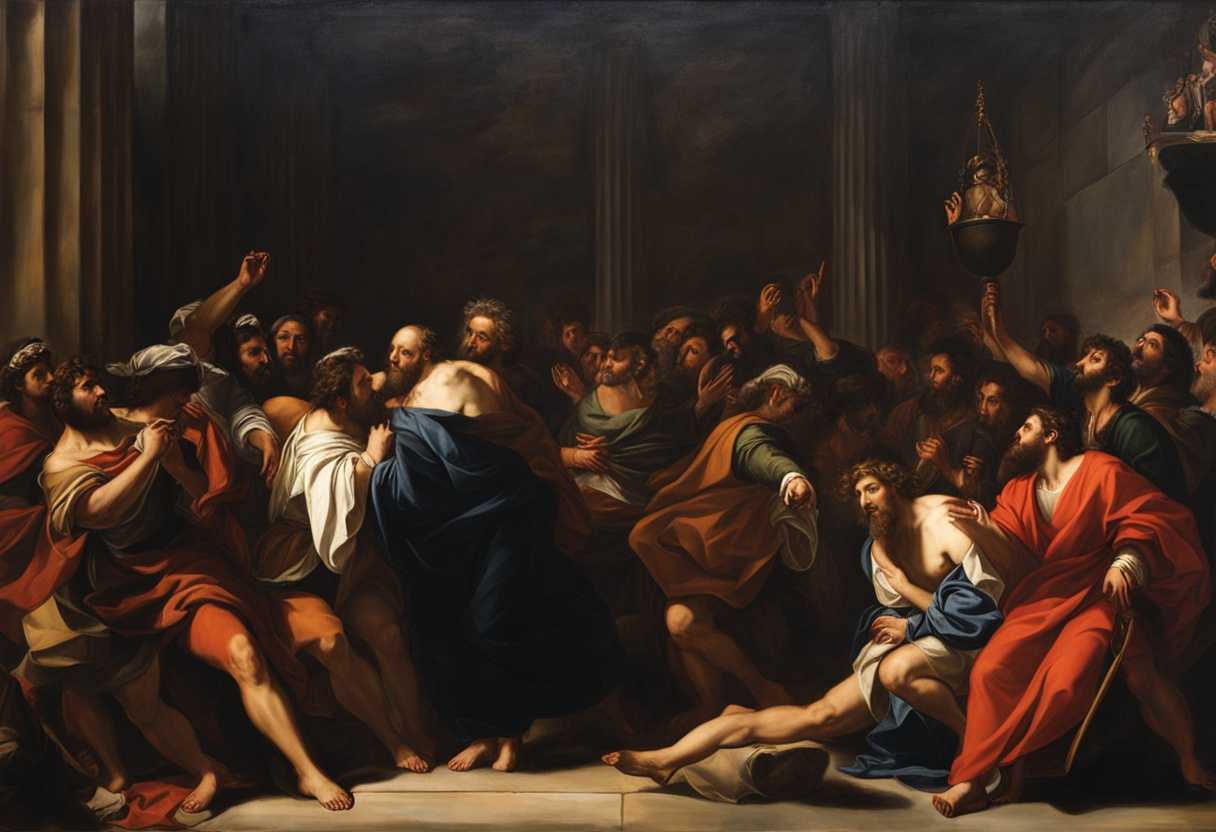
Setting the Scene for Acts 1:15-26
The scene in Acts 1:15-26 takes place in the upper room in Jerusalem, shortly after Jesus ascended to heaven. The disciples, including Peter, John, James, and Andrew, are gathered together along with about 120 believers, including women and Mary the mother of Jesus. They are in the upper room, a large chamber where they had been staying since the crucifixion of Jesus.
The disciples are in the process of selecting a replacement for Judas Iscariot, who betrayed Jesus and then died. Peter addresses the group, explaining the need to fulfill the prophecy in the Psalms about Judas’ betrayal and replacement. They decide to choose between two men, Joseph called Barsabbas (also known as Justus) and Matthias, to take Judas’ place among the twelve apostles. After praying for guidance, they cast lots to determine who will be chosen, and Matthias is selected to join the eleven apostles.
The atmosphere in the upper room is one of anticipation and unity as the believers come together to seek God’s will and make an important decision for the future of the early church. The faith and dedication of the disciples are evident as they follow the guidance of the Holy Spirit in selecting a new apostle to continue the work that Jesus began during his time on earth.
What is Acts 1:15-26 about?
The significance in this verse lies in choosing Matthias to fill the void left by Judas Iscariot among the Twelve Apostles. The scriptural prophecy is fulfilled by another taking Judas’ place, as foretold in the Book of Psalms. This act demonstrates the importance of continuity and order within the early Christian community, ensuring that the Twelve Apostles remained intact with their designated roles and responsibilities.
Think about the meticulous planning and divine guidance behind the selection of Matthias. The decision was not made haphazardly but through prayer and discernment, reflecting the reverence and respect for God’s word and purpose. The early Christians had trust and faith in God’s will being carried out through the selection of Matthias, emphasizing the importance of obedience and faithfulness in fulfilling God’s plan. What can we learn from this verse about the significance of honoring scriptural prophecies and following God’s guidance in our lives and communities? How can we apply this lesson to our own decision-making processes and understanding of God’s will?
Understanding what Acts 1:15-26 really means
In Acts 1:15-26, we witness a pivotal moment in the early Christian community as they grapple with the vacancy left by Judas Iscariot among the twelve apostles. The passage unfolds after Jesus’ ascension and before the day of Pentecost, with Peter addressing around 120 believers gathered together. The urgency to fill Judas’ place highlights the community’s commitment to maintaining the integrity and symbolism of the twelve apostles, representing the twelve tribes of Israel and the foundation of the new covenant community.
“The Scripture had to be fulfilled” underscores the believers’ conviction that even in the face of betrayal and vacancy, God’s divine plan continues to unfold. The act of casting lots to determine Matthias as Judas’ replacement reveals their reliance on divine guidance over human decision-making. This reliance on God’s will echoes throughout the Bible, emphasizing the belief that every decision, even seemingly random ones like casting lots, ultimately rests in the hands of the Lord.
Drawing from related biblical passages such as Psalm 109:8 and Proverbs 16:33, we see a consistent theme of God’s sovereignty and control over events, including the selection of leaders. The parallel with Jesus’ original choosing of the twelve apostles in Luke 6:12-16 reinforces the significance of their number and role in laying the foundation of the early church. These connections provide a broader context for understanding the importance of leadership succession and divine guidance in the Christian faith.
Today, the passage resonates with contemporary believers in several ways. It prompts reflection on the process of leadership succession within communities, emphasizing the need for prayerful discernment and careful consideration in selecting new leaders. The practice of seeking divine guidance, as exemplified by casting lots, encourages believers to trust in God’s leading in their decision-making processes. Furthermore, the unity and collective decision-making displayed by the early Christian community serve as a model for fostering community and unity within modern faith communities.
To illustrate the passage’s relevance, consider a scenario where a church faces the transition of leadership due to a retiring pastor. Through prayer and reflection, the congregation seeks God’s guidance in selecting a new leader. Their faithfulness leads them to a candidate who embodies the qualities they have been praying for, bringing renewed vision and energy to the church. This anecdote mirrors the early believers’ reliance on divine guidance to sustain the strength and purpose of their community.
In conclusion, Acts 1:15-26 teaches us valuable lessons about fulfilling God’s plans, the significance of leadership, and the necessity of seeking divine guidance in our decisions. It challenges us to trust in God’s providence, work collaboratively as a community, and uphold our faith and mission with unity and purpose. As we navigate our own leadership transitions and decision-making processes, may we draw inspiration from the early believers’ example of faithfulness and reliance on God’s guidance.
How can we discern God’s will in decision-making?
Discerning God’s will in decision-making involves seeking guidance through prayer, studying the Scriptures, and seeking wise counsel. We invite His wisdom and direction into our decision-making process by connecting with God through prayer. Studying the Scriptures allows us to align our choices with God’s revealed word, helping us make choices that are in line with His character and values. Seeking counsel from mature and spirit-filled believers can also provide additional perspectives and insights that can help us discern God’s will more clearly.
When faced with important decisions, it is essential to surrender our desires, fears, and biases to God and submit to His leading. We position ourselves to discern His will more effectively by being open and willing to listen to God through prayer, Scripture, and wise input from others. We can have confidence that God will direct our paths and lead us according to His perfect plan as we trust in His sovereignty and seek His guidance with a humble heart.
Application
Let Acts 1:15-26 be a compass guiding your actions, steering you towards unity with fellow believers. Prioritize prayer and seek God’s wisdom in decision-making, for He knows your heart. Dive into God’s word and foster fellowship, knowing that in all choices, God leads the way. Are you ready to align with God’s will and walk in unity in your work and family?

Reverend Michael Johnson is an experienced Church Minister with a profound expertise in spirituality and guidance. With a serene presence and a compassionate heart, he has faithfully served his congregation for over 20 years, leading them on a spiritual journey towards inner peace and enlightenment. Reverend Johnson’s extensive knowledge of religious philosophies and profound understanding of human nature have made him a trusted confidant and mentor to many, as he seamlessly weaves his profound wisdom into life teachings. Reverend Johnson’s calming demeanor and empathetic nature continue to uplift and heal souls, nurturing a sense of unity and tranquility within his community.