
Acts 20:7-12 is about the apostle Paul preaching to the believers in Troas and raising Eutychus from the dead, illustrating the power of God at work through Paul’s ministry and the importance of faith and perseverance in the face of challenges.
7 On the first day of the week, when we were gathered together to break bread, Paul talked with them, intending to depart on the next day, and he prolonged his speech until midnight.
8 There were many lamps in the upper room where we were gathered.
9 And a young man named Eutychus, sitting at the window, sank into a deep sleep as Paul talked still longer. And being overcome by sleep, he fell down from the third story and was taken up dead.
10 But Paul went down and bent over him, and taking him in his arms, said, “Do not be alarmed, for his life is in him.”
11 And when Paul had gone up and had broken bread and eaten, he conversed with them a long while, until daybreak, and so departed.
12 And they took the youth away alive, and were not a little comforted.
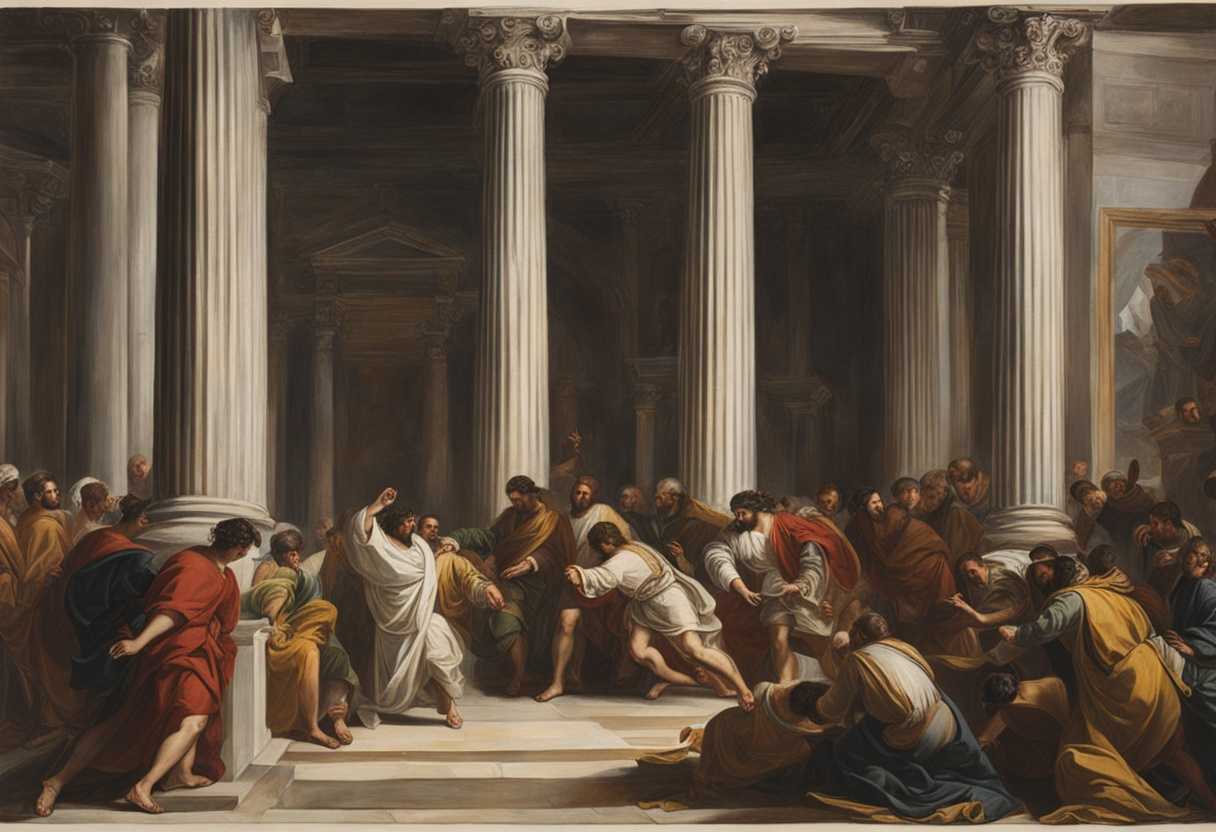
Setting the Scene for Acts 20:7-12
In Acts chapter 20, we find the apostle Paul in the city of Troas during one of his missionary journeys. The scene is set in an upper room where the believers have gathered together on the first day of the week to break bread and listen to Paul preach. The room is dimly lit by oil lamps, casting a warm glow on the faces of those present. The air is filled with the scent of freshly baked bread and the sound of quiet conversation.
Among those in attendance are Paul himself, along with Luke, the author of the book of Acts, and a young man named Eutychus. Eutychus is seated by the window, trying to stay awake as Paul continues to preach late into the night. The room is packed with believers, eager to hear the words of the apostle and to fellowship with one another.
As the night wears on, Eutychus begins to struggle to keep his eyes open and eventually falls into a deep sleep. Sitting on the window ledge, he loses his balance and falls from the third-story window to the ground below. Panic ensues as the believers rush down to find Eutychus lying lifeless on the ground. But through the miraculous intervention of God, Paul is able to raise Eutychus from the dead, and the believers are filled with awe and gratitude for God’s power and mercy.
What is Acts 20:7-12 about?
Paul raised Eutychus from the dead after he fell from a window while Paul was preaching. This serves as a powerful reminder of the importance of staying alert and engaged during moments of teaching and learning. Just like Eutychus, who fell into a deep sleep during a significant teaching moment, we might also find ourselves becoming complacent or disengaged during times when we should be attentive and focused.
This verse also highlights the miraculous power of Paul, who was able to bring Eutychus back to life. It serves as a testament to the authority and divine intervention that Paul possessed, emphasizing the profound impact of his teachings and his connection to God. It prompts us to reflect on the power of faith and the potential for extraordinary events to occur when we are in alignment with God’s will. How can we strive to be more present and attentive during moments of learning and spiritual growth? What can we learn from Paul’s example of faith and miraculous abilities to deepen our own connection to God?
Understanding what Acts 20:7-12 really means
To begin our exploration of Acts 20:7-12, let’s structure our commentary in the following way: Context, Detailed Analysis, Cross-References, Modern Relevance, and Anecdote.
Context
Acts 20:7-12 is a passage that takes place during Paul’s third missionary journey. Paul, along with other believers, is gathered in Troas to break bread and share fellowship. This meeting occurs on the first day of the week, symbolizing the early Christian practice of gathering on what we now call Sunday. Understanding the setting helps us to grasp the importance of the events that unfold.
Detailed Analysis
The passage includes several meaningful phrases that warrant closer examination. “On the first day of the week” highlights the early Christian practice of meeting on Sunday, differentiating them from Jewish customs. “Paul talked with them, intending to depart on the next day, and he prolonged his speech until midnight” shows Paul’s deep commitment to teaching and the community’s eagerness to listen. The phrase “young man named Eutychus, sitting at the window, sank into a deep sleep” introduces a dramatic element that leads to a miraculous event. When Eutychus falls and is presumed dead, Paul’s intervention—”Paul went down and bent over him, and taking him in his arms, said, ‘Do not be alarmed, for his life is in him’”—marks a moment of divine power and reassurance.
Cross-References
This passage can be enriched by looking at other miraculous resurrections in the Bible. For instance, in 1 Kings 17:21-22, Elijah prays over the widow’s son, bringing him back to life. Similarly, in Luke 7:14-15, Jesus raises the widow’s son at Nain. These cross-references reinforce the theme of God’s power over life and death, demonstrating continuity in God’s miraculous interventions.
Modern Relevance
The relevance of this passage today lies in its demonstration of divine presence in community gatherings. We often overlook the importance of communal worship and fellowship in our fast-paced lives. This passage reminds us of the transformative power of coming together to share in God’s word. It speaks to the resilience of faith and the miraculous possibilities that arise from genuine communal worship.
Anecdote
I recall a local church that had a tradition of holding all-night prayer vigils. One time, a young member, exhausted from a long week, fell asleep during the vigil. Instead of being irritated, the congregation gathered around him, praying and laying hands on him. Miraculously, the young man woke up feeling rejuvenated, both physically and spiritually. This modern-day experience mirrors the story of Eutychus, illustrating how communal faith can bring about extraordinary outcomes.
Conclusion
Acts 20:7-12 is a rich passage that underscores the importance of community, the power of teaching, and divine intervention. We open ourselves to the miraculous and reaffirm our faith by gathering together. Let’s consider how we can foster deeper connections within our own communities as we reflect on this passage, creating spaces where the divine can work in unexpected ways. What steps can we take to make our gatherings more spiritually enriching? How can we support each other in our faith journeys?
How can we honor the Sabbath while serving others?
The early church gathered together on the first day of the week to break bread and hear the word of God, as seen in Acts 20:7-12. This passage highlights the importance of coming together as a community to worship and learn from Scripture. We can honor the Sabbath while also serving others by setting aside dedicated time on the Sabbath to focus on spiritual growth and fellowship. This can be done through attending church services, participating in Bible study groups, or engaging in acts of service that bring hope and comfort to those in need.
Furthermore, we can honor the Sabbath while serving others by practicing acts of kindness and compassion. Taking the time to care for the physical, emotional, and spiritual needs of those around us reflects the heart of God and fulfills the call to love our neighbors as ourselves. We embody the essence of Sabbath rest by being intentional about reaching out to those who are marginalized, vulnerable, or in distress, bringing restoration and healing to broken lives. Jesus consistently prioritized caring for others, even on the Sabbath day, and in doing so, we follow his example.
Application
Think of your weekly routines, filled with work meetings and family dinners. Now, picture the importance of coming together with your church family to break bread and share in faith. Acts 20:7-12 shows us the power of gathering, learning, and supporting each other. In the face of our hectic lives, we need that spiritual recharge and encouragement more than ever. How will you make time to connect and grow with your church community this week?

Reverend Michael Johnson is an experienced Church Minister with a profound expertise in spirituality and guidance. With a serene presence and a compassionate heart, he has faithfully served his congregation for over 20 years, leading them on a spiritual journey towards inner peace and enlightenment. Reverend Johnson’s extensive knowledge of religious philosophies and profound understanding of human nature have made him a trusted confidant and mentor to many, as he seamlessly weaves his profound wisdom into life teachings. Reverend Johnson’s calming demeanor and empathetic nature continue to uplift and heal souls, nurturing a sense of unity and tranquility within his community.