
Acts 21:37-39 is about the Apostle Paul addressing a Roman commander in Jerusalem, revealing his identity as a Roman citizen and a Jew, which highlights the themes of identity, the tension between different cultures, and the protection of civil rights within the narrative of his missionary journey.
37 As Paul was about to be brought into the barracks, he said to the tribune, “May I say something to you?” And he said, “Do you know Greek?
38 Then you are not the Egyptian who recently stirred up a revolt and led the four thousand men of the Assassins out into the wilderness?”
39 Paul replied, “I am a Jew, from Tarsus in Cilicia, a citizen of no obscure city. I beg you, permit me to speak to the people.”
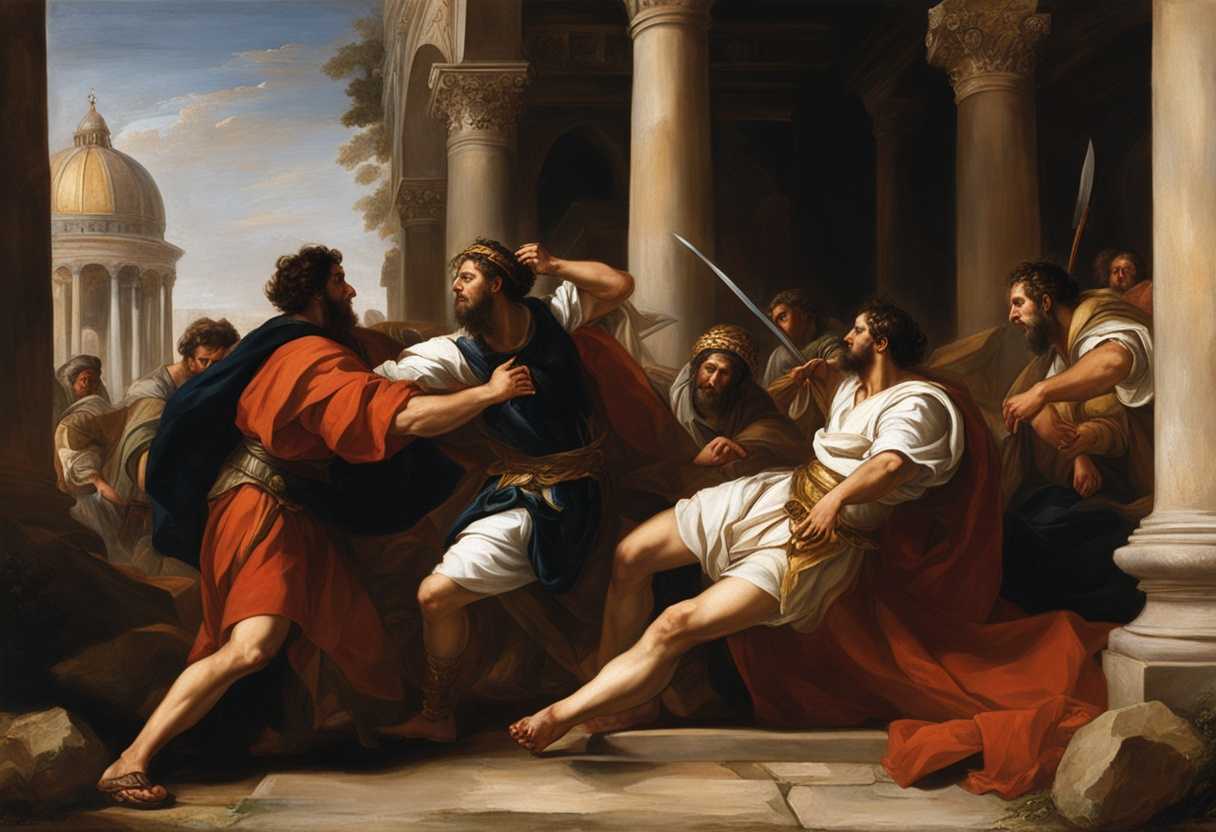
Setting the Scene for Acts 21:37-39
The scene unfolds in the bustling city of Jerusalem, a place teeming with life, culture, and tension. The air is thick with the sounds of merchants calling out their wares, the aroma of spices and baked bread wafting through the narrow streets, and the distant echoes of prayers rising from the Temple. It is during the Feast of Pentecost, a time when the city is filled with pilgrims from all over the region, each bringing their own stories and traditions. Amidst this vibrant backdrop, a commotion breaks out in the streets, drawing the attention of both locals and visitors alike. The crowd is agitated, their voices rising in a cacophony of shouts and accusations, as they surround a man who has been seized and is being dragged through the throng.
This man is Paul, a fervent apostle known for his passionate preaching of the Gospel. He has returned to Jerusalem after a long journey, filled with the desire to share his faith and the news of Christ with his fellow Jews. However, his presence has sparked outrage among some who view him as a threat to their traditions and beliefs. As he is being led away by the angry mob, the Roman commander, a centurion named Claudius Lysias, intervenes. He arrives with a contingent of soldiers, drawn by the chaos, and quickly assesses the situation. Paul, despite being in a precarious position, remains calm and composed, even as he is bound and surrounded by hostility. The commander, recognizing that Paul is a Roman citizen, is intrigued by the man’s demeanor and the accusations against him.
As the soldiers lift Paul above the crowd to carry him to safety, the scene is charged with tension and uncertainty. The streets of Jerusalem, usually a place of celebration, have turned into a stage for conflict. The Roman commander, seeking to understand the uproar, turns to Paul and asks him about his identity. Paul, with a voice that carries both authority and humility, responds in Greek, revealing his status as a Roman citizen and a Jew from Tarsus. This moment of recognition shifts the dynamics of the scene, as the commander realizes he is dealing with a man of significance, not just a common troublemaker. The crowd continues to murmur, their anger palpable, but now there is a glimmer of respect for Paul, who stands resolute amidst the chaos, ready to defend his faith and his rights.
What is Acts 21:37-39 about?
Identity, privilege, and survival have a fascinating interplay in this verse. Paul’s declaration of his Roman citizenship serves as a powerful reminder of the weight that social status can carry in challenging situations. We might ask ourselves: what does it mean to possess a certain identity in our own lives, and how can that identity provide us with tools or protections in moments of crisis as we listen to Paul assert his rights amidst a hostile crowd? When Paul reveals his citizenship, he is leveraging his legal standing to shield himself from harm, illustrating how external labels can influence our experiences and interactions. Paul’s response invites us to reflect on the broader implications of belonging and advocacy. How often do we find ourselves needing to assert our rights or identity in difficult circumstances? Paul’s ability to invoke his Roman citizenship emphasizes the significance of awareness regarding the privileges and protections available to us. It nudges us to consider our own contexts: are there aspects of our own identities that we can leverage to navigate through life’s challenges? This moment also raises questions about those who lack such identities or protections. How do we ensure that everyone, regardless of their social standing, is afforded dignity and safety? We can engage in deeper conversations about justice, advocacy, and the moral responsibilities we have towards others in our society by examining Paul’s assertion of citizenship.
Understanding what Acts 21:37-39 really means
In Acts 21:37-39, we find ourselves at a critical juncture in the Apostle Paul’s journey. He has arrived in Jerusalem, a place where he is met with hostility from a Jewish crowd. This moment is not just a narrative detail; it encapsulates the tension between his mission and the cultural backdrop of his audience. Understanding this context is essential for grasping the significance of Paul’s actions and words.
One of the key themes in this passage is identity and belonging. When Paul declares, “I am a Jew,” he is not merely stating a fact; he is asserting his connection to a rich heritage and a community that has shaped his life. This moment prompts us to consider our own identities. How do our backgrounds influence our faith? In a world that often seeks to divide us, Paul’s assertion serves as a reminder of the importance of understanding and embracing our roots while also being open to dialogue with those who may differ from us.
Courage in adversity is another prominent theme. Paul’s willingness to address the crowd, despite the imminent danger, exemplifies the boldness that believers are called to exhibit. In our own lives, we may encounter situations where standing firm in our beliefs is met with opposition. How do we respond? Paul’s example encourages us to engage thoughtfully and courageously, articulating our faith even when it feels uncomfortable.
Related biblical passages, such as Philippians 3:5-6 and 2 Timothy 1:7, further illuminate Paul’s character. His background as a Pharisee and his zealousness for the law provide insight into the depth of his understanding of Jewish culture. This knowledge equips him to navigate the complexities of his mission. Additionally, the spirit of power, love, and self-discipline mentioned in 2 Timothy resonates with Paul’s boldness in this moment, reminding us that we are not alone in our struggles.
In today’s context, the relevance of Paul’s experience cannot be overstated. Many individuals grapple with their identities in environments that challenge their beliefs. Consider the story of Sarah, a young woman who faced criticism for her conservative views in a liberal college setting. Inspired by Paul, she chose to engage in respectful conversations about her faith. This approach not only fostered understanding but also built bridges rather than barriers. How might we apply this lesson in our own interactions?
The phrases “I am a Jew” and “Tarsus, a citizen of no ordinary city” carry profound meaning. They signify not just cultural identity but also a deep connection to the faith and traditions that shaped Paul’s life. They remind us that our backgrounds, whether perceived as ordinary or extraordinary, can be used by God for His purposes. How can we leverage our own stories to connect with others?
In conclusion, Acts 21:37-39 invites us to reflect on our identities and the courage we need to share our faith. It challenges us to engage with others respectfully and boldly, just as Paul did. Our backgrounds can serve as a bridge in our witness for Christ, fostering understanding and reconciliation in a divided world. How will you respond to this call in your own life?
How do we respond to misunderstandings about our faith?
When faced with misunderstandings about our faith, it is important to respond with a willingness to communicate effectively and clarify misconceptions. Engaging in respectful dialogue allows us to share our beliefs and provide context for our practices. This approach not only helps others understand our perspective better but also opens the door for meaningful conversations about faith, fostering empathy and respect. Misunderstandings often stem from a lack of information or exposure to different viewpoints; it’s crucial to recognize this. We demonstrate the principles of understanding and compassion that are central to our faith by patiently explaining our beliefs and providing insights into our faith’s teachings. This can help break down barriers and stereotypes, enabling a more constructive discussion. Our response should ultimately reflect not only an explanation of our beliefs but also an embodiment of the values we espouse. We exemplify the ideals of love and humility that are foundational to our faith by remaining calm and respectful in the face of misunderstandings. Our actions and attitudes in these interactions can serve as a powerful witness to others, showcasing the transformative nature of our beliefs.
Application
Imagine you’re at work, and the pressure is mounting — deadlines are looming, and everyone is waiting for a leader to step up. Like Paul, who stood fearless even in chains, can you find your voice when challenges arise? Think about your family too — how often do you hold back your beliefs when it’s tough? This is your moment to show courage, to share what you stand for, even if it feels risky. Will you rise to the occasion and light the way for others in your life?

Reverend Michael Johnson is an experienced Church Minister with a profound expertise in spirituality and guidance. With a serene presence and a compassionate heart, he has faithfully served his congregation for over 20 years, leading them on a spiritual journey towards inner peace and enlightenment. Reverend Johnson’s extensive knowledge of religious philosophies and profound understanding of human nature have made him a trusted confidant and mentor to many, as he seamlessly weaves his profound wisdom into life teachings. Reverend Johnson’s calming demeanor and empathetic nature continue to uplift and heal souls, nurturing a sense of unity and tranquility within his community.