
Acts 5:1-6 is about the consequences of deceit and dishonesty in the context of Ananias and Sapphira’s deceitful act of keeping back part of the proceeds from the sale of their property, resulting in their sudden deaths as a warning against hypocrisy and lying to the Holy Spirit.
2 and with his wife’s knowledge he kept back for himself some of the proceeds and brought only a part of it and laid it at the apostles’ feet.
2 and with his wife’s knowledge he kept back for himself some of the proceeds and brought only a part of it and laid it at the apostles’ feet.
3 But Peter said, “Ananias, why has Satan filled your heart to lie to the Holy Spirit and to keep back for yourself part of the proceeds of the land?
4 While it remained unsold, did it not remain your own? And after it was sold, was it not at your disposal? Why is it that you have contrived this deed in your heart? You have not lied to man but to God.
5 When Ananias heard these words, he fell down and breathed his last. And great fear came upon all who heard of it.
6 The young men rose and wrapped him up and carried him out and buried him.
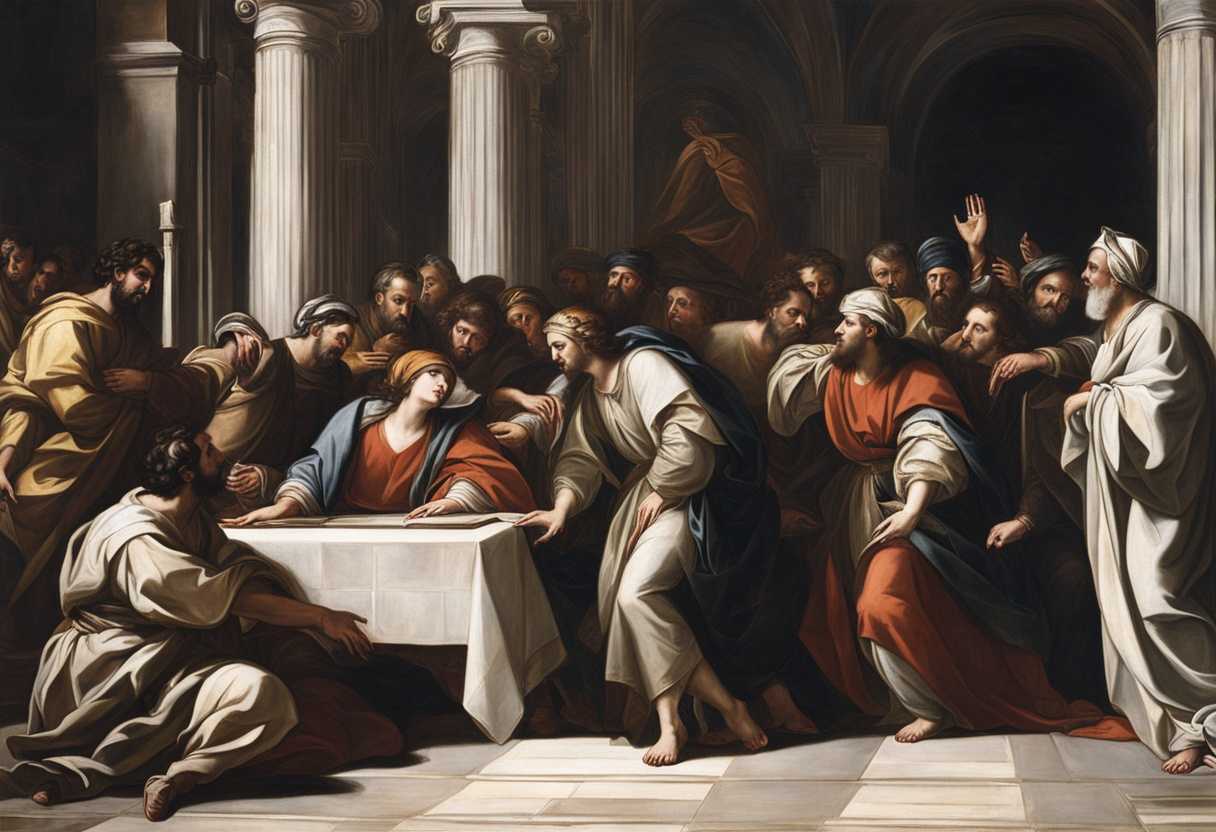
Setting the Scene for Acts 5:1-6
In Acts chapter 5, we find Ananias and his wife Sapphira in the early Christian community in Jerusalem. The scene takes place shortly after the formation of the early church, where believers were sharing all they had with one another. Ananias and Sapphira were part of this community and had also sold a piece of property. However, they conspired together to keep back some of the proceeds for themselves while pretending to give the full amount to the apostles.
The setting is likely a gathering of the believers, possibly in one of the meeting places where they came together to share meals, pray, and study the teachings of the apostles. Ananias and Sapphira would have been present among the other members of the community, trying to maintain their facade of generosity. As the story unfolds, Peter confronts Ananias about his deception, leading to a dramatic moment where Ananias falls dead after being exposed. This event serves as a powerful lesson about the importance of honesty and integrity within the Christian community.
What is Acts 5:1-6 about?
This verse from Acts 5 illustrates the grave consequences of deceit and hypocrisy. Ananias and Sapphira decided to present a false image of their generosity by pretending to give the entire amount of money from a land sale while actually keeping a portion for themselves. This act of dishonesty not only misled the community but also demonstrated a lack of faith in God’s provision and a desire for personal gain and recognition. They sought to deceive both the disciples and ultimately God Himself by lying about their offering.
Have you ever felt the temptation to deceive others or to present a false image of yourself to gain approval or recognition? This story serves as a powerful reminder that God sees through our outward actions and knows the true intentions of our hearts. It challenges us to examine our motives and be honest in our dealings, knowing that falsehoods and deceit have no place in a relationship with a God who values honesty and integrity. Let us reflect on the example of Ananias and Sapphira and strive to live authentically and transparently before God and others.
Understanding what Acts 5:1-6 really means
In Acts 5:1-6, we encounter the sobering account of Ananias and Sapphira, a couple who faced tragic consequences for their deceitful actions. They sold a piece of property but chose to withhold a portion of the proceeds while pretending to donate the entire sum to the apostles. When confronted by Peter, Ananias fell down dead due to his dishonesty, and later, Sapphira met the same fate for continuing the lie.
The key phrase “kept back part of the proceeds” underscores the core issue of deceit and dishonesty in this narrative. It’s not merely about the act of withholding money but about the deception that followed. Their sin lay not in keeping some of the money but in lying about it, revealing the severity of their actions.
When Peter questions Ananias, saying, “Why has Satan filled your heart,” we see the spiritual battle at play. This phrase highlights the influence of evil in leading individuals towards sin, emphasizing the ongoing struggle between good and evil in the spiritual realm.
Moreover, the statement “You have not lied to men but to God” emphasizes the gravity of their sin. It underscores that deceit against the community is ultimately deceit against God Himself, highlighting the importance of honesty and integrity in all aspects of our lives.
This passage resonates with contemporary audiences by stressing the values of integrity and honesty. In a world where dishonesty may seem like an easier path, believers are called to uphold truthfulness and integrity in their actions, reflecting the character of God.
Furthermore, the narrative underscores the concept of spiritual accountability, reminding us that our actions are not hidden from God. We are ultimately accountable to Him for our deeds, emphasizing the need for authenticity and transparency in our lives.
The story of Ananias and Sapphira also speaks to the significance of trust within communities. Just as the early Christian community relied on mutual trust and honesty, trust remains foundational in modern-day communities, be it in churches, workplaces, or families.
In conclusion, the account of Ananias and Sapphira serves as a poignant reminder of the importance of living with honesty and integrity. It prompts us to reflect on our own lives, ensuring that we are truthful not only in the eyes of others but also before God. This narrative encourages us to cultivate trust and accountability within our communities, recognizing that our actions have profound implications on those around us.
Are we being honest and transparent in our actions?
The story of Ananias and Sapphira in Acts 5 serves as a powerful reminder of the importance of honesty and transparency in our actions. Ananias and Sapphira chose to deceive the early Christian community by pretending to give all the proceeds from the sale of their property, when in reality, they were holding back a portion for themselves. Their lack of transparency ultimately led to dire consequences for both of them. Examining this narrative reminds us of the importance of being genuine and truthful in our dealings with others. Integrity and honesty should be at the forefront of our interactions, whether it be in our relationships, work, or daily lives. Transparency builds trust and fosters genuine connections with those around us, while deceit can lead to division and harm. We, as followers of Christ, are called to walk in the light and be open about our actions, motives, and intentions. Our words and deeds should align with the truth and reflect the love and grace of God. We should strive to emulate the honesty and transparency demonstrated by Jesus in our own lives, knowing that authenticity and openness allow us to truly reflect His nature to the world.
Application
Friends, let’s reflect on Acts 5:1-6 and realize the importance of living with honesty and integrity in our daily lives. Take a moment to evaluate your actions and intentions, ensuring they align with God’s will. Let’s strive to be transparent and truthful, steering clear of deception like Ananias and Sapphira. Commit to walking in the light, honoring God in all aspects of your life. Will you rise to the challenge and embrace a life marked by integrity and faithfulness?

Reverend Michael Johnson is an experienced Church Minister with a profound expertise in spirituality and guidance. With a serene presence and a compassionate heart, he has faithfully served his congregation for over 20 years, leading them on a spiritual journey towards inner peace and enlightenment. Reverend Johnson’s extensive knowledge of religious philosophies and profound understanding of human nature have made him a trusted confidant and mentor to many, as he seamlessly weaves his profound wisdom into life teachings. Reverend Johnson’s calming demeanor and empathetic nature continue to uplift and heal souls, nurturing a sense of unity and tranquility within his community.