
Acts 8:1 is about the spreading of the persecution against the early church, leading to the scattering of believers throughout the regions of Judea and Samaria.
1 And Saul approved of his execution. And there arose on that day a great persecution against the church in Jerusalem, and they were all scattered throughout the regions of Judea and Samaria, except the apostles.
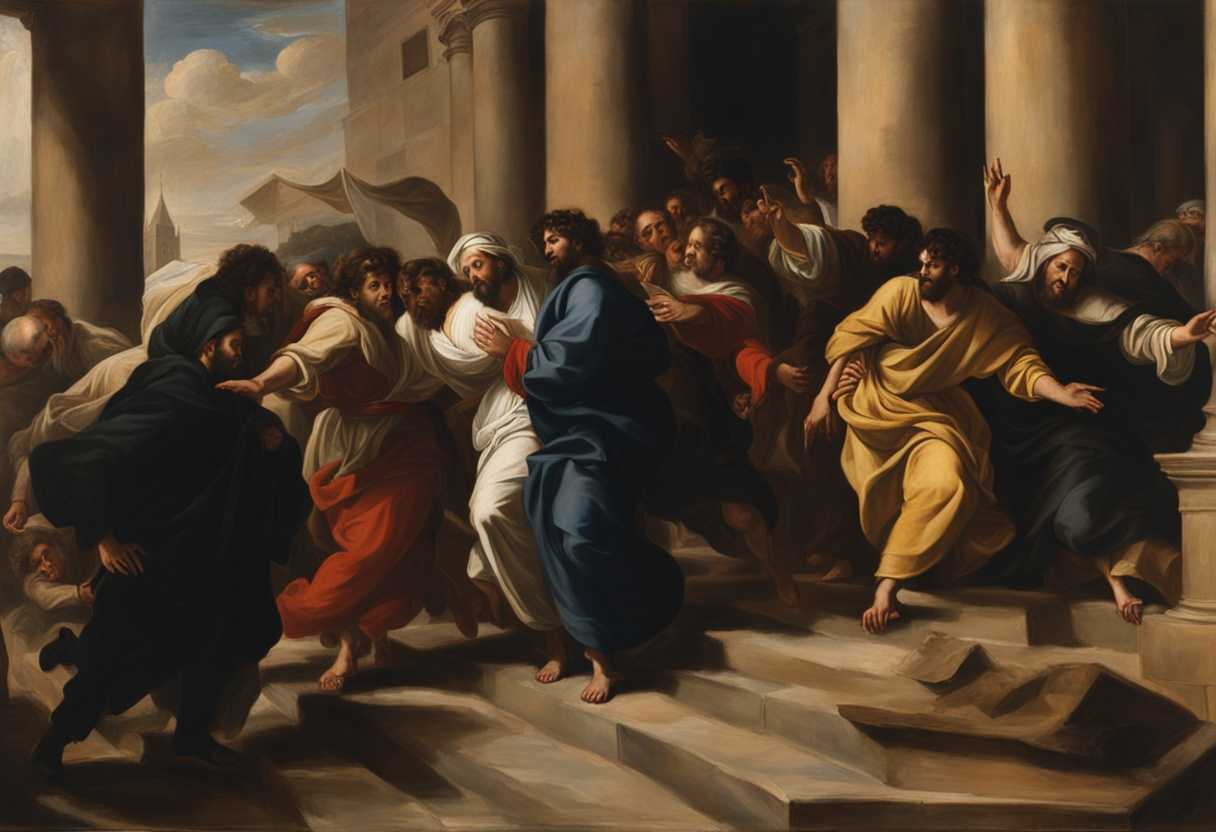
Setting the Scene for Acts 8:1
In Acts chapter 8, we find a tumultuous scene unfolding in Jerusalem. The followers of Jesus are facing increasing persecution, with Saul (who later becomes the apostle Paul) leading the charge against them. The atmosphere is tense and filled with fear as believers are being dragged from their homes and imprisoned for their faith.
Among those caught up in this persecution is a devout man named Stephen, known for his unwavering faith and powerful preaching. Despite the danger, Stephen continues to boldly proclaim the gospel, which only serves to further enrage his opponents. As the situation escalates, Stephen finds himself standing before the Sanhedrin, accused of blasphemy and facing a hostile crowd.
Surrounded by angry faces and feeling the weight of the impending judgment, Stephen stands firm in his faith, ready to defend his beliefs even at the cost of his own life. The scene is charged with emotion and tension, as Stephen’s fate hangs in the balance and the early Christian community grapples with the harsh reality of persecution for their beliefs.
What is Acts 8:1 about?
This verse highlights a time when Saul, who later became the apostle Paul, was actively opposing and persecuting the early Christian church. His actions led to many believers being scattered and forced to flee their homes and communities. This event marked a challenging and turbulent period for the early church as they faced intense persecution and had to navigate uncertain and dangerous circumstances.
Have you ever faced opposition or challenges for your beliefs? Can you imagine the fear and uncertainty the early believers must have felt as they were forced to scatter and flee for their safety? Despite the difficult circumstances, this verse also reflects the resilience and perseverance of the early church members as they continued to spread the message of Christianity, even in the face of persecution. It serves as a reminder of the trials and tribulations that may come with following one’s faith, yet also emphasizes the strength and unity that can be found within a community of believers.
Understanding what Acts 8:1 really means
Structure for Commentary:
1. Introduction and Context
2. Key Phrases and Their Meanings
3. Connections to Other Biblical Passages
4. Relevance to Modern Life
5. Anecdotal Illustration
6. Conclusion and Reflection
Introduction and Context:
The verse in question marks a critical juncture in the early Christian church. Saul’s approval of Stephen’s death and the subsequent persecution led to the scattering of believers throughout Judea and Samaria. This verse represents both a moment of severe trial and a catalyst for the spread of the Gospel. Understanding this duality can offer profound insights into the nature of faith and resilience.
Key Phrases and Their Meanings:
Several phrases stand out. “Saul approved of their killing him” highlights Saul’s active role in the persecution. Saul, who later becomes Paul, starts here as an antagonist. “Great persecution” signifies the intense suffering faced by early Christians. The “scattering” of believers indicates both an immediate threat and an unexpected opportunity for the Gospel to reach new regions.
Connections to Other Biblical Passages:
This event calls to mind Jesus’ words in Acts 1:8, where He instructs the disciples to be His witnesses in Jerusalem, Judea, Samaria, and to the ends of the earth. Ironically, persecution fulfills this prophecy. Additionally, Romans 8:28 reassures us that God can bring good out of dire situations, a theme evident in how the early church’s dispersion led to the spread of Christianity.
Relevance to Modern Life:
Today, many face trials that seem insurmountable. This verse reminds us that hardships can serve a greater purpose, often beyond our understanding. We might find new avenues for growth, connection, and even ministry in moments of struggle. Are there areas in your life where you feel scattered or persecuted? How might these experiences be used for a greater good? A man lost his job unexpectedly. Initially, this felt like a devastating blow, much like the persecution of the early Christians. However, this setback forced him to explore new career paths. He discovered a passion for teaching and eventually found a job that allowed him to mentor young people, influencing their lives positively. His “scattering” led to new opportunities and a deeper sense of purpose.
Conclusion and Reflection:
This verse teaches us that God’s plans can unfold in the most unlikely circumstances. While we may not always understand the reasons behind our trials, looking at the bigger picture can offer comfort and hope. Reflect on your own life: How can you turn moments of hardship into opportunities for growth and service? How can your faith sustain you through these times? Potential for profound transformation and the spread of God’s love exists even in the midst of persecution and scattering.
How can we respond to persecution with courage?
We can respond to persecution with courage by remembering that God is with us and will provide us with the strength we need to endure. Through prayer and seeking God’s guidance, we can find the courage to face persecution with steadfast faith and trust in His plan for our lives. We can take comfort in knowing that our faithfulness to God will not go unnoticed, and He will ultimately bring about justice and redemption in His time, just as the early Christians in Acts faced opposition and persecution.
Furthermore, we can respond to persecution with courage by focusing on the bigger picture and the eternal reward that awaits us in heaven. We can find the strength to endure any trials and tribulations that come our way by keeping our eyes fixed on Jesus and the hope of salvation. We can stand firm in our faith in the face of persecution, knowing that our suffering is building endurance, character, and hope in the promises of God. Our faithfulness in the midst of persecution will bring glory to God and bear witness to His transforming power in our lives, giving us courage.
Application
Think of life’s challenges like juggling work deadlines and family obligations. Acts 8:1 shows us how believers faced persecution yet bravely spread the gospel. Instead of retreating, they advanced. Will you stand firm in your faith and share Christ’s message, even when it’s tough?

Reverend Michael Johnson is an experienced Church Minister with a profound expertise in spirituality and guidance. With a serene presence and a compassionate heart, he has faithfully served his congregation for over 20 years, leading them on a spiritual journey towards inner peace and enlightenment. Reverend Johnson’s extensive knowledge of religious philosophies and profound understanding of human nature have made him a trusted confidant and mentor to many, as he seamlessly weaves his profound wisdom into life teachings. Reverend Johnson’s calming demeanor and empathetic nature continue to uplift and heal souls, nurturing a sense of unity and tranquility within his community.