
1 And these are the words of the book that Baruch the son of Neriah, son of Mahseiah, son of Zedekiah, son of Hasadiah, son of Hilkiah, wrote in Babylon,
2 And they sent it to Jerusalem to Joakim the high priest, the son of Hilkiah, son of Shallum, and to the priests and all the people who were present with him in Jerusalem.
3 Baruch read the book of the commandments of God to all the people of Israel on the day of the festival and in the hearing of the assembly of the people of Israel and in the hearing of the children of the people of Israel and in the hearing of all who had come from the land of exile to hear it,
4 And the word of the Lord came to Jeremiah:
5 And they wept, and fasted, and prayed before the Lord.
6 We have sinned before the Lord our God, and have not believed him or relied on his salvation.
7 And they sent it to Jerusalem to Joakim the high priest, the son of Hilkiah, son of Shallum, and to the priests and all the people who were present with him in Jerusalem.
8 Yet we have sinned before the Lord our God, and have not obeyed the voice of the Lord our God, by walking in his laws, which he set before us.
9 The Lord watch over you, and take pity on you, and bring you back to the land of your fathers.
10 And they sent it to Jerusalem to Joakim the high priest, the son of Hilkiah, son of Shallum, and to the priests and all the people who were present with him in Jerusalem.
11 And pray for the life of Nebuchadnezzar king of Babylon, and for the life of Belshazzar his son, that their days on earth may be like the days of heaven.
12 And the Lord will give us strength, and will light up our eyes, and we shall live under the shadow of Nebuchadnezzar king of Babylon, and under the shadow of Belshazzar his son, and we shall serve them many days and find favor in their sight.
13 Pray for us to the Lord our God, for we have sinned against the Lord our God, and the anger and wrath of the Lord have not turned away from us.
14 And you shall read aloud this scroll that we send you, to make your confession in the house of the Lord on the days of the feast and at the appointed seasons.
15 And you shall say: ‘Righteousness belongs to the Lord our God, but to us and to our fathers open shame, as at this day.
16 And we did not listen to your voice, to serve the king of Babylon, and we have not prayed for the life of Nebuchadnezzar king of Babylon and his son Belshazzar, or for all the people.
17 And they sent it to Jerusalem to Joakim the high priest, the son of Hilkiah, son of Shallum, and to the priests and all the people who were present with him in Jerusalem.
18 And they shall say, “Righteousness belongs to the Lord, but to us open shame, as at this day, to the men of Judah, to the inhabitants of Jerusalem, and to all Israel, those who are near and those who are far away, in all the lands to which you have driven them, because of the treachery that they have committed against you.
19 They have not obeyed the voice of the Lord our God or walked in the statutes that he set before us.
20 The Lord has brought it about, and has done as he said. Because you sinned against the Lord and did not obey his voice, this thing has come upon you.
21 And pray for the life of Nebuchadnezzar king of Babylon, and for the life of Belshazzar his son, that their days on earth may be like the days of heaven.
22 And they wept with many tears, and prayed that the Lord would look upon them with favor, for they were all bound with chains.
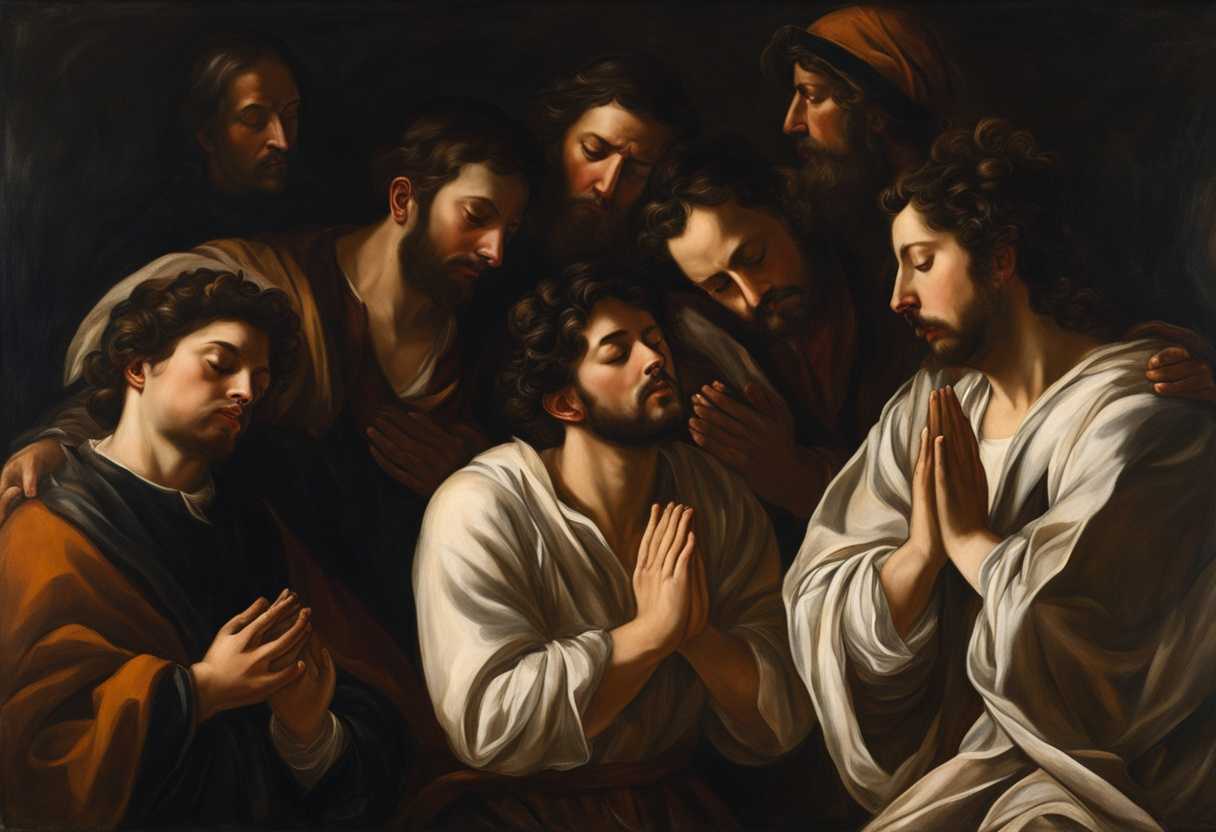
The True Meaning of Baruch 1
The Book of Baruch is believed to have been written by Baruch, the scribe and companion of the prophet Jeremiah. Baruch lived during the tumultuous time of the Babylonian conquest of Jerusalem and the subsequent exile of the Judean people. Baruch recounts the reading of a letter he had written, which was sent to the exiled Jews in Babylon in this chapter. The letter contains a confession of the sins of the people and a plea for God’s forgiveness. It also includes a reminder of the prophecies made by Jeremiah, which had come to pass with the fall of Jerusalem.
Baruch’s words echo the lamentations of the prophet Jeremiah, as seen in the book of Lamentations. The people are called to repentance and to remember their covenant with God, even in the midst of their suffering and exile.
Baruch 1:1-3
The setting in which the text is situated is presented in Baruch 1:1-3. The verses mention King Nebuchadnezzar, who was the king of Babylon during the time of the Babylonian exile of the Israelites. The mention of this king immediately places the narrative within a historical context and serves to remind the readers of the difficult period of exile that the Israelites were enduring. This exile was a pivotal event in the history of the Israelites, marking a time of great suffering and spiritual reflection.
The naming of King Nebuchadnezzar is significant because he is a prominent figure in the Bible, particularly in the book of Daniel. Nebuchadnezzar is portrayed as a powerful and prideful ruler in the book of Daniel, and his encounters with the God of Israel lead to profound transformations in his life. His story serves as a reminder of the sovereignty and power of God over the rulers and nations of the world. Additionally, Nebuchadnezzar’s interactions with Daniel and other Jewish exiles highlight themes of faithfulness, obedience, and the ultimate triumph of God’s kingdom.
Furthermore, Baruch 1:2-3 mention that the disaster prophesied by the prophets had come upon the people. This disaster refers to the destruction of Jerusalem and the temple by the Babylonians, which was foretold by prophets such as Jeremiah and Ezekiel. The devastation of the city and the exile of its inhabitants were seen as a consequence of the Israelites’ disobedience and idolatry. This theme of divine judgment and the consequences of sin runs throughout the Bible, serving as a solemn warning and a call to repentance.
The verses in Baruch 1:1-3 set the stage for the rest of the book of Baruch and underscore the themes of repentance, restoration, and hope in the midst of adversity. They remind the readers of the consequences of turning away from God and the importance of remaining faithful even in times of trial. The historical context provided by the mention of King Nebuchadnezzar and the prophesied disaster helps to ground the text in a specific time and place, while also connecting it to broader themes and narratives found throughout the Bible.
Baruch 1:4-7
The passage in Baruch 1:4-7 reads, “And they said to the people: Thus saith the Lord Almighty: the God of Israel: Behold, I will send for Nebuchadnezzar the king of Babylon, my servant: and I will set his throne upon these stones which I have hid, and he shall spread his pavilion over them.” And he shall come, and shall strike the land of Egypt: and he shall bring to death them that are for death, and to captivity them that are for captivity, and to the sword them that are for the sword. And I will kindle a fire in the temples of their gods, and he shall burn and carry them away captives: and he shall cover the faces of their gods with confusion.”
This passage reveals God’s plan to punish the people of Judah for their disobedience by allowing Nebuchadnezzar, the king of Babylon, to conquer them. It is significant to note that God refers to Nebuchadnezzar as “my servant,” indicating that even a pagan ruler can be used as an instrument of God’s will. This concept echoes throughout the Bible, illustrating that God can work through anyone, regardless of their background or beliefs, to fulfill His divine purposes.
Nebuchadnezzar’s invasion and destruction of Judah were not just acts of war but were part of God’s judgment against His people for turning away from Him. This serves as a cautionary tale about the consequences of disobedience and the importance of remaining faithful to God’s commandments. It reinforces the biblical principle that God is just and righteous, and His judgments are inevitable for those who stray from His path.
The mention of Nebuchadnezzar’s conquest of Egypt in these verses also serves as a reminder of the power dynamics in the ancient Near East. Egypt was a formidable kingdom, and the fact that Nebuchadnezzar was able to subdue it further emphasizes how God can use even the most unlikely figures to achieve His purposes. The destruction of the temples of the Egyptian gods underscores the supremacy of the Lord Almighty over all other deities, highlighting the futility of placing one’s trust in false gods. Baruch 1:4-7 ultimately demonstrates the themes of divine sovereignty, judgment, and the consequences of sin. It challenges readers to reflect on their own obedience to God’s will and the importance of remaining steadfast in faith, knowing that God’s plans will ultimately prevail, whether through peace or by the sword. This passage also sets the stage for the redemption and restoration of the people of Judah, emphasizing God’s mercy and faithfulness despite their waywardness.
Baruch 1:8-12
The verse in Baruch 1:8-12 presents a confession from the people of Israel, acknowledging their sins and the consequences that befell them. The passage starts by highlighting the disobedience of the people to the voice of the Lord and the prophets who spoke in His name. This disobedience led to their exile to Babylon, a punishment for their unfaithfulness. The text indicates that it had been a long period since they observed the laws, the days of their ancestors’ sin, and their own sin.
This section emphasizes one of the central themes in the Bible: the concept of sin and its consequences. Throughout the Old Testament, the Israelites often strayed from God’s commandments, leading to various forms of punishment. The exile to Babylon was a significant event in Israel’s history, illustrating the idea that disobedience to God has repercussions. It serves as a reminder that faithfulness and obedience are crucial in maintaining a relationship with God.
The mention of the sins of their fathers highlights the idea of generational sin, a concept found in various parts of the Bible. The LORD your God states in Exodus 20:5, “You shall not bow down to them or worship them; for I am a jealous God, punishing the children for the sin of the parents to the third and fourth generation of those who hate me.”” This notion suggests that the actions of ancestors can have a lasting impact on future generations.
Furthermore, this confession of the people in Baruch reflects the importance of repentance and humility before God. Throughout the Bible, individuals and nations are called to confess their sins and turn back to God in repentance. God says in 2 Chronicles 7:14, “If my people, who are called by my name, will humble themselves and pray and seek my face and turn from their wicked ways, then I will hear from heaven, and I will forgive their sin and will heal their land.”” This highlights the idea that true repentance and humility can lead to forgiveness and restoration. This passage from Baruch serves as a poignant reminder of the consequences of sin, the importance of obedience to God’s commandments, and the need for repentance and humility in seeking forgiveness. It echoes timeless messages found throughout the Bible regarding the relationship between humanity and God, emphasizing the themes of sin, repentance, and restoration.
Baruch 1:13-15
Baruch, the faithful scribe and companion of the prophet Jeremiah, addresses the remnant of the people of Israel who had been taken into exile in Babylon in Baruch 1:13-15. These verses highlight the importance of acknowledging one’s sins and the consequences that result from turning away from God. Baruch acknowledges in the first section of these verses that the people of Israel did not listen to the voice of the Lord or follow His commandments. This confession sets the stage for the repentance that is to follow. It is crucial to note that the acknowledgment of one’s sins is the first step towards repentance and reconciliation with God. This act of humility and recognition of wrongdoing is a recurring theme throughout the Bible. From Adam and Eve in the Garden of Eden to the nation of Israel in the Old Testament, the importance of repentance and seeking forgiveness from God is emphasized time and time again.
The next section of these verses describes the punishment that the people of Israel faced due to their disobedience. Baruch recounts how the people were handed over to King Nebuchadnezzar of Babylon, who destroyed their temple and brought them into exile. This event serves as a stark reminder of the consequences of sin and disobedience. Throughout the Bible, we see that when God’s people turn away from Him and worship other gods, they face calamity and defeat. The exile of Israel to Babylon was a direct result of their abandonment of God and His commandments. This demonstrates the concept of divine discipline, where God allows His people to face the consequences of their actions in order to bring about repentance and return to Him. Baruch urges the people of Israel to acknowledge their sins and turn back to God in repentance in the final section of these verses. He calls on them to walk in the ways of the Lord and to be obedient to His commandments. This plea for repentance and obedience is a common theme throughout the Bible, as God consistently calls His people to turn away from sin and back to Him. The message of repentance and reconciliation with God is central to the Christian faith, as exemplified in the teachings of Jesus and the apostles in the New Testament. These verses from Baruch 1 encapsulate timeless themes of sin, judgment, repentance, and the call to return to God. They serve as a powerful reminder of the consequences of disobedience and the importance of humility and repentance in maintaining a close relationship with God. God, who is always ready to forgive and restore those who turn to Him in true repentance, reminds us of His faithfulness and mercy as we reflect on the story of the people of Israel in exile.
Baruch 1:16-22
Several important sections in Baruch 1:16-22 provide insight into the context and themes of the book of Baruch. The verses begin with Baruch acknowledging the sins of the people of Israel and the reasons for their current predicament. He recounts the unfaithfulness of the people, their turning away from God’s commandments, and their disobedience to the voice of the Lord. This confession by Baruch reflects a key theme present in the book of Baruch – the consequences of sin and disobedience.
Baruch’s acknowledgment of the sins of the people of Israel serves as a reminder of the importance of obedience to God’s commandments in the broader biblical context. Throughout the Old Testament, we see instances where the Israelites strayed from God’s ways, leading to calamity and exile. The book of Baruch is situated during the period of exile in Babylon, where the Israelites faced the consequences of their disobedience. The confession in these verses highlights the recognition of wrongdoing and the need for repentance, a central theme echoed in other parts of the Bible, such as in 2 Chronicles 7:14, where God promises to heal the land if His people turn from their wicked ways.
Furthermore, in Baruch 1:18-22, we see Baruch recalling the warnings given by the prophets to the people of Israel. The prophets served as messengers of God, calling the Israelites to repentance and obedience. However, the people did not heed these warnings and continued in their sinful ways. This rejection of divine instruction led to the fulfillment of the prophecies of destruction and exile. The mention of the prophets underscores the important role they played in the history of Israel, guiding the people back to God and warning them of the consequences of their actions.
The verses in Baruch 1:16-22 offer a powerful message about the significance of obedience, repentance, and the consequences of sinful behavior. The confession of sins by Baruch, along with the acknowledgment of the warnings of the prophets, highlights the cyclical nature of Israel’s relationship with God throughout the Old Testament. It serves as a cautionary tale for believers, emphasizing the need to walk in God’s ways, heed His warnings, and seek forgiveness when we stray. These verses in Baruch ultimately set the stage for the themes of redemption and restoration that the book further expounds upon. The overarching message remains relevant today, reminding us of the importance of staying faithful to God and seeking reconciliation when we fall short.
After Baruch 1
The people had been exiled from their homeland, forced to live in a foreign land. Yet, even in their captivity, they remained steadfast in their faith. They gathered together, reading the words of the prophets and offering prayers to the Lord. Though their circumstances were bleak, they held onto the hope that one day, they would return to Jerusalem and rebuild their beloved city. The people were reminded of the importance of remembering their past as the chapter drew to a close, even as they looked towards the future. For it was in the lessons of their history that they would find the strength to endure the trials that lay ahead. And so, with renewed determination, they turned their eyes towards the horizon, ready to face whatever challenges the next chapter would bring.

Reverend Michael Johnson is an experienced Church Minister with a profound expertise in spirituality and guidance. With a serene presence and a compassionate heart, he has faithfully served his congregation for over 20 years, leading them on a spiritual journey towards inner peace and enlightenment. Reverend Johnson’s extensive knowledge of religious philosophies and profound understanding of human nature have made him a trusted confidant and mentor to many, as he seamlessly weaves his profound wisdom into life teachings. Reverend Johnson’s calming demeanor and empathetic nature continue to uplift and heal souls, nurturing a sense of unity and tranquility within his community.