
Deuteronomy 18:3-5 is about the specific provisions made for the Levites, the priests, denoting their special role and dedication to serving the Lord and the community.
3 And this shall be the priests’ due from the people, from those offering a sacrifice, whether an ox or a sheep: they shall give to the priest the shoulder and the two cheeks and the stomach.
4 The firstfruits of your grain, of your wine and of your oil, and the first fleece of your sheep, you shall give him.
5 For the Lord your God has chosen him out of all your tribes to stand and minister in the name of the Lord, him and his sons for all time.
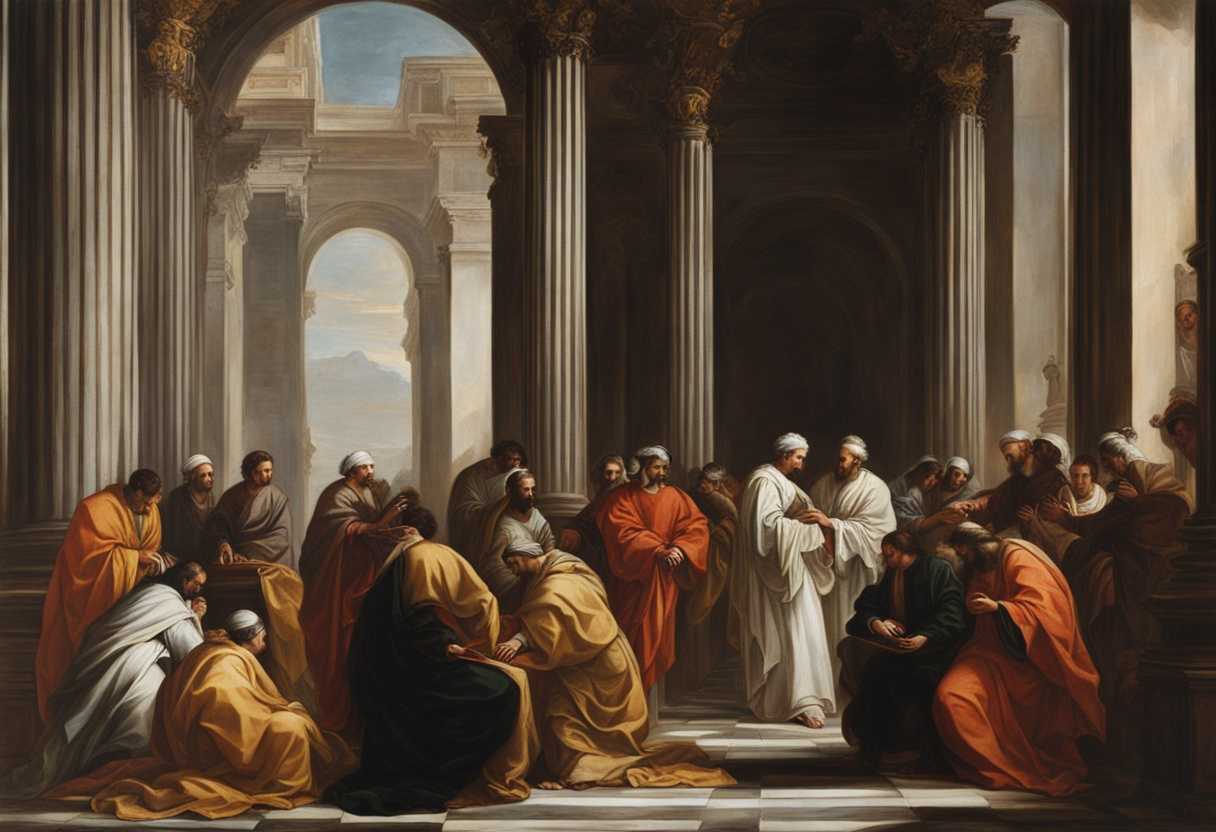
Setting the Scene for Deuteronomy 18:3-5
In the scene described in Deuteronomy 18:3-5, we find the tribe of Levi gathered together in the outskirts of the Promised Land. The Levites, descendants of Levi, were chosen by God to serve as priests and caretakers of the tabernacle. As the other tribes of Israel received their portions of land, the Levites did not inherit a specific territory but were given cities scattered throughout the land where they could reside.
The Levites are seen in this scene, having come together to receive their portion from the offerings of the people. The people of Israel were instructed to provide for the Levites from their own resources, recognizing the importance of their role in the spiritual life of the community. The Levites, in turn, were responsible for the religious duties and teaching the people the ways of God.
Surrounding the Levites are the tents and dwellings of the other tribes, as they camped around the tabernacle, the central place of worship. The scene is filled with a sense of reverence and dedication as the Levites prepare to fulfill their sacred duties and the people of Israel show their support and respect for their spiritual leaders.
What is Deuteronomy 18:3-5 about?
Priests and Levites played a significant role in ancient Jewish religious practices, as seen in this verse. They were responsible for receiving offerings from the people and serving as intermediaries between the people and God. This shows the importance of a structured religious hierarchy in facilitating the connection between the divine and the human.
Imagine a time when people believed that offerings and sacrifices were necessary to maintain a connection with the divine. The priests and Levites were the ones who ensured that these rituals were carried out properly and that the messages and prayers of the people reached God. Their role was not just ceremonial but also held great spiritual significance, as they were seen as the link between the earthly and the divine realms.
Reflect on the responsibility and trust that the people placed in these religious leaders. They were not only performing rituals but also guiding and leading the community in matters of faith and spirituality. This verse reminds us of the importance of having dedicated individuals who can help others in their journey towards understanding and connecting with the divine.
Understanding what Deuteronomy 18:3-5 really means
Deuteronomy, a pivotal book in the Bible, captures Moses’ final addresses to the Israelites as they stand on the cusp of entering the Promised Land. Among the laws and guidelines laid out in these chapters, Deuteronomy 18:3-5 shines a spotlight on the provisions designated for the Levitical priests. These priests, set apart for divine service, were to be supported by the community they served. The phrase “The priest shall receive” underscores the communal responsibility to care for those who minister in spiritual capacities, highlighting the importance of sustaining and honoring spiritual leaders.
In detailing the portions of sacrificial animals allocated to the priests – the shoulder, cheeks, and stomach – the passage symbolizes the necessity of ensuring that those dedicated to serving God are adequately provided for. Additionally, offering the firstfruits of grain, new wine, and oil signifies giving God primacy in one’s life and acknowledging His provision. The phrase “For the Lord your God has chosen them” emphasizes the divine selection and sanctity of the Levitical priests, reinforcing their unique role and the community’s duty to respect and support them.
Further insights can be gleaned by exploring related biblical passages. Numbers 18:8-24 elaborates on the offerings and tithes designated for the Levites, aligning with the principles outlined in Deuteronomy 18:3-5. In 1 Corinthians 9:13-14, Paul draws a parallel between supporting those who preach the gospel in the Old Testament and ministers in the New Testament church. Malachi 3:10 encourages faithful tithing, promising blessings for those who support God’s work.
The relevance of this passage extends to contemporary times, urging modern congregations to prioritize supporting their pastors and church leaders. Just as the Israelites were instructed to care for the Levitical priests, believers today are called to sustain those who dedicate their lives to spiritual service. By prioritizing giving and recognizing the significance of nurturing their spiritual community, individuals can uphold the principles outlined in Deuteronomy 18:3-5.
Consider a scenario where a pastor in a small-town church diligently tends to the needs of the congregation, offering counsel, comfort, and spiritual guidance. Recognizing the pastor’s unwavering commitment, the church members decide to contribute a portion of their income regularly to ensure the pastor’s well-being. This act not only supports the pastor but also strengthens the community’s unity and dedication to their faith, embodying the principles of provision and care highlighted in Deuteronomy 18:3-5.
In conclusion, Deuteronomy 18:3-5 underscores the significance of supporting those who serve in spiritual capacities. By honoring and providing for God’s chosen servants, we ensure the continuity of spiritual guidance and care within our communities. This ancient principle remains profoundly relevant in contemporary society, emphasizing the enduring importance of sustaining and respecting those who dedicate their lives to spiritual service.
Are we honoring and supporting our spiritual leaders?
The verse refers to the support and honor that should be given to the spiritual leaders chosen by God. We must honor and support our spiritual leaders today. These individuals play a crucial role in guiding us spiritually, teaching us about our faith, and providing pastoral care to their communities. We show our gratitude for their dedication and service to God and the congregation by honoring and supporting them.
It is also important to remember that spiritual leaders often face unique challenges and responsibilities. They are called to lead, teach, and care for their communities, all while dealing with their own struggles and personal growth. We can help uplift them in their mission and ensure that they are able to continue serving effectively by offering our support and encouragement. We not only honor their calling but also strengthen the bond between the spiritual leaders and their congregation by doing so. We are following the example set in the Bible and showing our respect for the spiritual authority that God has placed in our lives by honoring and supporting our spiritual leaders. We should ensure that our spiritual leaders have the necessary support, both emotionally and practically, to fulfill their duties and continue to lead their communities in faith, just as the Israelites were instructed to provide for the Levites.
Application
Take a moment to reflect on Deuteronomy 18:3-5. Upholding the Levites is a noble duty, like supporting our colleagues at work or cherishing our family members. Our efforts can strengthen the spiritual foundation they provide, just as teamwork propels us towards success. Will you answer the call to uphold and honor the sacred role of the Levites in God’s plan?

Reverend Michael Johnson is an experienced Church Minister with a profound expertise in spirituality and guidance. With a serene presence and a compassionate heart, he has faithfully served his congregation for over 20 years, leading them on a spiritual journey towards inner peace and enlightenment. Reverend Johnson’s extensive knowledge of religious philosophies and profound understanding of human nature have made him a trusted confidant and mentor to many, as he seamlessly weaves his profound wisdom into life teachings. Reverend Johnson’s calming demeanor and empathetic nature continue to uplift and heal souls, nurturing a sense of unity and tranquility within his community.