
1 Now Moses and the elders of Israel commanded the people, saying, “Keep the whole commandment that I command you today.
2 And on the day you cross over the Jordan to the land that the Lord your God is giving you, you shall set up large stones and plaster them with plaster.
3 And you shall write on them all the words of this law, when you cross over to enter the land that the Lord your God is giving you, a land flowing with milk and honey, as the Lord, the God of your fathers, has promised you.
4 So it shall be, when you have crossed over the Jordan, that on Mount Ebal you shall set up these stones, which I command you today, and you shall plaster them with plaster.
5 And there you shall build an altar to the Lord your God, an altar of stones. You shall wield no iron tool on them;
6 You shall build the altar of the Lord your God of uncut stones, and you shall offer burnt offerings on it to the Lord your God.
7 And you shall sacrifice peace offerings and shall eat there, and you shall rejoice before the Lord your God.
8 And you shall write on the stones all the words of this law very plainly.”
9 Then Moses and the Levitical priests said to all Israel, “Keep silence and hear, O Israel: this day you have become the people of the Lord your God.
10 “You shall therefore obey the voice of the Lord your God, keeping his commandments and his statutes, which I command you today.”
11 “On the same day Moses commanded the people, saying,
12 “When you have crossed over the Jordan, these shall stand on Mount Gerizim to bless the people: Simeon, Levi, Judah, Issachar, Joseph, and Benjamin.
13 And these shall stand on Mount Ebal for the curse: Reuben, Gad, Asher, Zebulun, Dan, and Naphtali.
14 And the Levites shall declare to all the men of Israel in a loud voice:
15 “‘Cursed be the man who makes a carved or cast metal image, an abomination to the Lord, a thing made by the hands of a craftsman, and sets it up in secret.’ And all the people shall answer and say, ‘Amen.’
16 “‘Cursed be anyone who dishonors his father or his mother.’ And all the people shall say, ‘Amen.’
17 “‘Cursed be anyone who moves his neighbor’s landmark.’ And all the people shall say, ‘Amen.’
18 “‘Cursed be anyone who misleads a blind man on the road.’ And all the people shall say, ‘Amen.’
19 “‘Cursed be anyone who perverts the justice due to the sojourner, the fatherless, and the widow.’ And all the people shall say, ‘Amen.’
20 “‘Cursed be anyone who lies with his father’s wife, because he has uncovered his father’s nakedness.’ And all the people shall say, ‘Amen.’
21 “‘Cursed be anyone who lies with any kind of animal.’ And all the people shall say, ‘Amen.’
22 “‘Cursed be anyone who lies with his sister, whether the daughter of his father or the daughter of his mother.’ And all the people shall say, ‘Amen.’
23 “‘Cursed be anyone who lies with his mother-in-law.’ And all the people shall say, ‘Amen.’
24 “‘Cursed be anyone who strikes down his neighbor in secret.’ And all the people shall say, ‘Amen.’
25 “‘Cursed be anyone who takes a bribe to shed innocent blood.’ And all the people shall say, ‘Amen.’
26 “‘Cursed be anyone who does not confirm the words of this law by doing them.’ And all the people shall say, ‘Amen.’
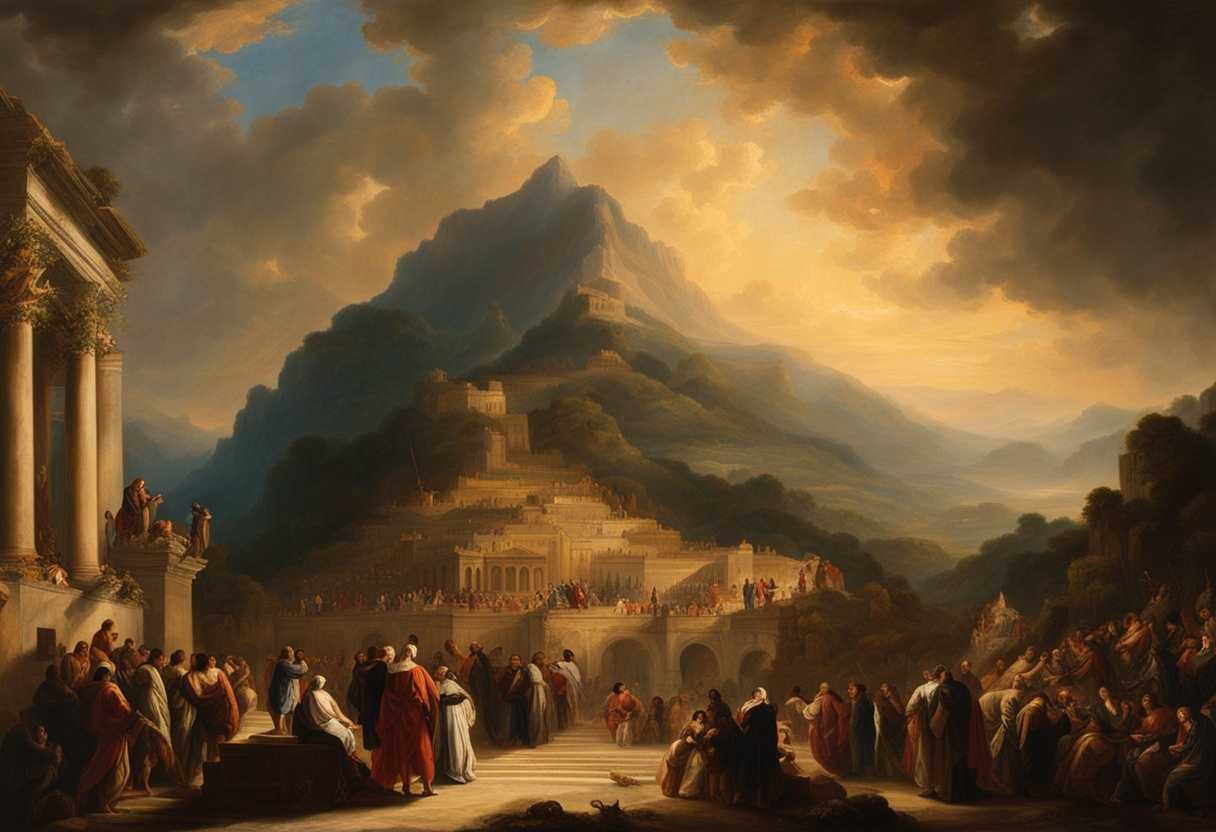
The True Meaning of Deuteronomy 27
The book of Deuteronomy was written by Moses, the great prophet and leader of the Israelites. Moses provided the people with final instructions and a renewed covenant with God as they prepared to enter the Promised Land. The Israelites are commanded to set up stones, make an altar, and pronounce blessings and curses upon the land in this chapter. This sets the stage for the dramatic events that will unfold as the Israelites conquer Canaan and establish their kingdom.
The chapter begins with Moses instructing the people to set up large stones and plaster them, and to write the words of the law on them. This was to be done upon crossing the Jordan River, as a memorial to the Lord’s faithfulness in bringing them to the Promised Land. The people were then to build an altar and offer sacrifices, signifying their renewed commitment to the covenant.
Interestingly, we see echoes of this command in the book of Joshua, where the Israelites do indeed set up these memorial stones after crossing the Jordan (Joshua 4:1-9). This demonstrates the unity of Scripture and how the different books complement one another to provide a complete picture of God’s plan.
The chapter goes on to describe the blessings that will come upon the people if they obey the Lord, and the curses that will result from disobedience. These blessings and curses are further elaborated upon in the following chapters, underscoring the importance of the people’s response to God’s word. The Israelites are reminded of the gravity of their decision to follow the Lord wholeheartedly as they prepare to enter the land.
Deuteronomy 27:1-8
Moses instructs the people of Israel to build an altar of stones on Mount Ebal, whitewash the stones, and inscribe the words of the law on them once they have crossed the Jordan River in Deuteronomy 27:1-8. This act symbolizes the establishment of a covenant between God and His people. The altar represented God’s presence among them and their commitment to follow His commandments. The act of inscribing the law on the stones served as a visual reminder of their obligations to God and the consequences of obedience or disobedience.
This command to write the law on stones was not only a physical representation but also a powerful metaphor for the importance of internalizing God’s word. The stones were to be a permanent fixture, serving as a constant reminder of the covenant between God and His people. This underscores the timeless message of the significance of immersing ourselves in God’s word, internalizing it, and allowing it to shape our lives. The location of this event is significant. Mount Ebal was known for its association with curses, while Mount Gerizim was associated with blessings. The Israelites proclaimed the curses by building the altar on Mount Ebal, serving as a warning of the consequences of disobedience. This ritual reinforced the idea that obedience to God’s commandments leads to blessings, while disobedience leads to curses. The stark contrast between the two mountains symbolized the choice that the Israelites had: to follow God’s ways and receive blessings or to stray and face the consequences.
This passage also emphasizes the communal nature of the covenant. The entire community, including the elders, officers, judges, and all the people, was involved in this ritual. This collective participation reinforced the idea that the covenant with God was not just an individual commitment but a communal one. The people of Israel were bound together in their relationship with God, and their actions affected the entire community. God establishes covenants with His people throughout history in the broader context of the Bible. From the covenant with Noah, to Abraham, to Moses and the Israelites, and ultimately the new covenant through Jesus Christ, God’s faithfulness and desire for a relationship with His people are evident. The story arc of the Bible is one of God’s relentless pursuit of His people, calling them into relationship and offering blessings for obedience. The scene depicted in Deuteronomy 27:1-8 encapsulates essential themes of covenant, obedience, consequences, and community. It serves as a powerful reminder of the importance of adhering to God’s commandments, the consequences of disobedience, and the blessings that come from walking in obedience. It underscores the enduring message of God’s desire for a relationship with His people and the importance of communal commitment to Him.
Deuteronomy 27:9-10
Moses and the Levitical priests in Deuteronomy 27:9-10 commanded the Israelites, saying, “Be silent, Israel, and listen! You have now become the people of the Lord your God. Obey the Lord your God and follow his commands and decrees that I give you today.’” This passage marks a pivotal moment in the journey of the Israelites as they are about to enter the Promised Land. Moses, along with the Levitical priests, is addressing the entire nation, urging them to pay attention, be quiet, and recognize that they belong to the Lord.
This call to silence and attentiveness is significant because it symbolizes reverence and focus on the importance of what is about to take place. The act of listening is a way for the Israelites to demonstrate their submission to God’s authority and their willingness to follow His instructions. The Israelites are acknowledging that they are the people of the Lord, entering into a covenant relationship with God, and committing to obedience and faithfulness to His commands.
The emphasis on obeying and following God’s commands and decrees highlights the central theme of obedience throughout the Bible. This theme is not only crucial for the Israelites at that moment but remains relevant for believers today. Obedience to God’s Word is a demonstration of faith and trust in His wisdom and sovereignty. Jesus emphasizes the importance of obeying God’s commands in the New Testament when he says in John 14:15, “If you love me, keep my commands.””
This passage serves as a reminder that as believers, we are called to heed God’s Word, follow His instructions, and live in obedience to His will. We are also called to listen and obey, just as the Israelites were urged to do. Our obedience is a reflection of our love and devotion to God and is essential in living out our faith.
Deuteronomy 27:11-13
Moses commanded the people on that day in Deuteronomy 27:11-13 to stand on Mount Gerizim to bless the people after crossing the Jordan, including the tribes of Simeon, Levi, Judah, Issachar, Joseph, and Benjamin. And these tribes shall stand on Mount Ebal for the curse: Reuben, Gad, Asher, Zebulun, Dan, and Naphtali.”
This section of the verse is a pivotal moment in the book of Deuteronomy as Moses gives specific instructions to the Israelites regarding the blessings and curses that are to be pronounced once they enter the Promised Land. Mount Gerizim and Mount Ebal were located near the city of Shechem, which held great historical significance for the Israelites. These mountains were not only geographical landmarks but symbolic of the contrasts between blessings and curses, life and death.
The blessings were to be declared by six tribes on Mount Gerizim, while the curses were to be pronounced by the other six tribes on Mount Ebal. This ritual served as a powerful reminder of the covenant between God and His people, emphasizing the importance of obedience and the consequences of disobedience. The symbolism here is profound, illustrating the choices that the Israelites had before them – to follow God’s commands and receive blessings, or to disobey and face curses.
This division of tribes for blessing and curse also highlights the unity and diversity within the nation of Israel. Despite being twelve distinct tribes, they were all part of God’s chosen people, and each had a role to play in fulfilling God’s plan. This reinforces the idea of unity in diversity, where different individuals or groups can come together for a common purpose under the umbrella of God’s sovereignty.
This passage echoes the earlier blessings and curses outlined in Deuteronomy 11, where Moses urges the Israelites to choose life by loving and obeying God. The repetition of these themes underscores their importance and serves as a reminder for the Israelites to remain faithful to God as they journey into the land He had promised them. The blessings and curses were not just mere words but a reflection of the spiritual reality that obedience brings about blessings, while disobedience leads to curses. This passage also points to the overarching narrative of the Bible in a broader sense – emphasizing the importance of choices and consequences. Throughout the Bible, we see examples of individuals, nations, and even mankind as a whole facing the outcomes of their decisions. The blessings and curses pronounced on Mount Gerizim and Mount Ebal serve as a microcosm of this larger theological truth. It emphasizes the free will that God has endowed humanity with, highlighting the responsibility that comes with making choices in alignment with God’s will.
Deuteronomy 27:14-26
Moses instructs the Israelites on the importance of obeying God’s commandments and the consequences of disobedience in Deuteronomy 27:14-26. The section can be broken down into two main parts: the pronouncement of curses on Mount Ebal and the reason for these curses.
Firstly, in verses 14-26, Moses details a series of curses that are to be pronounced by the Levites upon Mount Ebal after the Israelites crossed the Jordan River. These curses were meant to be a vivid reminder of the severe consequences that would result from disobedience to God’s commandments. Each curse would be followed by an “Amen” from the people, signifying their agreement to the just penalties for breaking the covenant with God.
These curses touch upon various sins such as dishonoring parents, moving boundary markers, leading the blind astray, perverting justice, engaging in incestuous relationships, and accepting a bribe to kill an innocent person. Moses emphasized the importance of moral integrity and obedience to the law by listing out these specific sins and their corresponding curses.
The severity of these curses serves as a stark warning to the Israelites that their obedience to God’s commandments was not optional but rather a matter of life and death. It underscores the significance of living in accordance with God’s will and the consequences that come from straying from His path.
This passage highlights a recurring theme throughout the Bible – the importance of obedience to God’s commands and the repercussions of disobedience. God’s chosen people faced dire consequences when they turned away from Him in the Old Testament. From Adam and Eve in the Garden of Eden to the Israelites in the wilderness, disobedience always led to suffering and separation from God. The teachings of Jesus Christ in the New Testament give new meaning to the concept of obedience. Jesus speaks of the importance of building one’s house on a solid foundation of obedience to His words in Matthew 7:24-27, likening those who hear and do His teachings to wise builders who withstand the storms of life. Obedience to God’s commands brings blessing, while disobedience leads to destruction, as ultimately shown in Deuteronomy 27:14-26. It challenges us to examine our own lives and consider whether we are truly living in alignment with God’s will, knowing that our choices have eternal consequences.
After Deuteronomy 27
The people had followed God’s commands and set up the stones on Mount Ebal. They had listened as the Levites pronounced the curses for disobedience. The Israelites had solemnly agreed to these terms, pledging to obey the Lord. Yet, as the sun set, I could not help but wonder – how long would their resolve last? Would they remain faithful, or would the temptations of the world lure them away? Only time would tell. But I knew that in the days ahead, I must continue to guide them, lest they stray from the path of righteousness once more.

Reverend Michael Johnson is an experienced Church Minister with a profound expertise in spirituality and guidance. With a serene presence and a compassionate heart, he has faithfully served his congregation for over 20 years, leading them on a spiritual journey towards inner peace and enlightenment. Reverend Johnson’s extensive knowledge of religious philosophies and profound understanding of human nature have made him a trusted confidant and mentor to many, as he seamlessly weaves his profound wisdom into life teachings. Reverend Johnson’s calming demeanor and empathetic nature continue to uplift and heal souls, nurturing a sense of unity and tranquility within his community.