
Deuteronomy 4:11-12 is about the awe-inspiring revelation of God to the Israelites through fire, darkness, and clouds at Mount Sinai, signifying His power, holiness, and presence among His people.
11 And you came near and stood at the foot of the mountain, while the mountain burned with fire to the heart of heaven, wrapped in darkness, cloud, and gloom.
12 Then the Lord spoke to you out of the midst of the fire. You heard the sound of words, but saw no form; there was only a voice.
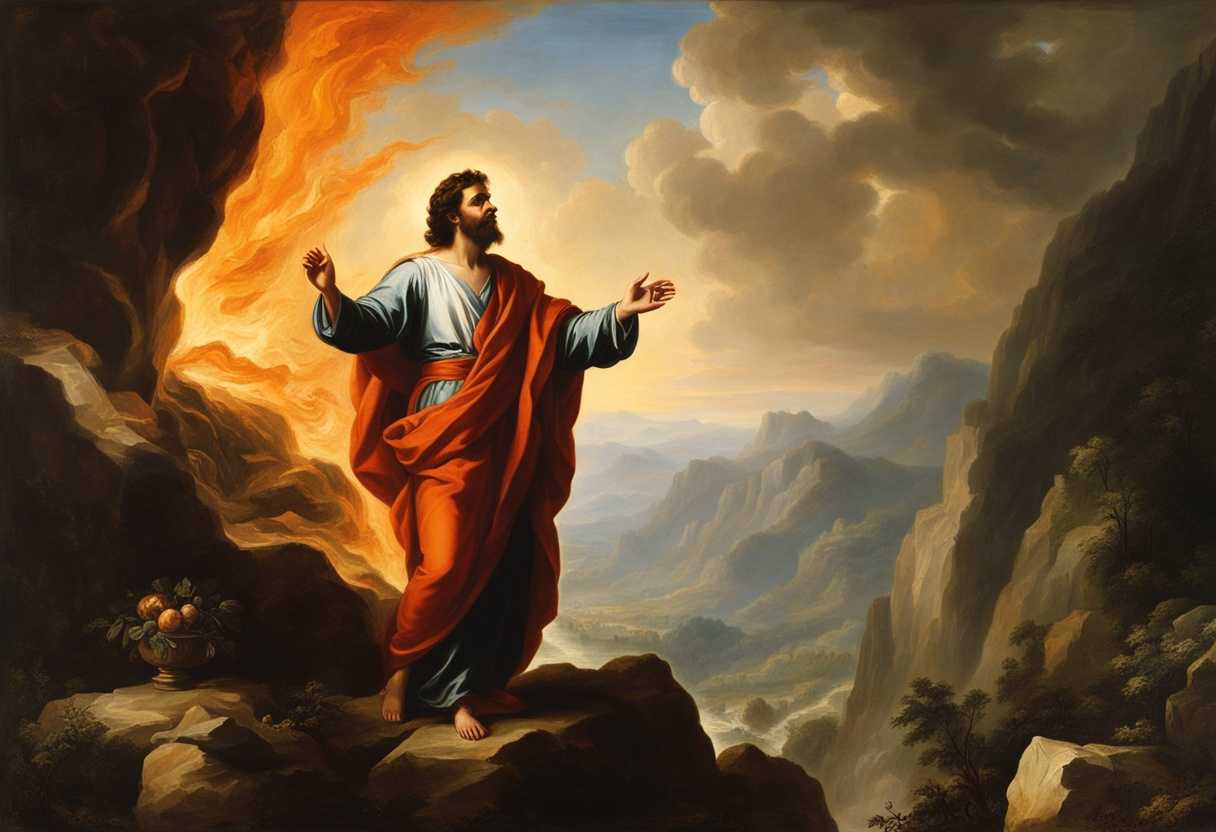
Setting the Scene for Deuteronomy 4:11-12
In Deuteronomy chapter 4, Moses is addressing the Israelites as they stand at the foot of Mount Horeb. The scene is set in the wilderness, with the majestic mountain looming in the background, its peak covered in a thick cloud. The Israelites have been wandering in the wilderness for forty years, following their exodus from Egypt, and now they have arrived at this sacred place to receive the words of the Lord.
As Moses speaks, the Israelites listen intently, their faces reflecting a mixture of awe and reverence. The elders of the tribes are gathered around him, along with the priests and Levites. The sound of the wind rustling through the desert brush is the only interruption to the solemnity of the moment. The presence of the Lord is palpable, and the people are keenly aware of the significance of the words being spoken to them.
Moses recounts the events of their journey, reminding them of the miracles and wonders that the Lord performed on their behalf. He emphasizes the importance of obeying the commandments and statutes that the Lord has given them, for it is through their obedience that they will demonstrate their wisdom and understanding to the nations around them. The Israelites stand united in their commitment to follow the Lord and uphold His covenant, as they prepare to embark on the next phase of their journey towards the Promised Land.
What is Deuteronomy 4:11-12 about?
Imagine standing with Moses on the majestic Mount Sinai, witnessing the awe-inspiring display of God’s presence as he receives the Ten Commandments. This moment is not just a simple exchange of rules, but a profound declaration of God’s sovereignty and guidance for His people. The giving of the Commandments on Mount Sinai signifies a divine covenant between God and humanity, setting a moral framework for how His people should live their lives.
Through this event, we can see that these commandments are not merely a set of arbitrary rules but a reflection of God’s love and desire for a harmonious relationship with His creation. The presence of God on Mount Sinai emphasizes the importance of the Commandments and serves as a powerful reminder of the need for obedience and reverence towards Him. The Commandments guide our actions and shape our relationship with God and others, reminding us of their significance as we reflect on this momentous occasion.
Understanding what Deuteronomy 4:11-12 really means
Deuteronomy 4:11-12 provides a vivid depiction of the Israelites’ encounter with God at Mount Horeb, also known as Mount Sinai. As we delve into these verses, we are transported back to a moment of awe and reverence, where the Israelites stood at the foot of the mountain, symbolizing their readiness to receive God’s commandments. The imagery of the mountain burning with fire to the heart of heaven conveys the powerful and consuming presence of God, underscoring His holiness and the gravity of the covenant being established.
“You heard the sound of words, but saw no form; there was only a voice.” This phrase encapsulates the transcendence and invisibility of God, emphasizing that He cannot be confined to any physical representation or idol. The Israelites experienced the voice of God without a visible form, highlighting the spiritual nature of their encounter. This concept resonates with the teaching in John 4:24, where Jesus emphasizes that God is spirit, and true worshipers must engage with Him in spirit and truth.
The parallels with Exodus 19:18-19 further emphasize the awe-inspiring nature of God’s presence at Mount Horeb. The thunder, lightning, and smoke described in Exodus add layers to the intensity of the moment, reinforcing the profound impact of encountering the Almighty. Hebrews 12:18-21 contrasts the fear and trembling experienced at Mount Sinai with the new covenant through Jesus Christ, illustrating the shift from a covenant of law to one of grace and redemption.
In our modern context, these verses serve as a poignant reminder of the significance of reverence and awe in our relationship with God. In a world where the sacred is often trivialized, we are called to approach God with humility and respect, acknowledging His holiness and the weight of His commandments. The emphasis on hearing God’s voice rather than seeing a form challenges us to cultivate a deeper, more spiritual connection with the Divine, moving beyond mere physical representations.
Consider a scenario where you attend a concert in complete darkness, only able to hear the music without seeing the performers. The impact of the experience lies not in what you see but in what you hear and feel. Similarly, the Israelites’ encounter with God was profound because of the powerful voice they heard, not because of any visual spectacle. This analogy underscores the essence of connecting with God on a spiritual level, beyond the confines of the material world.
As we reflect on these verses, we are prompted to seek God’s voice in our lives through prayer, scripture, and the guidance of the Holy Spirit. By prioritizing a deeper spiritual connection over external symbols or rituals, we align ourselves with the essence of true worship. Let us approach God with reverence and awe, recognizing His holiness and the significance of His presence in our lives. May we heed His voice and embrace the profound and awe-inspiring nature of His being.
How can awe of God impact our lives today?
The awe of God can have a profound impact on our lives today by reminding us of His greatness and holiness. It calls us to approach Him with reverence and humility, understanding that He is all-powerful and worthy of our respect and adoration. This recognition of God’s awesomeness can inspire us to live a life of obedience and gratitude, seeking to honor Him in all that we do.
When we truly grasp the awe-inspiring nature of God, we are humbled before Him and recognize our own limitations and need for His guidance and grace. This can lead to a deeper faith and trust in God, knowing that He is in control and His plans are far greater than our own. We can find strength, peace, and direction in our daily lives by holding onto this sense of awe, knowing that we serve a God who is above all things and in whom we can place our ultimate trust.
Application
Embrace the power of Deuteronomy 4:11-12 and feel the presence of our divine Creator all around you. Picture those fiery mountains and thick darkness and see the majesty of God. Let’s align ourselves with His plans, following His path and shining with His glory. Will you rise to reflect the magnificence of our God in your daily life?

Reverend Michael Johnson is an experienced Church Minister with a profound expertise in spirituality and guidance. With a serene presence and a compassionate heart, he has faithfully served his congregation for over 20 years, leading them on a spiritual journey towards inner peace and enlightenment. Reverend Johnson’s extensive knowledge of religious philosophies and profound understanding of human nature have made him a trusted confidant and mentor to many, as he seamlessly weaves his profound wisdom into life teachings. Reverend Johnson’s calming demeanor and empathetic nature continue to uplift and heal souls, nurturing a sense of unity and tranquility within his community.