
Deuteronomy 9:9-10 is about Moses receiving the tablets of the covenant from the Lord on Mount Sinai, symbolizing the establishment of the covenant between God and the Israelites.
9 When I went up the mountain to receive the tablets of stone, the tablets of the covenant that the Lord made with you, I remained on the mountain forty days and forty nights. I neither ate bread nor drank water.
10 And the Lord gave me the two tablets of stone written with the finger of God, and on them were all the words that the Lord had spoken with you on the mountain out of the midst of the fire on the day of the assembly.
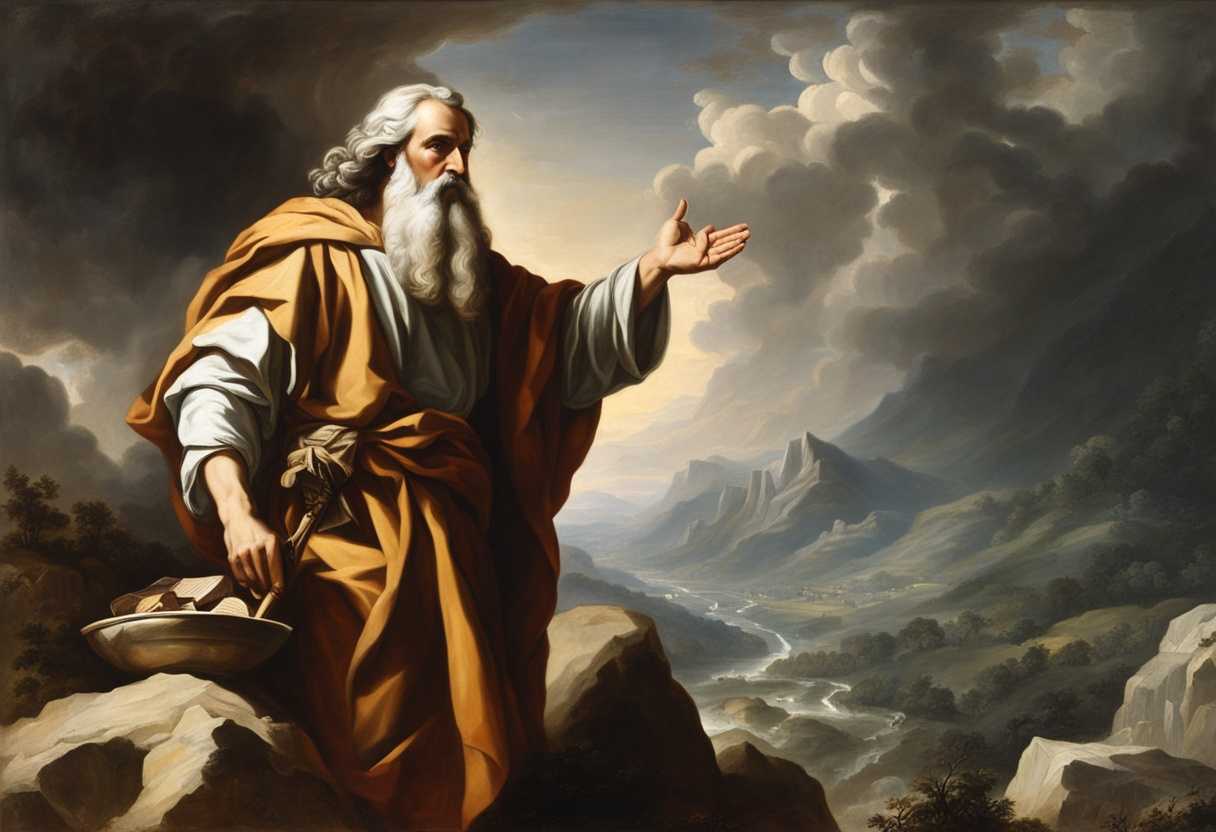
Setting the Scene for Deuteronomy 9:9-10
In Deuteronomy chapter 9, Moses is recounting the Israelites’ journey through the wilderness to the Promised Land. The scene described in verses 9-10 takes place at Mount Sinai, where Moses had spent 40 days and 40 nights fasting and receiving the tablets of the covenant from the Lord. The Israelites had been camped at the base of the mountain, waiting for Moses to return.
As Moses descends from the mountain, he carries the two stone tablets inscribed with the Ten Commandments, a symbol of God’s covenant with His people. The Israelites, led by Aaron, had grown impatient during Moses’ absence and had turned to idolatry, creating a golden calf to worship. The atmosphere is tense as Moses confronts the people about their sin and the breaking of the covenant with God.
The surroundings at Mount Sinai are awe-inspiring, with the majestic mountain looming overhead and the camp of the Israelites spread out below. The air is charged with a mix of fear, anticipation, and repentance as Moses prepares to intercede on behalf of the people before God. The scene serves as a powerful reminder of the consequences of disobedience and the importance of remaining faithful to the covenant with the Lord.
What is Deuteronomy 9:9-10 about?
Isn’t it truly awe-inspiring to think about the profound moment when Moses received the tablets of the covenant from God on Mount Sinai? This event symbolizes the establishment of a sacred bond between God and His people, signifying the giving of divine laws and guidance to guide the Israelites in their lives. The tablets served as a tangible representation of the covenant that the Israelites entered into with God, reflecting the importance of following His commandments and living a righteous life.
Imagine the weight of responsibility that Moses must have felt as he received these tablets, knowing that he was entrusted with carrying out God’s will and sharing His teachings with the people. It serves as a reminder for all of us to reflect on the significance of the covenants we make in our own lives and the importance of upholding our commitments, especially those made with a higher power. Just like Moses, we are called to be faithful stewards of the divine guidance we receive and to live in alignment with the values and principles laid out for us. May we find inspiration in Moses’s example and strive to honor our own covenants with integrity and devotion.
Understanding what Deuteronomy 9:9-10 really means
In Deuteronomy 9:9-10, we delve into a pivotal moment in Moses’ life as he ascends Mount Sinai to receive the tablets of the covenant from God. This event is not merely a historical account but a profound lesson in the role of mediation between humanity and the divine. As Moses undertakes this journey, he embodies the intermediary between God’s law and the people of Israel, highlighting the crucial nature of divine guidance in our lives.
The phrase “When I went up on the mountain to receive the tablets of stone” encapsulates Moses’ unique position as a conduit for God’s commandments. It underscores the significance of divine law as a guiding force for the Israelites and emphasizes the importance of obedience and reverence towards God’s covenant. The tablets themselves symbolize the tangible representation of this sacred agreement, a physical reminder of the promises and expectations set forth by the Lord.
Moses’ forty days and nights on the mountain serve as a period of testing and preparation, a common motif in biblical narratives symbolizing spiritual growth and endurance. This duration echoes similar instances in the Bible, such as Jesus’ forty days of fasting in the wilderness, highlighting the transformative power of perseverance and dedication in the face of trials. It prompts us to reflect on our own seasons of testing and the growth that can emerge from such challenging times.
Drawing parallels to contemporary experiences, the themes of seeking divine guidance and adhering to commitments resonate deeply with individuals today. In a world filled with uncertainties and distractions, the need for direction and purpose remains a universal pursuit. Just as the Israelites looked to Moses for guidance, we too seek clarity and wisdom in navigating our own paths.
Consider the analogy of a student preparing for a crucial exam, investing time and effort in study and sacrifice. This mirrors Moses’ period of preparation on the mountain, culminating in the reception of knowledge and understanding. Similarly, our dedication to spiritual growth and adherence to commitments can lead to profound rewards and fulfillment in our lives.
As we reflect on Moses’ experience and its relevance to our spiritual journeys, we are prompted to examine our own areas of growth and commitment. How can we dedicate ourselves more fully to deepening our relationship with God and honoring the covenants we have made, whether spiritual, personal, or professional? By internalizing the lessons from Deuteronomy 9:9-10, we can find inspiration to embark on a journey of spiritual preparation and steadfast commitment, mirroring Moses’ unwavering dedication to God’s covenant.
How can we deepen our trust in God’s guidance?
One way to deepen our trust in God’s guidance is to reflect on His past faithfulness. The Israelites in the verse recount the ways in which God had been with them, guiding and protecting them even through difficult times. We can be reassured of God’s guidance in the present and future by looking back on our own lives and recognizing the times when He has shown His presence and faithfulness.
Another way to deepen our trust in God’s guidance is through prayer and seeking His wisdom. We can also turn to prayer as a way to align our hearts and minds with His will, just as the Israelites sought guidance through prayer and fasting. We demonstrate our trust in His plans for us and invite His wisdom into our lives by asking for His guidance and being open to His leading.
Lastly, we can deepen our trust in God’s guidance by surrendering our own plans and desires to Him. When we acknowledge that His ways are higher than our ways, we can release our need for control and trust that His guidance will always lead to what is best for us. This act of surrendering allows us to walk in faith, knowing that His guidance is always for our ultimate good and His glory.
Application
Just like keeping up with our responsibilities at work and caring for our loved ones, staying true to God’s commandments is essential. Let’s acknowledge our mistakes, seek forgiveness, and embrace His love and mercy. It’s the perfect moment to dedicate ourselves to living a life of purity and penitence. Are you ready to step up, follow His guidance, and show reverence in everything you do?

Reverend Michael Johnson is an experienced Church Minister with a profound expertise in spirituality and guidance. With a serene presence and a compassionate heart, he has faithfully served his congregation for over 20 years, leading them on a spiritual journey towards inner peace and enlightenment. Reverend Johnson’s extensive knowledge of religious philosophies and profound understanding of human nature have made him a trusted confidant and mentor to many, as he seamlessly weaves his profound wisdom into life teachings. Reverend Johnson’s calming demeanor and empathetic nature continue to uplift and heal souls, nurturing a sense of unity and tranquility within his community.