
Ecclesiastes 1:4 is about the cyclical and repetitive nature of life and the universe, emphasizing that everything is constantly in motion and there is nothing truly new under the sun.
4 A generation goes, and a generation comes, but the earth remains forever.
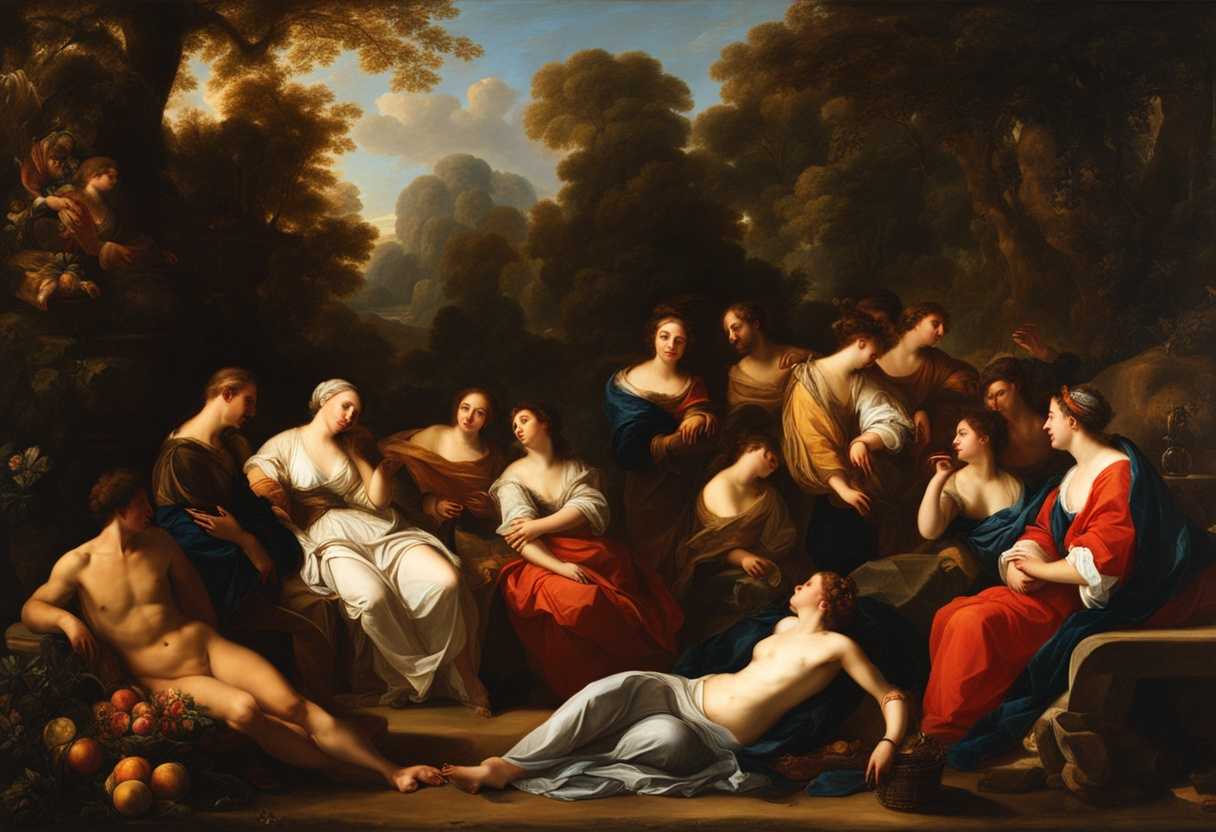
Setting the Scene for Ecclesiastes 1:4
In Ecclesiastes chapter 1, the scene is set in the ancient city of Jerusalem during the time of King Solomon. The renowned king, known for his wisdom and wealth, is surrounded by his court officials, advisors, and scholars. The group has gathered in the grand palace courtyard, where a lavish feast has been prepared to celebrate the completion of a new temple in the city.
The air is filled with the aroma of roasted meats and exotic spices, while musicians play soothing melodies in the background. King Solomon, dressed in regal attire adorned with jewels, sits at the head of the table, engaging in deep discussions with his guests about the meaning of life and the pursuit of wisdom. The courtyard is adorned with intricate tapestries depicting scenes from ancient scriptures, adding to the ambiance of the gathering.
As the sun begins to set over the city, casting a warm golden glow over the courtyard, the conversation turns to the cyclical nature of life and the passing of time. King Solomon, known for his introspective nature, ponders the fleeting nature of human existence and the eternal wisdom of God. The scene is one of opulence and intellectual stimulation, as the guests soak in the wisdom of the wise king in the midst of a vibrant and bustling city.
What is Ecclesiastes 1:4 about?
The author reflects on the passing of generations and the enduring nature of the earth in Ecclesiastes 1:4. This verse speaks to the cycles of life and the transience of human existence in contrast to the timeless stability of the natural world. The imagery of generations coming and going highlights the fleeting nature of human life, emphasizing the impermanence of our presence on this earth. Meanwhile, the earth’s permanence symbolizes continuity and endurance, serving as a reminder of the larger forces at play beyond our individual lifespans.
Have you ever stopped to ponder the legacy we leave behind as individuals in the grand scheme of the universe? This verse invites us to contemplate our place in the world and the fleeting nature of our time here. It prompts us to consider our actions and impact on the earth, urging us to appreciate the beauty and stability of nature that will outlast our own time. How can we find meaning and purpose amidst the fleeting nature of human existence, knowing that the earth endures long after we are gone? Reflecting on Ecclesiastes 1:4 challenges us to consider our place in the broader context of the universe and the legacy we are creating for future generations.
Understanding what Ecclesiastes 1:4 really means
The Book of Ecclesiastes, traditionally attributed to King Solomon, delves into profound reflections on the meaning of life and the human experience. In Ecclesiastes 1:4, the verse “A generation goes, and a generation comes” poignantly captures the transient nature of human existence. This phrase serves as a stark reminder of the cyclical pattern of life, where one generation gives way to the next in an unending succession. It prompts us to ponder the brevity of our time on earth, echoing the sentiment expressed in Psalm 90:10, which speaks of the fleeting nature of life.
Contrasting the ephemeral nature of human generations, the verse continues, “But the earth remains forever.” This juxtaposition emphasizes the enduring quality of the earth, highlighting its permanence in contrast to the fleeting lives of individuals. Just as Isaiah 40:8 asserts the eternal nature of God’s word compared to the transient nature of grass and flowers, Ecclesiastes underscores the sense of continuity and stability found in the natural world.
In today’s context, Ecclesiastes 1:4 holds relevance in two key areas. Firstly, it prompts us to confront our mortality and contemplate the impermanence of our lives. This reflection can lead us to prioritize meaningful pursuits such as nurturing relationships and fostering spiritual growth. Secondly, the verse serves as a reminder of our responsibility as stewards of the earth. Just as God entrusted Adam with the care of the Garden of Eden in Genesis 2:15, we are called to protect and preserve the environment for future generations.
Consider a community project focused on environmental conservation as an illustration of these principles in action. Imagine a local church organizing a tree-planting event to enhance green spaces and promote sustainability. Such initiatives not only benefit the immediate community but also contribute to a positive legacy that extends beyond individual lifetimes.
In delving deeper into the meaning of Ecclesiastes 1:4, we find profound truths about the passage of time and the eternal nature of God’s creation. The phrase “A generation goes, and a generation comes” encapsulates the inevitability of change and the continuous cycle of life and death. It encourages humility and a broader perspective on our place in the world. Conversely, “But the earth remains forever” underscores the enduring aspects of God’s creation, inviting contemplation on the eternal truths that transcend human existence.
In conclusion, let us reflect on the timeless wisdom of Ecclesiastes 1:4 and its implications for our lives today. May we consider how we can contribute to the well-being of future generations through our actions and choices. As we navigate the transient nature of life, may we find meaning and purpose in our daily endeavors, guided by faith and a commitment to stewardship. Let us pray for wisdom and guidance as we seek to leave a positive legacy for those who will come after us.
What lasting value is there in human toil?
The lasting value in human toil lies in the realization that all labor under the sun is ultimately fleeting and temporary. Despite our efforts and hard work, we are reminded of the transient nature of our achievements in this world. This perspective prompts us to seek a deeper purpose beyond our earthly toil and encourages us to focus on things that have eternal significance.
When we understand the impermanence of our earthly endeavors, we are invited to shift our priorities and invest our time and energy in pursuits that have eternal value. This awareness can lead us to seek a relationship with the eternal God and engage in activities that contribute to His kingdom. Our toil becomes meaningful not only in the present moment but also in the context of eternity when we align our efforts with God’s purposes. We are motivated to seek a greater purpose that transcends the temporal in light of the fleeting nature of human toil. This knowledge can inspire us to live with a sense of perspective, recognizing that our labor, when offered to God, can have a lasting impact beyond our earthly existence. We have the opportunity to participate in God’s eternal work and bring about lasting transformation in the world through our toil and endeavors.
Application
Think about your daily grind—work deadlines, family obligations, endless to-do lists. Life can feel like a hamster wheel, can’t it? But what if you aimed higher, seeking purpose beyond the temporary rush? Focus on what truly matters, the lasting impact you can make. How will you choose to spend your precious time to find deeper fulfillment today?

Reverend Michael Johnson is an experienced Church Minister with a profound expertise in spirituality and guidance. With a serene presence and a compassionate heart, he has faithfully served his congregation for over 20 years, leading them on a spiritual journey towards inner peace and enlightenment. Reverend Johnson’s extensive knowledge of religious philosophies and profound understanding of human nature have made him a trusted confidant and mentor to many, as he seamlessly weaves his profound wisdom into life teachings. Reverend Johnson’s calming demeanor and empathetic nature continue to uplift and heal souls, nurturing a sense of unity and tranquility within his community.