
Ephesians 2:11 is about emphasizing the division that existed between Jews and Gentiles before Christ, highlighting the unifying work of Jesus Christ in abolishing this separation and bringing reconciliation between all people.
11 Therefore remember that at one time you Gentiles in the flesh, called “the uncircumcision” by what is called the circumcision, which is made in the flesh by hands—
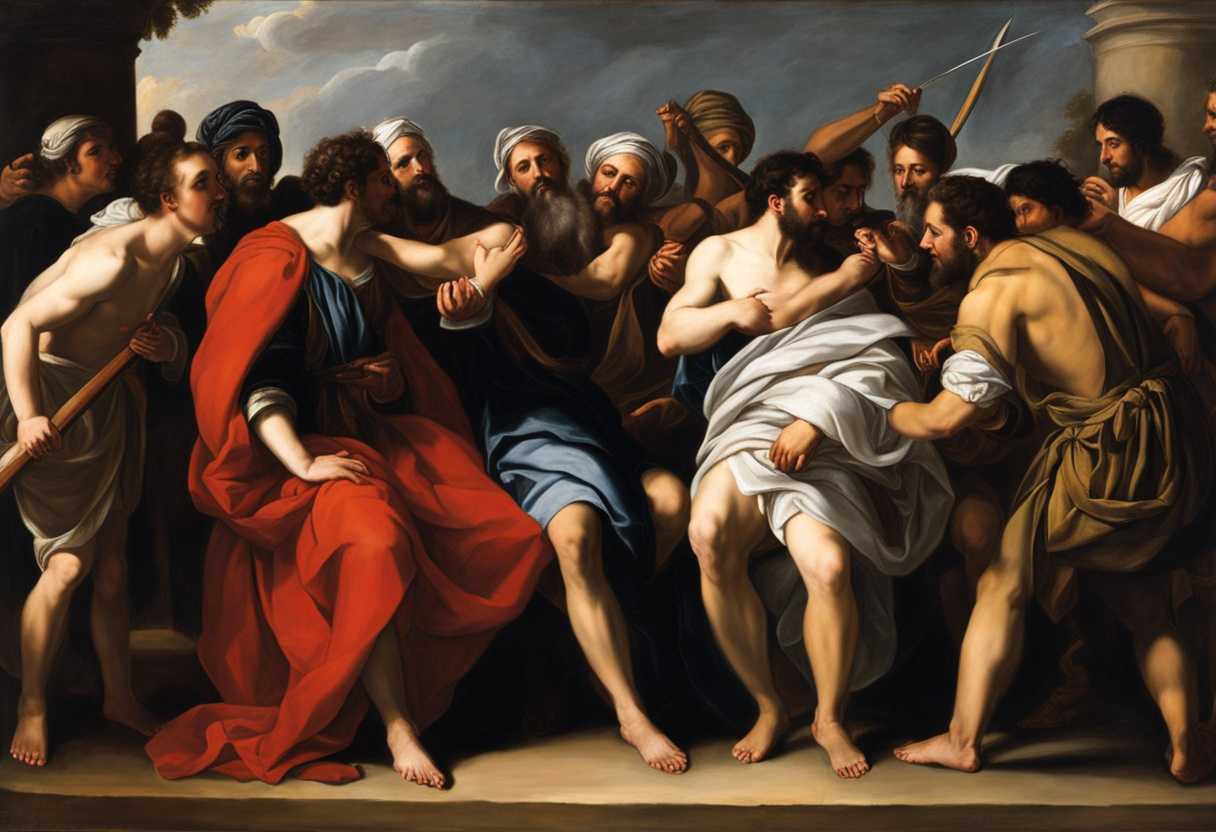
Setting the Scene for Ephesians 2:11
In Ephesians chapter 2, the apostle Paul sets the scene in a bustling marketplace in the ancient city of Ephesus. The marketplace is filled with merchants from various backgrounds, selling their goods and engaging in lively conversations. Among the crowd are a group of Gentile believers who have recently come to faith in Christ. They are marveling at the unity they have found with their Jewish brothers and sisters in Christ, a unity that transcends their cultural and religious differences.
As the Gentile believers gather in a shaded corner of the marketplace, they are joined by a Jewish Christian named Priscilla, who has been instrumental in teaching them about the gospel of Jesus Christ. With her gentle and wise demeanor, Priscilla explains to them the significance of their newfound faith in light of the historical animosity between Jews and Gentiles. She reminds them of the words of the apostle Paul, who wrote to the Ephesians, emphasizing that through Christ, both Jews and Gentiles are now reconciled to God and united as one body.
The scene is filled with a sense of awe and gratitude as the Gentile believers reflect on the transformative power of the gospel in their lives. They are humbled by the realization that they are no longer outsiders, but fellow citizens with the saints and members of the household of God. In this diverse and vibrant marketplace, the message of reconciliation and unity rings loud and clear, as believers from different backgrounds come together in worship and fellowship, united by their shared faith in Jesus Christ.
What is Ephesians 2:11 about?
The apostle Paul highlights the unity and equality found in Christ in Ephesians 2:11. He is reminding the Gentile believers that they are no longer outsiders but are now included in God’s family through faith in Jesus. This verse underscores the fact that in Christ, there is no distinction between Jew and Gentile; all believers are part of the same spiritual family. Paul’s message here is a powerful reminder of the unity that we have in Christ and the inclusive nature of God’s love for all people.
Have you ever felt like an outsider or like you didn’t belong? This verse speaks directly to those feelings, assuring us that in Christ, we are all welcomed and accepted. It challenges us to look beyond cultural, social, or ethnic differences and see each other as brothers and sisters in Christ. Through this verse, we are encouraged to embrace diversity, show love and respect to all, and celebrate the unity we have as members of God’s family.
Understanding what Ephesians 2:11 really means
In Ephesians 2:11, Paul’s message to the Ephesians resonates with a timeless truth about unity in Christ. He prompts the Gentile believers to reflect on their former status, emphasizing the stark separation they once experienced from God’s chosen people, the Jews. The distinction between the circumcised (Jews) and the uncircumcised (Gentiles) underscores the deep-rooted division and societal labels that existed in that era.
Drawing parallels, Galatians 3:28 reinforces the theme of unity by proclaiming the equality of all believers in Christ, transcending societal norms and divisions. Similarly, Romans 11:17-18 uses the imagery of Gentiles being grafted into the olive tree to symbolize their inclusion in God’s people, highlighting the transformative power of Christ’s unifying love.
The relevance of Ephesians 2:11 extends to contemporary society, urging individuals to confront prejudices and divisions, encouraging a perspective that sees beyond cultural and ethnic differences. By reflecting on personal and communal histories of discord, believers can appreciate the reconciling work of Christ and strive towards fostering unity within diverse communities.
Consider a scenario where two historically rivalrous groups find reconciliation through a unifying leader, akin to Christ breaking down the barriers between Jews and Gentiles. In a modern church setting, the diversity of backgrounds coming together mirrors the unity in Christ, emphasizing the importance of acknowledging past divisions to cherish the present harmony.
Practical application of this verse involves introspection on how Christ has brought reconciliation in personal and communal histories marked by division. Embracing the diversity within the body of Christ becomes a celebration of unity, recognizing the equality and oneness shared by all believers in Him.
Ephesians 2:11 serves as a poignant reminder of Christ’s transformative love and the unity it fosters among believers. It prompts us to reflect on our past, appreciate the present unity in Christ, and actively engage in dismantling any remaining barriers that hinder communal harmony and reconciliation.
How can we overcome spiritual separation and division?
One way to overcome spiritual separation and division is to remember the ultimate unifying factor, which is the presence of God in our lives. We can bridge the gaps that often lead to separation by focusing on our shared belief in a higher power and our common purpose of living a life according to spiritual principles. When we actively seek to cultivate understanding, compassion, and unity with others, regardless of differences in beliefs or backgrounds, we can move towards a more harmonious and cohesive spiritual community.
Another powerful tool in overcoming spiritual separation is through practicing forgiveness and empathy. We not only free ourselves from the burden of resentment but also pave the way for healing and reconciliation by extending grace and forgiveness to those who may have caused division or hurt in the past. Empathy allows us to see beyond surface differences and connect on a deeper level with others, fostering a sense of understanding and solidarity that transcends individual beliefs or practices.
Lastly, nurturing a spirit of inclusivity and openness within our spiritual communities can help combat division. We can break down walls of separation and foster a culture of unity and cooperation by creating spaces where all individuals feel welcomed, accepted, and valued. We can create a more inclusive and connected spiritual community that is united in purpose and love by embracing diversity and celebrating the richness of varied perspectives and experiences.
Application
Remember who you are: a member of Christ’s team. Just like a strong family or successful project at work, unity is key. Let’s bring that same togetherness to our daily lives, showing love and grace no matter our differences. How will you show this unity in your actions today?

Reverend Michael Johnson is an experienced Church Minister with a profound expertise in spirituality and guidance. With a serene presence and a compassionate heart, he has faithfully served his congregation for over 20 years, leading them on a spiritual journey towards inner peace and enlightenment. Reverend Johnson’s extensive knowledge of religious philosophies and profound understanding of human nature have made him a trusted confidant and mentor to many, as he seamlessly weaves his profound wisdom into life teachings. Reverend Johnson’s calming demeanor and empathetic nature continue to uplift and heal souls, nurturing a sense of unity and tranquility within his community.