
Exodus 16:3-4 is about the Israelites grumbling and complaining about their difficult circumstances in the wilderness, prompting God to provide them with manna as a test of their obedience and trust in Him to provide for their needs.
3 and the people of Israel said to them, “Would that we had died by the hand of the Lord in the land of Egypt, when we sat by the meat pots and ate bread to the full, for you have brought us out into this wilderness to kill this whole assembly with hunger.”
4 Then the Lord said to Moses, “Behold, I am about to rain bread from heaven for you, and the people shall go out and gather a day’s portion every day, that I may test them, whether they will walk in my law or not.
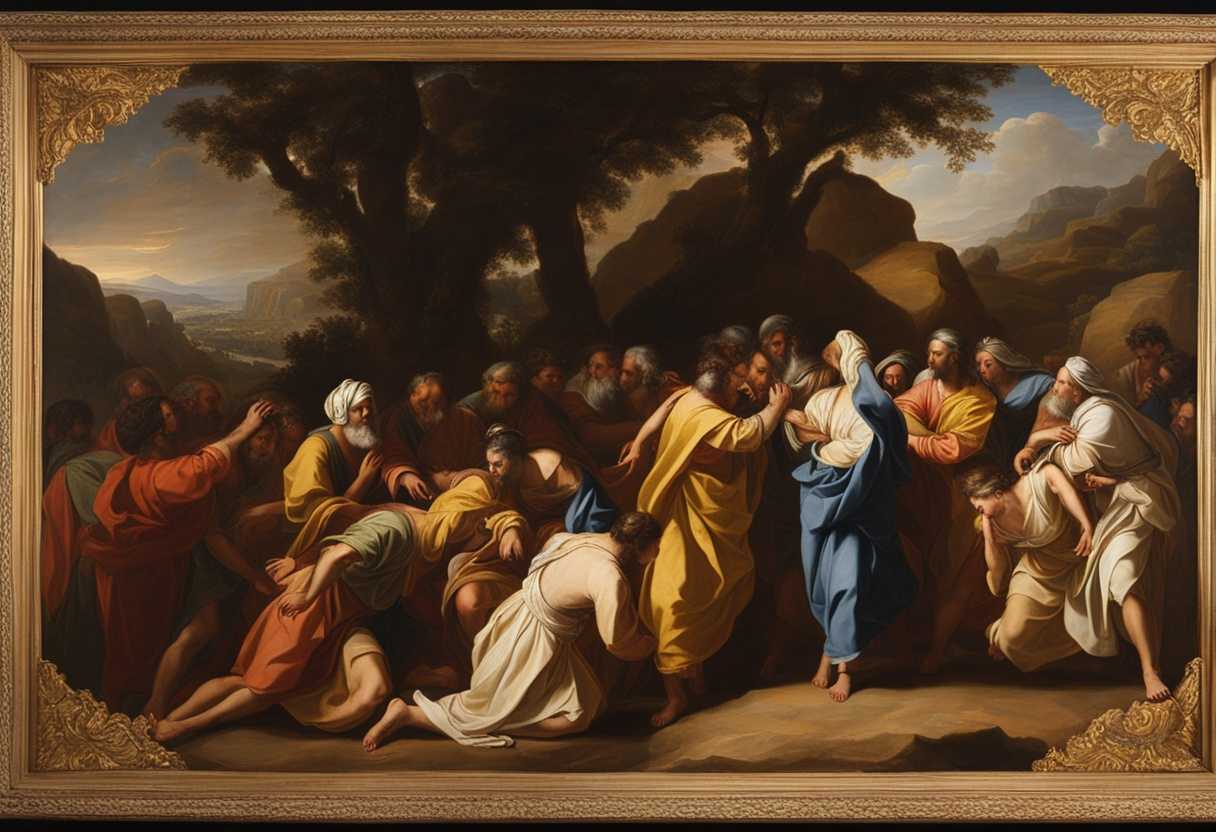
Setting the Scene for Exodus 16:3-4
The scene in Exodus 16:3-4 takes place in the wilderness shortly after the Israelites have been freed from slavery in Egypt. The Israelites, led by Moses and Aaron, have been journeying through the desert towards the Promised Land. However, they soon find themselves facing a new challenge – hunger. The people begin to grumble and complain to Moses and Aaron, expressing their longing for the food they had back in Egypt.
Surrounded by the vast and barren desert, the Israelites are weary and uncertain about their future. They are a large group of men, women, and children who have been brought together by their shared history of oppression and their newfound freedom. Despite witnessing the miracles of the plagues and the parting of the Red Sea, their faith is tested as they face the harsh realities of survival in the wilderness.
Moses and Aaron, chosen by God to lead the Israelites out of Egypt, find themselves in a difficult position as they try to reassure and guide the people. The tension is palpable as the Israelites grumble and question whether God is truly with them in this desolate place. It is a pivotal moment in their journey, as they must learn to trust in God’s provision and guidance for the challenges that lie ahead.
What is Exodus 16:3-4 about?
This verse highlights the importance of trust and obedience in our relationship with God. Just like the Israelites were tested with manna in the wilderness, we too are tested in our faith journey. God’s provision of manna was not just about meeting their physical needs, but also about teaching them to rely on Him and follow His guidance.
Think about it – why would God provide manna every day instead of a surplus for the Israelites to store up? It was to teach them to depend on Him daily, to trust that He would provide for them each day. God may place challenges or tests before us in our own lives to see if we will trust Him and follow His lead. Are we willing to let go of our fears and doubts, and instead, choose to walk in obedience and faith, even when we cannot see the whole picture?
So, as you reflect on this verse, consider how God might be testing your obedience and faith in Him. Are there areas in your life where you are called to trust Him more fully? God’s provision, like the Israelites, may come in unexpected ways, but it is always rooted in His love and desire for us to grow closer to Him. Trust in His plan, and let your faith be your guide in the wilderness of life.
Understanding what Exodus 16:3-4 really means
In Exodus 16:3-4, we witness a poignant moment in the journey of the Israelites through the wilderness. Freed from Egyptian slavery, yet facing hunger in the barren land, the people begin to grumble against Moses and Aaron. Their words echo with despair and doubt, “If only we had died by the Lord’s hand in Egypt!” This cry reveals a lack of faith and a longing for the familiarity of the past, even if it was marked by oppression. It is a stark reminder of how easily we can forget God’s past deliverance when faced with present challenges.
Accusing Moses and Aaron of leading them into the desert to starve, the Israelites showcase a common human response in times of crisis – fear and blame. This tendency to shift responsibility onto leaders when difficulties arise is a timeless trait that speaks to our need for control and security. However, in the midst of their complaints, God responds with a promise, “I will rain down bread from heaven for you.” This divine assurance of provision not only addresses their physical hunger but also serves as a testament to God’s unwavering care and ability to meet needs in miraculous ways.
The parallels between the Israelites’ reliance on manna in the wilderness and our own dependence on God for daily sustenance are striking. Just as they had to trust God for their daily bread, we are called to trust Him for our daily needs, knowing that He is aware of our circumstances and will provide. The Israelites’ grumbling serves as a cautionary tale for us today, reminding us of the dangers of ingratitude and lack of faith. Instead of complaining, we are encouraged to cultivate a spirit of gratitude and trust in God’s faithfulness.
Scriptures like Matthew 6:31-33, John 6:31-35, and Philippians 4:19 further reinforce the theme of God’s provision and care for His people. Jesus’ teachings on not worrying about food or clothing, His identification as the “bread of life,” and Paul’s reassurance of God meeting all our needs underscore the timeless truth of God’s faithfulness. These passages offer us guidance and comfort in navigating our own challenges and uncertainties, pointing us towards a deeper reliance on God’s unchanging character.
In our modern lives, we can see glimpses of God’s provision through acts of kindness and unexpected blessings. Just as a family in financial crisis receives groceries from a neighbor prompted by compassion, we are reminded that God can use various means to provide for our needs. This contemporary example of God’s “manna” through others illustrates His awareness of our circumstances and His ability to work through people to meet our needs.
In conclusion, the story of manna in the wilderness stands as a powerful testament to God’s provision and faithfulness. It challenges us to trust in God, practice gratitude over grumbling, and recognize His hand in our daily lives. By reflecting on this narrative and related scriptures, we find encouragement and hope in God’s unchanging nature and His promise to care for us, even in the midst of life’s uncertainties.
How can we trust in God’s provision completely?
We can trust in God’s provision completely by acknowledging that He is aware of our needs and will provide for us in His perfect timing. We may also have moments of doubt or fear, just as the Israelites in the wilderness questioned God’s provision. However, when we surrender our worries and anxieties to God, we are allowing Him to work in our lives and to show us His faithfulness.
Trusting in God’s provision completely requires us to have faith that He is our provider and sustainer. We can rest in the assurance that God knows what we need even before we ask. We can let go of our worries about the future and have confidence that He will meet all our needs according to His glorious riches by seeking His kingdom first and trusting in His promises.
When we fully trust in God’s provision, we are acknowledging His sovereignty and control over all aspects of our lives. This trust enables us to let go of our own desires and plans, allowing God to lead us on the path He has set out for us. We can have faith that He will continue to provide for us in the future by recognizing His provision in our past and present circumstances, guiding us with His love and wisdom.
Application
Let’s learn from the Israelites’ story and choose gratitude over complaints. Trust that God will provide for you, even in uncertain times. Let’s pray and be thankful for what we have, just like we would with our family’s support. So, how will you show your gratitude and trust in God’s provision today?

Reverend Michael Johnson is an experienced Church Minister with a profound expertise in spirituality and guidance. With a serene presence and a compassionate heart, he has faithfully served his congregation for over 20 years, leading them on a spiritual journey towards inner peace and enlightenment. Reverend Johnson’s extensive knowledge of religious philosophies and profound understanding of human nature have made him a trusted confidant and mentor to many, as he seamlessly weaves his profound wisdom into life teachings. Reverend Johnson’s calming demeanor and empathetic nature continue to uplift and heal souls, nurturing a sense of unity and tranquility within his community.