
Exodus 2:11-25 is about Moses fleeing from Egypt after killing an Egyptian, finding refuge in Midian, marrying Zipporah, and laying the foundation for his eventual role as the leader of the Israelites.
11 One day, when Moses had grown up, he went out to his people and looked on their burdens, and he saw an Egyptian beating a Hebrew, one of his people.
12 He looked this way and that, and seeing no one, he struck down the Egyptian and hid him in the sand.
13 When he went out the next day, behold, two Hebrews were struggling together. And he said to the man in the wrong, “Why do you strike your companion?”
14 He answered, “Who made you a prince and a judge over us? Do you mean to kill me as you killed the Egyptian?” Then Moses was afraid, and thought, “Surely the thing is known.”
15 When Pharaoh heard of it, he sought to kill Moses. But Moses fled from Pharaoh and stayed in the land of Midian. And he sat down by a well.
16 Now the priest of Midian had seven daughters, and they came and drew water and filled the troughs to water their father’s flock.
17 Now the shepherds came and drove them away, but Moses stood up and saved them, and watered their flock.
18 When they came home to their father Reuel, he said, “How is it that you have come home so soon today?”
19 They said, “An Egyptian delivered us out of the hand of the shepherds and even drew water for us and watered the flock.”
20 He said to his daughters, “Then where is he? Why have you left the man? Call him, that he may eat bread.”
21 And Moses was content to dwell with the man, and he gave Moses his daughter Zipporah.
22 She gave birth to a son, and he called his name Gershom, for he said, “I have been a sojourner in a foreign land.”
23 During those many days the king of Egypt died, and the people of Israel groaned because of their slavery and cried out for help. Their cry for rescue from slavery came up to God.
24 And God heard their groaning, and God remembered his covenant with Abraham, with Isaac, and with Jacob.
25 God saw the people of Israel—and God knew.
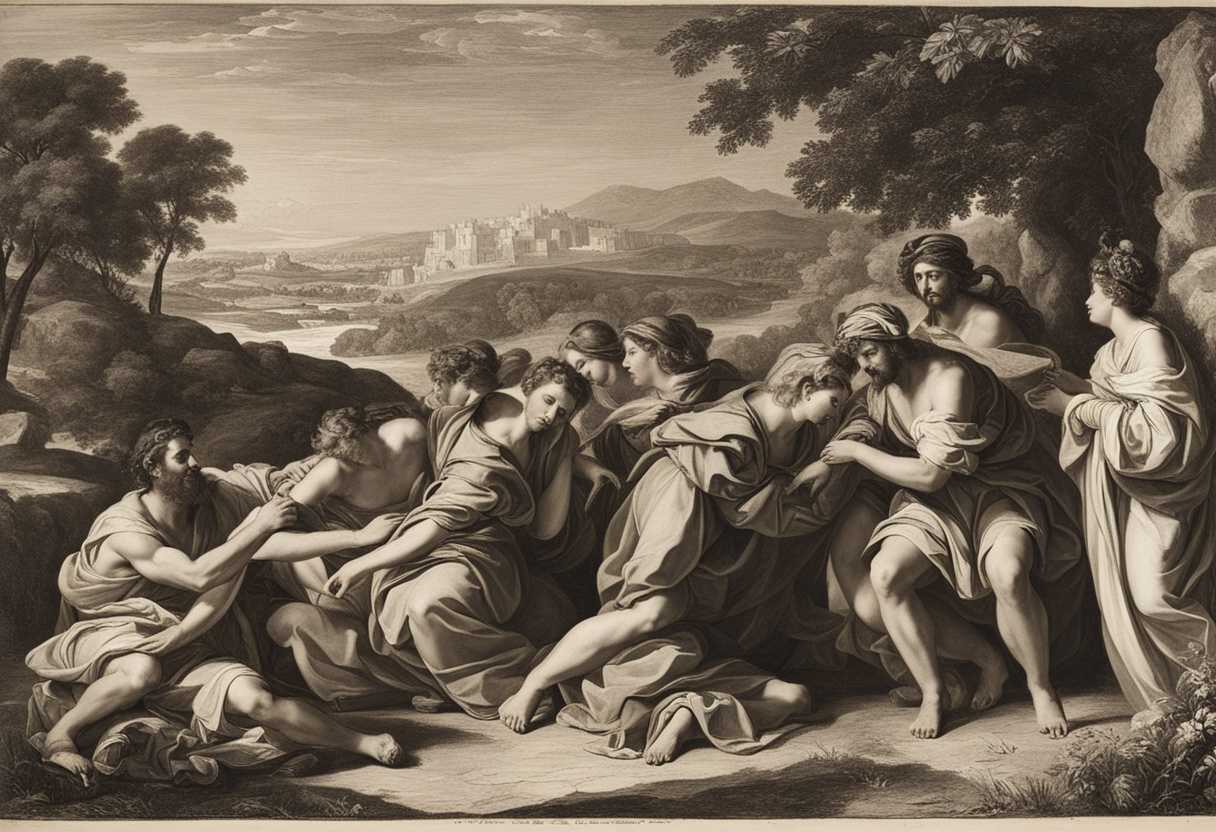
Setting the Scene for Exodus 2:11-25
In Exodus chapter 2, we find Moses, who had been raised as an Egyptian prince but was actually a Hebrew by birth, witnessing an Egyptian beating a Hebrew slave. Filled with righteous anger, Moses looked around to make sure no one was watching and then struck down the Egyptian, killing him. Realizing that his actions were known, Moses fled to the land of Midian to escape Pharaoh’s wrath.
As Moses arrived in Midian, he came across a well where seven sisters were trying to water their father’s flock. Some shepherds came and drove them away, but Moses stood up for the women and helped them water their flock. The sisters returned home to their father, Reuel, also known as Jethro, and told him about the stranger who had helped them. Impressed by Moses’ actions, Jethro invited him to their home and eventually gave his daughter Zipporah to Moses in marriage.
The scene is set in the vast desert of Midian, with the scorching sun beating down on the sandy landscape. The well where Moses meets the seven sisters is a central point, surrounded by a few sparse trees offering minimal shade. The women, weary from their struggle with the shepherds, are grateful for Moses’ intervention and are eager to share the news with their father. The encounter at the well marks the beginning of Moses’ new life in Midian, where he will find refuge and eventually receive his divine calling from God.
What is Exodus 2:11-25 about?
Moses experiences a pivotal moment in this verse. Fleeing Egypt after committing a crime, Moses is in a period of self-exile and reflection. Through this action, Moses faces the consequences of his actions and begins a journey of transformation and redemption. This moment marks a turning point in his life, both symbolically and literally, as he leaves behind his past life to forge a new path.
Moses’s encounter with God at the burning bush is a powerful moment of divine intervention and calling. It signifies a spiritual awakening and a new chapter in Moses’s life where he is chosen by God for a great purpose. Through this encounter, Moses learns of his calling to lead the Israelites out of Egypt, setting the stage for one of the most significant stories in the Bible. This verse reminds us of the power of redemption, forgiveness, and second chances, showing that even in our darkest moments, there is always the possibility for transformation and a higher calling.
Understanding what Exodus 2:11-25 really means
In Exodus 2:11-25, we delve into the early life of Moses, a figure whose journey from a privileged Egyptian upbringing to becoming a leader of the Israelites is marked by pivotal decisions and divine intervention. The passage begins with Moses witnessing the harsh treatment of his Hebrew brethren, leading him to defend a Hebrew slave against an Egyptian oppressor. This act showcases Moses’ empathy and sense of justice, despite his royal upbringing. It prompts us to ponder how our own backgrounds and experiences shape our responses to injustice.
As Moses flees to Midian after realizing his actions have been discovered, we witness a significant turning point in his life. This period of exile serves as a time of growth and preparation for his future role as a deliverer of his people. It reminds us that sometimes, unexpected detours in life can lead to greater purpose and fulfillment. Have you ever experienced a setback that later paved the way for a new direction or opportunity?
The passage also highlights God’s faithfulness and compassion towards His people. When the Israelites groan under the weight of oppression, God hears their cries and remembers His covenant with their forefathers. This reassurance of God’s attentiveness to human suffering and His commitment to His promises offers hope and comfort in times of struggle. How does knowing that God is mindful of your pain and faithful to His word impact your faith journey?
Moses’ story resonates with contemporary issues of justice, identity, and faith. It challenges us to consider how we respond to injustice in our own lives and communities. Like Moses, we are called to stand up for what is right, even when it requires courage and sacrifice. How can you apply the lessons from Moses’ story to advocate for justice and equality in your spheres of influence?
In a world where ethical dilemmas and moral choices abound, the example of Moses serves as a beacon of integrity and conviction. Just as he chose to align himself with the oppressed Hebrews rather than enjoy the privileges of his Egyptian status, we are encouraged to prioritize righteousness over personal comfort. How can you emulate Moses’ commitment to justice and faithfulness in your daily decisions and interactions?
Reflecting on Exodus 2:11-25 prompts us to examine our own responses to injustice, our trust in God’s providence, and our willingness to stand up for what is right. As we navigate the complexities of life, may we draw inspiration from Moses’ journey and find the courage to pursue justice, uphold integrity, and trust in the faithfulness of God.
How can we respond to injustice with courage?
We can respond to injustice with courage by not turning a blind eye to it, but rather taking action to address it. This can be seen in the actions of Moses, who witnessed an Egyptian mistreating a Hebrew and did not hesitate to intervene. We can draw inspiration from this example and stand up against oppression and injustice, even if it means going against the status quo.
Courage in the face of injustice also involves a willingness to step out of our comfort zones and confront the problem head-on. Moses had to flee Egypt after his actions became known, but he did not let fear deter him from ultimately returning to confront Pharaoh. We too may face consequences or backlash for standing up against injustice, but it is important to remember that staying silent only allows injustice to persist.
Additionally, responding to injustice with courage requires faith and trust in God’s plan. Even when faced with difficult and dangerous situations, we can find strength in knowing that God is with us and will guide us through the challenges. We can overcome fear and uncertainty in the pursuit of justice by staying true to our values and beliefs.
Application
Like Moses in Exodus, let’s show compassion and fight for justice. Stand up for what’s right. Be the voice for those in need. Let’s not ignore the injustices but be the change the world needs. Will you join the mission of spreading justice and mercy in your community today?

Reverend Michael Johnson is an experienced Church Minister with a profound expertise in spirituality and guidance. With a serene presence and a compassionate heart, he has faithfully served his congregation for over 20 years, leading them on a spiritual journey towards inner peace and enlightenment. Reverend Johnson’s extensive knowledge of religious philosophies and profound understanding of human nature have made him a trusted confidant and mentor to many, as he seamlessly weaves his profound wisdom into life teachings. Reverend Johnson’s calming demeanor and empathetic nature continue to uplift and heal souls, nurturing a sense of unity and tranquility within his community.