
Exodus 32:4-6 is about the Israelites creating and worshiping a golden calf as a substitute for God, demonstrating the dangers of idolatry and the consequences of turning away from the true faith.
4 And he received the gold from their hand and fashioned it with a graving tool and made a golden calf. And they said, “These are your gods, O Israel, who brought you up out of the land of Egypt!”
5 When Aaron saw this, he built an altar before it. And Aaron made a proclamation and said, “Tomorrow shall be a feast to the Lord.”
6 And they rose up early the next day and offered burnt offerings and brought peace offerings. And the people sat down to eat and drink and rose up to play.
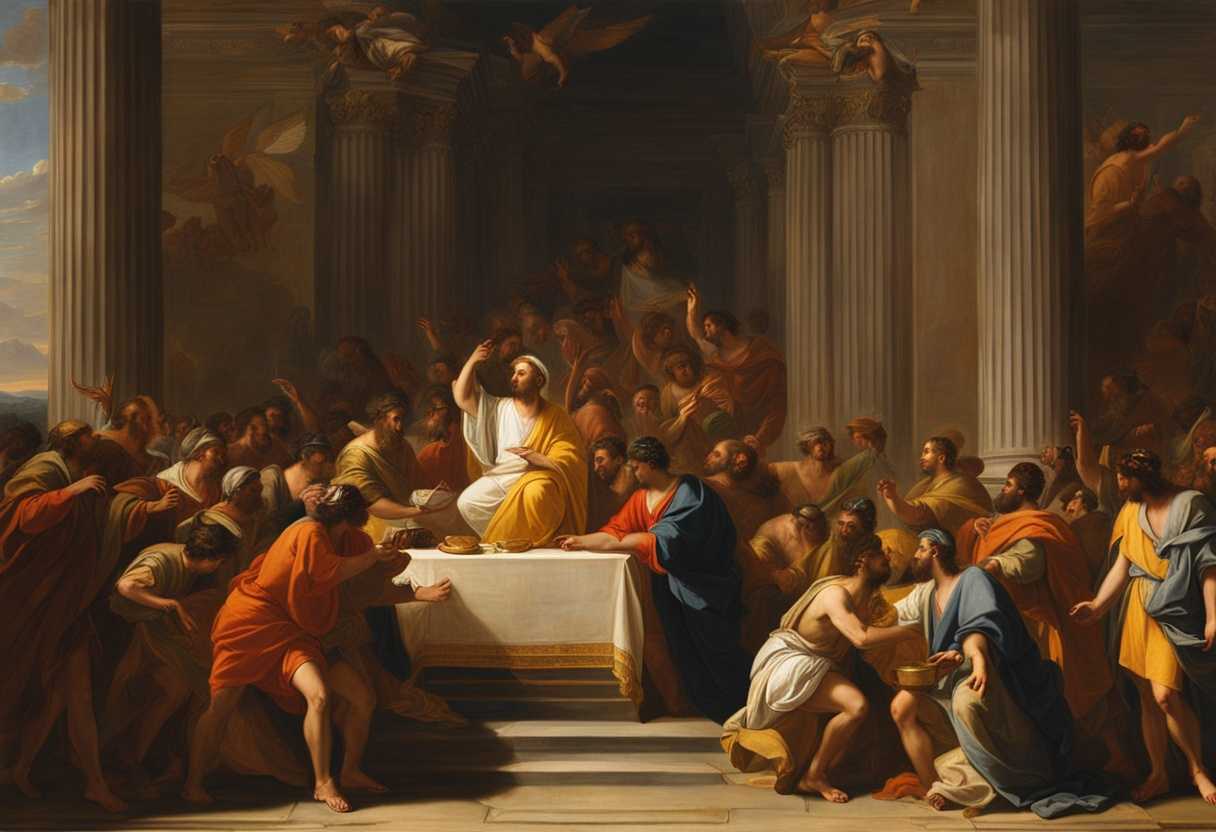
Setting the Scene for Exodus 32:4-6
The scene described in Exodus 32:4-6 takes place at the foot of Mount Sinai shortly after Moses had gone up the mountain to receive the Ten Commandments from God. The Israelites, feeling anxious and uncertain about Moses’ prolonged absence, turned to Aaron, Moses’ brother, for guidance. In their impatience, they asked Aaron to make them gods to lead them, as they were unsure of what had become of Moses.
Aaron, succumbing to the pressure, asked the people to bring him their gold earrings. He then fashioned a golden calf out of the collected gold and presented it to the Israelites, declaring, “These are your gods, O Israel, who brought you up out of the land of Egypt.” The people, caught up in the moment, began to worship the golden calf, offering sacrifices and engaging in revelry.
The surroundings were likely chaotic, with the Israelites gathered around the golden calf, dancing and celebrating. The atmosphere would have been charged with excitement and perhaps a sense of relief at having a tangible object to focus their worship on. The scene serves as a stark reminder of the Israelites’ tendency to turn away from God and seek comfort in material things, despite all the miracles and provisions they had witnessed.
What is Exodus 32:4-6 about?
Imagine the devastation of seeing a people you love and care for turn away from you to worship an object made of gold. This verse showcases the betrayal that God felt when the Israelites chose to worship a golden calf instead of Him. It reflects how easily humans can be swayed from their faith and devotion when faced with temptations and distractions.
Have you ever had someone you cared for deeply disappoint you? Think about those feelings of hurt, anger, and betrayal. Now, imagine how much more intense those emotions would be if you were God, the creator of the universe, watching your chosen people turn their backs on you. This verse serves as a cautionary tale, reminding us of the importance of staying true to our faith and not letting material possessions or other distractions lead us away from our relationship with God.
Understanding what Exodus 32:4-6 really means
In Exodus 32:4-6, we witness a pivotal moment in the journey of the Israelites, freshly liberated from Egyptian bondage. As Moses communed with God on Mount Sinai, the people, under Aaron’s interim leadership, succumbed to impatience and fear, seeking a tangible representation of the divine. The creation of the golden calf stands as a stark violation of the commandments against idolatry, as Aaron fashions an idol from their offerings, symbolizing a departure from the true worship of God.
The phrase “These are your gods, Israel, who brought you up out of Egypt” encapsulates the profound ingratitude and forgetfulness displayed by the Israelites. By attributing their deliverance to a man-made object, they not only defied God’s commandments but also distorted the narrative of their liberation. Engaging in sacrificial rituals and revelry before the golden calf, the people demonstrated a misguided devotion, substituting true worship with hedonistic indulgence.
This narrative finds echoes in other biblical passages, such as Deuteronomy 9:16, where Moses recounts the gravity of the sin of idolatry and the necessity of repentance. Paul’s admonition in 1 Corinthians 10:7 serves as a cautionary tale against falling into the trap of idolatry, using the golden calf incident as a stark example. Psalm 106:19-20 mourns Israel’s idolatrous actions, contrasting the glory of God with the shame of worshipping a mere image.
The relevance of this account extends to contemporary society, where idolatry manifests in subtler forms like the pursuit of wealth, status, or pleasure. The impatience displayed by the Israelites mirrors our struggles with waiting on God’s timing and trusting in His plan. Moreover, the influence of community dynamics is evident in the collective decision to create and worship the golden calf, highlighting how societal pressures can sway individuals away from their faith.
Consider a scenario where a community faces a crisis and instead of turning to faith and prayer, they resort to superstitions or quick fixes. This parallels the Israelites’ turn to the golden calf, illustrating how easily people can be led astray when they lose sight of their true source of help and hope. Ultimately, the story of the golden calf serves as a poignant reminder of the dangers of idolatry, the virtues of patience and faith, and the imperative to remain steadfast in our devotion to God alone. It prompts introspection into our lives, urging us to identify and dismantle modern-day idols, reaffirming our commitment to worshipping the one true God.
How do we guard against idolatry in our lives?
We guard against idolatry in our lives by staying true to our faith and constantly focusing on the One True God. It is important to prioritize our relationship with Him above all else and not allow anything or anyone to become a substitute or distraction from our devotion to Him. We can actively resist the temptation to idolize material possessions, status, or other people by recognizing that God is sovereign and deserving of our worship.
We can also guard against idolatry by regularly examining our hearts and motives. This involves reflecting on our thoughts, actions, and desires to ensure that they align with God’s will and do not veer into idolatrous worship of anything or anyone other than Him. Seeking accountability and guidance from other believers can also help us stay on the right path and prevent us from straying into worshipping false gods in our lives. By continually striving to deepen our relationship with God and surrendering our hearts completely to Him, we can protect ourselves from the pitfalls of idolatry and remain steadfast in our faith.
Application
Reflect on the story of Exodus 32:4-6. What idols are holding you back from connecting with God fully? Just like how we prioritize work and family, affirm your loyalty to God by pushing aside any rival in your heart. Today, let’s cleanse our lives of false idols and stand firm in serving the one true God. Will you make the choice to put God above all else in your life and worship?

Reverend Michael Johnson is an experienced Church Minister with a profound expertise in spirituality and guidance. With a serene presence and a compassionate heart, he has faithfully served his congregation for over 20 years, leading them on a spiritual journey towards inner peace and enlightenment. Reverend Johnson’s extensive knowledge of religious philosophies and profound understanding of human nature have made him a trusted confidant and mentor to many, as he seamlessly weaves his profound wisdom into life teachings. Reverend Johnson’s calming demeanor and empathetic nature continue to uplift and heal souls, nurturing a sense of unity and tranquility within his community.