
Exodus 32:9-10 is about God’s righteous anger towards the Israelites for their idolatry, showcasing His jealousy and desire for a loyal and exclusive relationship with His people.
9 And the Lord said to Moses, “I have seen this people, and behold, it is a stiff-necked people.
10 Now therefore let me alone, that my wrath may burn hot against them and I may consume them, in order that I may make a great nation of you.
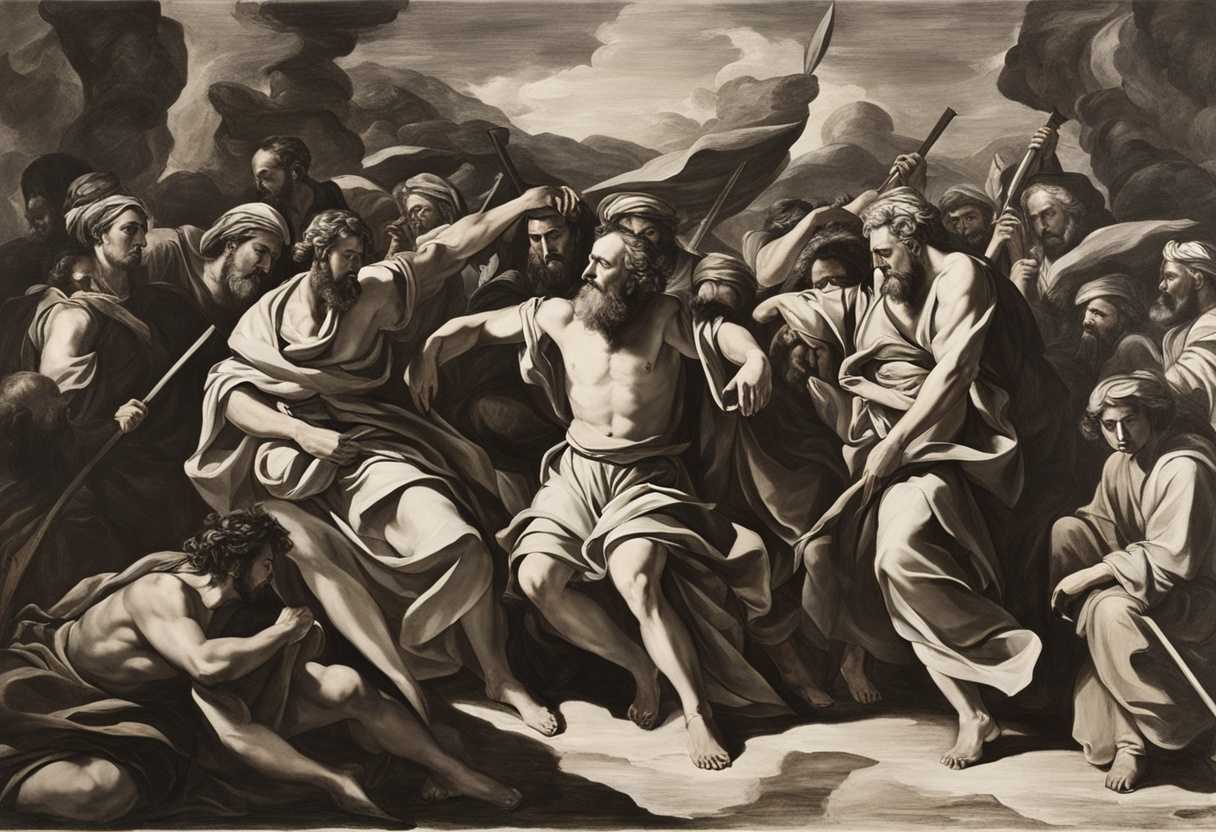
Setting the Scene for Exodus 32:9-10
The scene in Exodus 32:9-10 takes place at the foot of Mount Sinai, where Moses had gone up to receive the Ten Commandments from God. The Israelites, led by Aaron, had grown impatient during Moses’ absence and had asked Aaron to make them a god to worship. Aaron, succumbing to the pressure, collected their gold jewelry and fashioned a golden calf for them to worship. As the people danced and worshiped around the idol, God became angry and told Moses that He was ready to destroy the Israelites for their idolatry.
In this tense moment, Moses interceded on behalf of the people, pleading with God to spare them and not bring destruction upon them. Moses reminded God of His promise to make the Israelites into a great nation and urged Him to show mercy. The scene is filled with tension and drama as Moses stands as a mediator between the angry God and the repentant people, trying to prevent disaster from befalling the Israelites for their grave sin of idolatry.
The setting is one of chaos and confusion, with the Israelites caught up in their idolatrous worship and God’s anger ready to be unleashed. Moses, the humble and faithful servant of God, stands in the midst of it all, trying to bring peace and reconciliation between the people and their Creator. The scene serves as a powerful reminder of the consequences of turning away from God and the importance of repentance and intercession in seeking His mercy.
What is Exodus 32:9-10 about?
Moses demonstrates a powerful display of intercession on behalf of the Israelites in this verse. The Israelites had strayed from God’s commandments and were engaging in idolatry, a serious offense in the eyes of God. God’s anger was kindled against them as a result, and He threatened to destroy them. However, Moses, acting as a mediator between the people and God, steps in to plead for mercy and forgiveness. This act of intercession by Moses shows his deep love and care for his people, despite their disobedience. We, as teachers, can draw parallels to our own lives and relationships with our students. Just like Moses intervened for the Israelites, we may find ourselves in situations where we need to advocate for our students, especially when they make mistakes or face challenges. This verse reminds us of the importance of showing compassion, understanding, and support when our students falter or go astray. It challenges us to be like Moses, standing up for those in need and guiding them back onto the right path through our actions and words. Let us be teachers who advocate for our students, even in their moments of weakness, just as Moses interceded on behalf of the Israelites.
Understanding what Exodus 32:9-10 really means
The Book of Exodus recounts the Israelites’ journey from slavery in Egypt to the Promised Land, led by Moses. In Exodus 32, while Moses is receiving the Ten Commandments from God on Mount Sinai, the Israelites fashion a golden calf to worship in his absence. Verses 9-10 reveal God’s anger towards the Israelites for their idolatry and His plan to destroy them, proposing to make a great nation out of Moses instead. This passage showcases God’s intimate knowledge of His people’s actions and character, referring to them as “stiff-necked,” emphasizing their stubbornness and persistent disobedience.
God’s declaration to Moses to leave Him alone so His anger may burn against the Israelites underscores the seriousness of their sin and the consequences they face. The offer to make Moses into a great nation highlights God’s power to fulfill His promises through different means, despite human failings. Deuteronomy 9:13-14 and Numbers 14:11-12 echo the theme of stubbornness among the Israelites and God’s contemplation of starting anew through Moses. Genesis 12:2 reinforces God’s promise to Abraham of a great nation, illustrating continuity in God’s plans despite human shortcomings.
These verses remain relevant today, reflecting human nature’s resistance to change and divine patience alongside justice. They serve as a reminder of the consequences of persistent disobedience despite God’s love. Moses’ role as an intercessor for the Israelites emphasizes the power of prayer and advocacy, urging us to pray for others and seek God’s mercy. Just as a parent’s anger stems from a desire to protect their child, God’s anger towards the Israelites is rooted in His care for their well-being and faithfulness.
Reflect on areas in your life where you may exhibit stubbornness and resistance to God’s guidance. Consider the significance of interceding for others, following Moses’ example with the Israelites. Recognize God’s justice and mercy, understanding that while He is patient, there are repercussions for disobedience. By delving into these verses and their broader biblical context, we deepen our understanding of God’s character and His expectations for us, prompting us to live faithfully and advocate for others in prayer.
How can we intercede for others in crisis?
Interceding for others in crisis involves standing in the gap on their behalf, seeking God’s mercy and intervention in their situation. It means pleading with God for forgiveness, protection, and guidance for those going through difficult times. Like Moses interceded for the Israelites when they sinned against God, we can also lift up our loved ones, friends, and even strangers before the Lord, asking Him to show compassion and extend His grace towards them. We demonstrate our love, compassion, and solidarity with others as we intercede for them. It is a way of showing that we care deeply about their well-being and that we are willing to stand alongside them in their time of need. We acknowledge our dependence on God and our belief in His power to bring about change and transformation in the lives of those we are praying for by seeking His help on their behalf.
Interceding for others in crisis also reflects our understanding of the interconnectedness of humanity and our responsibility to support and uplift one another. Our prayers can make a difference in the lives of those facing challenges, just as Moses’ intercession helped turn away God’s anger and brought about a shift in the Israelites’ circumstances. Through our intercession, we are inviting God to work in the lives of others, bringing comfort, healing, and restoration where it is needed most.
Application
In the busy hustle of our modern lives, let’s remember the crucial role we play in supporting each other, just like in the dynamics of a thriving team at work or a loving family at home. Our prayers can be the bridge that brings back those who have lost their way, just as an anchor holds a ship steady in rough seas. Will you step up today and be that guiding light for someone in need?

Reverend Michael Johnson is an experienced Church Minister with a profound expertise in spirituality and guidance. With a serene presence and a compassionate heart, he has faithfully served his congregation for over 20 years, leading them on a spiritual journey towards inner peace and enlightenment. Reverend Johnson’s extensive knowledge of religious philosophies and profound understanding of human nature have made him a trusted confidant and mentor to many, as he seamlessly weaves his profound wisdom into life teachings. Reverend Johnson’s calming demeanor and empathetic nature continue to uplift and heal souls, nurturing a sense of unity and tranquility within his community.