
Exodus 6:16-19 is about tracing the genealogy of Moses and Aaron back to their ancestors Levi, Kohath, and Amram, highlighting the importance of their lineage in the unfolding of God’s plan for the Israelites.
16 These are the names of the sons of Levi according to their generations: Gershon, Kohath, and Merari, the years of the life of Levi being 137 years.
17 The sons of Gershon: Libni and Shimei, by their clans.
18 The sons of Kohath: Amram, Izhar, Hebron, and Uzziel; and the years of the life of Kohath were 133 years.
19 The sons of Merari: Mahli and Mushi. These are the clans of the Levites according to their generations.
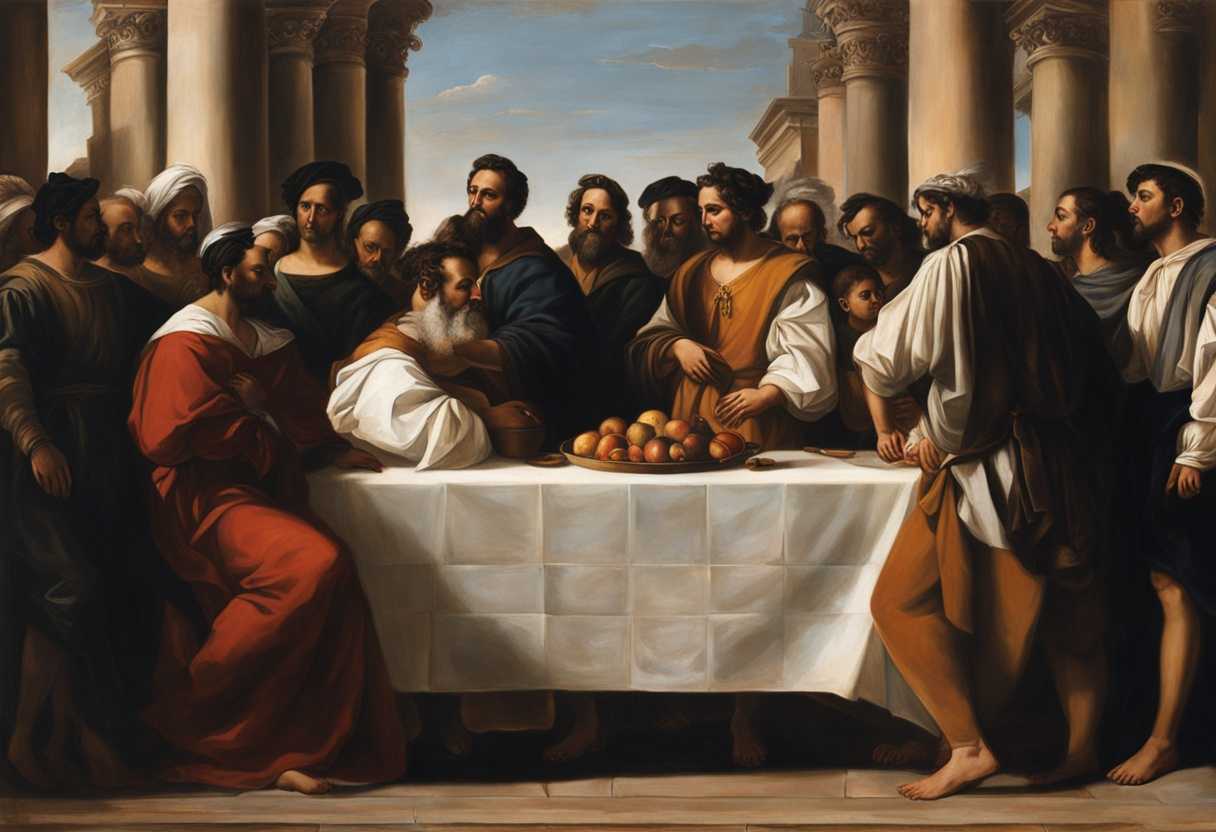
Setting the Scene for Exodus 6:16-19
The scene in Exodus 6:16-19 takes place in the land of Egypt during the time of Moses and Aaron. Moses and Aaron are standing before Pharaoh, the powerful ruler of Egypt, demanding the release of the Israelites from their enslavement. Pharaoh, seated on his throne, is surrounded by his advisors and court officials, who are watching the exchange with keen interest.
Moses and Aaron, representing the Israelites, are determined and resolute as they speak to Pharaoh, their faces reflecting the weight of their mission. The room is grand and opulent, with intricate hieroglyphics adorning the walls and golden ornaments gleaming in the flickering torchlight. The air is thick with tension as Pharaoh, his face a mask of defiance, listens to their plea with a mixture of disdain and curiosity.
The courtiers, dressed in elaborate robes and headdresses, whisper amongst themselves, their eyes darting between Moses and Pharaoh. The scene is charged with anticipation, as the fate of an entire nation hangs in the balance, and the clash of wills between Moses and Pharaoh reverberates through the chamber, echoing the struggle for freedom and justice.
What is Exodus 6:16-19 about?
Ah, the deep well of wisdom that can be found in genealogies! These verses serve as a reminder of the rich heritage and lineage of Moses and Aaron, tracing their roots back to the tribe of Levi. Just like a sturdy tree with deep roots, their ancestry grounded them and provided a solid foundation for their leadership roles.
Have you ever stopped to ponder the significance of knowing one’s lineage? It can offer a sense of identity, connection, and belonging. Their lineage from Levi not only established their credibility as leaders but also highlighted the faithfulness of God in fulfilling His promises through generations in the case of Moses and Aaron. We should also consider how our own ancestry and heritage have shaped us as we reflect on these verses. We should draw strength and inspiration from the stories of those who came before us, recognizing that we are part of a larger narrative guided by the hand of God.
Understanding what Exodus 6:16-19 really means
Introduction
In Exodus 6:16-19, we delve into the genealogy of Levi, one of Jacob’s twelve sons, which serves to establish the lineage and legitimacy of key figures in biblical narratives. These verses list the descendants of Levi, shedding light on the importance of heritage in biblical contexts.
Key Phrases and Their Meanings
“These are the names of the sons of Levi according to their generations” emphasizes the significance of lineage and heritage, anchoring individuals within a historical and familial framework. The mention of “Gershon, Kohath, and Merari” highlights the three main clans of the Levites, each with distinct roles in the religious life of Israel. Additionally, noting that “The years of the life of Levi were 137 years” underscores the enduring legacy and longevity associated with Levi, a common theme in biblical genealogies.
Related Passages
In Genesis 46:11, a similar list of Levi’s sons provides consistency and continuity in the biblical record. Numbers 3:17-20 elaborates on the roles and responsibilities of Levi’s descendants, emphasizing their crucial function in the service of the Tabernacle. Furthermore, 1 Chronicles 6:1-3 traces the lineage of Levi, reinforcing the importance of these family lines in Israel’s history.
Relevance to People Today
Understanding heritage, akin to the Israelites’ value of genealogies, can offer individuals today a deeper connection to their roots and a sense of identity. The Levites’ specific roles in their community remind us that everyone has a unique purpose and contribution to make. Reflecting on the legacy of Levi’s descendants prompts contemplation on the impact we are leaving for future generations.
Anecdote
Consider the story of an individual who unearthed their family history, discovering a lineage of educators. This revelation inspired them to pursue a career in education, feeling a profound connection to their ancestors and a sense of fulfillment in continuing the family legacy.
Conclusion
In conclusion, Exodus 6:16-19 provides a window into the genealogy of Levi, offering insights into biblical heritage and lineage. Encouraging readers to explore their own heritage and roles within their communities, these verses underscore the timeless relevance of understanding one’s roots and the transformative impact it can have on personal identity and purpose.
How can we seek forgiveness and reconciliation with others?
Seeking forgiveness and reconciliation with others involves acknowledging our own mistakes and shortcomings, and honestly expressing our remorse for any harm we may have caused. It requires humility to admit when we are wrong and to take responsibility for our actions. Additionally, reconciliation often involves seeking to understand the perspective and feelings of the other person involved, showing empathy and compassion towards their experiences.
It is important to approach the process of seeking forgiveness and reconciliation with a sincere and open heart, willing to listen, learn, and grow from the experience. This may involve making amends, offering restitution, or taking steps to ensure that similar mistakes are not repeated in the future. The goal of seeking forgiveness and reconciliation is ultimately to repair and restore the relationship, fostering understanding, compassion, and mutual respect.
Application
Let’s build a spiritual legacy as strong as the roots of a family tree. Just like in the modern world where we strive to excel at work and nurture our family, let’s also put in the effort to cultivate and pass on our faith. Let’s be the torchbearers, lighting the way for others to find their own path of faith and wisdom. Will you join in this sacred journey of preserving and spreading the flame of faith?

Reverend Michael Johnson is an experienced Church Minister with a profound expertise in spirituality and guidance. With a serene presence and a compassionate heart, he has faithfully served his congregation for over 20 years, leading them on a spiritual journey towards inner peace and enlightenment. Reverend Johnson’s extensive knowledge of religious philosophies and profound understanding of human nature have made him a trusted confidant and mentor to many, as he seamlessly weaves his profound wisdom into life teachings. Reverend Johnson’s calming demeanor and empathetic nature continue to uplift and heal souls, nurturing a sense of unity and tranquility within his community.