
Ezekiel 30:10-12 is about God’s judgment coming upon Egypt, leading to their downfall and the end of their pride and power.
10 “Thus says the Lord God: “I will put an end to the wealth of Egypt, by the hand of Nebuchadnezzar king of Babylon.”
11 He and his people with him, the most ruthless of nations, shall be brought in to destroy the land, and they shall draw their swords against Egypt and fill the land with the slain.
12 And I will dry up the Nile and will sell the land into the hand of evildoers; I will bring desolation upon the land and everything in it, by the hand of foreigners; I am the Lord; I have spoken.
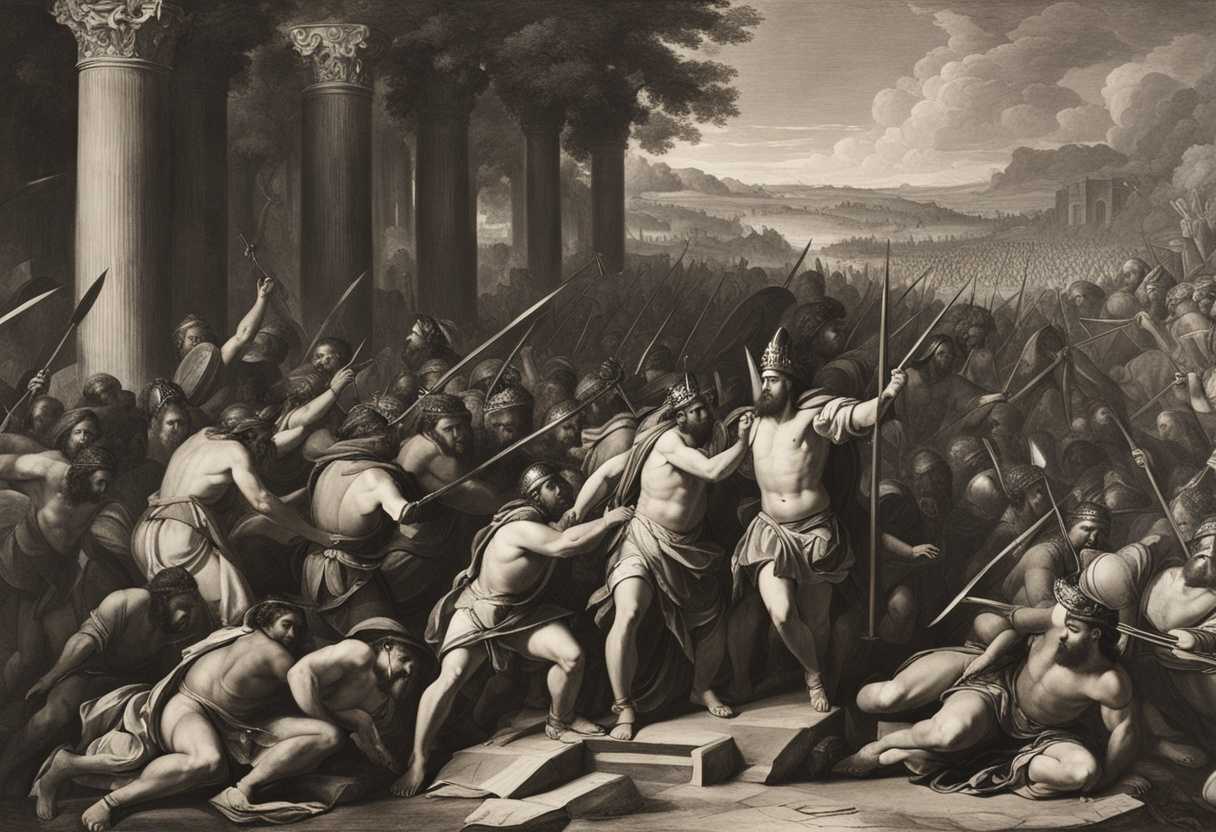
Setting the Scene for Ezekiel 30:10-12
In Ezekiel chapter 30, we find a scene set in the ancient city of Thebes, also known as No-Amon, which was the capital of Egypt at the time. The city is bustling with activity as the people go about their daily lives, unaware of the impending doom that Ezekiel is prophesying about. The sun beats down on the city, casting long shadows as the day progresses.
Among the inhabitants of Thebes are the wealthy merchants, the priests of the Egyptian gods, and the common folk going about their chores. The air is filled with the sounds of market vendors haggling, children playing, and the occasional cry of a passing camel. The Nile River flows nearby, providing water and sustenance to the city and its people.
Ezekiel, a prophet of the Lord, stands in the midst of the city, his voice ringing out as he delivers a message of judgment and destruction from God. Some stop to listen, while others scoff and continue on their way, dismissing his words as the ramblings of a madman. The tension in the air is palpable as Ezekiel’s words hang heavy over the city, foreshadowing the calamity that is soon to befall Thebes.
What is Ezekiel 30:10-12 about?
Ezekiel prophesied the downfall of Egypt and the dispersion of its people. This verse serves as a sobering reminder of the consequences that can arise from turning away from God and succumbing to worldly temptations. We delve into this passage, prompting us to reflect on the transient nature of earthly power and the ultimate supremacy of divine authority.
Imagine the desolation and upheaval that must have gripped Egypt as this prophecy unfolded. The once-proud nation brought to its knees, its people scattered far and wide. Through Ezekiel’s words, we are urged to contemplate the futility of seeking security and strength in material pursuits, rather than placing our trust in the unwavering support of the Almighty. Let us consider the importance of remaining steadfast in our faith, even in the face of adversity, as we ponder on this verse. Let us heed the warning embedded in this prophecy and strive to align our actions with the will of God, knowing that true strength and lasting security can only be found in Him.
Understanding what Ezekiel 30:10-12 really means
Ezekiel 30:10-12 forms part of a significant prophecy against Egypt, as conveyed by the prophet Ezekiel. This prophecy unveils the impending downfall of Egypt and its allies under the rule of Nebuchadnezzar, the Babylonian king. Egypt, a formidable nation, symbolized human arrogance and reliance on worldly power rather than on God, making the historical context crucial for understanding the gravity of the situation.
“I will put an end to the hordes of Egypt” signifies God’s direct intervention in human affairs, showcasing His supremacy over nations and their destinies. The phrase “By the hand of Nebuchadnezzar king of Babylon” underscores God’s ability to utilize even foreign rulers to fulfill His plans, revealing that all earthly dominion ultimately rests under His authority. “The land of Egypt will become a desolate waste” emphasizes the comprehensive nature of the judgment, highlighting the repercussions of forsaking God and leaning on human might.
In parallel passages like Isaiah 19:1-4 and Jeremiah 46:25-26, we witness similar prophecies against Egypt, reinforcing the consistent message of God’s judgment through various prophets. Proverbs 21:1 further solidifies this theme by asserting that the Lord directs the heart of kings as He pleases, showcasing His control over rulers and nations.
Today, Ezekiel’s prophecy serves as a poignant reminder of the emptiness of relying solely on human strength and wisdom. In a world where nations and individuals often trust in military prowess, economic prowess, or political alliances, this prophecy urges us to acknowledge God’s ultimate supremacy. It also prompts us towards humility and reliance on God, rather than pride and self-sufficiency.
To illustrate this point, envision a contemporary business leader who, despite building a thriving company through sheer determination and strategic partnerships, faces ruin during a global crisis. When all human strategies fail, turning to God for guidance and trusting in His providence reveals a path to recovery. This narrative echoes Ezekiel’s lesson: human endeavors are finite, but God’s power knows no bounds.
In conclusion, Ezekiel 30:10-12 powerfully underscores God’s sovereignty and the significance of entrusting our faith in Him rather than in human capabilities. It beckons us towards humility, reliance on God, and acknowledgment of His ultimate dominion over every facet of life.
How can we respond when facing destruction?
We can respond in times of destruction by turning to God for hope and strength. Even amidst devastation, we can find solace in our faith and trust that God is with us. We can find the courage to face the challenges ahead by seeking His guidance and relying on His grace.
The passage reminds us that destruction is not the end; it is a part of a larger plan that God has for us. Through trials and hardships, we can grow in our faith and become stronger individuals. It is during these difficult times that we can cling to God’s promises and find comfort in His presence.
Therefore, when facing destruction, we can respond with faith and perseverance, knowing that God is ultimately in control. We can navigate through the tough times with hope and resilience by holding onto our belief in His power and goodness.
Application
Let’s take a moment to reflect on Ezekiel 30:10-12 and be encouraged by the sovereignty and justice of the Lord. In the midst of life’s challenges, let’s put our trust in His plans, just like we do in our work or family life. Seek His wisdom and guidance, knowing He is in control even in chaos. Will you choose to align your actions with God’s will and trust in His sovereignty today?

Reverend Michael Johnson is an experienced Church Minister with a profound expertise in spirituality and guidance. With a serene presence and a compassionate heart, he has faithfully served his congregation for over 20 years, leading them on a spiritual journey towards inner peace and enlightenment. Reverend Johnson’s extensive knowledge of religious philosophies and profound understanding of human nature have made him a trusted confidant and mentor to many, as he seamlessly weaves his profound wisdom into life teachings. Reverend Johnson’s calming demeanor and empathetic nature continue to uplift and heal souls, nurturing a sense of unity and tranquility within his community.