
Ezekiel 34:2 is about the responsibility and accountability of religious leaders to care for and guide their followers with integrity and compassion.
2 “Son of man, prophesy against the shepherds of Israel; prophesy, and say to them, even to the shepherds, Thus says the Lord God: Ah, shepherds of Israel who have been feeding yourselves! Should not shepherds feed the sheep?
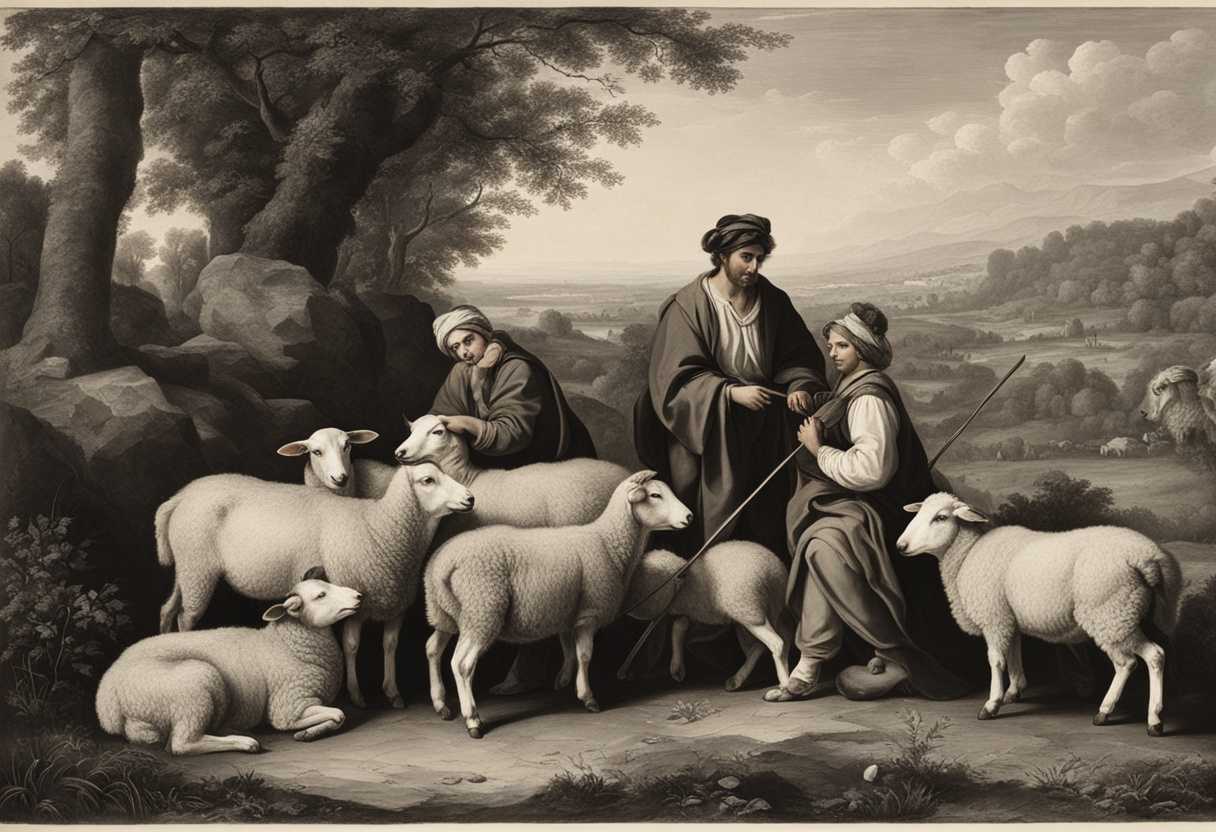
Setting the Scene for Ezekiel 34:2
In Ezekiel chapter 34, the prophet Ezekiel is standing in the midst of a vast and lush pasture, surrounded by rolling hills and clear streams. The sun is setting, casting a warm golden glow over the scene. Ezekiel is not alone; he is joined by a group of shepherds, the leaders of Israel. These shepherds were meant to care for and protect the people of Israel, but instead, they have neglected their duties, allowing the flock to scatter and fall prey to danger.
As Ezekiel addresses the shepherds, his voice carries a mix of sorrow and righteous anger. He rebukes them for their failures and warns of the consequences of their negligence. The sheep, representing the people of Israel, are scattered and vulnerable, in need of a true shepherd to guide and protect them. Ezekiel’s words are a powerful call to repentance and a reminder of God’s faithfulness to His people, even in the face of human failure. The scene is charged with emotion and urgency, as Ezekiel implores the shepherds to fulfill their responsibilities and lead the flock back to safety and security.
What is Ezekiel 34:2 about?
This verse from the book of Ezekiel carries a powerful message about the responsibilities of leaders towards those they lead. It serves as a reminder that leadership is not just about power and authority but also about serving and caring for others. Leaders are entrusted with the well-being of their people and have a duty to nurture and protect them.
Furthermore, this verse highlights the importance of accountability and the consequences of neglecting one’s responsibilities. It challenges us to reflect on our own roles as leaders, whether at home, in our communities, or in our workplaces. Are we truly fulfilling our duties towards those under our care? Are we prioritizing their needs and well-being above our own interests? These questions encourage us to strive for a leadership style that is rooted in empathy, compassion, and selflessness. This verse serves as a call to action for all leaders to embody the qualities of a true shepherd – one who guides, protects, and nurtures their flock with love and devotion. It reminds us that leadership is a sacred trust that requires humility, integrity, and a genuine concern for the welfare of others. Let us reflect on this message and strive to be the kind of leaders that God truly intends us to be.
Understanding what Ezekiel 34:2 really means
In Ezekiel 34:2, we encounter a poignant message from God through the prophet Ezekiel, condemning the shepherds of Israel for their neglect and selfishness towards the people under their care. The metaphor of shepherds and sheep is a recurring theme in the Bible, symbolizing the relationship between leaders and their followers. The phrase “Woe to the shepherds of Israel” signifies a severe judgment awaiting these leaders, emphasizing the impending sorrow and consequences of their actions. Their failure to prioritize the well-being of the flock over their own interests is highlighted in the phrase “Who only take care of themselves,” revealing a stark contrast to the selfless nature of a true shepherd.
Should not shepherds take care of the flock? This rhetorical question posed in Ezekiel 34:2 serves as a poignant reminder of the fundamental duty of leaders to nurture, protect, and guide those entrusted to their care. Drawing parallels from other biblical passages, such as John 10:11 where Jesus identifies Himself as the Good Shepherd who sacrifices for His sheep, we see the ideal model of leadership characterized by selflessness and sacrificial love. Psalm 23 further reinforces this image, portraying God as the ultimate shepherd who provides abundantly for His people’s needs.
The relevance of Ezekiel 34:2 extends beyond its historical context, resonating with contemporary issues of leadership accountability and selflessness in service. Whether in religious, political, or social spheres, leaders are called to prioritize the welfare of those they lead, echoing the exhortation in 1 Peter 5:2-3 for shepherds to care for God’s flock willingly and without selfish motives. The verse challenges individuals in positions of authority to emulate the compassionate and sacrificial leadership exemplified by Jesus Christ, the ultimate Good Shepherd.
To illustrate the impact of neglectful leadership, envision a community where leaders prioritize personal gain over the well-being of their constituents. In such a scenario, essential services suffer, and the community languishes while leaders thrive in luxury. However, a transformative leader who embodies the qualities of a good shepherd can bring about positive change, demonstrating the transformative power of selfless service and genuine care for others. Ezekiel 34:2 serves as a poignant call to reflect on our roles within our communities, urging us to embody the virtues of compassion and selflessness in our interactions with others.
In conclusion, Ezekiel 34:2 stands as a timeless admonition on the responsibilities of leadership and the imperative of selfless service. It prompts us to evaluate our own attitudes and actions, encouraging us to strive for a model of leadership that mirrors the compassionate and sacrificial nature of the Good Shepherd, Jesus Christ. Let us heed the lessons of Ezekiel 34:2, aspiring to lead with humility, integrity, and a genuine concern for the well-being of those entrusted to our care.
How can we be better shepherds to those entrusted to us?
We, as shepherds to those entrusted to us, must always keep in mind our responsibility to care for and guide them with compassion and wisdom. We should strive to lead by example, showing sincerity and humility in our actions, and always placing the well-being of those under our care above our own needs and desires. It is important to cultivate a deep understanding of the needs and struggles of those we are leading, so that we can provide the support and guidance they require to thrive and grow.
Additionally, being better shepherds requires us to listen to and empathize with those we lead, offering understanding and encouragement when they face challenges or obstacles. We can help those entrusted to us develop their own strengths and capabilities by fostering a nurturing and supportive environment, empowering them to overcome difficulties and achieve their full potential. We can create a positive and enriching experience for all involved by approaching our role as shepherds with humility, compassion, and a genuine desire to support and uplift others.
Application
Picture yourself as the shepherd of your own busy life, managing both work and family. Just like handling team projects or ensuring your kids are safe, it’s your duty to look out for those who need you. Step up and take action—lend a hand or an ear. When was the last time you truly looked out for someone? Will you be the one who makes a difference today?

Reverend Michael Johnson is an experienced Church Minister with a profound expertise in spirituality and guidance. With a serene presence and a compassionate heart, he has faithfully served his congregation for over 20 years, leading them on a spiritual journey towards inner peace and enlightenment. Reverend Johnson’s extensive knowledge of religious philosophies and profound understanding of human nature have made him a trusted confidant and mentor to many, as he seamlessly weaves his profound wisdom into life teachings. Reverend Johnson’s calming demeanor and empathetic nature continue to uplift and heal souls, nurturing a sense of unity and tranquility within his community.