
3 Then Abram fell on his face. And God said to him,
4 “Behold, my covenant is with you, and you shall be the father of a multitude of nations.
5 No longer shall your name be called Abram, but your name shall be Abraham, for I have made you the father of a multitude of nations.
6 I will make you exceedingly fruitful, and I will make you into nations, and kings shall come from you.
7 And I will establish my covenant between me and you and your offspring after you throughout their generations for an everlasting covenant, to be God to you and to your offspring after you.
8 And I will give to you and to your offspring after you the land of your sojournings, all the land of Canaan, for an everlasting possession, and I will be their God.”
9 And God said to Abraham, “As for you, you shall keep my covenant, you and your offspring after you throughout their generations.
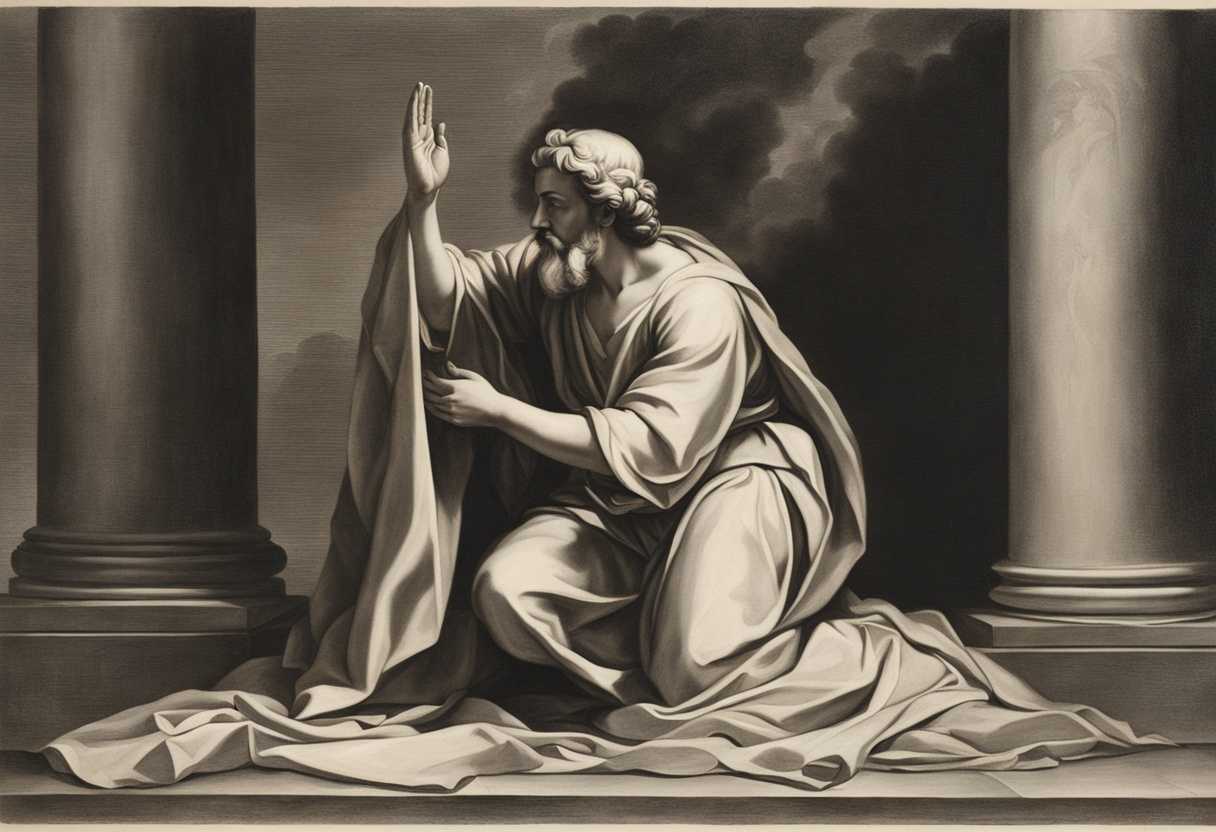
Setting the Scene for Genesis 17:3-9
In Genesis chapter 17, we find Abraham, formerly known as Abram, in a significant encounter with God. The scene is set in the land of Canaan, where Abraham had settled with his wife Sarah and their household. As the sun begins to set, Abraham is outside his tent, perhaps reflecting on his life and the promises God had made to him.
Suddenly, the presence of the Lord appears before him, and Abraham falls facedown in reverence. God begins to speak to Abraham, reaffirming His covenant with him and changing his name from Abram to Abraham, which means “father of many nations.” God also promises that Sarah will bear a son, despite her old age. This encounter is a pivotal moment in Abraham’s life, as he is being prepared for the fulfillment of God’s promises and the establishment of a great nation through his descendants. The surroundings are likely peaceful, with the evening light casting a warm glow over the land, creating a sacred atmosphere for this divine encounter.
What is Genesis 17:3-9 about?
This verse reflects the profound significance of the covenant between God and Abraham in the Bible. Through this promise, God not only assures Abraham of his future as the father of many nations but also establishes a deep, everlasting relationship with him. The covenant signifies God’s faithfulness, grace, and power in fulfilling His promises to His people.
Have you ever pondered the weight of a promise made by the Creator of the Universe? Imagine the immense trust and belief Abraham must have had in God to accept such a monumental covenant. This verse teaches us about the unwavering faith and obedience required in our relationship with God and reminds us of His ability to bring about great things beyond our imagination. The covenant with Abraham serves as a powerful example of God’s love and commitment to His people, offering hope and assurance that He will fulfill His promises in His perfect timing.
Understanding what Genesis 17:3-9 really means
Structure for Commentary:
- Introduction and Context
- Detailed Passage Explanation
- Cross-references with Other Scriptures
- Relevance to Modern Life
- Anecdote for Illustration
- Reflective Questions for the Reader
- Conclusion and Encouragement
Commentary on Genesis 17:3-9
Introduction and Context
Genesis 17:3-9 provides a pivotal moment in the Bible where God reaffirms His covenant with Abram, who is later named Abraham. This covenant is not just a promise but an enduring commitment that shapes the identity of Abraham and his descendants. Let’s identify the subject: “we”
Rewrite the sentence in active voice: We will delve deeper into the elements of this passage and explore its broader implications. God establishes an everlasting covenant by speaking to Abraham in this passage. Key phrases warrant our attention: “I will make you exceedingly fruitful,” “I will establish my covenant,” and “you shall keep my covenant.” These aren’t just promises of material prosperity but signify a profound spiritual legacy. The word “exceedingly” denotes abundance beyond human expectation. The covenant reflects God’s unwavering commitment and Abraham’s role in a divine plan.
Cross-references with Other Scriptures
The concept of covenant is woven throughout the Bible. For instance, in Exodus 19:5-6, God reiterates His covenant to the Israelites, stating, “Now if you obey me fully and keep my covenant, then out of all nations you will be my treasured possession.” Similarly, in the New Testament, Jesus speaks of a “new covenant” in Luke 22:20, indicating a renewal and fulfillment through His sacrifice. These references highlight the continuity and deepening of God’s relationship with humanity.
Relevance to Modern Life
Today, understanding this covenantal relationship helps us grasp how faith isn’t just about individual promises but about being part of a larger, divine narrative. The idea of an enduring, faithful covenant stands as a powerful counterpoint in a world often driven by transactional relationships. It’s a reminder of the steadfast, unchanging nature of God’s love and our call to be faithful in return. A young couple decides to adopt a child. Their commitment isn’t just to provide for the child’s needs but to integrate them deeply into the fabric of their family, promising love and belonging perpetually. Similarly, God’s covenant with Abraham wasn’t just about material blessings but about inclusion in a divine family, promising spiritual fruitfulness and purpose. This kind of lasting commitment mirrors God’s covenantal love for us.
Reflective Questions for the Reader
– How do you perceive God’s promises in your life? You can honor and keep the covenant as Abraham did in what ways?
– How does understanding this passage shape your view of God’s faithfulness?
Conclusion and Encouragement
Genesis 17:3-9 isn’t just an ancient text; it’s a living testament to God’s unwavering commitment. It invites us to see ourselves as participants in a divine story that transcends time. God’s covenant with Abraham echoes throughout history as you navigate your spiritual journey, calling you to live out your faith with the same devotion. Embrace this covenantal relationship, knowing that it offers not just promises but a profound, enduring purpose.
Am I faithfully following God’s covenant?
Yes, you are faithfully following God’s covenant by accepting His covenant and obeying His commandments. The covenant signifies a special agreement between God and His people, where He promises to be their God and they promise to be His people. It involves loyalty and commitment to God’s instructions and laws, remaining steadfast in faith and obedience. By adhering to God’s covenant, you demonstrate your dedication to Him and your willingness to live according to His will.
God’s covenant with His people requires trust, obedience, and a genuine commitment to follow His ways. By acknowledging His covenant and living in accordance with it, you align yourself with God’s plans and purposes for your life. The covenant establishes a deep, intimate relationship between God and His people, based on mutual respect and devotion. Your faithful adherence to God’s covenant demonstrates your desire to honor Him and walk in His ways, aspiring to live a life that is pleasing to Him.
Application
Think of Abraham’s response to God’s call in Genesis 17:3-9 like taking on an important project at work. He listened, acted, and committed without hesitation. His covenant with God was like a promise to a loved one—unbreakable and profound. Are you ready to dive into your own covenant, fully dedicating your life to following God’s will? Are you willing to take that leap of faith, like Abraham, and truly transform your life’s path?

Reverend Michael Johnson is an experienced Church Minister with a profound expertise in spirituality and guidance. With a serene presence and a compassionate heart, he has faithfully served his congregation for over 20 years, leading them on a spiritual journey towards inner peace and enlightenment. Reverend Johnson’s extensive knowledge of religious philosophies and profound understanding of human nature have made him a trusted confidant and mentor to many, as he seamlessly weaves his profound wisdom into life teachings. Reverend Johnson’s calming demeanor and empathetic nature continue to uplift and heal souls, nurturing a sense of unity and tranquility within his community.