
8 He took curds and milk and the calf that he had prepared, and set it before them. And he stood by them under the tree while they ate.
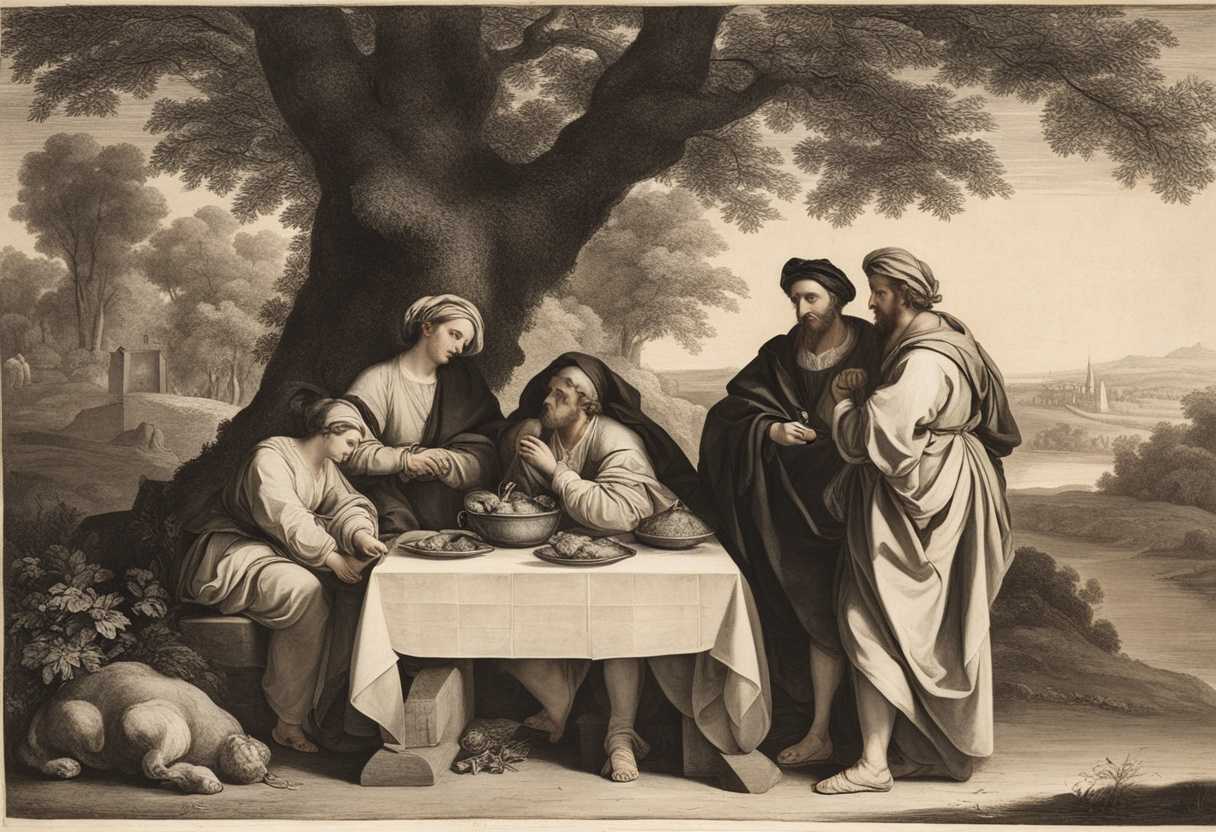
Setting the Scene for Genesis 18:8
In Genesis chapter 18, we find Abraham sitting at the entrance of his tent during the heat of the day. As he looks up, he sees three men standing nearby. These men are actually angels sent by God, but Abraham does not know this yet. Being the hospitable host that he is known to be, Abraham runs to greet them and invites them to rest and have a meal under the shade of the trees.
Abraham quickly instructs Sarah, his wife, to prepare bread using fine flour, and he himself goes to choose a calf from his herd and has it prepared for the guests. The scene is set in the vast desert plains of Mamre, where Abraham and Sarah have made their home. The sun beats down on the sandy landscape, and a gentle breeze rustles through the few trees that provide some relief from the scorching heat.
As the meal is prepared and served, the three visitors share a moment of fellowship with Abraham and Sarah. Little do they know that these visitors bring with them a message that will change the course of their lives forever. The scene is one of warmth, hospitality, and divine intervention, as Abraham unknowingly entertains angels in his midst.
What is Genesis 18:8 about?
Abraham demonstrates a beautiful example of hospitality and kindness towards three strangers in this verse. Despite not knowing who the visitors are, Abraham goes out of his way to ensure they are well-fed and taken care of. Abraham shows his generosity and willingness to share what he has with others by offering them bread, milk, and a calf. This act of hospitality reflects the importance of welcoming strangers and the value of treating others with kindness and respect.
Have you ever thought about the significance of hospitality in building connections with others? How can we emulate Abraham’s actions by extending a helping hand to those in need, even if they are strangers to us? This verse reminds us of the power of generosity and the impact it can have on those around us. It challenges us to step out of our comfort zones and show compassion towards others, no matter their background or circumstances. Abraham’s example can inspire us to incorporate more hospitality and kindness into our own lives as we reflect on it.
Understanding what Genesis 18:8 really means
Structure
- Introduction and Context
- Detailed Breakdown of Key Phrases
- Connection to Other Biblical Passages
- Relevance to Modern Life
- Anecdote for Illustration
- Conclusion and Reflection
Commentary
Introduction and Context
Genesis 18:8 occurs within the larger narrative of Abraham’s hospitality to three visitors, who turn out to be divine messengers. This act of hospitality precedes the announcement of Sarah’s impending pregnancy, an event central to God’s covenant with Abraham. Understanding the cultural and spiritual significance of this moment clarifies its meaning and importance for us today.
Detailed Breakdown of Key Phrases
One key phrase in the verse is “set it before them.” This act signifies not only provision but also a form of respect and reverence for his guests. Hospitality in Abraham’s time was a sacred duty that reflected one’s relationship with God and others. Abraham ensured that the best was offered to his guests, which challenges us to consider how we treat those who come into our lives.
Another significant phrase is “while they ate, he stood near them.” This small but telling action reveals Abraham’s humility and readiness to serve. Rather than taking a position of equality or authority, Abraham positions himself as a servant, prepared to address any need that may arise.
Connection to Other Biblical Passages
This humility and service are echoed in Philippians 2:3, where Paul urges, “Do nothing out of selfish ambition or vain conceit. Rather, in humility value others above yourselves.” Both passages emphasize serving others as a reflection of our faith and commitment to God. Likewise, Hebrews 13:2 reminds us, “Do not forget to show hospitality to strangers, for by so doing some have shown hospitality to angels without knowing it.” This verse directly links back to the hospitality of Abraham, underscoring its timeless relevance. The practice of genuine hospitality might seem outdated or inconvenient in today’s fast-paced world. However, this passage challenges us to revisit the importance of welcoming and serving others. We embody a divine principle of love and respect, not just performing a social duty. How often do we go out of our way to make someone feel at home? Are we willing to serve without seeking anything in return? Jane, a member of our congregation, often opens her home for community gatherings. Though her house is modest, she ensures everyone feels welcome and valued. One evening, a new family attended her gathering. They later shared how Jane’s hospitality made them feel accepted in a city where they felt like outsiders. Their experience didn’t just comfort them—it reinforced the idea that love expressed through service can be transformative.
Conclusion and Reflection
Genesis 18:8 invites us to reflect on how we demonstrate our faith through hospitality and service. The modest yet profound actions of Abraham set a precedent that transcends time. This verse calls us to look beyond ourselves, serve others wholeheartedly, and recognize that in doing so, we fulfill God’s will. Let’s ask ourselves: how can we better serve those around us today? What steps can we take to embody the humility and readiness that Abraham exemplified? Through these reflections, we not only honor others but also draw closer to God’s intentions for us.
How can we demonstrate hospitality to strangers?
One way we can demonstrate hospitality to strangers is by actively seeking opportunities to extend warmth and kindness to those we encounter, even if they are unfamiliar to us. We can show genuine interest in their well-being, offer them refreshments, and provide a welcoming environment where they feel valued and cared for. We embody the spirit of hospitality that is celebrated in the verse by going out of our way to make strangers feel at ease and comfortable.
Additionally, we can practice empathy and compassion towards strangers, recognizing that everyone has their own unique experiences and struggles. We can create a safe space for them to share their stories and feel accepted by showing understanding and consideration for their circumstances. We exemplify the hospitality that is encouraged in the verse by being open-hearted and receptive to the needs of others.
Furthermore, we can demonstrate hospitality by going beyond basic gestures and truly embracing strangers as part of our community. We foster a sense of belonging and inclusion by forming genuine connections with them, listening to their perspectives, and offering support when needed. We fulfill the virtue of hospitality and enrich our own lives by welcoming diverse voices and experiences into our midst.
Application
Think about Genesis 18:8 and the hospitality of Abraham and Sarah. They welcomed strangers with open arms and generous hearts. In your busy life, full of work deadlines and family responsibilities, can you find a moment to extend kindness to someone else? Show love and compassion in every interaction. Who needs your hospitality today?

Reverend Michael Johnson is an experienced Church Minister with a profound expertise in spirituality and guidance. With a serene presence and a compassionate heart, he has faithfully served his congregation for over 20 years, leading them on a spiritual journey towards inner peace and enlightenment. Reverend Johnson’s extensive knowledge of religious philosophies and profound understanding of human nature have made him a trusted confidant and mentor to many, as he seamlessly weaves his profound wisdom into life teachings. Reverend Johnson’s calming demeanor and empathetic nature continue to uplift and heal souls, nurturing a sense of unity and tranquility within his community.