
Genesis 20:11-13 is about Abraham revealing his concern about the lack of fear of God in foreign lands and expressing his worry that he and his wife Sarah would not be safe due to their status as married siblings, highlighting the importance of faith and divine protection in unfamiliar territories.
11 Abraham said, “I did it because I thought, ‘There is no fear of God at all in this place, and they will kill me because of my wife.’
12 Besides, she is indeed my sister, the daughter of my father though not the daughter of my mother, and she became my wife.
13 And when God caused me to wander from my father’s house, I said to her, ‘This is the kindness you must do me: at every place to which we come, say of me, He is my brother.’”
Setting the Scene for Genesis 20:11-13
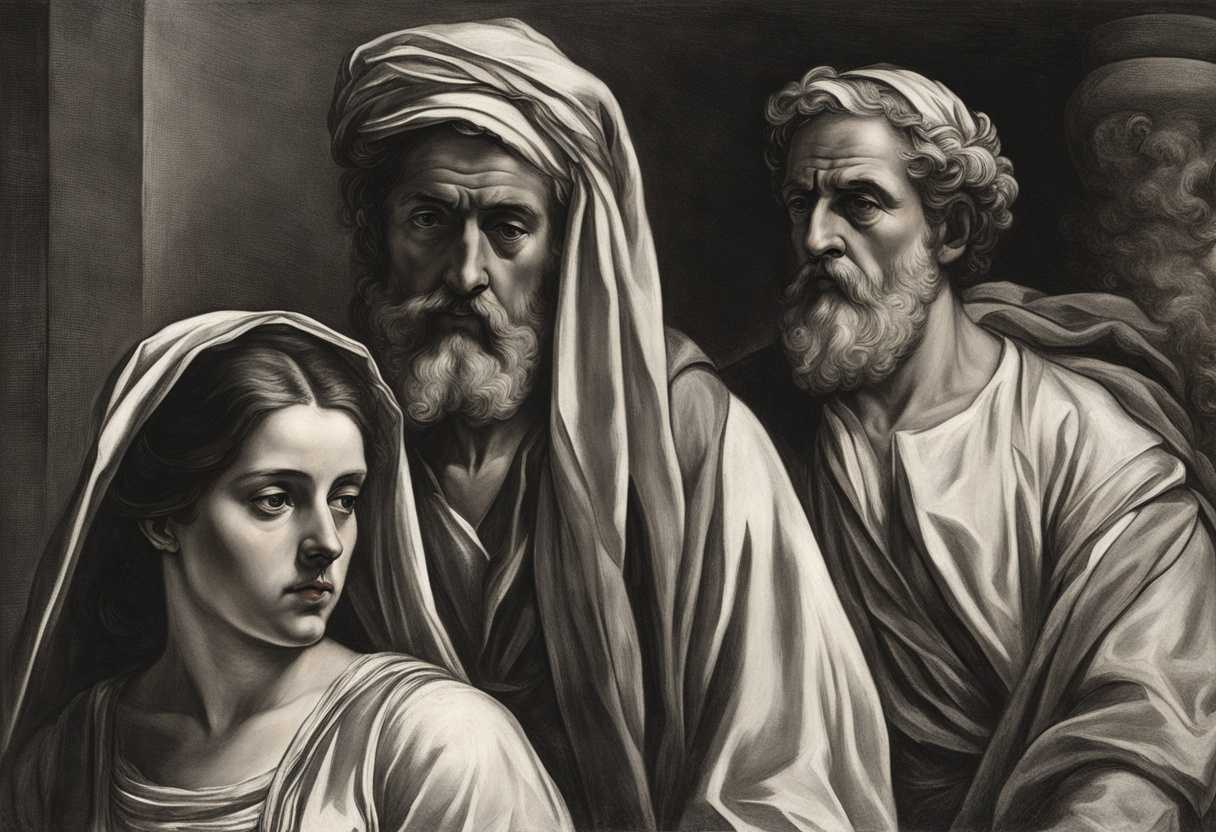
In Genesis chapter 20, we find Abraham and Sarah on a journey to Gerar, a city in the land of the Philistines. As they arrive, Abraham, fearing for his life, tells Sarah to say that she is his sister rather than his wife, as he believed the people of Gerar would kill him to take her. Abimelech, the king of Gerar, hears of Sarah’s beauty and takes her into his household.
The scene unfolds in the royal court of Abimelech, where Abraham and Sarah find themselves in a precarious situation. Abimelech, unaware that Sarah is actually Abraham’s wife, is visited by God in a dream, warning him of the grave mistake he is about to make by taking Sarah as his own. In the dream, God reveals the truth about Sarah’s relationship with Abraham and the potential consequences of Abimelech’s actions.
As the morning comes, Abimelech confronts Abraham about his deception, questioning why he lied about Sarah being his sister. Abraham explains his reasoning, citing his fear of being killed because of Sarah’s beauty. In a display of God’s mercy, Abimelech spares Abraham and Sarah, returning Sarah to her rightful husband and even offering gifts as a gesture of goodwill. This scene serves as a reminder of God’s protection over His chosen ones, even in moments of human frailty and deception.
What is Genesis 20:11-13 about?
Abraham, his wife Sarah, and King Abimelech are involved in a complex situation in this verse. Abraham feared for his life and introduced Sarah as his sister to protect himself. This deception put Sarah in a vulnerable position, as it would have allowed others to potentially take her as a wife without her consent. The moral implications of Abraham’s actions are significant, as he prioritized his own safety over the well-being of his wife.
Think about the ethical dilemmas that arise from this story. Fear can lead people to make choices that compromise their values. Reflect on the importance of honesty and integrity in relationships, even in difficult circumstances. How could Abraham have handled the situation differently? What can we learn from this story about the consequences of deception and the importance of standing up for what is right, even when it is challenging?
Understanding what Genesis 20:11-13 really means
In the narrative of Abraham and Abimelech, we witness a moment of fear and deception that unfolds due to Abraham’s lack of trust in God’s protection. Abraham, out of fear for his life, portrays Sarah as his sister to Abimelech, a decision driven by his apprehension rather than faith in God’s promises. This incident sheds light on the human tendency to resort to deceit when faced with fear, highlighting the moral dilemmas that arise from such actions. Abraham’s assumption that there is no fear of God in Gerar reflects his own lack of faith, showcasing how fear can cloud our judgment and lead us astray.
The key phrases in this passage offer insights into Abraham’s mindset and motivations. His attempt to justify his deception by claiming Sarah as his sister, albeit from a different lineage, underscores the complexity of human relationships and the compromises we make when fear takes hold. Moreover, Abraham’s plan for Sarah to pose as his sister wherever they go reveals a lack of trust in God’s guidance, as he prioritizes his safety over God’s promises. This narrative serves as a cautionary tale, urging us to examine our own actions and motivations when faced with fear and uncertainty.
Drawing parallels to other biblical passages, such as Genesis 12:10-20, where a similar incident occurs in Egypt, reinforces the recurring theme of fear and deception in human nature. Proverbs 29:25 and Psalm 56:3 further emphasize the dangers of succumbing to fear rather than trusting in the Lord for protection and guidance. These verses serve as reminders for us today, prompting reflection on how fear can lead us astray and urging us to place our trust in God’s providence.
In a contemporary context, the story of Abraham and Abimelech resonates with situations we encounter daily, where fear tempts us to compromise our integrity. Consider a scenario where a professional embellishes their resume out of fear of job insecurity, only to face repercussions when the truth surfaces. This anecdote mirrors Abraham’s predicament, illustrating the consequences of deception born out of fear. It underscores the importance of upholding integrity and placing our trust in God, even when uncertainty looms large.
In conclusion, Abraham’s story serves as a poignant reminder of the perils of fear and deception, urging us to anchor our trust in God’s promises. By reflecting on this narrative and related scriptures, we glean wisdom on navigating challenges with integrity and faith. Let us heed the lessons from Abraham’s journey, striving to walk in faith and trust, knowing that God’s protection and provision encompass us in every circumstance.
What does it mean to fear God in truth?
To fear God in truth means to acknowledge His power and authority over all things, and to live in accordance with His will. It involves having a deep reverence and respect for God, knowing that He sees and knows all things. It also means obeying His commandments and seeking to do what is righteous in His eyes. Abraham exemplifies fearing God in truth in Genesis 20:11-13 by explaining to Abimelech that his fear of God led him to act in integrity and honesty. Despite the potential consequences, Abraham chose to speak the truth because he revered God more than anything else. This demonstrates a genuine fear of God that transcends mere outward appearances or rituals. To fear God in truth ultimately means having a genuine relationship with Him, based on love, reverence, and obedience. It is to recognize His sovereignty and to live in a way that honors Him in all aspects of life.
Application
In a world where honesty is the currency we trade in our relationships, let’s pledge to be the beacon of truth and integrity, just like Abraham faced his truths. Let us build our relationships on pillars of transparency and sincerity, echoing the ultimate trustworthiness. Will you join in this journey of sincerity and honesty, mirroring the essence of God in every aspect of your life?

Reverend Michael Johnson is an experienced Church Minister with a profound expertise in spirituality and guidance. With a serene presence and a compassionate heart, he has faithfully served his congregation for over 20 years, leading them on a spiritual journey towards inner peace and enlightenment. Reverend Johnson’s extensive knowledge of religious philosophies and profound understanding of human nature have made him a trusted confidant and mentor to many, as he seamlessly weaves his profound wisdom into life teachings. Reverend Johnson’s calming demeanor and empathetic nature continue to uplift and heal souls, nurturing a sense of unity and tranquility within his community.