
1 The Lord visited Sarah as he had said, and the Lord did to Sarah as he had promised.
2 And Sarah conceived and bore Abraham a son in his old age at the time of which God had spoken to him.
3 Abraham called the name of his son who was born to him, whom Sarah bore him, Isaac.
4 And Abraham circumcised his son Isaac when he was eight days old, as God had commanded him.
5 Abraham was a hundred years old when his son Isaac was born to him.
6 And Sarah said, “God has made laughter for me; everyone who hears will laugh over me.”
7 And she said, “Who would have said to Abraham that Sarah would nurse children? Yet I have borne him a son in his old age.”
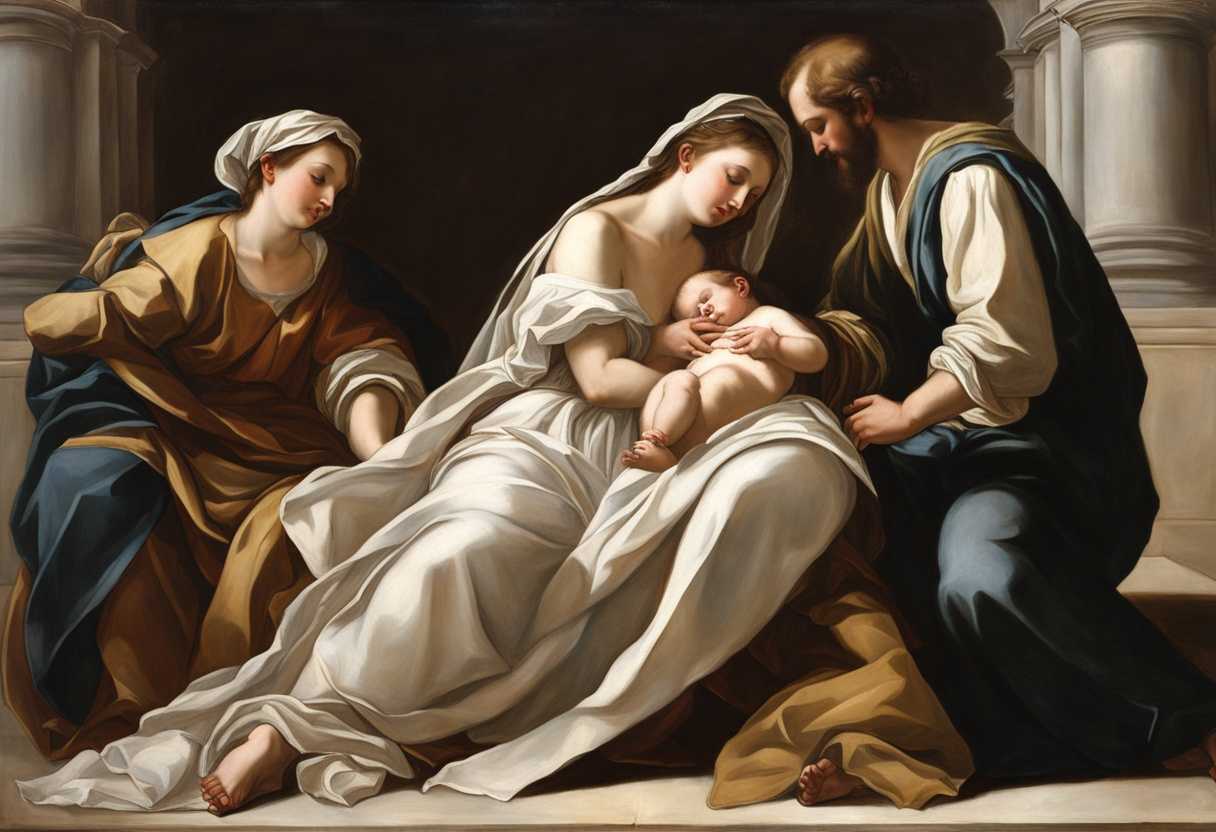
Setting the Scene for Genesis 21:1-7
In Genesis chapter 21, we find ourselves in the midst of a joyous occasion in the camp of Abraham and Sarah. The scene is set in the desert, where the sun is shining brightly, casting a warm glow over the tents and the surrounding landscape. The air is filled with the sounds of laughter and celebration as the long-awaited promise of a son for Abraham and Sarah has finally been fulfilled.
Abraham, a man of great faith, and Sarah, his wife, who had been barren for many years, are now beaming with joy as they cradle their newborn son, Isaac. The couple had faced many trials and challenges along their journey, but their faith in God had never wavered. Now, their tent is filled with family and friends who have come to rejoice with them in this miraculous moment.
As the sun begins to set, casting a golden hue over the desert, the sound of music and singing fills the air. The scene is one of pure happiness and gratitude as Abraham and Sarah give thanks to God for His faithfulness in fulfilling His promise to them. It is a moment of pure joy and celebration that will be remembered for generations to come.
What is Genesis 21:1-7 about?
Wow, what a powerful verse! It showcases the faithfulness and sovereignty of God. Despite Sarah’s doubts and disbelief in her ability to bear a child due to her old age, God remained faithful to His promise. He showed that nothing is impossible for Him and that His plans always come to fruition, even if they seem unlikely or impossible to us.
Isn’t it incredible to see how God works in His own timing, even if it goes against human logic and understanding? This verse encourages us to trust in God’s promises, even when circumstances seem impossible or unlikely. It reminds us that God’s plans are perfect, and He will always fulfill what He has promised, no matter the obstacles or setbacks we may face. Let’s take this verse as a reminder to have faith in God’s timing and trust that He will always come through on His promises, just as He did for Sarah.
Understanding what Genesis 21:1-7 really means
Structure for the Commentary:
- Introduction and Overview of the Passage
- Contextual Background and Historical Significance
- Key Phrases and Their Meanings
- Related Biblical References
- Relevance to Modern Readers
- Concluding Thoughts and Reflection
Introduction and Overview of the Passage:
Genesis 21:1-7 recounts a pivotal moment in the biblical narrative—the birth of Isaac to Abraham and Sarah. This passage marks the fulfillment of God’s promise to the couple, underscoring themes of faith, divine timing, and the miraculous nature of God’s interventions.
Contextual Background and Historical Significance:
Before delving into the specifics, let’s consider the context. Abraham and Sarah had been expecting this child for a long time. Sarah was long past childbearing years, and this made the promise seem humanly impossible. Their journey of trust and doubt, filled with moments of impatience and even laughter at the improbability, sets the stage for understanding the gravity of Isaac’s birth.
Key Phrases and Their Meanings:
“Now the LORD was gracious to Sarah.” This phrase highlights God’s compassion and willingness to fulfill His promises, even when situations seem impossible. The emphasis on grace reminds us that God’s actions are never about our worthiness but about His generosity.
“Sarah conceived and bore a son.” These words encapsulate the miracle. Sarah’s advanced age and previous barrenness amplify the miraculous nature of Isaac’s birth. It’s a reminder that God’s plans are often beyond human comprehension and limitations.
“God has brought me laughter.” Sarah’s statement is rich with emotion. Where there was once disbelief and perhaps even bitterness, now there is joy. It reminds us that God’s fulfillment of His promises brings profound joy and transformation.
Related Biblical References:
To understand the full impact of this passage, let’s consider Luke 1:37, “For with God nothing shall be impossible.” Just as Sarah conceived Isaac, Mary conceived Jesus, and both instances show God’s power over natural limitations. Additionally, Hebrews 11:11 emphasizes Sarah’s faith, portraying her belief as integral to receiving God’s promise. This story speaks to anyone who is waiting on God for an answer, particularly in seemingly impossible situations, in today’s context. It reassures us that God’s timing is perfect and His promises are sure. Reflect on a time when you waited for an answer or a miracle. Did you find that God’s timing brought about a deeper joy and appreciation once it was fulfilled? Jane, a woman from our congregation, struggled with infertility for years. She and her husband clung to faith, despite numerous setbacks. When they finally adopted a child, Jane remarked, “I understand Sarah’s laughter. It came late, but it was perfect. Ponder the promises you are holding onto as you reflect on Genesis 21:1-7. Are you trusting in God’s timing, even when it seems delayed? This passage encourages us to shift from anxiety to trust, from doubt to faith. Reflect on God’s track record in your life—how has He been gracious to you? Allow this story of Sarah and Isaac to bolster your faith in God’s unwavering promises. Our journeys of waiting often lead to the deepest, most joyful fulfillments in the end. Take heart, for God’s timing, though sometimes mysterious, is always perfect.
How can we trust in God’s timing for blessings?
God’s timing is perfect and always aligned with His divine plan in the story from Genesis 21:1-7. Despite Abraham and Sarah’s old age and Sarah’s barrenness, God fulfilled His promise of a child to them at the appointed time. This narrative teaches us to trust in God’s timing for blessings, even when circumstances seem impossible or delayed.
The story of Abraham and Sarah demonstrates that God’s timing is sovereign and never late. When we place our faith in Him, we can rest assured that He will bring about His promises in His perfect timing. We may not always understand why certain blessings are delayed, but we can be confident that God’s timing is always for our ultimate good and His glory.
Therefore, as we reflect on the account of Abraham and Sarah’s miracle baby, Isaac, we can find assurance in knowing that God’s timing is trustworthy. We should have faith in His timing for our lives, believing that He will bring about blessings at the right moment, exactly as He has planned.
Application
Think about Sarah’s joy when she gave birth to Isaac, just like hitting your big break when all seemed lost. She trusted in a promise that seemed impossible, much like waiting for that big promotion or family milestone. Today, embrace that same trust in the promises laid out for you. Will you seize this moment of faith and act on it, or let it slip by? How will you respond to the faithfulness in your life today?

Reverend Michael Johnson is an experienced Church Minister with a profound expertise in spirituality and guidance. With a serene presence and a compassionate heart, he has faithfully served his congregation for over 20 years, leading them on a spiritual journey towards inner peace and enlightenment. Reverend Johnson’s extensive knowledge of religious philosophies and profound understanding of human nature have made him a trusted confidant and mentor to many, as he seamlessly weaves his profound wisdom into life teachings. Reverend Johnson’s calming demeanor and empathetic nature continue to uplift and heal souls, nurturing a sense of unity and tranquility within his community.