
Genesis 25:7-10 is about the end of Abraham’s life, his burial, the blessing of Ishmael, and the lineage of Isaac as documented in the book of Genesis.
7 These are the days of the years of Abraham’s life, 175 years.
8 Abraham breathed his last and died in a good old age, an old man and full of years, and was gathered to his people.
9 And his sons Isaac and Ishmael buried him in the cave of Machpelah, in the field of Ephron the son of Zohar the Hittite, east of Mamre,
10 the field that Abraham purchased from the Hittites. There Abraham was buried, with Sarah his wife.
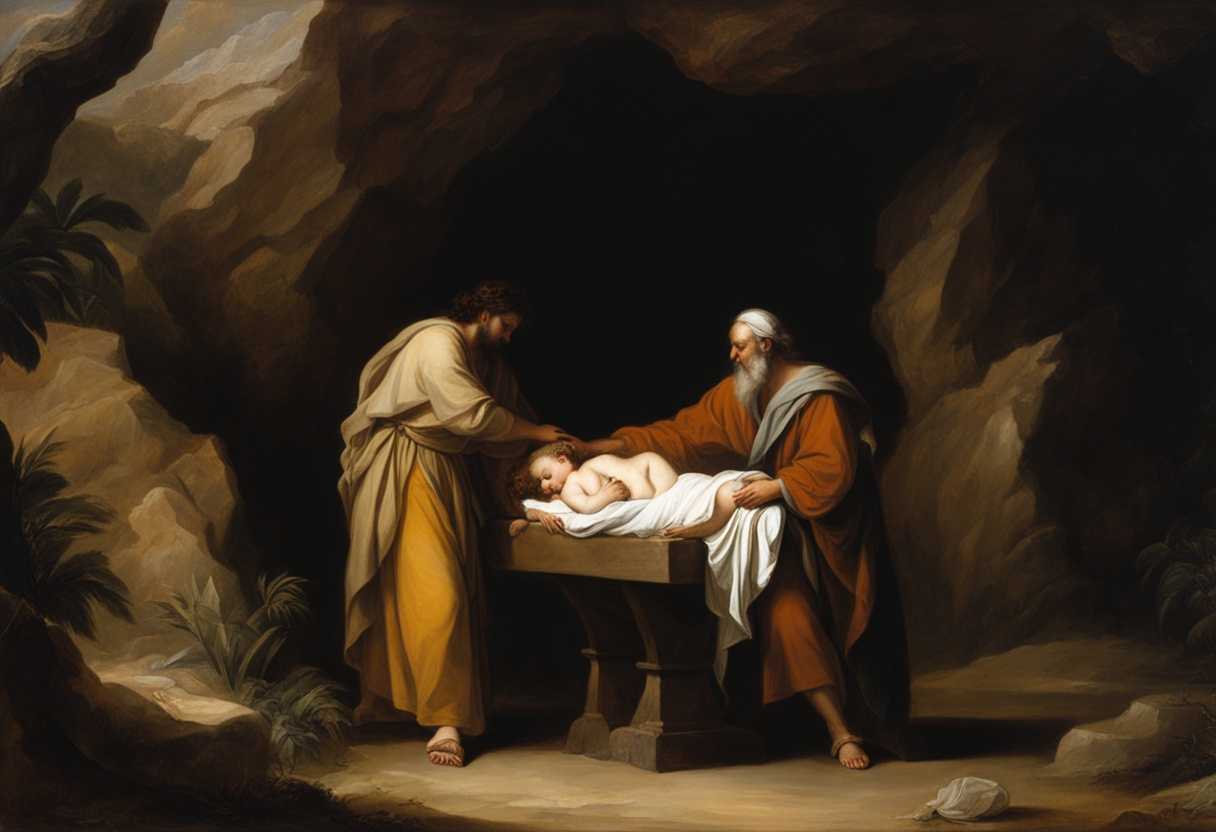
Setting the Scene for Genesis 25:7-10
The scene described in Genesis 25:7-10 takes place at the end of Abraham’s life. Abraham, the patriarch of the Israelites, has passed away at the age of 175. The setting is a somber one, as Abraham’s sons, Isaac and Ishmael, come together to bury their father. Isaac, the son of Abraham and Sarah, and Ishmael, the son of Abraham and Hagar, put aside their differences and unite in this moment of grief and respect for their father.
The surroundings are likely a solemn burial site, with the vast desert landscape stretching out around them. The brothers, Isaac and Ishmael, who had been separated for many years due to family conflicts, now stand side by side as they fulfill their duty to honor their father’s memory. The scene is a poignant reminder of the complexities of family relationships and the importance of coming together in times of loss.
As Isaac and Ishmael lay Abraham to rest, the legacy of the great patriarch lives on through his descendants. The unity displayed by the brothers in this moment foreshadows the eventual reconciliation of their descendants, the Israelites and the Ishmaelites, who would share a common ancestry through Abraham. The scene serves as a powerful testament to the bonds of family and the enduring impact of a father’s legacy.
What is Genesis 25:7-10 about?
When we reflect on this verse, we are witnessing a powerful moment of transition and continuity within the family lineage. The passing of Abraham marks not only the end of a significant chapter in the family’s history but also the beginning of a new era for his descendants, Isaac and Ishmael. Abraham leaves behind a legacy of blessings that his sons will now carry forward as he is laid to rest.
Have you ever thought about the weight of familial inheritance and the responsibility that comes with it? Abraham’s blessings are not simply material or tangible possessions but a spiritual and cultural heritage that is handed down from one generation to the next in this verse. Through this act of passing on blessings to Isaac and Ishmael, we are reminded of the importance of honoring and preserving our family traditions and values. We are encouraged to think about our own roles within our families and communities as we contemplate the significance of Abraham’s death and the blessings bestowed upon his sons. How are we carrying forward the legacies and teachings passed down to us? Are we nurturing and cherishing the blessings we have inherited, ensuring that they continue to flourish and resonate in the lives of those who come after us? We too should embrace the responsibility of preserving and passing on the gifts we have received, shaping the future with wisdom and grace, just as Abraham entrusted his blessings to his sons.
Understanding what Genesis 25:7-10 really means
In Genesis 25:7-10, we witness the poignant moment of Abraham’s death and burial. Abraham, known as the patriarch of the Israelites, holds a significant place in the biblical narrative for his unwavering faith and obedience to God. As we delve into the context of these verses, we find Abraham passing away at the ripe age of 175, a testament to a life lived fully in service to God. His burial takes place in the cave of Machpelah, a site he purchased as a family burial ground, symbolizing his deep roots in the land promised to his descendants.
“The days of the years of Abraham’s life” encapsulate the richness and completeness of his journey on earth. Each moment, each trial, and each triumph contributed to the tapestry of his life, reflecting a legacy of faith and obedience. When it is said that Abraham was “gathered to his people,” we glimpse the profound belief in being reunited with loved ones in the afterlife, a comforting thought that transcends the physical realm. The act of Isaac and Ishmael coming together to bury their father speaks volumes about reconciliation and forgiveness, showcasing the power of familial unity despite past conflicts.
Drawing parallels from related biblical passages, we see God’s promise to Abraham in Genesis 15:15 fulfilled as he dies in peace and is buried honorably. Hebrews 11:13-16 and Romans 4:16-18 further illuminate Abraham’s unwavering faith, portraying him as a beacon of trust in God’s promises and a model of righteousness for generations to come. These passages not only honor Abraham’s legacy but also inspire believers to walk in faith and hope, looking towards a heavenly inheritance beyond earthly bounds.
The themes of legacy, reconciliation, and faith resonate deeply with individuals today. Abraham’s life serves as a template for leaving a lasting impact through faith and obedience. By reflecting on his story, we are encouraged to mend broken relationships, nurture a heritage of love and forgiveness, and anchor our lives in unwavering faith in God’s promises. Just as Abraham’s journey inspires us, modern-day stories of reconciliation and enduring legacies remind us of the transformative power of faith and hope in navigating life’s challenges.
In conclusion, the account of Abraham’s death and burial encapsulates profound truths about faith, reconciliation, and the enduring legacy we leave behind. As we ponder on these themes, let us introspect on our own lives, seeking to emulate Abraham’s faith and commitment to God. May we strive to build bridges, sow seeds of reconciliation, and walk in faith, knowing that our actions today shape the legacy we leave for future generations.
What kind of legacy will you leave behind?
Abraham lived a fulfilling life and left behind a legacy that continued through his son Isaac. Abraham’s descendants carried on his faith and devotion, just as God blessed and guided him. This passing down of beliefs and values is an integral part of leaving a meaningful legacy for future generations.
Similarly, the way Abraham lived his life and the impact he had on those around him are key components of the legacy he left behind. His relationships, his character, and his faithfulness were all part of the foundation he built for his family and the community around him. These aspects of his life continued to influence those who came after him, illustrating the importance of living a purposeful and virtuous life in order to leave a lasting legacy.
The legacy of Abraham serves as a reminder of the power of faith, perseverance, and obedience to God. Through his actions and choices, he set an example for his descendants and for all who look to his story for inspiration. One can also leave behind a legacy that reflects the values and beliefs they hold dear, impacting future generations in a meaningful way by following in his footsteps.
Application
Reflect on the legacy left by those we’ve lost and honor them by living our lives with purpose and gratitude. Just as every moment counts in our work and family life, so does how we spend our time here on earth. Let’s make the most of today by making a positive impact on those around us and creating a legacy worth remembering. Are we truly living in a way that reflects the values and love passed down to us by our departed loved ones?

Reverend Michael Johnson is an experienced Church Minister with a profound expertise in spirituality and guidance. With a serene presence and a compassionate heart, he has faithfully served his congregation for over 20 years, leading them on a spiritual journey towards inner peace and enlightenment. Reverend Johnson’s extensive knowledge of religious philosophies and profound understanding of human nature have made him a trusted confidant and mentor to many, as he seamlessly weaves his profound wisdom into life teachings. Reverend Johnson’s calming demeanor and empathetic nature continue to uplift and heal souls, nurturing a sense of unity and tranquility within his community.