
18 Jacob loved Rachel. And he said, “I will serve you seven years for your younger daughter Rachel.”
19 Laban said, “It is better that I give her to you than that I should give her to any other man; stay with me.”
20 So Jacob served seven years for Rachel, and they seemed to him but a few days because of the love he had for her.
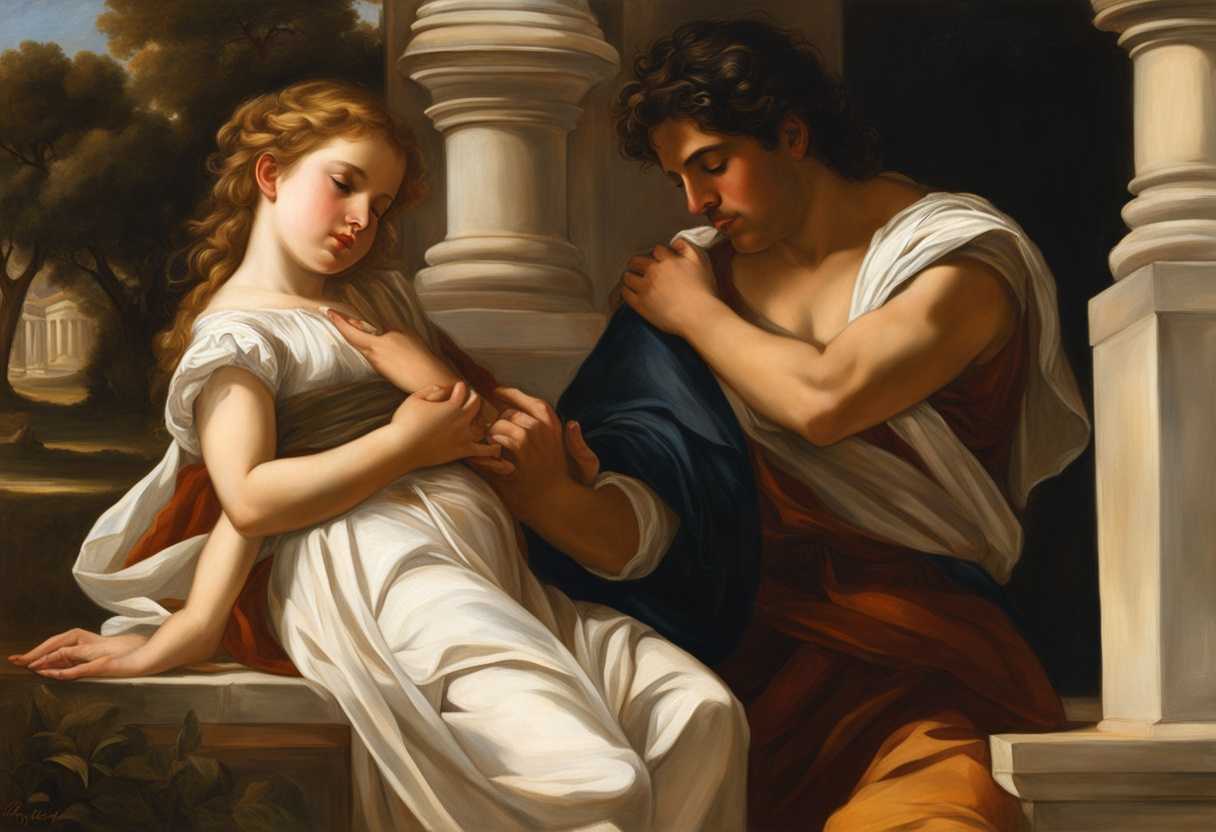
Setting the Scene for Genesis 29:18-20
In Genesis 29:18-20, we find Jacob arriving in the land of Haran. He had left his home to escape the wrath of his brother Esau, who wanted to kill him for taking his blessing from their father, Isaac. Jacob, guided by his mother Rebekah, set out on a journey to find a wife from her brother Laban’s family. As Jacob reached the well in Haran, he saw shepherds gathering their flocks, waiting to water them. Among the shepherds was Rachel, Laban’s daughter, who was a shepherdess herself.
The scene is set in the early evening, with the sun casting a warm glow over the well. The sound of sheep bleating and the gentle flow of water from the well create a peaceful atmosphere. Jacob, weary from his journey, approaches the shepherds and strikes up a conversation with them. As Rachel arrives with her flock, Jacob is immediately captivated by her beauty and kindness. Overwhelmed with emotion, Jacob rolls the stone away from the well to water Rachel’s sheep, a gesture that would change the course of his life forever.
As the sun begins to set, Jacob introduces himself to Rachel and is welcomed into Laban’s household. Little did Jacob know that his decision to water Rachel’s flock would lead to a series of events that would test his faith, love, and perseverance. The stage is now set for a tale of love, deception, and redemption to unfold in the land of Haran.
What is Genesis 29:18-20 about?
Jacob’s love for Rachel is seen in this verse. The passage highlights the idea that time spent with a loved one can feel like it passes quickly, regardless of the actual duration. Jacob’s love for Rachel was so strong that the seven years he worked for her father to earn her hand in marriage seemed like a short period of time to him. This verse beautifully captures the power of love to transcend the constraints of time and space.
Have you ever experienced a moment in your life where time flew by because you were with someone you truly cared about? It’s a powerful feeling, isn’t it? This verse reminds us of the beauty of love and how it can make even the longest of tasks seem trivial when done for the ones we hold dear. It serves as a timeless reminder of the profound impact that love can have on our perception of time and our willingness to make sacrifices for those we love.
Understanding what Genesis 29:18-20 really means
Structure of the Commentary
- Introduction to the Passage
- Context and Background
- Detailed Analysis of Key Phrases
- Connecting with Other Biblical Passages
- Relevance to Modern Readers
- Reflection and Application
Introduction to the Passage
Genesis 29:18-20 captures a pivotal moment in the story of Jacob, highlighting his devotion and determination. While these verses are part of a narrative, they also carry profound meanings that extend beyond the immediate context. Let’s explore how this ancient text speaks to us today. Jacob, staying with his uncle Laban, has fallen in love with Rachel, Laban’s younger daughter in these verses. To marry her, Jacob agrees to work for Laban for seven years. This period highlights Jacob’s patience and commitment, as well as his willingness to serve for what he values deeply. The cultural backdrop of arranged marriages and the role of dowries is essential to understanding this commitment. Jacob’s affection is highlighted by this powerful declaration that he loved Rachel. Love, in this context, is not fleeting but enduring.
– “I will serve you seven years for Rachel”: Jacob’s willingness to serve speaks volumes about his dedication and patience. This is a tangible demonstration of his commitment.
– “And they seemed unto him but a few days”: This poetic expression underscores the depth of Jacob’s love. The passage of time felt insignificant compared to his love for Rachel.
Each of these phrases builds on the theme of love manifesting through sacrifice and patience. Consider the parallels with other scriptures when connecting with other Biblical passages. For instance, 1 Corinthians 13:4-7 speaks about the enduring nature of love, “Love is patient, love is kind… always trusts, always hopes, always perseveres.” Ephesians 5:25 also commands, “Husbands, love your wives, just as Christ loved the church and gave himself up for her.” These verses reinforce the idea that love is deeply intertwined with sacrifice and commitment.
Relevance to Modern Readers
For today’s readers, these verses hold significant lessons. Jacob’s story encourages patience and long-term commitment in relationships, careers, or personal goals, in an age where instant gratification is the norm. The idea that true love and deep commitments won’t necessarily yield immediate rewards is a timeless message. It’s a reminder that some of life’s most valuable treasures are worth waiting and working for.
Reflection and Application
I recall a story from a couple in our congregation. They met in college but were separated by miles of distance due to job placements. For years, they maintained their relationship through letters and calls, visiting each other infrequently. They often spoke of how those years, though challenging, fortified their relationship. When they finally were able to settle in the same city, their bond was even stronger. Their shared journey is reminiscent of Jacob’s seven years – a testament to the strength developed through patience and dedication.
To reflect, consider: What are you currently working towards that requires patience? How can Jacob’s story inspire you to remain committed through the waiting period? Jacob’s love made seven years feel like just a few days, a profound testament to the power of love and patience. This narrative invites us to ask: what would we be willing to endure and work towards if driven by a love so deep? How might our lives look different if we embraced longer-term thinking and commitment?
How can we discern the will of God in relationships?
We can discern the will of God in relationships by seeking His guidance through prayer and listening to His leading in our hearts. Just as Jacob prayed to God for guidance in his relationship with Rachel, we too can ask God to reveal His will for us. Through prayer, we can align our desires and decisions with God’s plan for our lives.
Additionally, we can discern the will of God in relationships by seeking wisdom from trusted mentors or spiritual leaders. Jacob sought counsel from Laban, Rachel’s father, before pursuing a relationship with Rachel. Seeking advice from those who are wise and grounded in faith can provide valuable insight and confirmation of God’s will in our relationships.
Lastly, we can discern the will of God in relationships by paying attention to how circumstances unfold and trusting that God is working all things together for our good. Even when faced with challenges or obstacles, we can have faith that God’s hand is guiding us towards His best plan for our lives and relationships. We can discern and follow His will in all of our relationships by staying connected to God through prayer, seeking wise counsel, and trusting in His timing.
Application
Think about Jacob’s years of work and waiting for Rachel, just like grinding through a tough project at work or balancing family commitments. His dedication paid off. Are you willing to trust that patience and persistence will get you through tough times? Keep your faith strong, even when delays make it hard. So, when hurdles appear, will you stand firm and follow the path of faith?

Reverend Michael Johnson is an experienced Church Minister with a profound expertise in spirituality and guidance. With a serene presence and a compassionate heart, he has faithfully served his congregation for over 20 years, leading them on a spiritual journey towards inner peace and enlightenment. Reverend Johnson’s extensive knowledge of religious philosophies and profound understanding of human nature have made him a trusted confidant and mentor to many, as he seamlessly weaves his profound wisdom into life teachings. Reverend Johnson’s calming demeanor and empathetic nature continue to uplift and heal souls, nurturing a sense of unity and tranquility within his community.