
15 The Lord God took the man and put him in the garden of Eden to work it and keep it.
16 And the Lord God commanded the man, saying, “You may surely eat of every tree of the garden,
17 but of the tree of the knowledge of good and evil you shall not eat, for in the day that you eat of it you shall surely die.”
1 Now the serpent was more crafty than any other beast of the field that the Lord God had made.
2 And the woman said to the serpent, “We may eat the fruit of the trees of the garden,
3 but God said, ‘You shall not eat of the fruit of the tree that is in the midst of the garden, neither shall you touch it, lest you die.’”
4 But the serpent said to the woman, “You will not surely die.
5 For God knows that when you eat of it your eyes will be opened, and you will be like God, knowing good and evil.
6 So when the woman saw that the tree was good for food, and that it was a delight to the eyes, and that the tree was to be desired to make one wise, she took of its fruit and ate, and she also gave some to her husband who was with her, and he ate.
7 Then the eyes of both were opened, and they knew that they were naked. And they sewed fig leaves together and made themselves loincloths.
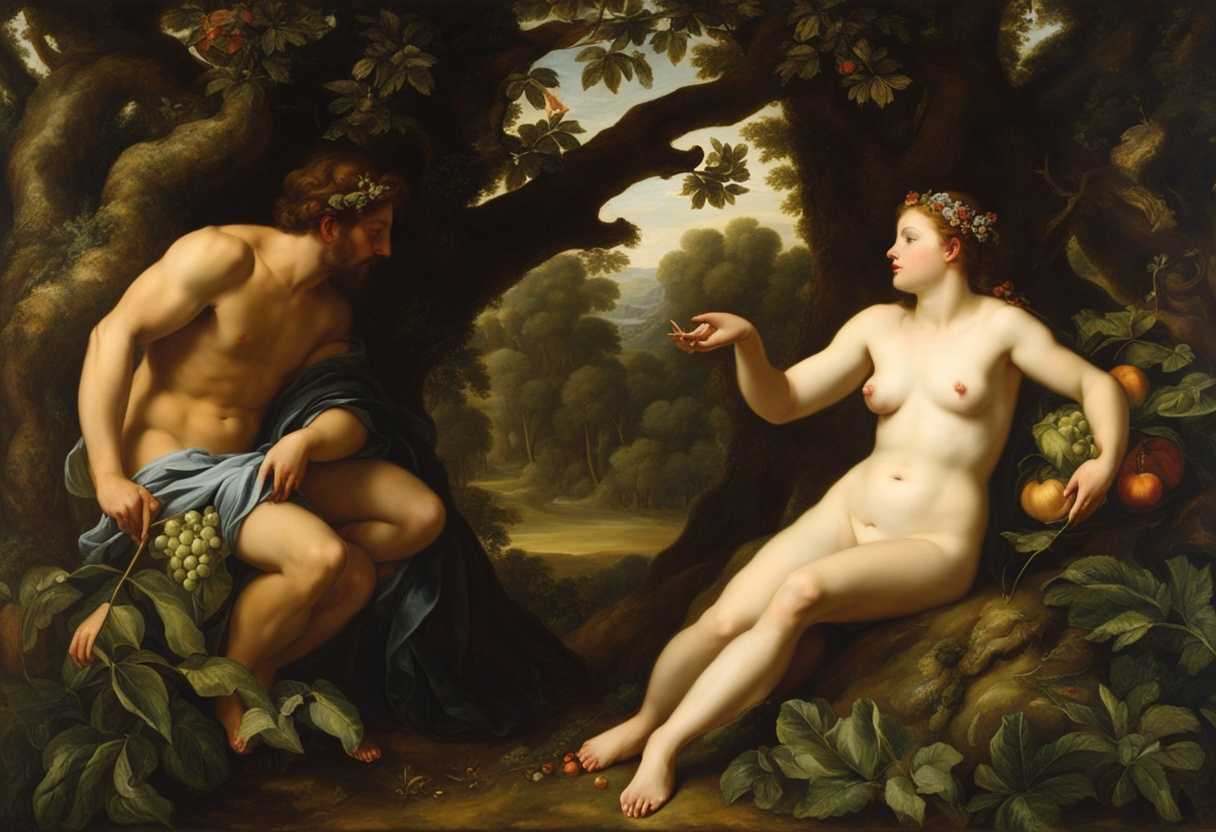
Setting the Scene for Genesis 2:15-17, 3:1-7
In the Garden of Eden, a lush paradise filled with vibrant flora and fauna, we find Adam and Eve, the first man and woman created by God. The scene is serene and idyllic, with clear streams meandering through the verdant landscape and the sweet fragrance of blossoming flowers lingering in the air. Adam, formed from the dust of the ground, and Eve, fashioned from his rib, dwell in perfect harmony with nature and each other.
One day, as they stroll through the garden, they come across the Tree of the Knowledge of Good and Evil. The serpent, a cunning creature, approaches Eve and engages her in conversation, planting seeds of doubt and curiosity in her mind. Despite God’s clear command not to eat from the tree, the serpent’s deceitful words lead Eve to pluck the forbidden fruit and take a bite. She then offers it to Adam, who also partakes, and in that moment, their innocence is shattered as they become aware of their nakedness and their disobedience.
The once peaceful scene in the Garden of Eden is now tainted by sin, as Adam and Eve realize the consequences of their actions. Their eyes are opened to the knowledge of good and evil, and they experience shame and fear for the first time. This pivotal moment marks the beginning of humanity’s journey outside of paradise, as they are banished from the garden and must now navigate a world tainted by sin and its consequences.
What is Genesis 2:15-17, 3:1-7 about?
Human choice defies powerful imagery of divine instruction in this verse. The command not to eat from the tree of knowledge symbolizes a boundary set by God for the well-being of humans. It serves as a test of obedience and trust in divine wisdom. The act of disobedience by man signifies a desire for autonomy and knowledge beyond what was intended for them, ultimately leading to sin and its consequences.
Have you ever reflected on the significance of boundaries and limitations in our lives? Do you think there are times when we challenge authority or rules for our own desires? This verse reminds us of the importance of guidance and the consequences of straying away from it. It prompts us to contemplate the balance between seeking knowledge and wisdom while respecting the boundaries set by a higher power. We should heed the lessons from this verse to respect divine guidance and trust in its purpose for our well-being as we navigate through our own choices and decisions.
Understanding what Genesis 2:15-17, 3:1-7 really means
Pivotal moments that define the trajectory of humanity in biblical narrative are encountered in Genesis 2:15-17 and 3:1-7. These verses collectively delve into themes of responsibility, obedience, and the consequences of our choices. Let’s explore these themes to gain deeper insights into their relevance today.
Initially, Genesis 2:15-17 places Adam in the Garden of Eden with a clear command to cultivate it and keep it, signifying a divine trust and responsibility bestowed upon humanity. The phrase “to work it and take care of it” encapsulates not just physical labor but a stewardship role that denotes respect and care. This implies an intrinsic relationship between humans and the earth, a relationship of nurture and protection. The prohibition against eating from the tree of the knowledge of good and evil sets the stage for free will and the moral tests that accompany it.
Moving to Genesis 3:1-7, the narrative shifts to the cunning serpent’s conversation with Eve. This passage introduces the complex interplay of temptation, deceit, and the human propensity to desire more than what is granted. When Eve decides to partake of the forbidden fruit and shares it with Adam, they both experience the immediate consequence of their disobedience—awareness of their nakedness, symbolizing loss of innocence and the onset of moral consciousness.
Why does this matter to us today? These passages remind us of the ongoing human struggle with temptation and the consequences of our choices. Every day, we face decisions that test our integrity and obedience, not unlike Adam and Eve’s encounter with the fruit. The story offers a mirror into our own lives—how often have we chosen a path knowing it might not be right, swayed by curiosity or desire?
Let’s consider a modern analogy: imagine a scenario where a person is tempted to bypass software copyrights to save on costs. Initially, it seems harmless and advantageous, but like the fruit in Eden, this act carries consequences that can mar one’s ethical integrity and legal standing. This anecdote brings to life the Eden narrative, illustrating how contemporary temptations can parallel the foundational biblical struggle between right and wrong.
Furthermore, other scriptural references like Romans 5:12 discuss how Adam’s actions set a precedent for human nature, emphasizing the significance of these Genesis passages in understanding sin and redemption. “Therefore, just as sin entered the world through one man, and death through sin, and in this way death came to all people, because all sinned—” This verse connects the Eden story with a broader theological framework, highlighting the impact of Genesis on Christian doctrine. The account of Adam, Eve, and the serpent in Genesis not only tells us about the beginnings of human history but also offers timeless lessons on the nature of temptation, the importance of obedience, and the profound consequences of our choices. We reflect on these lessons as we navigate through our daily lives, understanding that each decision we make contributes to shaping our moral landscape and our relationship with the divine. How might your choices today reflect the stewardship entrusted to you?
What is the consequence of disobeying God’s commandments?
The consequence of disobeying God’s commandments can be seen in the story of Adam and Eve in the book of Genesis. When Adam and Eve disobeyed God by eating from the forbidden tree, they experienced shame and realized they were naked. This disobedience led to a breakdown in their relationship with God, as they were banished from the Garden of Eden.
Disobedience to God’s commandments not only affects our relationship with Him but also has consequences for our own lives. Their disobedience in the story of Adam and Eve resulted in the introduction of sin and the suffering and hardships that followed. It brought about a sense of guilt, fear, and separation from God, which are the spiritual consequences of disobeying God’s commandments. Disobeying God’s commandments can ultimately lead to spiritual, emotional, and physical consequences. It can create distance in our relationship with God, disrupt the harmony of our own lives, and result in negative outcomes for ourselves and others. It is a reminder of the importance of obedience and the potential repercussions of straying from God’s will.
Application
Consider your life as a complex network of roads, where each choice is a crossroad leading toward or away from your ultimate destination. The passages in Genesis 2:15-17 and 3:1-7 remind us of the hazardous paths of temptation and the high cost of straying from the path set before us. Just as a diligent worker safeguards their tools and a loving parent shields their child, so must we protect our spiritual journey. Fortify yourself with prayer and immerse in the scriptures to keep your steps firm and your direction true. How will you arm yourself today to fend off the temptations lurking at every corner?

Reverend Michael Johnson is an experienced Church Minister with a profound expertise in spirituality and guidance. With a serene presence and a compassionate heart, he has faithfully served his congregation for over 20 years, leading them on a spiritual journey towards inner peace and enlightenment. Reverend Johnson’s extensive knowledge of religious philosophies and profound understanding of human nature have made him a trusted confidant and mentor to many, as he seamlessly weaves his profound wisdom into life teachings. Reverend Johnson’s calming demeanor and empathetic nature continue to uplift and heal souls, nurturing a sense of unity and tranquility within his community.