
Genesis 36:1-8 is about the genealogy of Esau, highlighting his numerous descendants and the establishment of separate lineages between him and his brother Jacob, showcasing the fulfillment of God’s promise to make them into two great nations.
1 These are the generations of Esau (that is, Edom).
2 Esau took his wives from the Canaanites: Adah the daughter of Elon the Hittite, Oholibamah the daughter of Anah the daughter of Zibeon the Hivite,
3 and Basemath, Ishmael’s daughter, the sister of Nebaioth.
4 Adah bore Eliphaz to Esau, Basemath bore Reuel,
5 Oholibamah bore Jeush, Jalam, and Korah.
6 Then Esau took his wives, his sons, his daughters, and all the members of his household, his livestock, all his beasts, and all his property that he had acquired in the land of Canaan.
7 For their possessions were too great for them to dwell together. The land of their sojournings could not support them because of their livestock.
8 So Esau settled in the hill country of Seir. Esau is Edom.
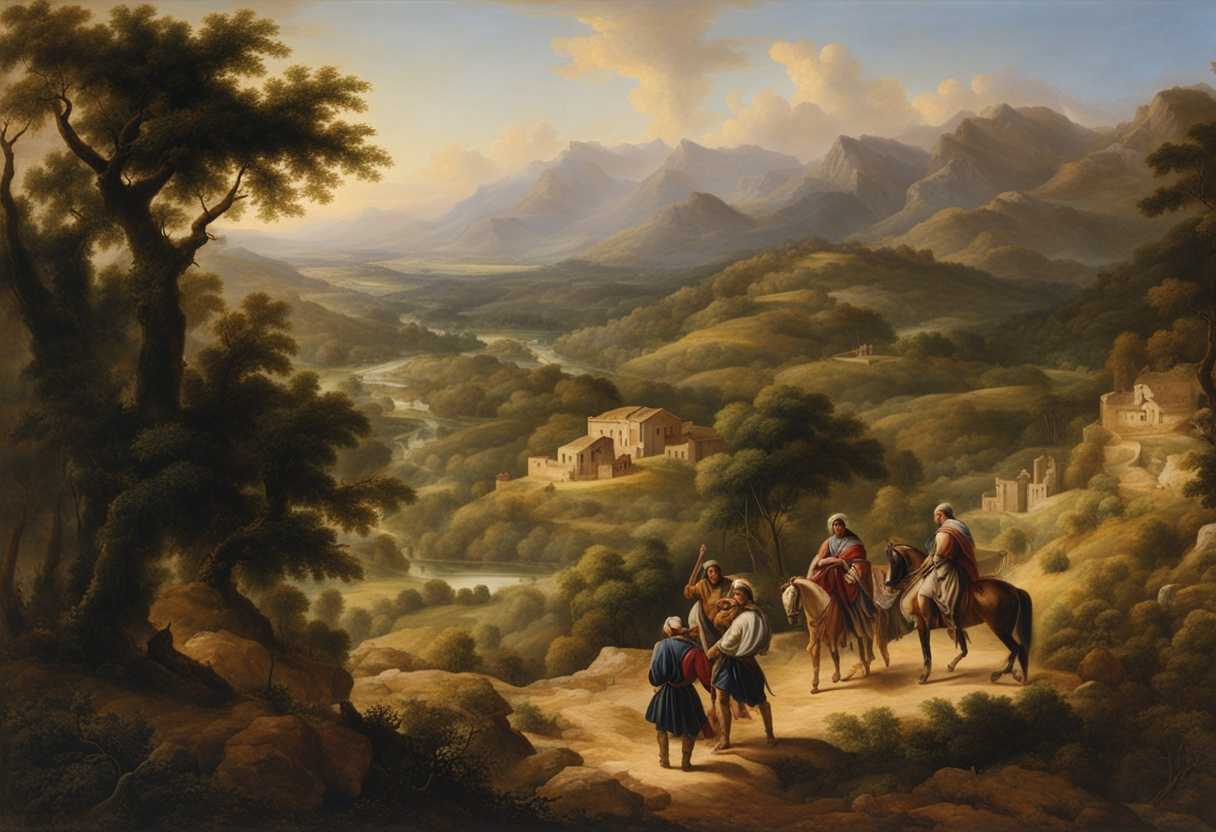
Setting the Scene for Genesis 36:1-8
In Genesis 36:1-8, the scene is set in the land of Canaan, where Esau, also known as Edom, has settled with his family and possessions. Esau is the elder twin brother of Jacob, and he is accompanied by his wives, sons, daughters, and all the people and livestock that belong to him. The surroundings are described as the rugged and mountainous region of Seir, where the Edomites have made their home.
Esau’s descendants are listed in these verses, showcasing the flourishing community that has developed from his lineage. The names of his wives and children are mentioned, highlighting the growth of his family over the years. The Edomites have become a significant tribe in the region, establishing their presence and influence in the land of Canaan.
The scene depicts a moment of reflection on Esau’s legacy and the prosperity of his descendants. It serves as a reminder of the fulfillment of God’s promise to bless him and make his offspring numerous. The mention of Esau’s family members and their roles within the community paints a picture of a thriving society that has emerged from the humble beginnings of one man.
What is Genesis 36:1-8 about?
The verse documents the genealogy of Esau, detailing his descendants, wives, children, and territories. This passage provides a historical account of Esau’s lineage, tracing the origins and expansion of his family. It not only serves as a record of his bloodline but also gives insight into the power dynamics and regions controlled by his offspring.
Have you ever wondered about the origins of a family line or how territories were divided and passed down through generations? This verse sheds light on the complexity of family structures and inheritance patterns in ancient times. By delving into Esau’s genealogy, a deeper understanding of the cultural, social, and political dynamics at play during that period can be gleaned. This verse invites us to contemplate the significance of lineage and heritage in shaping historical narratives as we read it. Through documenting Esau’s descendants and their territories, we get a glimpse into the interconnectedness of family, land, and power. This verse not only provides a glimpse into the past but also prompts us to reflect on how ancestral connections shape our identities and our understanding of the world around us.
Understanding what Genesis 36:1-8 really means
In Genesis 36:1-8, we delve into the genealogy of Esau, also known as Edom, shedding light on his lineage and the fulfillment of God’s promises to Abraham’s descendants. The mention of “Esau, who is Edom” underscores the significance of Esau’s identity and his pivotal role in the biblical narrative, linking him to the nation of Edom. It is intriguing to note how Esau’s choice of wives from the daughters of Canaan contrasts with Jacob’s lineage, which remained within the family of Abraham. This decision by Esau to marry outside his heritage sets the stage for the divergence between the two brothers and the establishment of distinct nations.
In Genesis 25:23, we encounter God’s prophecy to Rebekah regarding her twins, Esau and Jacob, where it is foretold that “the older will serve the younger.” This prophecy lays the foundation for the future relationship between their descendants, shaping the course of events to come. Additionally, in Genesis 27:39-40, Isaac’s blessing to Esau hints at his future and the eventual separation from Jacob, further emphasizing the unfolding of God’s plan through the generations. Deuteronomy 2:4-5 reinforces the recognition of Esau’s lineage, as God instructs the Israelites not to contend with the Edomites, acknowledging their connection to Esau.
The story of Esau and Jacob resonates with contemporary themes of family dynamics, sibling rivalry, and reconciliation, offering insights into personal identity and destiny. By reflecting on one’s heritage and the choices of ancestors, individuals can gain a deeper understanding of how their past influences their present and shapes their future. Consider a tale of two siblings who embarked on divergent paths in life, akin to Esau and Jacob, where their choices, though distinct, contributed to their personal growth and the fulfillment of their unique destinies.
In conclusion, Genesis 36:1-8 plays a crucial role in unraveling the broader biblical narrative and showcasing God’s unwavering faithfulness to His promises. It prompts readers to ponder their own family histories and the impact of ancestral decisions on their trajectories, mirroring how Esau’s choices reverberated through the generations. As we navigate our own journeys, may we glean wisdom from the accounts of Esau and Jacob, recognizing the intricate interplay between our past, present, and future in shaping our lives.
How can we maintain humility despite our successes?
One way to maintain humility despite our successes is to always remember that our achievements are ultimately gifts from God. When we acknowledge that our talents, opportunities, and accomplishments come from Him, we are less likely to become prideful. We can remain humble in the face of success by staying rooted in gratitude and recognizing that all good things come from God.
Another approach to maintaining humility is by surrounding ourselves with wise and humble individuals who can provide accountability and perspective. Seeking out mentors, friends, or spiritual advisors who can offer guidance and support can help us stay grounded and remind us of the importance of humility. We can continue to grow in humility even as we experience success by listening to the wisdom of others and learning from their experiences.
Additionally, practicing gratitude and giving back to others can help us remain humble. We can shift the focus away from ourselves and towards making a positive impact in the lives of those around us by using our successes as opportunities to serve and uplift others. Serving others with a grateful heart can help us cultivate humility and keep our achievements in perspective.
Application
Dive into Genesis 36:1-8 and uncover the powerful legacy outlined within. Let this ancient lineage spark a fire within you to uphold and cherish your own family’s values and beliefs. Harness the strength of your spiritual heritage and let it guide you in your modern-day journey towards faith. How will you honor your roots and carry the torch of faith into the future?

Reverend Michael Johnson is an experienced Church Minister with a profound expertise in spirituality and guidance. With a serene presence and a compassionate heart, he has faithfully served his congregation for over 20 years, leading them on a spiritual journey towards inner peace and enlightenment. Reverend Johnson’s extensive knowledge of religious philosophies and profound understanding of human nature have made him a trusted confidant and mentor to many, as he seamlessly weaves his profound wisdom into life teachings. Reverend Johnson’s calming demeanor and empathetic nature continue to uplift and heal souls, nurturing a sense of unity and tranquility within his community.