
Genesis 37:29-36 is about the betrayal and sale of Joseph by his brothers, symbolizing jealousy, deceit, and God’s ultimate plan for turning evil intentions into good outcomes through divine intervention and Joseph’s eventual rise to power in Egypt.
29 When Reuben returned to the pit and saw that Joseph was not in the pit, he tore his clothes
30 Then he returned to his brothers and said, “The boy is gone, and I, where shall I go?”
31 Then they took Joseph’s robe and slaughtered a goat and dipped the robe in the blood.
32 And they sent the robe of many colors and brought it to their father and said, “This we have found; please identify whether it is your son’s robe or not.”
33 And he identified it and said, “It is my son’s robe. A fierce animal has devoured him. Joseph is without doubt torn to pieces.”
34 Then Jacob tore his garments and put sackcloth on his loins and mourned for his son many days.
35 All his sons and all his daughters rose up to comfort him, but he refused to be comforted and said, “No, I shall go down to Sheol to my son, mourning.” Thus his father wept for him.
36 Meanwhile the Midianites had sold him in Egypt to Potiphar, an officer of Pharaoh, the captain of the guard.
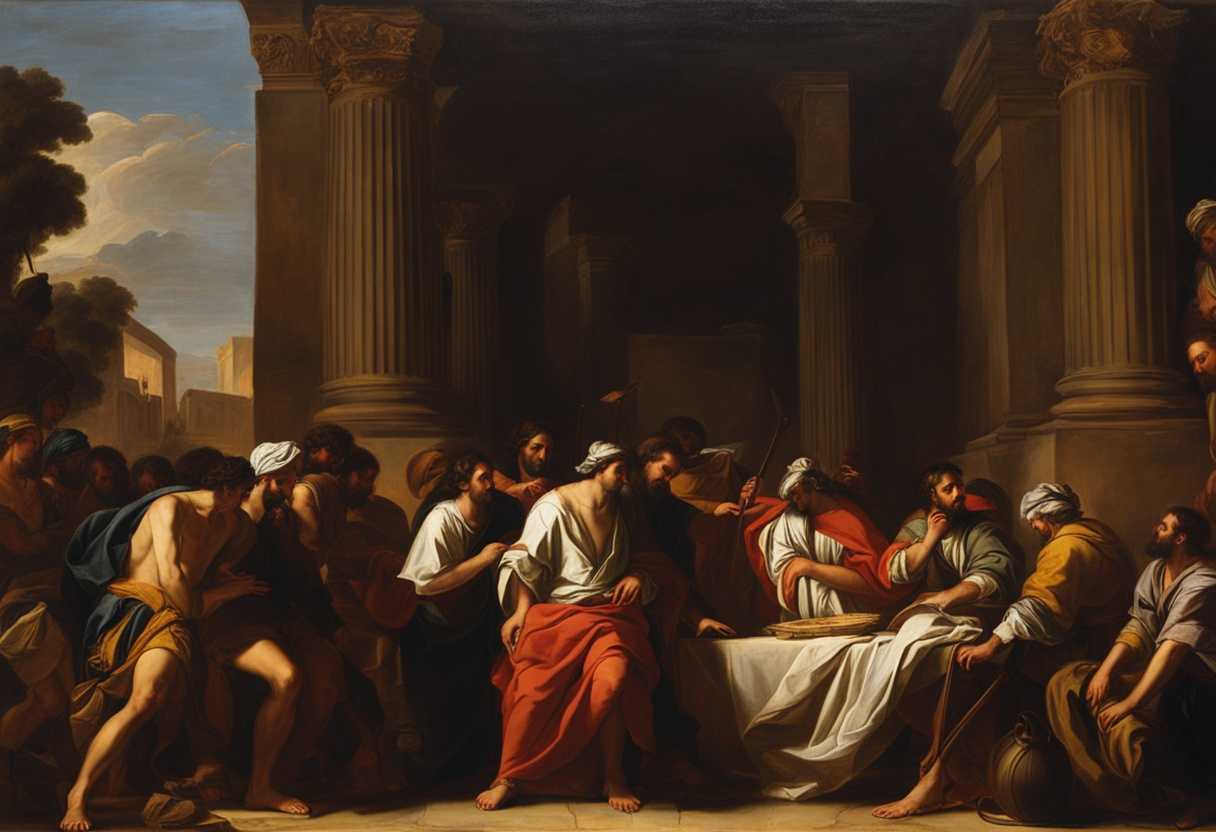
Setting the Scene for Genesis 37:29-36
In the scene described in Genesis 37:29-36, we find Joseph’s brothers in the midst of a tumultuous and heartbreaking situation. The brothers, including Reuben, Simeon, Levi, Judah, Dan, Naphtali, Gad, Asher, Issachar, and Zebulun, had just betrayed their younger brother, Joseph. They had plotted against him out of jealousy and sold him into slavery to a passing caravan of Ishmaelites.
The setting is a desolate and barren land, with the scorching sun beating down on the group of brothers as they stand around the pit where they had thrown Joseph. The air is heavy with tension and guilt as they now face the consequences of their actions. The brothers are torn between relief at having gotten rid of Joseph, the source of their jealousy, and the heaviness of what they have done to their own flesh and blood.
As they sit down to eat, a caravan of traders approaches, and Judah sees an opportunity to profit from their misdeed. They decide to sell Joseph to the traders for twenty shekels of silver, and as they watch him being taken away, a mixture of relief and sorrow washes over them. The scene is filled with a sense of betrayal, regret, and the beginning of a long journey of redemption and forgiveness for the brothers.
What is Genesis 37:29-36 about?
A powerful illustration of betrayal and resilience is seen in this verse. Joseph’s own brothers, driven by jealousy and resentment, choose to sell him into slavery. This act of betrayal marks the beginning of Joseph’s journey into a life filled with hardship and challenges. It raises profound questions about family relationships, trust, and the consequences of envy. Can you imagine the heartbreak Joseph must have felt, being betrayed by those closest to him and forced into a life of servitude and uncertainty?
However, despite the injustice and cruelty he faces, Joseph’s story is ultimately one of resilience and redemption. Through his unwavering faith and perseverance, he rises above his circumstances and eventually becomes a powerful figure in Egypt, playing a crucial role in saving his family during a time of famine. This verse reminds us of the importance of staying strong in the face of adversity, trusting in our faith, and believing that even in the darkest moments, there is always hope for a brighter future. How can we apply Joseph’s example to our own lives, finding strength and courage in the face of challenges and holding onto our faith that better days are ahead?
Understanding what Genesis 37:29-36 really means
The passage in Genesis 37:29-36 paints a poignant picture of betrayal, grief, and deception within a family. Reuben’s anguish upon discovering Joseph missing from the pit showcases the depth of his sorrow, emphasized by the symbolic tearing of his clothes, a traditional expression of despair in Hebrew culture. The brothers’ deceitful act of presenting Joseph’s robe, stained with goat’s blood, to Jacob reflects their envy and willingness to deceive to cover their sin. Jacob’s profound mourning, donning sackcloth and grieving for many days, underscores the weight of the brothers’ actions and the extent of his sorrow.
In related biblical passages, such as Genesis 42:21-22, the brothers later confront their guilt, acknowledging their wrongdoing and its repercussions. Psalm 34:18 offers solace by reminding us that God is near to the brokenhearted, akin to Jacob in his time of mourning. Romans 8:28 reassures believers that God works for the good of those who love Him, hinting at the eventual positive turn in Joseph’s story despite the initial tragedy.
The narrative’s relevance today is striking, as many grapple with betrayal and deceit in their relationships. Jacob’s grief resonates universally, validating the profound sorrow that accompanies loss and the necessity of mourning. Joseph’s eventual redemption and reconciliation with his family offer hope that even amidst darkness, there can be a path to forgiveness and restoration.
Consider a modern-day scenario where favoritism and false accusations tear a family apart, echoing the turmoil in Joseph’s story. Despite the initial discord and pain, the eventual revelation of truth provides an opportunity for healing and reconciliation, mirroring the themes of hope and redemption found in this biblical account.
In conclusion, Genesis 37:29-36 serves as a poignant reminder of the destructive nature of jealousy and deceit, the depth of grief in loss, and the promise of redemption. It calls us to uphold integrity, embrace mourning as a natural part of healing, and trust in God’s overarching plan for our lives. Through reflection on this passage, we are encouraged to navigate our own struggles with honesty, resilience in grief, and faith in the possibility of restoration.
How can we trust in God’s plan?
One way we can trust in God’s plan is by remembering that He is always in control and sees the bigger picture. Even in moments of betrayal or difficulty, we can find solace in the belief that God has a plan for us that ultimately leads to growth and fulfillment. Just like how Joseph’s betrayal by his brothers ultimately led to him being in a position to save his family during a time of famine, we can trust that God’s plan for us is for our ultimate good.
Additionally, we can trust in God’s plan by cultivating a sense of surrender and faith. We can find peace in knowing that God will guide us in the right direction by letting go of our need to control every aspect of our lives and instead surrendering ourselves to His will. This doesn’t mean we won’t face challenges or hardships, but it does mean that we can trust in the wisdom and love of God to see us through those difficulties.
Lastly, trusting in God’s plan requires patience and perseverance. We too may have to wait and trust in God’s timing, just as Joseph had to endure many trials and tribulations before seeing the fulfillment of God’s plan in his life. We can have confidence that God’s plan will unfold in the perfect way and at the perfect time by remaining steadfast in our faith and continuing to move forward in obedience and trust.
Application
Let’s learn from Joseph’s story of betrayal and suffering to tackle jealousy head on. Search your heart for any traces of envy and nurture a community of love and unity. Will you join me on this journey towards compassion and forgiveness today?

Reverend Michael Johnson is an experienced Church Minister with a profound expertise in spirituality and guidance. With a serene presence and a compassionate heart, he has faithfully served his congregation for over 20 years, leading them on a spiritual journey towards inner peace and enlightenment. Reverend Johnson’s extensive knowledge of religious philosophies and profound understanding of human nature have made him a trusted confidant and mentor to many, as he seamlessly weaves his profound wisdom into life teachings. Reverend Johnson’s calming demeanor and empathetic nature continue to uplift and heal souls, nurturing a sense of unity and tranquility within his community.