
4 But the serpent said to the woman, “You will not surely die.
5 For God knows that when you eat of it your eyes will be opened, and you will be like God, knowing good and evil.
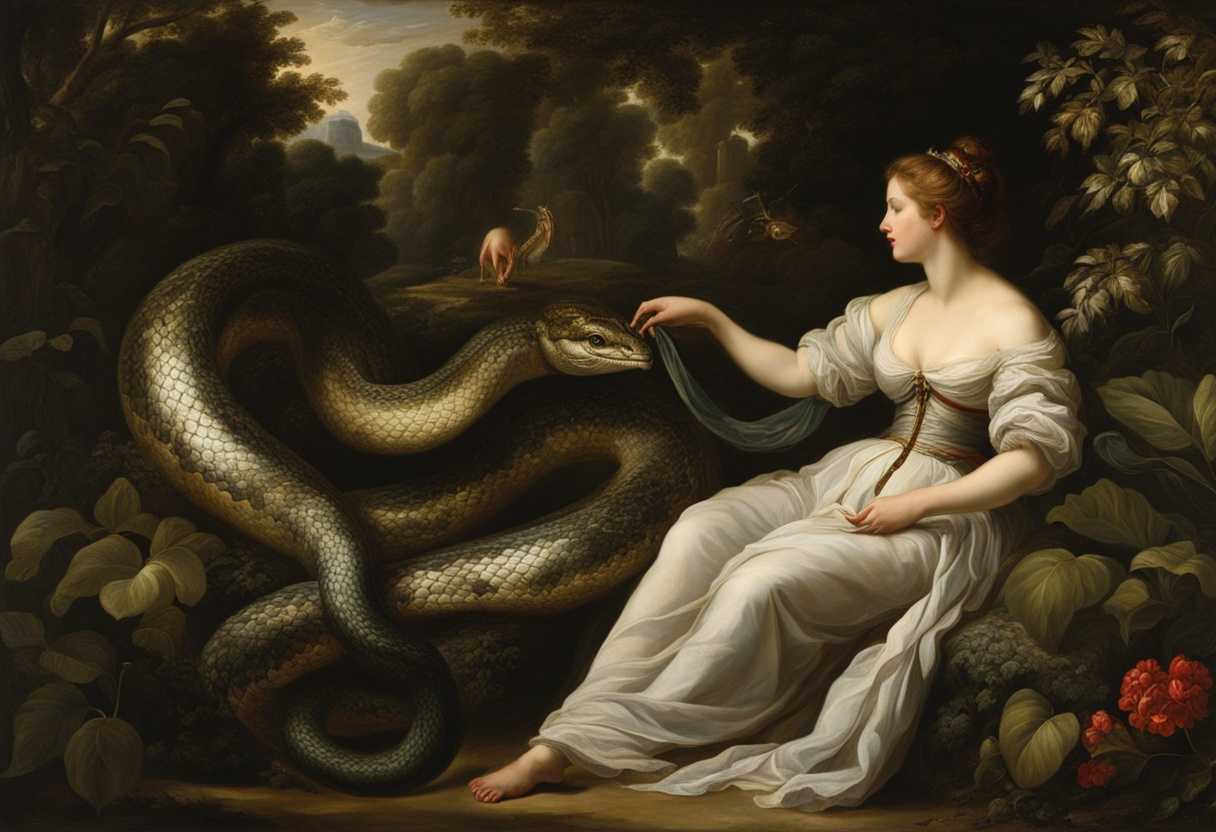
Setting the Scene for Genesis 3:4-5
In the Garden of Eden, a serene and lush paradise created by God, we find Eve, the first woman, standing near the Tree of Knowledge of Good and Evil. The scene is tranquil, with the gentle rustling of leaves and the sweet fragrance of blooming flowers filling the air. Eve is captivated by the beauty of the forbidden fruit hanging from the tree, its ripe and tempting appearance drawing her closer.
As she stands there, contemplating the fruit, a serpent slithers up to her. Unbeknownst to Eve, this serpent is actually Satan in disguise, cunning and deceitful. He begins to engage her in conversation, planting seeds of doubt and curiosity in her mind about God’s command not to eat from the tree. Eve listens intently as the serpent questions the validity of God’s warning, sowing the first seeds of disobedience and rebellion in her heart.
Caught in the web of deception, Eve starts to question the goodness and intentions of God. The serpent’s words, filled with lies and manipulation, lead her to believe that by eating the fruit, she will gain knowledge and become like God. In this pivotal moment, Eve’s decision to listen to the serpent’s deceitful words sets into motion the tragic events that will forever change the course of humanity.
What is Genesis 3:4-5 about?
This verse highlights a pivotal moment in the Bible where Eve is deceived by Satan’s cunning words. It illustrates the danger of succumbing to deceit and temptation, as Satan preys on Eve’s desire to be like God. Satan leads Eve astray from God’s commands and creates a rift in her relationship with Him by promising her something desirable yet unattainable through disobedience. Let’s ponder on the consequences of giving in to deceit and temptation as we reflect on this verse. What false promises are we falling for in our own lives that lead us away from God’s will? How can we strengthen our resolve to resist the deceptions of the enemy and stay true to God’s word? Let’s remember that Satan’s tactics have not changed since the beginning of time, and we must be vigilant in recognizing and resisting his deceitful ways. May we find strength in God’s truth and wisdom to navigate the challenges of temptation and deception that come our way.
Understanding what Genesis 3:4-5 really means
One of the pivotal moments in Scripture that shapes the foundation of human understanding of temptation and knowledge occurs in Genesis 3:4-5. This passage, ripe with meaning, demands a closer look to uncover how it informs our daily lives and spiritual journeys.
First, let’s consider the implications of the serpent’s assertion that one will not die from eating the forbidden fruit, directly contradicting God’s command. This introduces us to the theme of doubt—specifically, doubt in divine instruction. The serpent’s words, “You will not certainly die,” not only challenge the veracity of God’s word but subtly suggest that God might be withholding beneficial knowledge. What does this tell us about temptation? It often arrives cloaked in the guise of good intentions or half-truths, leading us to question foundational beliefs and values.
Furthermore, the serpent’s claim that their eyes will be opened, and they will be like God, knowing good and evil, dives deeper into the human psyche. The allure of divinity and enhanced wisdom is a potent lure. Here, the Scripture reveals a profound truth about human ambition and our innate desire for independence and self-sufficiency. This temptation to ‘be like God’ reflects our struggles with pride and the desire to control our destinies without divine interference.
Reflecting on this narrative today, how often do we see similar temptations in our own lives? Moments where we are led to believe that stepping outside the moral framework set by our faith will somehow lead to greater enlightenment or freedom? It’s a timeless struggle with relevance in an age where societal norms often run counter to biblical teachings.
To illustrate, consider a recent encounter I had with a community member who wrestled with the decision to engage in unethical business practices to survive economically. The allure was clear: potentially huge benefits masked the underlying disobedience to God’s commandments. Like the fruit in Eden, the opportunity was “good for food and pleasing to the eye,” yet fraught with spiritual danger. Genesis 3:4-5 offers more than just the recount of the original sin. It serves as a mirror reflecting our daily battles with temptation, the allure of forbidden knowledge, and the ultimate consequences of our choices. Reflect on this passage and ask yourself: what is your ‘forbidden fruit’? How can I resist the serpent’s smooth talk in my own life? Drawing wisdom from these ancient texts provides us not only with guidelines for moral conduct but also with deep insights into the human condition. Thus, through understanding and faith, we navigate the delicate balance between knowledge and obedience, independence and submission to divine will.
How can we discern lies from the truth?
The serpent deceives Eve by questioning the truth of God’s words in the verse. The serpent’s lie is evident when he tells Eve that eating the fruit will not lead to death, contrary to what God had clearly stated. This deception highlights the importance of recognizing and discerning lies from the truth. One way to discern lies is by comparing the information presented against what is known to be true and reliable, such as God’s word in this context. We can identify falsehoods and deceit by relying on what is known to be true and not swaying from it.
Furthermore, being grounded in the truth and having a deep understanding of God’s word can enable us to discern lies. Just as Eve was deceived because she was not firmly anchored in God’s truth, we too may fall prey to falsehoods if we are not rooted in what is genuine and trustworthy. Continuous study and meditation on God’s word help us develop a strong foundation that guards us against deception and equips us to distinguish truth from lies.
Additionally, seeking discernment through prayer and guidance from the Holy Spirit can help us navigate through deceitful tactics. The Holy Spirit is our helper and can provide us with wisdom and insight to identify falsehoods and steer us towards the truth. We can gain clarity and discernment in distinguishing between lies and the truth by relying on the Holy Spirit’s guidance, just as we see the consequences of failing to do so in the encounter between Eve and the serpent.
Application
Imagine you’re navigating the bustling city of life, where distractions and false advertisements are at every corner like vendors shouting from their stands. In this chaotic market, it’s crucial to hold tight to the true map—God’s Word—guiding you past the serpent’s clever gimmicks. Every decision you face is a crossroads. Stay alert, shield your heart, and let discernment be your trusted guide. Choose not to buy into the tempting offers that lead you down the wrong paths. Will you take a firm stand, cling to the truth, and walk in the light of clarity and purpose? What choice will you make when the serpent whispers?

Reverend Michael Johnson is an experienced Church Minister with a profound expertise in spirituality and guidance. With a serene presence and a compassionate heart, he has faithfully served his congregation for over 20 years, leading them on a spiritual journey towards inner peace and enlightenment. Reverend Johnson’s extensive knowledge of religious philosophies and profound understanding of human nature have made him a trusted confidant and mentor to many, as he seamlessly weaves his profound wisdom into life teachings. Reverend Johnson’s calming demeanor and empathetic nature continue to uplift and heal souls, nurturing a sense of unity and tranquility within his community.