
Genesis 48:21-22 is about Jacob’s blessing to Joseph, where he assures him that God will continue to be with his descendants and grants him an additional portion of land as a symbol of favor and the continuation of God’s covenant promises.
21 Then Israel said to Joseph, “Behold, I am about to die, but God will be with you and will bring you again to the land of your fathers.
22 Moreover, I have given to you rather than to your brothers one mountain slope that I took from the hand of the Amorites with my sword and with my bow.”
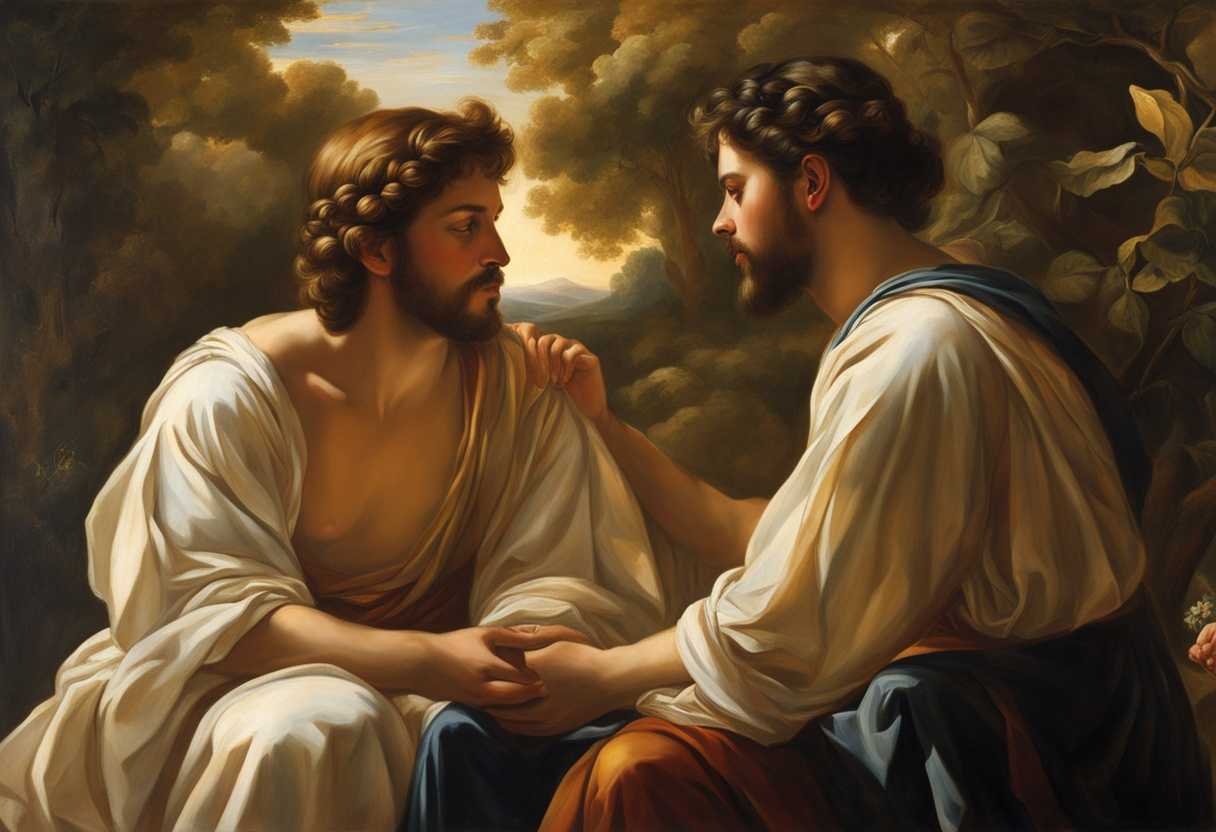
Setting the Scene for Genesis 48:21-22
In a dimly lit chamber within the home of Jacob, the patriarch of the Israelite people, a poignant scene unfolds. Jacob, now an old man, reclines on his bed, his frail body a testament to the many years he has lived. The air is thick with the scent of aged wood and the faint aroma of herbs, remnants of the blessings he has bestowed upon his family. Surrounding him are his beloved sons, Joseph and his two sons, Ephraim and Manasseh. Joseph, having risen to prominence in Egypt, has brought his sons to receive their grandfather’s blessing, a significant rite that carries the weight of family legacy and divine promise.
As Jacob’s eyes, dimmed by age, gaze upon the young boys, a sense of nostalgia washes over him. He recalls the trials and triumphs of his own life, the struggles with his brother Esau, and the years spent in servitude and wandering. The room is adorned with simple furnishings, a woven mat on the floor, and a few clay pots filled with oil and grain, symbolizing the modest yet rich life of a nomadic family. The flickering light from an oil lamp casts shadows on the walls, creating an intimate atmosphere where the past and future converge. Jacob’s heart swells with emotion as he prepares to impart a blessing that will shape the destinies of his grandsons.
In this sacred moment, Jacob reaches out to embrace Ephraim and Manasseh, positioning them before him. He recalls the promise made to him by God, the covenant that would extend through his lineage. With a trembling hand, he places his right hand on Ephraim, the younger, and his left on Manasseh, the elder, defying the customary order of blessing. This act signifies not only his love for them but also the divine favor that will rest upon Ephraim, the one who will lead the tribes of Israel into the future. The atmosphere is charged with anticipation as Jacob speaks words of blessing, sealing their fates and intertwining their lives with the rich tapestry of God’s plan for His people.
What is Genesis 48:21-22 about?
Jacob, also known as Israel, bestows a blessing upon the sons of Joseph—Ephraim and Manasseh in this touching moment from the book of Genesis. This is not merely a familial gesture; it is a profound declaration about their future and their place within the nation of Israel. Jacob underscores the significance of their roles in the unfolding narrative of the Israelite people by adopting Joseph’s sons and declaring them equal in status to his own sons. This act prompts us to consider: what does it mean for each generation to carry forward the legacy of faith and promise? How do blessings shape our destinies and the destinies of those who come after us? Jacob’s blessings moreover highlight the importance of identity and belonging within a community. He is not just predicting their future but also reinforcing the idea that each individual has a crucial role to play in the larger tapestry of their collective heritage by affirming Ephraim and Manasseh’s prominence. We might wonder, then, how do the blessings we give or receive influence our own identities? They guide our actions and shape our aspirations in what ways? When we reflect on our relationships, do we see opportunities to cultivate a sense of purpose in those around us, much like Jacob did? This act of blessing illustrates a powerful truth: each person’s influence extends far beyond their immediate presence; it reverberates throughout time and generations. Let’s take a moment to appreciate the significance of such acts of love and affirmation in our own lives.
Understanding what Genesis 48:21-22 really means
Genesis 48:21-22 captures a poignant moment in the narrative of Jacob (Israel) as he blesses his grandsons, Ephraim and Manasseh. This passage is significant as it highlights the importance of legacy, blessing, and the divine favor that is passed through generations. As we delve into these verses, we find a rich tapestry of meaning that speaks not only to the characters involved but also to us today.
Jacob, nearing the end of his life, is imparting blessings to Joseph’s sons. This act transcends mere familial gesture; it is a profound spiritual act that carries weight in the lineage of Israel. The context of this blessing is crucial, as it sets the stage for the future of the tribes of Israel. Jacob’s awareness of his mortality adds urgency to his words, reminding us that our time is limited and that we must consider what we leave behind.
The phrase “I am about to die” signifies the gravity of the moment. Jacob’s acknowledgment of his impending death underscores the importance of the blessings he is about to bestow. It invites us to reflect on our own mortality and the legacy we create. Similarly, when Jacob refers to “the angel who has redeemed me,” he highlights God’s intervention in his life, emphasizing divine protection and guidance. This serves as a reminder that our lives are intertwined with God’s providence, shaping our paths in ways we may not fully understand.
When Jacob states, “I give you one more ridge,” he indicates the act of giving a double portion, which is significant in biblical tradition. This symbolizes favor and inheritance, suggesting that God’s blessings are abundant and often exceed our expectations. It prompts us to consider how we view blessings in our own lives. Are we open to receiving and recognizing the abundance that God offers us?
In exploring related biblical passages, we find Deuteronomy 33:13-17, which elaborates on the blessings of Joseph, reinforcing the significance of Jacob’s blessing in Genesis. This connection highlights the prosperity and favor that Joseph’s descendants would experience. Additionally, Ephesians 1:3 speaks to the spiritual blessings we receive in Christ, drawing a parallel to the blessings Jacob bestows on his grandsons. It emphasizes that blessings are not just material but spiritual and eternal, inviting us to broaden our understanding of what it means to be blessed.
In a world where familial ties and legacies can often be overlooked, this passage serves as a reminder of the importance of blessing the next generation. It encourages us to consider what we are passing down to our children and grandchildren, not just in material terms but in faith, values, and spiritual heritage. I recall a family reunion where elder members shared stories of faith and resilience. One grandmother spoke about the importance of prayer, reminding us of the strength found in our shared faith and the legacy we carry forward.
Genesis 48:21-22 is a powerful reminder of the importance of blessings in our lives. It challenges us to reflect on our own legacies and the spiritual inheritance we are creating for future generations. As we navigate our lives, may we be mindful of the blessings we can impart, just as Jacob did, ensuring that our faith and values continue to thrive in those who come after us. How will you choose to bless those around you today?
What legacy am I leaving for future generations?
The legacy you leave for future generations revolves around the values and wisdom you impart, often shaped by your experiences, actions, and the relationships you cultivate. The way you navigate challenges and celebrate opportunities can set a powerful example for those who follow in your footsteps. You nurture a sense of unity and purpose that can resonate through time by prioritizing family, faith, and the importance of sharing blessings. Your choices, whether in personal or broader social contexts, establish a framework for how future generations will understand their own identities and roles in the world.
Additionally, the significance of your inheritance extends into the moral and ethical lessons you pass down. Emphasizing the importance of hard work, integrity, and humility can help instill a strong sense of responsibility in the individuals who come after you. They can learn not only from your triumphs but also from your struggles. Such insights can empower them to forge their own paths while remaining grounded in the values that defined your journey. Your influence stretches beyond mere material possessions—it is embedded within the mindset and character traits you foster. You ultimately craft your legacy through the narratives you weave within your family and community, illustrating the profound impact one person can have on many. You create a vibrant tapestry that future generations can draw strength and inspiration from by ensuring that your life is a testament to kindness, generosity, and love. This legacy encourages them to build upon your foundations, allowing your values and lessons to endure, guiding them as they face their own challenges and opportunities.
Application
Imagine your family as a garden. Are you planting seeds of faith and hope that will flourish for generations to come? Just like a good work ethic shapes a strong career, the values and blessings you share shape the future of your loved ones. Reflect on what you’re nurturing in your life right now. Are you equipping your family to embrace a life filled with the richness of God’s promises? What legacy will you leave behind?

Reverend Michael Johnson is an experienced Church Minister with a profound expertise in spirituality and guidance. With a serene presence and a compassionate heart, he has faithfully served his congregation for over 20 years, leading them on a spiritual journey towards inner peace and enlightenment. Reverend Johnson’s extensive knowledge of religious philosophies and profound understanding of human nature have made him a trusted confidant and mentor to many, as he seamlessly weaves his profound wisdom into life teachings. Reverend Johnson’s calming demeanor and empathetic nature continue to uplift and heal souls, nurturing a sense of unity and tranquility within his community.